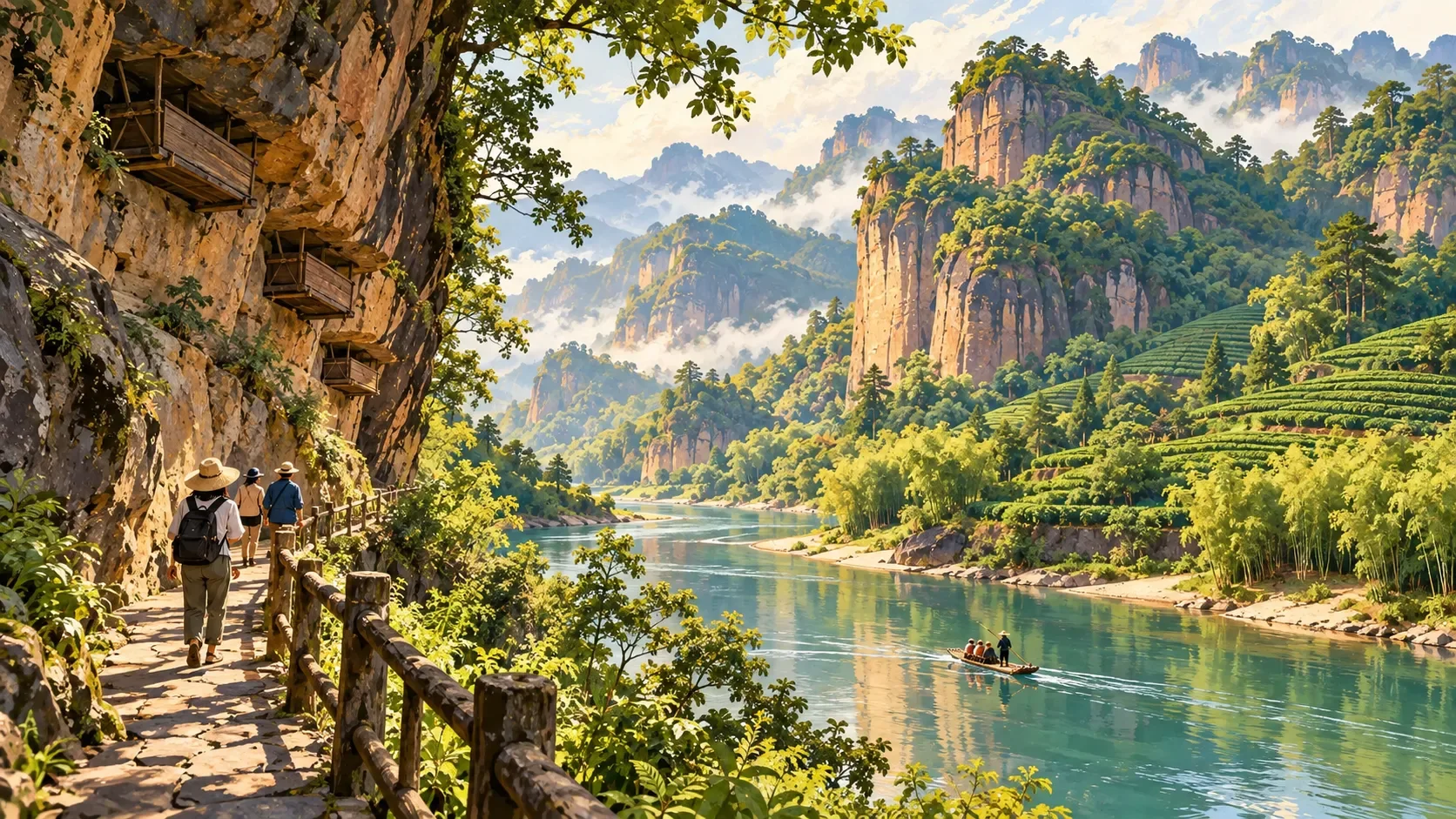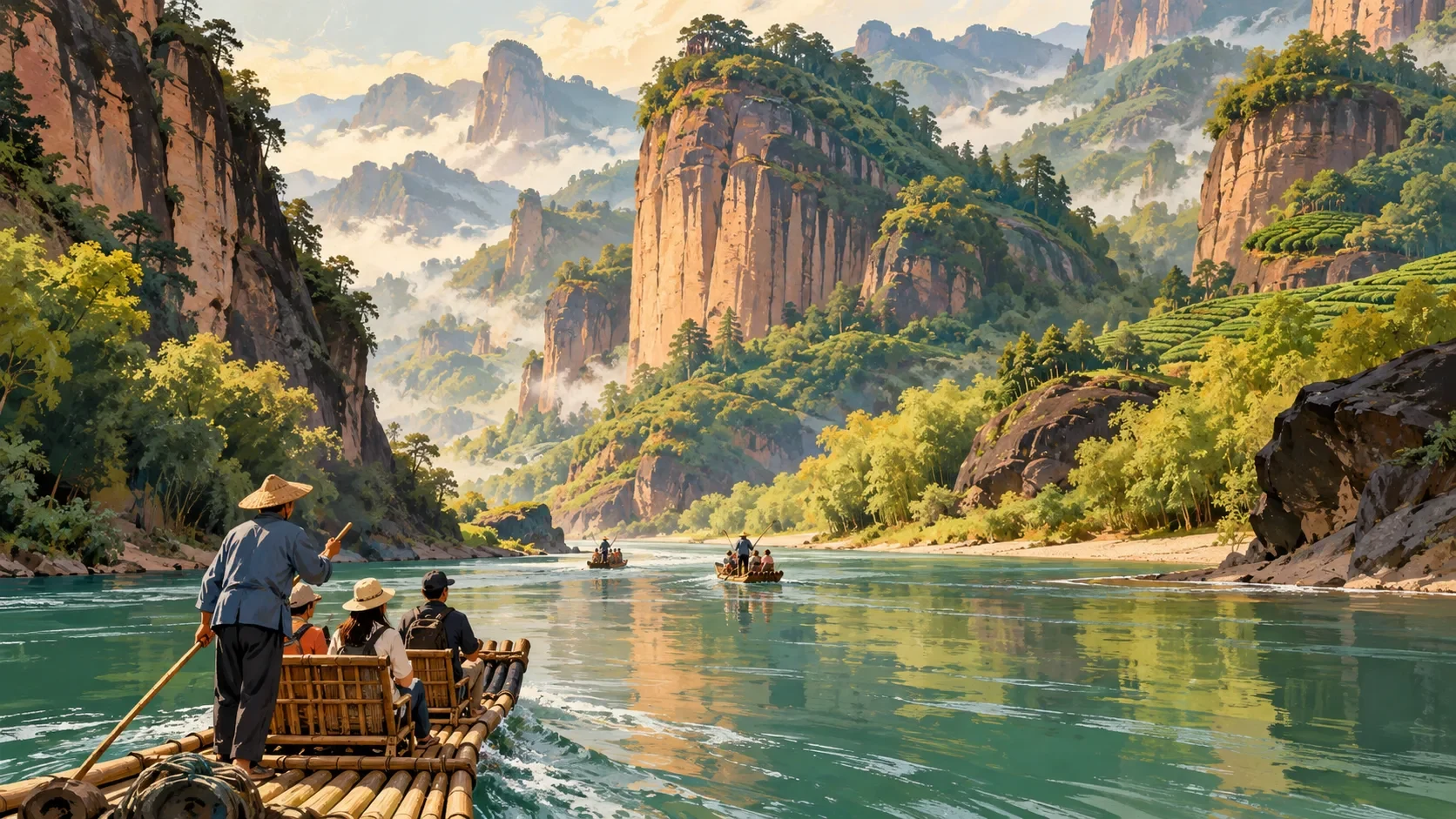
Wuyishan, in the hills of northern Fujian, is where Chinese landscape painting turns out to be real: sheer sandstone cliffs above a river that bends nine times, tea gardens stitched to the rock, and mist that never quite leaves. It is a UNESCO World Heritage site twice over — for scenery and biodiversity, and for culture, as the mountain where the philosopher Zhu Xi taught. You come for one bamboo-raft morning, a string of cliff walks, and more cups of da hong pao than you can count.