
Getting around
High-speed rail with your passport as the ticket, metro gates that take a QR code, taxis you can hail without Mandarin — and why an international driving permit is worthless here.
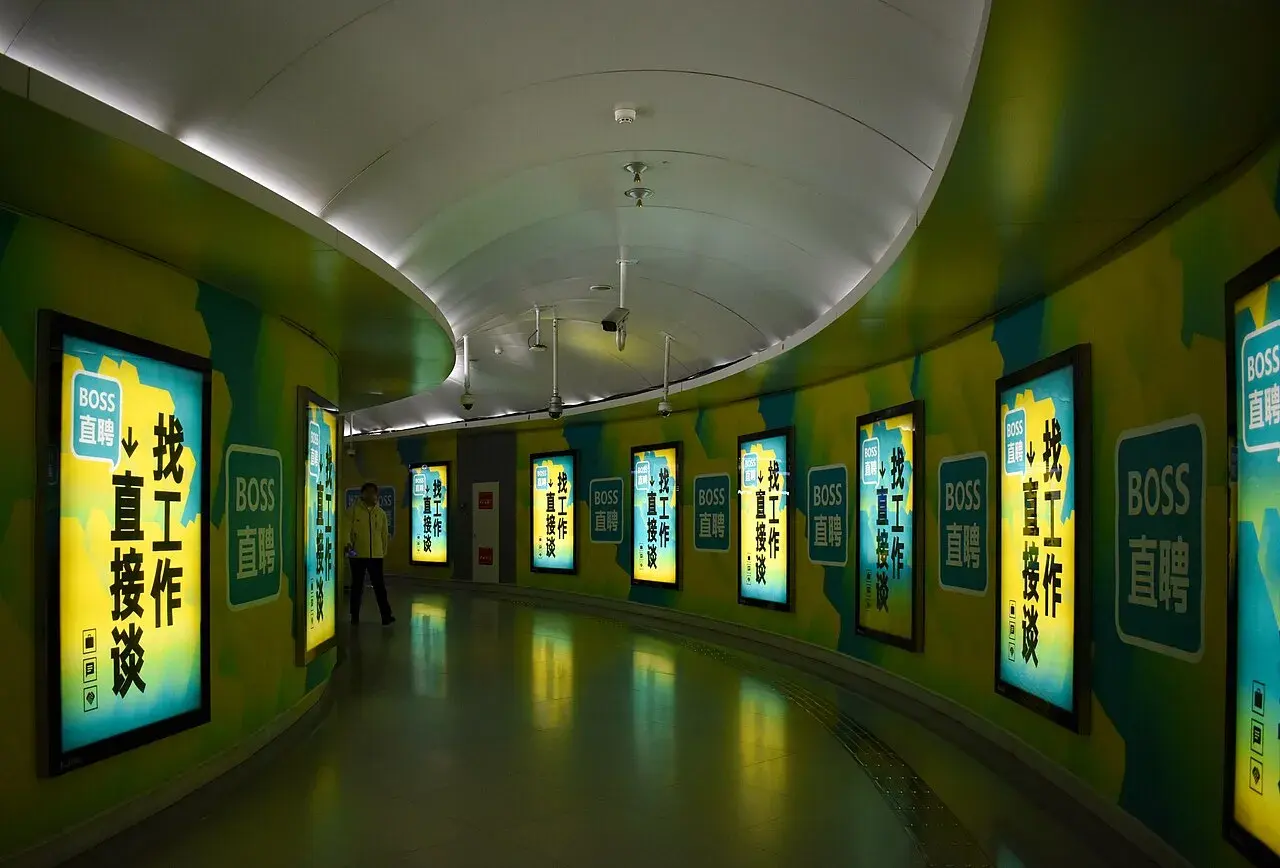
How the network is built
China’s transport runs on a clear hierarchy, and understanding it decides how you plan almost every day of a trip. High-speed rail connects cities; the metro covers the city; taxis and ride-hailing fill the gaps; shared bikes solve the last kilometre.
- Between cities: high-speed rail is almost always the right answer under about 1,200 km. It is fast, punctual and city-centre to city-centre.
- Within a city: the metro is cheap, fast and immune to traffic. Most visitor itineraries are built along metro lines.
- Last mile: taxis, ride-hailing and shared bikes.
- Domestic flights make sense only for long hops or where no rail line runs.
High-speed rail is the default
The high-speed network is the single best thing about travelling in China. Trains run at 250–350 km/h, depart on the second, and connect almost every city a visitor would want to see. For most intercity legs under roughly five hours, it beats flying once you count airport transfers and security.
- Book with your passport. Register once on the official 12306 platform, add each traveller, then your passport is your ticket at the gate.
- Three classes on most high-speed trains: second class, first class and business class. Second class is comfortable and is what most people book.
- Overnight sleeper trains still exist on long routes and save a hotel night. Soft sleeper is a four-berth compartment; hard sleeper is an open six-berth bay.
- Station names matter. A city often has several: Beijing has Beijing, Beijing South, Beijing West, Beijing North and Beijing Daxing. Check which one your train uses before you set off.
- Arrive 30–45 minutes before departure at a large station. Security screening and finding the right waiting hall take real time.
The gates close a few minutes before departure and they do close. If you are running late, aim for the station’s fast-track or ask staff — but plan not to need to.
The metro
Every major city has a metro, and it is the fastest way across town. Signage, ticket machines and announcements are bilingual on the lines visitors actually use, and the network map is easy to read once you know your line number and the direction of travel.
- Pay by QR code: Alipay and WeChat Pay both have a transport code you can set up in advance, in the app’s transport section.
- Contactless bank cards work on many systems, but support is inconsistent — do not rely on it as your only option.
- Single-journey tickets from a machine are fine and take coins or notes; machines usually have an English option.
- Every station has security screening — bag on the belt, and expect a wand check. Allow a few extra minutes.
- Trains stop running around 22:30–23:30 in most cities. Check the last train before a late dinner.
Taxis
Taxis are metered, plentiful in big cities and honest in the overwhelming majority of cases. The barrier is language, not price. Prepare for it and taxis become easy.
- Have your destination written in Chinese characters, on screen, before you get in.
- Meters start at a flagfall of roughly ¥13–16 in major cities and add per kilometre.
- Pay by QR code or cash; many drivers do not take cards.
- Get a receipt if you leave something behind — the receipt carries the car’s plate number.
- At stations and airports, use the official taxi rank rather than anyone who approaches you inside the terminal.
Ride-hailing
DiDi is the dominant app, works in English, and links to international cards. It removes the language problem entirely because you type the destination and the driver never needs to ask you anything.
- Install DiDi and set up your card before you travel.
- Set your pickup point carefully at stations and malls — they have designated ride-hailing zones, and the app shows you which.
- The app gives you the car’s plate number and colour, and in-app messaging is auto-translated.
- Fares are usually a little below taxi rates, and surge pricing applies at peak times.
- Your driver may call you. If you cannot speak Chinese, send a message instead — the app translates it.
Shared bikes
Dockless shared bikes are everywhere and are genuinely useful for short hops and for the last stretch between a metro station and a hotel. They need a Chinese app and usually a deposit or credit score, which is the main obstacle for visitors.
- Meituan Bike and HelloBike are the two you will see most.
- Payment is in-app and typically needs a Chinese wallet set up first.
- Scan the code on the lock, ride, then park in a designated area and lock manually.
- Do not leave a bike outside a marked zone — the app will keep charging you.
- Riding on pavements and against traffic is both illegal and genuinely dangerous here.
Driving is not the option it is elsewhere
This is the fact most visitors get wrong. China does not recognise the International Driving Permit, and a foreign national driving licence is not valid on its own for driving in mainland China. Visitors who want to drive legally need a temporary Chinese driving permit, obtained in person, and rental companies will require it.
- An IDP is not recognised — do not buy one expecting it to work here.
- A temporary driving permit is issued by the local traffic management authority, requires your passport and valid foreign licence, and generally involves a medical check and a short written test.
- Rental companies require the permit; they will not rent on a foreign licence alone.
- Hiring a car with a driver is the practical alternative and is not expensive by Western standards.
- Hong Kong, China and Macao, China licences have their own arrangements, and mainland licences are not valid in Hong Kong, China without additional steps.
Rules and reciprocity arrangements change. If self-driving is central to your trip, confirm the current requirement with the local traffic management authority before you book a car.
Domestic flights
Air travel is worth considering only where rail does not reach or where the distance is genuinely long — think Beijing to Kashgar, or Shanghai to Lhasa.
- Book on the airline’s own app or an international platform; your passport is the ID.
- Allow two hours at large airports, more at Beijing Daxing or Shanghai Pudong.
- Check which airport your flight uses — several cities have two, far apart.
- Delays are common in summer storm season and around Chinese New Year.
Accessibility and luggage
Station accessibility has improved a great deal but is uneven, and it is worth planning rather than improvising.
- Large rail stations and newer metro lines have lifts and step-free routes; older metro stations sometimes do not.
- Station staff are generally helpful if you ask at the information desk — point at your luggage and the stairs.
- Rail has generous luggage allowances compared with airlines, but you carry it yourself.
- Metro security will ask you to put bags through a scanner and may open a drink bottle for testing.
Frequently asked questions
Can foreigners use DiDi in China?
Yes. DiDi works in English and links to international cards. Set it up before you travel: you type the destination so the driver never needs to ask, the app shows the car’s plate number, and in-app messages are auto-translated.
How do I pay on the metro?
The easiest is a transport QR code inside Alipay or WeChat Pay — set it up in advance in the app’s transport section. Single-journey tickets from machines (with an English option) also work. Contactless bank cards work on some systems but support is inconsistent, so keep another option.
Do I need a Chinese phone number to get around?
Not for the metro or for ride-hailing. Airport and station Wi-Fi portals often require a Chinese number for a verification code, and some restaurant ordering systems assume one — that is the one case where a local SIM earns its registration visit.
How much does local transport cost in China?
Very little by international standards. The metro costs ¥2–10 per ride (distance-based); buses are ¥1–3. A taxi starts at ¥10–14 for the first 2–3 km, then about ¥2.5–3 per km — a typical cross-city ride runs ¥30–60. DiDi (China's Uber) costs roughly the same as a taxi, usually ¥15–100 for a city trip, with the fare shown upfront. Shared bikes are ¥1–3 per hour. Pay with a transit QR code inside Alipay or WeChat Pay, buy a single-journey ticket with cash at station machines, or get a refundable transit card for stays of 3+ days. As a rule of thumb, budget about ¥20–40 per person per day for city transport if you mostly use the metro and buses. (Airport exception: a taxi from Shanghai Pudong Airport to downtown runs about ¥150–200.)
This page is driven by the CMS content library — every update records its verification date. Report an issue →