

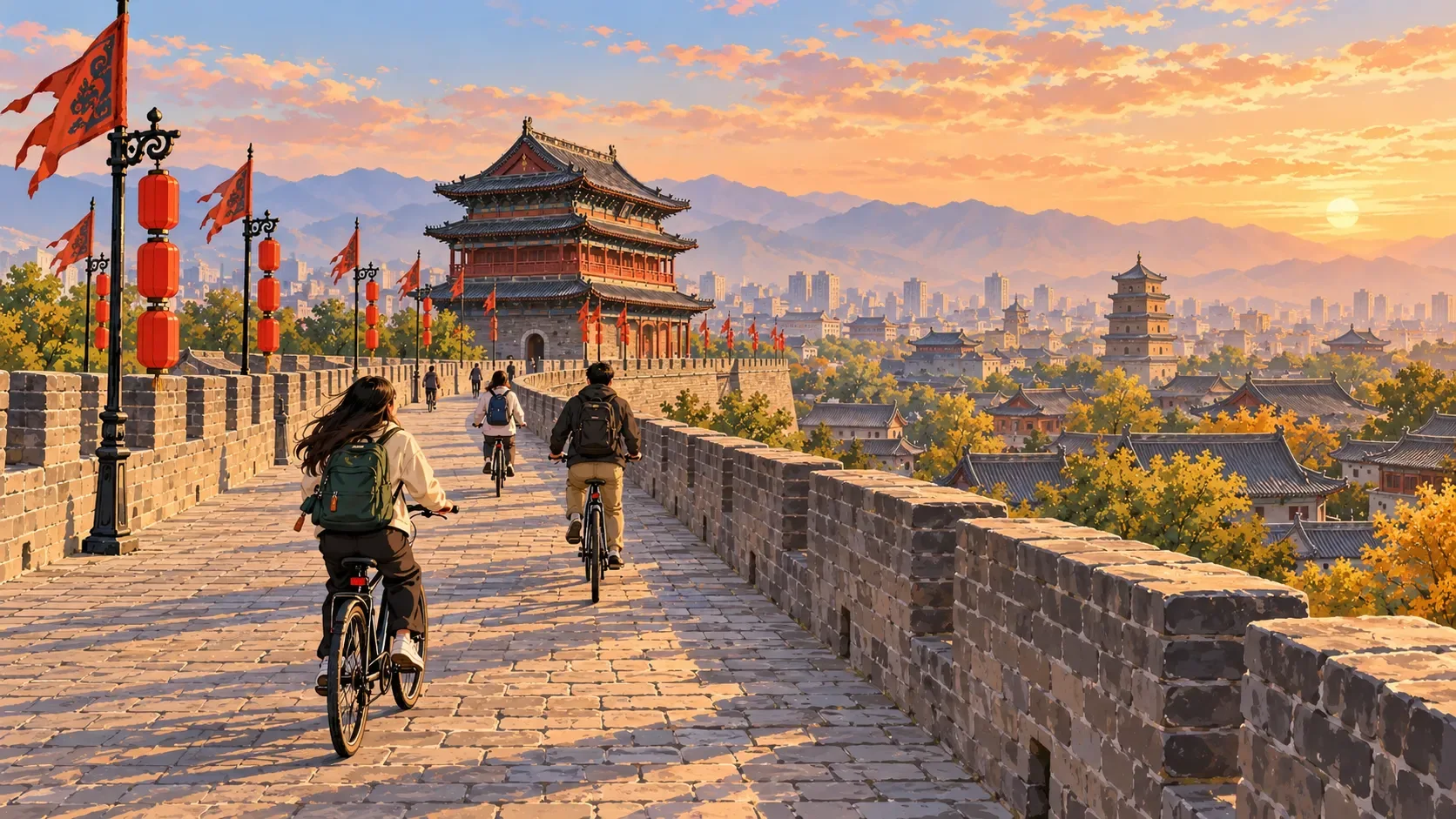
Xi'an — Chang'an in the age of the Silk Road — served as capital for more than a dozen dynasties across some eleven centuries, and the scale of that past is the first thing you feel: a complete Ming-era city wall you can cycle on top of, a pagoda raised for the monk who carried sutras back from India, and an army of terracotta soldiers standing where they were buried in 206 BCE. It is also one of China's great eating cities, famous for wheat noodles and halal street food.
The full handbook is part of the paid series
You have read the free preview — the introduction and the route map. The complete handbook adds the day-by-day plan, tickets and transport, culture and etiquette, food, useful Chinese, and the dated source list.