
Do You Need Cash in China? The Honest Answer for Tourists (2026)
Do You Need Cash in China? The Honest Answer for Tourists 2026 Key Takeaways You do not need cash for most purchases in China — but you should still carry some. Mobile QR payments
Do You Need Cash in China? The Honest Answer for Tourists (2026)
Key Takeaways
- You do not need cash for most purchases in China — but you should still carry some. Mobile QR payments (Alipay and WeChat Pay) dominate daily life, and both now accept foreign credit cards.
- Carry roughly 300–1,000 CNY in small notes as a backup for dead phone batteries, failed verification, rural vendors, small stalls, and situations where a QR code simply is not available.
- Cash is legal tender and merchants are expected to accept it. Refusing RMB cash is against the rules, though small vendors may genuinely not have change.
- Foreign cards work in fewer places than you might expect. Hotels, airports, and international chains usually accept them; local restaurants, taxis, and market stalls often do not.
- Set up at least one mobile wallet before you land. Treat cash as insurance, not as your primary payment method.
1. Introduction
If you have watched any travel video about China in the past few years, you have probably seen the same scene: a street vendor, a bowl of noodles, and a customer paying by scanning a QR code with a phone. It is easy to come away with the impression that China has gone completely cashless — and that showing up with a wallet full of banknotes will leave you stuck.
The reality is more nuanced, and it matters for your trip budget, your peace of mind, and your daily routine. Travelers searching for an answer to do I need cash in China usually want three things: a straight yes-or-no, a realistic number to carry, and a clear picture of what happens when a payment fails.
This guide answers all three. It explains how payments actually work on the ground, where cash still earns its place, how much to bring, and how to get more if you run out. It is written for international visitors — first-timers and returning travelers alike — who want a practical plan rather than a slogan.
2. The Short Answer: Cash Is a Backup, Not Your Main Tool
Core conclusion: For the great majority of tourist spending in Chinese cities, you will pay by phone. Cash is a safety net, not a daily necessity.
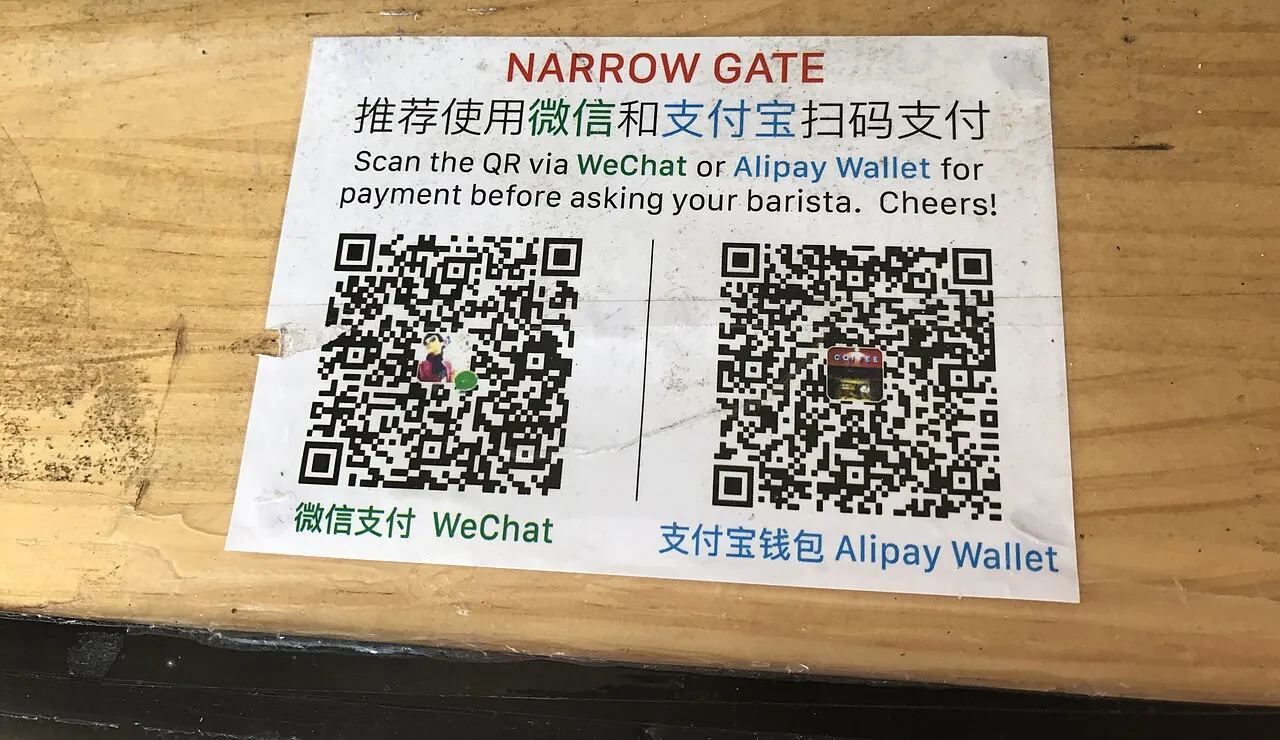
China's payment infrastructure moved quickly from cards to QR codes, largely skipping the era of widespread credit card terminals. Alipay (支付宝) and WeChat Pay (微信支付) are the two dominant apps, and since 2023 both have supported international credit and debit cards, including Visa, Mastercard, JCB, Discover, and American Express. That change removed the biggest historical obstacle for tourists: needing a Chinese bank account.
The practical sequence most visitors follow looks like this:
- Download Alipay and/or WeChat Pay before departure.
- Register with your passport and a mobile phone number.
- Link a foreign card.
- Scan merchant QR codes to pay — or let the merchant scan a payment code on your screen.
Two caveats are worth knowing before you rely on this completely.
Fees. Foreign card transactions in these wallets are not always free. Fees have generally applied only above a threshold per transaction (commonly around 200 CNY), at roughly 3%, though the exact terms and thresholds change. Small purchases are usually unaffected — coffee, subway rides, convenience store snacks — while larger ones may carry a surcharge. Check the current in-app terms rather than assuming.
Verification friction. Registration sometimes requires SMS verification, passport photos, or identity checks that can take minutes — or fail — at the worst possible moment. A foreign phone number may not receive the SMS reliably. This is exactly the scenario where cash rescues your afternoon.
Recommendation: Set up a wallet, test it with a small purchase on arrival, and keep a modest cash reserve regardless.
3. Where Cash Still Genuinely Matters
Core conclusion: Cash is not obsolete in China; it is just concentrated in specific situations. Knowing those situations keeps you from being caught short.
Cash earns its place in these real-world scenarios:
- Your phone is dead or lost. Payment apps require a charged device. A power bank helps, but a 100 CNY note helps more.
- Verification or network failure. Foreign cards get declined, apps log you out, SMS codes do not arrive, or international roaming drops. Cash works offline.
- Older and smaller vendors. A grandmother selling fruit at a roadside stall, a rural bus driver, a temple caretaker, or a repair shop in a small town may prefer — or only have — cash handling experience.
- Remote and secondary destinations. The further you go from Shanghai, Beijing, Shenzhen, and Hangzhou, the more often cash is welcomed simply because it is familiar.
- Markets and bargaining. Buying crafts, antiques, or produce is often faster with notes, and small change can help close a price.
- Taxis and some transport. Ride-hailing apps are dominant, but street taxis, minibuses, rural shuttles, and drivers in smaller cities may prefer cash, and some drivers struggle to make change for a 100 CNY note.
- Temples, donations, and small fees. Donation boxes, incense counters, and similar small transactions are often cash-based.
- Red envelopes and gifts. If you are visiting a Chinese friend or business contact, a cash gift in a red envelope is a cultural gesture that mobile transfers do not fully replicate for older recipients.
- As a budgeting tool. Cash makes daily spending visible in a way that tapping a phone does not.
Boundary condition worth knowing: refusing RMB cash is not permitted. Chinese law makes the renminbi the legal tender, and regulations introduced in 2024 explicitly require businesses and public service providers to accept cash and keep change available. Regulators have publicly penalized businesses that refused it. That said, a small shop genuinely may not have change for a 100 CNY note at 8 a.m., so practical courtesy — small denominations — matters more than invoking the rule.
4. How Payments Actually Compare
Here is a direct comparison of the three main ways a tourist can pay in China.
| Payment method | Typical acceptance | Setup effort | Best for | Main drawbacks |
|---|---|---|---|---|
| Alipay / WeChat Pay with foreign card | Very high in cities — nearly universal at shops, restaurants, transport, attractions | Medium: passport + phone + card, done before travel | Everyday spending, taxis, metro, chain stores, food | Fees above a threshold, verification failures, needs data/battery |
| Cash (CNY) | Legally required; widely accepted but sometimes inconvenient for small vendors | Low: withdraw or exchange on arrival | Backup, rural areas, markets, small vendors, tips-free situations | Change shortages, counterfeit awareness, carrying risk |
| Foreign credit/debit card (physical) | Low to moderate — hotels, airports, international chains, some malls | None | Hotel bills, large purchases, duty-free | Often rejected at local restaurants, taxis, and small shops |
A note on UnionPay: China's domestic card network is widely accepted, and many foreign cards carry UnionPay branding. If your card does, physical acceptance improves noticeably.
A note on tipping: tipping is not customary in mainland China, so you rarely need small notes for that purpose. Service charges at upscale hotels and restaurants are usually included in the bill.
Recommendation: Plan for a two-wallet, one-cash strategy — Alipay as primary, WeChat Pay as backup, and 300–1,000 CNY in notes as the fallback layer.
5. How to Get Cash and How Much to Carry
Core conclusion: Getting cash in China is straightforward; the trick is withdrawing the right denominations and not carrying more than you need.
Where to get cash
- ATMs at arrival. Bank of China, ICBC, China Construction Bank, and Agricultural Bank of China ATMs commonly accept foreign cards. Airport arrivals halls are the easiest starting point.
- Bank counters. Bring your passport. Bank staff can exchange major currencies and break large notes into smaller ones — useful and often overlooked.
- Airport and hotel exchange desks. Convenient but usually with less favorable rates.
- Before you leave home. A small amount of CNY is handy but not essential; rates abroad are often worse.
Practical withdrawal advice
- Prefer ATMs that dispense a mix of denominations, or withdraw an amount that forces smaller notes (for example, 800 CNY rather than 1,000).
- Expect per-transaction limits that vary by bank and card, commonly in the low thousands of CNY.
- Your home bank may charge a foreign ATM fee plus a currency conversion margin — check before you go.
- Keep receipts and be mindful of daily withdrawal caps set by your own bank.
How much cash to carry
| Traveler profile | Suggested cash on hand | Why |
|---|---|---|
| City-focused short trip (3–5 days) | 300–500 CNY | Backup only; wallets do the work |
| Mixed itinerary with smaller cities (1–2 weeks) | 800–1,500 CNY | Covers rural vendors, taxis, small fees |
| Off-the-beaten-path or long stay | 1,500–3,000 CNY, replenished as needed | More cash-only situations, fewer ATMs |
| Family or group travel | Add roughly 50% per additional adult | More small transactions, more failure points |
Safety and border notes
- Split cash between bag, hotel safe, and person. Do not carry everything in one place.
- China has low rates of street crime, but pickpocketing happens in crowded tourist areas and transport hubs.
- Familiarize yourself with the look and feel of the 100 CNY note, and be alert to counterfeit notes in informal markets — a common-sense precaution anywhere.
- Declare large amounts at customs. As a general rule, carrying the equivalent of more than USD 5,000 in foreign currency, or more than 20,000 CNY, triggers declaration requirements on entry or exit. Verify current rules with Chinese customs before traveling.
6. A Practical Pre-Trip Checklist
Use this as a quick readiness test before you fly.
- Install Alipay and WeChat Pay; complete identity verification with your passport.
- Link at least two different cards, ideally from different issuers, in case one is declined.
- Confirm your phone will have data in China — roaming or an eSIM — since payment apps need connectivity.
- Pack a power bank and a charging cable.
- Arrange 300–1,000 CNY in cash, favoring 20, 50, and 100 notes, and ask for small change at the first opportunity.
- Save screenshots of your hotel address in Chinese characters for taxi drivers.
- Keep a small reserve of cash separate from your main wallet.
- Check the current fee terms inside each payment app shortly before departure — policies are updated periodically.
7. FAQ
Q1. Can I use a foreign credit card in China?
Yes, but coverage is uneven. International cards are usually accepted at hotels, airports, upscale restaurants, international retail chains, and duty-free shops. Many local restaurants, street vendors, taxis, and small shops either cannot process them or prefer not to. Linking your card to Alipay or WeChat Pay extends its usefulness dramatically, because the merchant then receives a QR payment rather than a card transaction.
Q2. Is it legal for a shop to refuse cash in China?
No. The renminbi is China's legal tender, and regulations in force since 2024 require businesses and public service providers to accept cash and maintain change. Regulators have penalized businesses for refusing it. In practice, though, a small vendor may not have change for a large note, so carrying smaller denominations prevents most friction.
Q3. How much cash should I bring for a two-week trip?
For a typical two-week itinerary across major cities, 800–1,500 CNY is a sensible working amount, topped up at ATMs as needed. You will likely spend most of it only if you visit smaller towns, markets, or rural areas. There is no need to arrive with your entire budget in notes — ATMs and bank counters are widely available.
Q4. Do I need a Chinese bank account to use Alipay or WeChat Pay?
No. Both apps support international cards for foreign visitors, which is the main change that made cashless travel practical for tourists. You will still need a passport for verification and a phone number that can receive SMS codes. A Chinese bank account is useful mainly for long-term residents, not short-term visitors.
8. Conclusion
The honest answer to do I need cash in China is: less than you fear, more than zero. China's QR payment ecosystem is genuinely convenient, and with a foreign card linked to Alipay or WeChat Pay, you can handle the vast majority of daily spending with your phone. But the moments where that system fails — a flat battery, a declined card, a rural bus, a stallholder without a QR code — are precisely the moments when a few hundred yuan in notes turns a stressful afternoon into a minor inconvenience.
The balanced approach is simple. Set up two mobile wallets before you fly, carry 300–1,000 CNY in mixed denominations depending on your itinerary, withdraw more from bank ATMs as you travel, and keep the cash split across your bags. Treat cash as insurance rather than your primary tool, and you will get the convenience of a mobile-first payment culture without the vulnerability of depending on it entirely.
Before departure, take ten minutes to confirm the current fee terms in your payment apps and the latest customs declaration thresholds — both are the details most likely to change between now and your trip.