
Which Foreign Cards Work with WeChat Pay and Alipay (and Which Do Not)
Which Foreign Cards Work with WeChat Pay and Alipay and Which Do Not Key Takeaways Both apps accept major international card networks. Visa, Mastercard, JCB, Discover/Diners Club a
Which Foreign Cards Work with WeChat Pay and Alipay (and Which Do Not)
Key Takeaways
- Both apps accept major international card networks. Visa, Mastercard, JCB, Discover/Diners Club and — with some caveats — American Express can be linked to Alipay and WeChat Pay by visitors using a passport for verification.
- Binding a card is not the same as having a wallet balance. Foreign cards are charged per transaction; they generally cannot be used to top up a balance, send money to friends, or send red packets.
- The "WeChat Pay international card not supported" error usually comes from one of five causes: the card type is excluded (prepaid, some virtual cards), cross-border use is switched off at the issuer, verification is incomplete, the merchant uses a personal QR code rather than a merchant account, or a platform limit has been hit.
- Cost stacks. Expect a platform service fee on larger transactions (historically around 3%, with small transactions often waived) plus your own card's foreign transaction fee, typically 1–3%.
- Carry a backup. Two cards from different networks and issuers, plus a small amount of cash, resolves almost every point-of-sale failure in China.
1. Introduction
China is close to a cashless society at the point of sale. Chain stores, metro gates, night markets, ticket machines and even temple donation boxes increasingly expect a QR code scan rather than a card swipe or banknote. For a visitor arriving from Europe, North America, Southeast Asia or the Middle East, the practical question is no longer "should I install WeChat Pay or Alipay?" but "will my card actually work once I do?"
That question produces a lot of confusion, because both platforms advertise international card support while users simultaneously report failed payments, declined bindings and the specific error message WeChat Pay international card not supported. Both things are true at once: the feature exists, but it is narrower than a domestic wallet, and the reasons for failure are rarely explained clearly inside the app.
This guide sets out which foreign cards work with WeChat Pay and Alipay, which do not, where each one fails in practice, and how to diagnose a rejection in a few minutes rather than a few hours. It is written for short-term travelers, business visitors and new arrivals who want a payment setup that survives a two-week trip — not a theoretical overview of Chinese fintech.
2. The short answer: which card networks are accepted
Conclusion: The major global networks work. The problems come from card type and card settings, not usually from the network logo.
Both Alipay and WeChat Pay support international credit and debit cards issued outside mainland China, subject to identity verification with a passport. Alipay retired its earlier prepaid "Tour Pass" product and now lets visitors bind an international card directly; WeChat Pay offers the same direct-binding model through its Wallet section.
| Card type | Alipay | WeChat Pay | Practical notes |
|---|---|---|---|
| Visa credit / debit | Yes | Yes | Broadest acceptance; the safest default |
| Mastercard credit / debit | Yes | Yes | Comparable to Visa in reliability |
| JCB | Yes | Yes | Particularly smooth for Japan-issued cards |
| Discover / Diners Club | Yes | Yes, but less consistent | Keep a Visa or Mastercard as backup |
| American Express | Yes, widely | Inconsistent | Test a small payment before relying on it |
| UnionPay issued outside mainland China | Yes | Yes | Often the smoothest non-mainland option |
| UnionPay issued in mainland China | Yes | Yes | Native support; no international fee |
| Prepaid, gift and reloadable travel cards | Usually no | Usually no | Frequently rejected at binding stage |
| Some virtual-only neobank cards | Mixed | Mixed | Can fail identity or issuer checks |
| Cards issued in countries under network restrictions | No | No | Visa and Mastercard have suspended operations in some markets |
Practical advice: if you only carry one card, make it a Visa or Mastercard credit card from a major bank. If you carry two, pair a credit card with a UnionPay card or a debit card from a different issuer, so a single risk-control block does not leave you without options.
3. Where foreign cards work — and where they fail
Conclusion: Foreign cards work well for merchant payments and poorly for person-to-person money movement.
The distinction matters more than the network. When you pay a merchant, the transaction passes through a commercial acquiring channel that has been configured to accept international cards. When you pay an individual, or move money inside the app, there is no such channel — and this is where most "not supported" experiences originate.
Reliably works with an international card:
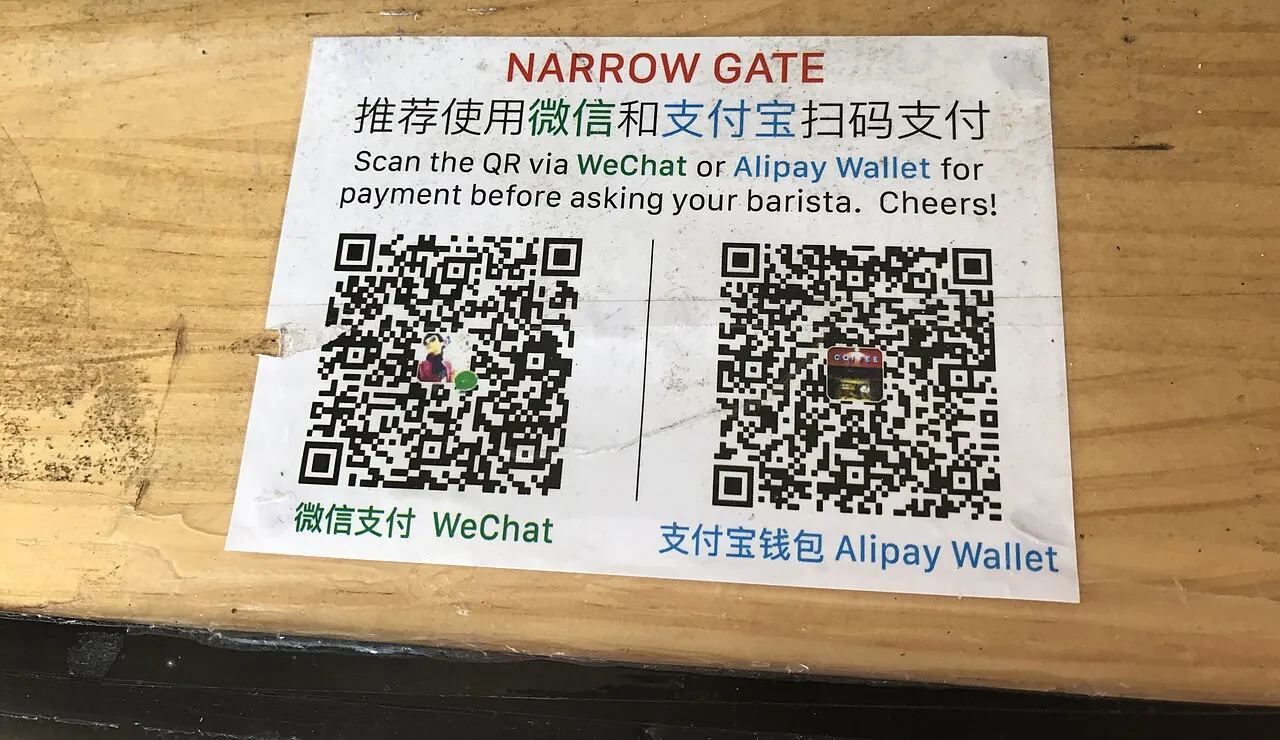
- Scanning a merchant's QR code at convenience stores, chains, restaurants, supermarkets and shopping malls.
- Being scanned by a cashier's scanner (the merchant scans the barcode on your phone).
- In-app payments inside major Super Apps and mini programs — ride-hailing, food delivery, movie tickets, attraction bookings.
- Municipal services that accept QR payment, including many metro and bus systems through the transport mini programs inside each app.
- Online purchases with larger Chinese platforms that display a WeChat Pay or Alipay option.
Frequently does not work:
- Transfers to friends and family. Sending money to another person's wallet is normally restricted for international-card users on both platforms.
- Red packets (hongbao). Sending digital red packets is treated as a transfer, not a purchase.
- Topping up your wallet balance. You are spending from the card per transaction; there is usually no stored balance to fund.
- Small vendors using a personal QR code. A street vendor's printed code may route to an individual account rather than a registered merchant. The scan succeeds, the payment declines.
- Some mini programs and niche apps. A minority of mini programs accept only domestic cards or wallet balance, even though the parent app accepts international cards.
- Certain restricted categories. Financial products, some virtual goods and regulated services are commonly excluded.
Scenario to plan for: a taxi driver whose QR code is a personal account is one of the most common failure points in China. Have cash for short taxi rides, or book through a ride-hailing mini program inside Alipay or WeChat, where the payment flows through a merchant channel and the international card normally clears.
4. Diagnosing the "international card not supported" error
Conclusion: Work through five checks in order; they resolve the large majority of rejections.
1. Is the card type excluded? Prepaid cards, gift cards, some travel money cards and a number of virtual-only neobank cards are routinely declined at the binding stage. This is usually a policy decision, not a temporary glitch. Switch to a standard credit or debit card from a bank.
2. Is cross-border use enabled at the issuer? Many banks block or flag transactions in China by default as a fraud precaution. Before you travel, enable overseas and online transactions in your banking app and, where the option exists, set a travel notice for China. A card that works at home can be silently declined abroad.
3. Is verification complete? Both platforms require identity verification with a passport, and often a selfie or liveness check. A partially verified account can bind a card but fail at payment. Complete verification in the app before you need to pay for anything time-sensitive, such as a train ticket.
4. Is the merchant actually a merchant? As above — personal QR codes behave differently from registered merchant accounts. If one shop declines and the next accepts, the card is fine and the merchant setup is the variable.
5. Have you hit a platform or issuer limit? Both apps apply per-transaction and cumulative spending caps for international cards, and your own issuer applies its own limits. These are displayed in the app and in your banking app rather than published as fixed public numbers, because they change. Large purchases — hotel deposits, electronics — are the usual trigger.
If all five check out and the payment still fails: wait a few hours and retry. Risk engines occasionally hold first-time international card payments for review, particularly on a newly created account. A second card from a different issuer is the fastest workaround.
5. Fees, limits, verification and refunds
Conclusion: Budget for two layers of cost, verify your identity early, and expect refunds to be slower than the original payment.
Fees. Alipay and WeChat Pay have both applied a service fee of roughly 3% on international card transactions above a small threshold — historically around 200 RMB — while waiving the fee on smaller payments. These waivers are promotional and change without much notice, so read the amount on the confirmation screen before you tap pay. On top of that, most issuers add a foreign transaction fee of about 1–3%. A large purchase can therefore cost noticeably more than the sticker price; small daily purchases often cost nothing extra.
Limits. Per-transaction and cumulative caps exist on both platforms and are shown in-app. They are set by the platform and by your issuer, and they are the most common reason a payment that worked yesterday fails today at a higher amount.
Verification. Passport-based verification is mandatory. Do it at home, on reliable Wi-Fi, before departure. Verification problems are far harder to solve in a queue at a train station.
Refunds. Refunds return to the original card, usually in the original currency, and typically take several business days to two weeks to appear. Exchange-rate movement between payment and refund can mean you get back slightly more or less than you paid. Keep the in-app transaction record until the refund clears — it is the reference both the merchant and your bank will ask for.
Security. Both apps use device binding and payment passwords. Set a payment password that is not your phone unlock code, and treat a lost phone as a lost wallet: freeze the account from another device immediately.
6. Setup checklist before you fly
Use this as a pre-departure sequence rather than an arrival-day scramble.
- Install both apps — Alipay and WeChat Pay — rather than choosing one. Merchant acceptance overlaps heavily, but not perfectly.
- Register with a phone number you will keep during the trip, and make sure it can receive international SMS.
- Complete passport verification and set a payment password in each app.
- Bind two cards from different issuers, ideally one Visa or Mastercard credit card and one debit or UnionPay card.
- Enable overseas and online transactions with each issuer, and add a travel notice.
- Run a small test payment — a coffee, a metro ticket — within the first hour of arrival, while you still have time and Wi-Fi to troubleshoot.
- Carry a modest amount of cash (a few hundred RMB) as a floor, not as your main method.
- Keep screenshots of any failed transaction showing the error and the amount.
For readers building a broader China trip plan — visas, itineraries, transport, food and safety — HelloChina (hellochina.fans) publishes structured English guides written for international readers rather than machine-translated from Chinese sources, which makes the payment and entry logistics easier to cross-check.
7. FAQ
Q1. Can I use a foreign card to send money to a friend or send a red packet on WeChat Pay?
No. Transfers between individuals and digital red packets are treated as wallet-to-wallet money movement rather than merchant purchases, and international cards are generally not accepted for them. Use a merchant payment, or ask the other person to pay and settle up outside the app.
Q2. Why does my card work in one shop and get declined in the next?
The most likely cause is the merchant's payment setup. Registered merchants process payments through a commercial channel configured for international cards; a small vendor using a personal QR code does not. If your card succeeds elsewhere in the same hour, the card is not the problem.
Q3. Do I need a Chinese bank account or a Chinese phone number?
No. Both platforms support registration with a foreign phone number and verification with a passport, and cards are charged per transaction rather than funded into a balance. A Chinese bank account mainly helps if you are staying long term and want to avoid international card fees.
Q4. Are there fees for using a foreign card with Alipay or WeChat Pay?
Possibly two. The platforms have applied a service fee of around 3% on international card transactions above roughly 200 RMB, often waiving it on smaller amounts, and your own issuer may add a foreign transaction fee of 1–3%. Fee waivers change, so confirm the total on the payment confirmation screen.
8. Conclusion
The honest answer to "which foreign cards work with WeChat Pay and Alipay" is that network branding is rarely the deciding factor — card type, issuer settings and merchant configuration are. A standard Visa or Mastercard credit card, verified with a passport and enabled for overseas use, will handle the large majority of daily payments in China. Prepaid and gift cards, many virtual-only cards, and cards from markets where the major networks have suspended operations will not.
The failure mode to plan around is not the card itself but the context: a personal QR code, a wallet transfer, a mini program that only accepts domestic cards, or a limit you did not know existed. Two cards from different issuers, complete verification done before departure, a small cash reserve, and a test payment on arrival will cover nearly every situation a short-term visitor encounters.
Set the payment layer up properly in the first hour, and the rest of the trip — trains, markets, museums, late-night noodles — becomes a matter of scanning and walking away.