
Chopsticks and shared dishes
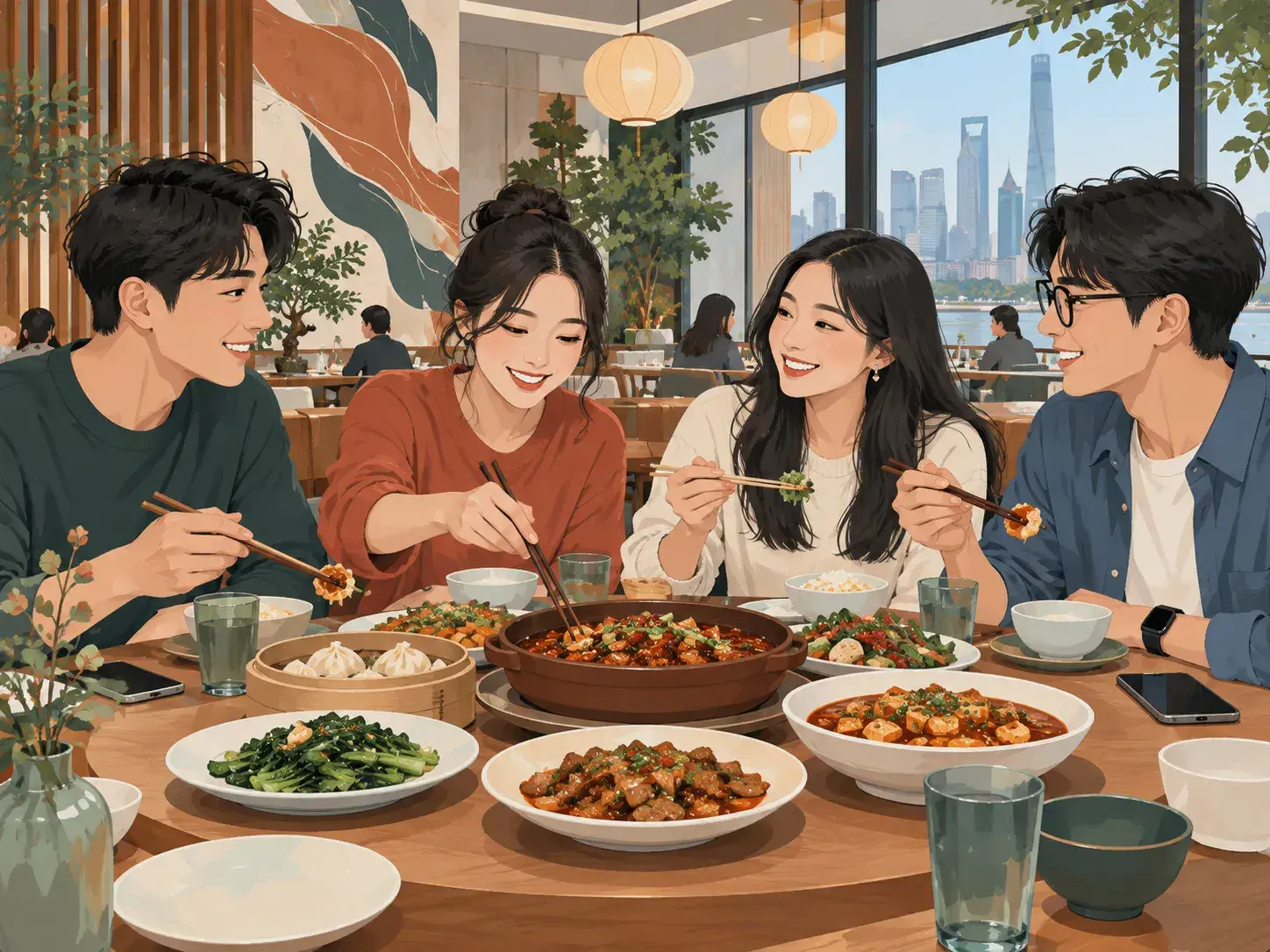
Most meals are ordered to the middle of the table and shared. Chopsticks are how you take your portion — and a few small habits make the whole thing feel easy.
What it is
Dishes arrive in the centre and everyone takes from them, usually into a small bowl of their own. Rice or noodles are personal; the dishes are communal. Restaurants increasingly provide serving chopsticks (公筷), and at family tables people often just use their own.
Where you will meet it
- Any restaurant with a round table and a lazy Susan
- Family and banquet meals, where the host orders for the table
- Hotpot, where raw items go into a shared broth
Do
- Rest your chopsticks on the rest or across your bowl when you pause — not upright in the rice
- Take from the side of a shared plate nearest you, and use serving chopsticks when they are provided
- Let the host or the eldest start first at a formal meal
- Say you are full (我吃饱了) rather than leaving abruptly — the host will often keep offering
Avoid
- Standing chopsticks upright in a bowl of rice — it echoes incense at funerals
- Digging around in a shared dish to find the piece you want
- Passing food from chopstick to chopstick
Regional, family and generational variation
Southern and coastal tables lean on rice with lighter dishes; northern tables lean on wheat — noodles, dumplings, bread — and heavier braises. Younger urban households are far more relaxed about these rules than a formal banquet with grandparents. In parts of the south, a bowl of soup may arrive first; in the north, it often comes last.
Words worth having
- 筷子 kuàizi
- chopsticks
- 公筷 gōngkuài
- serving chopsticks
- 我吃饱了 wǒ chī bǎo le
- I am full
- 干杯 gānbēi
- cheers / bottoms up