
Temples and religious sites
Most temples you will visit are working places of worship, not museums with a ticket window. A few quiet conventions cover almost every situation.
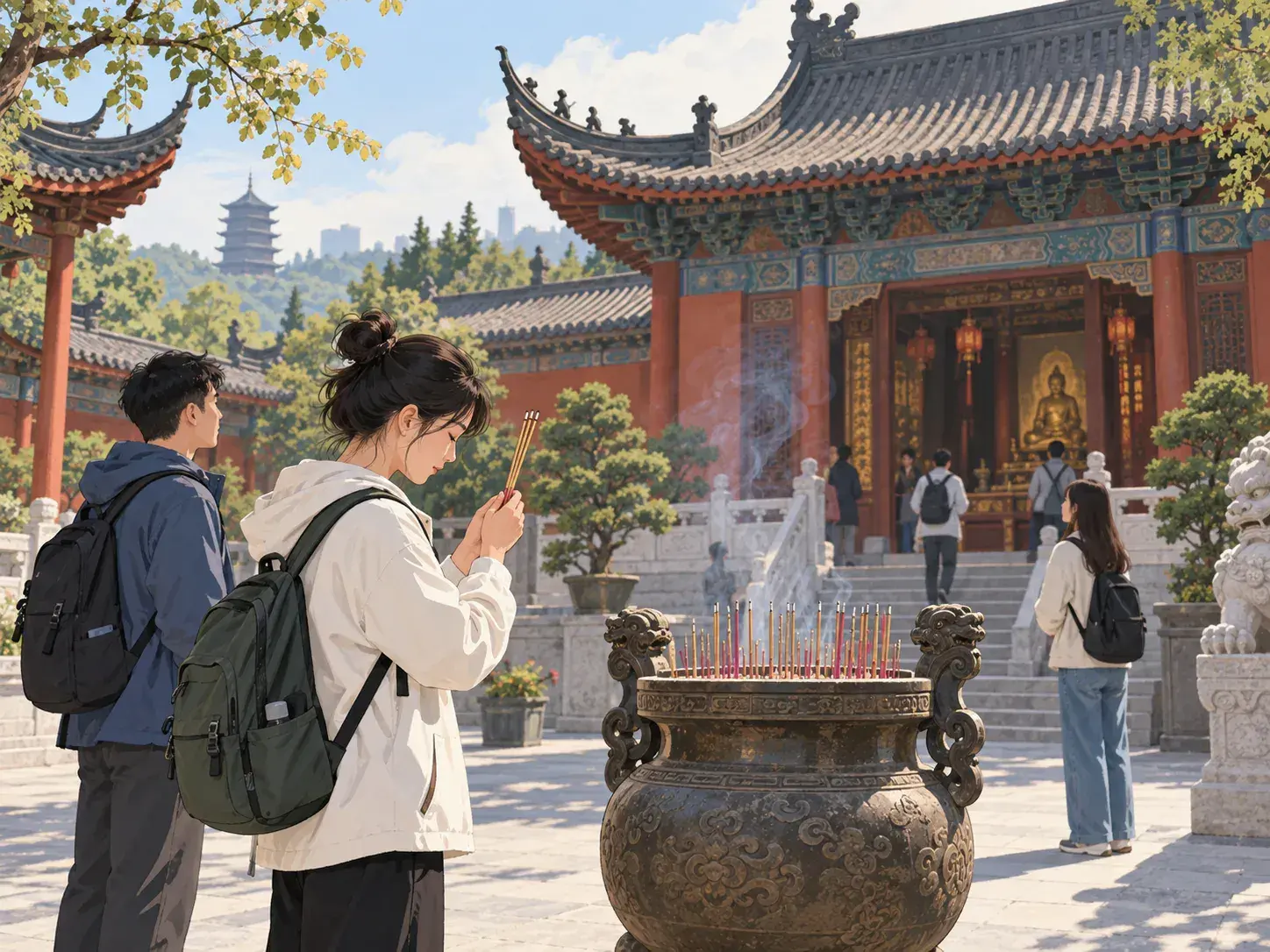
What it is
Buddhist and Daoist temples, Confucian halls, mosques and churches are all in active use. Some charge admission, some are free, and many are both a heritage site and a living congregation at the same time.
Where you will meet it
- City temples such as Yonghegong in Beijing or Jade Buddha in Shanghai
- Mountain temple complexes, often reached by cable car or long stairs
- Mosques in the Hui quarters of Xi’an, Lanzhou and Kashgar; churches in the old treaty ports
Do
- Step over the threshold rather than on it, in temple halls
- Keep your voice down and your phone on silent
- Walk clockwise around a stupa or prayer-wheel line if others are doing so
- Dress with shoulders and knees covered; some sites lend or sell wraps
Avoid
- Photographing altars, statues or worshippers where signs say not to
- Touching statues, murals or ritual objects
- Pointing your feet at an altar or a person when sitting on the floor
- Treating monks or nuns as photo props
Regional, family and generational variation
Practice varies enormously. A working monastery may close halls for chanting and reopen later; a heritage-only site may have no ritual at all. Daoist and Buddhist temples differ in layout and offering customs. Mosques in the northwest follow daily prayer times closely, and some are closed to visitors on Fridays. Christian churches in the old treaty ports may be active congregations with their own service hours.
Words worth having
- 寺庙 sìmiào
- temple
- 清真寺 qīngzhēnsì
- mosque
- 请勿喧哗 qǐng wù xuānhuá
- please keep quiet
- 香 xiāng
- incense