
Photography and respecting people
Nobody minds a photograph of a street or a temple facade. The line is people: ask first, and take a no gracefully.
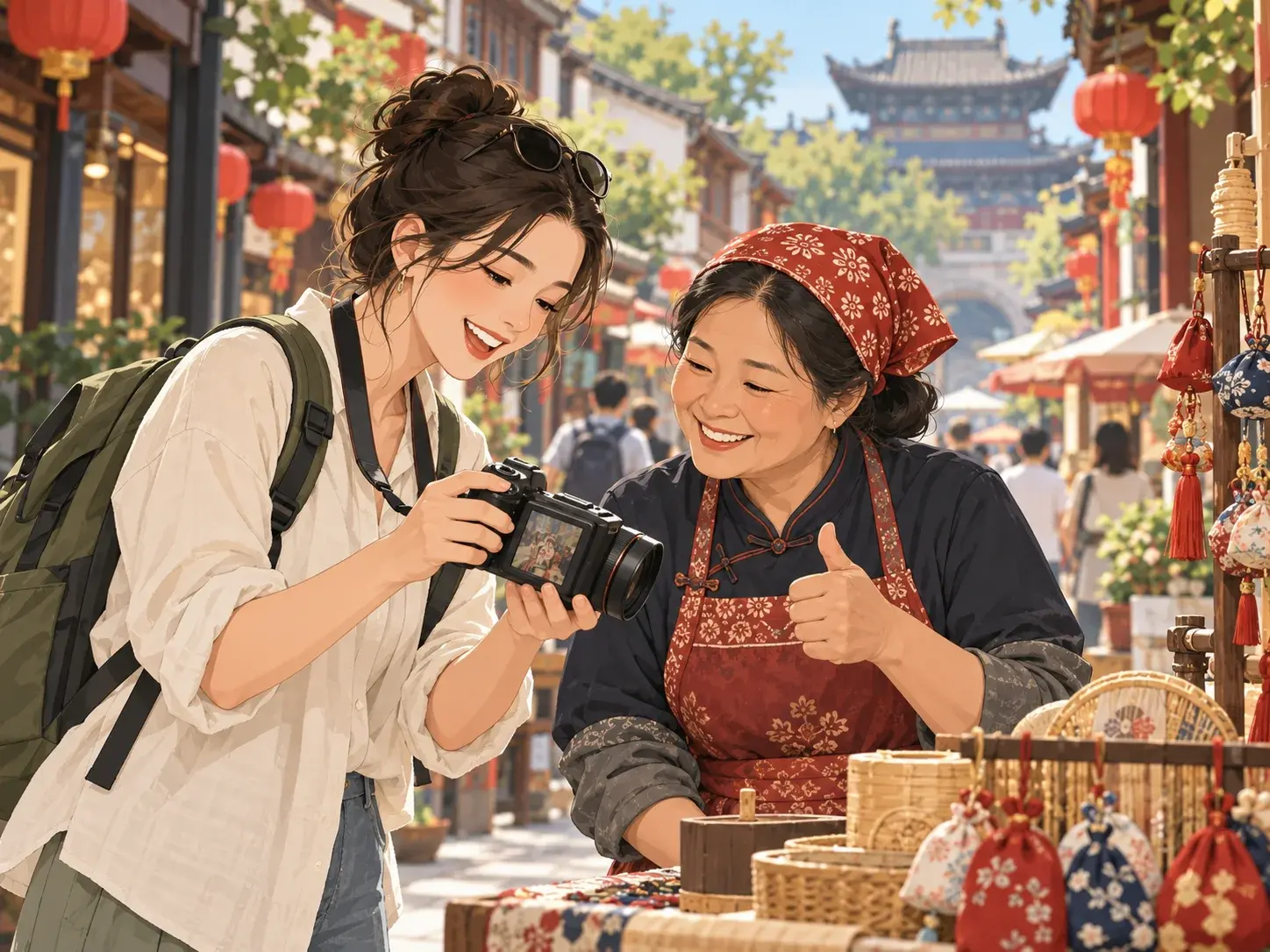
What it is
Most public spaces are open to photography. What changes the situation is whether a person is the subject. A wide street scene is fine; a close portrait, a vendor at work, a child, or anyone in a religious space needs a question first.
Where you will meet it
- Old towns, markets and street food lanes — people at work
- Temples, mosques and churches — worshippers and ritual
- Rural villages, where a camera marks you as an outsider
Do
- Ask with a gesture: point at the camera, then at them, raise your eyebrows — it works without language
- Offer to show the photo afterwards; it usually turns a refusal into a yes
- Put the camera away in prayer halls and where signs ask you to
- Accept "no" the first time, and do not photograph someone who has turned away
Avoid
- Photographing children without speaking to a parent or guardian
- Using a drone where it is restricted — many heritage and border areas ban them outright
- Photographing inside museums where a no-photo sign is displayed, or using flash on textiles and paintings
Regional, family and generational variation
Attitudes differ sharply by setting, not by region. Big-city residents are used to cameras; a small village may not be. Younger people are often happy to pose, older people much less so. Ethnic minority areas and religious sites deserve the most caution, and some explicitly prohibit photography.
Words worth having
- 可以拍照吗?kěyǐ pāizhào ma?
- May I take a photo?
- 谢谢 xièxie
- thank you
- 禁止拍照 jìnzhǐ pāizhào
- no photography