
Imperial & ritualMuseum & collectionBook ahead / busy
North China
Beijing
北京 · CN-BJ
Imperial landmarks & the Great Wall
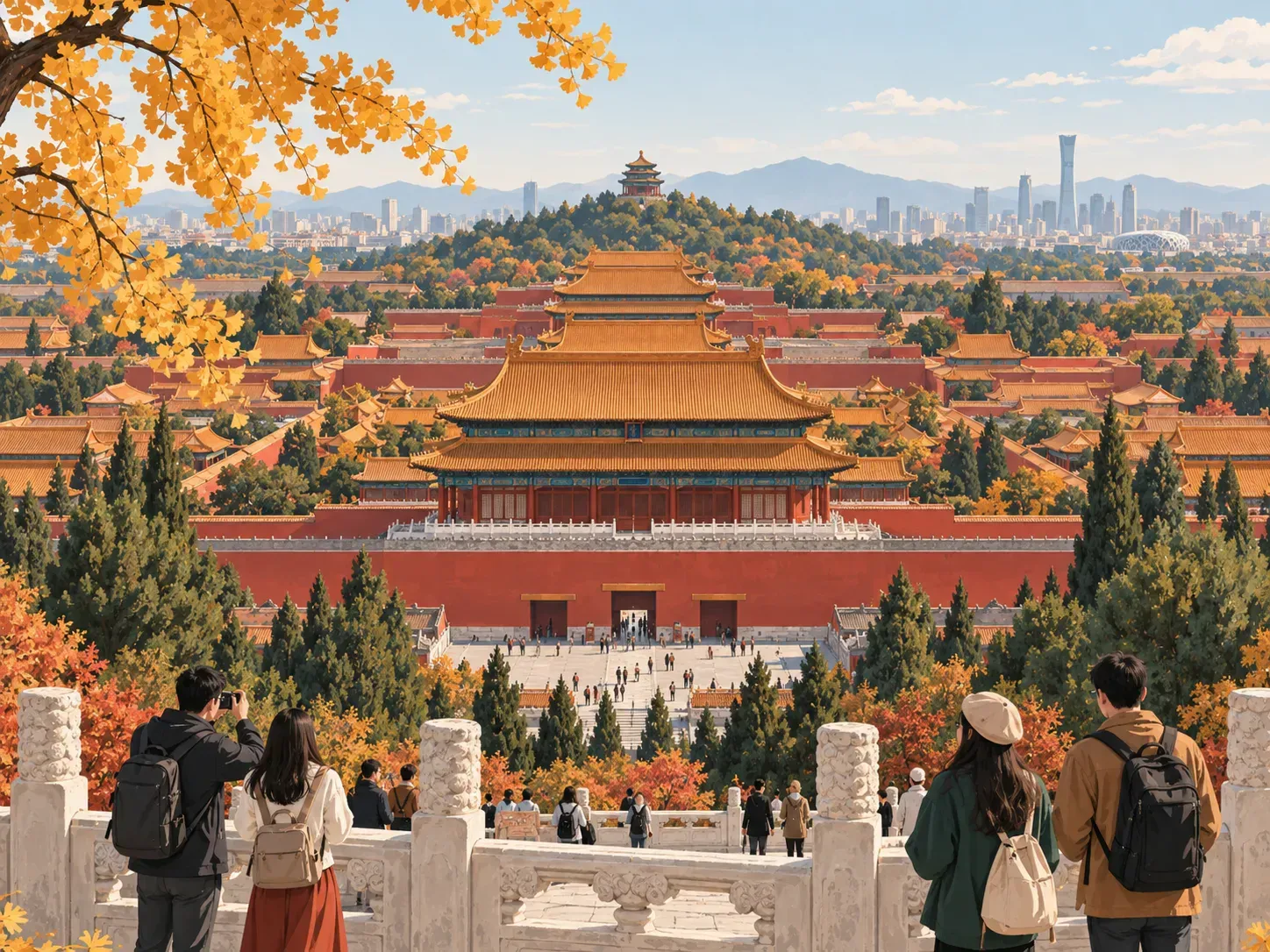
Ring roads around the Forbidden City, hutong lanes to the north, and the Great Wall within day-trip range. Beijing has the most forgiving transport in the country — the easiest soft landing for a first visit.
English translations of the source blocks on this page were prepared with machine assistance and are under editorial review; the Chinese source text remains authoritative.
HistoryArchitectureCity
Where to start
- Forbidden City — Jingshan — Shichahai
- Temple of Heaven & Xiannongtan
- Summer Palace & Old Summer Palace
Read these before you plan
- P0Book the timed entries first, then build the itinerary
The Forbidden City and the National Museum of China are the bookings most likely to reshape your whole trip — lock in their dates first, then arrange flexible sights like the Temple of Heaven and the Summer Palace. Both are routinely closed on Mondays, and some inner gardens of the Summer Palace and Temple of Heaven may also close on Mondays.
- P0Where to stay: metro entrance > district name > straight-line distance to sights
First-timers should default to Qianmen/Chongwenmen or Dongsi/Dengshikou. For evening hutong walks, consider Gulou/Beixinqiao — but confirm whether vehicles can reach the door, and check room soundproofing and the luggage route. Don't trust a hotel's "five minutes to the sights" claim at face value.
- P0Don't squeeze below the minimum stay at each sight
Allow at least 4 hours for the Forbidden City, 2.5 for the Temple of Heaven, 4 for the Summer Palace, 3 for the National Museum, and 3 inside the Mutianyu Great Wall area. Jingshan Park needs 1 hour, the Bell and Drum Towers plus hutongs 2.5 hours, Shichahai 2 hours. Anything less usually leaves you with nothing but transit and queues.
- P1Save the best light for four high-payoff windows
Be at the Forbidden City and Temple of Heaven right at opening; give Kunming Lake at the Summer Palace the pre-sunset hour; summit Jingshan 60–90 minutes before sunset; walk Shichahai into blue hour. At Mutianyu, check visibility and wind first, then decide whether to chase the long-telephoto ridgeline shots.
- P1Keep the must-see list short and precise
At the Forbidden City, focus on three compositions: gateways, courtyards, red walls. At the Temple of Heaven, keep the west side of the Hall of Prayer for Good Harvests and the Danbi Bridge axis. At the Summer Palace, keep the Long Corridor, the borrowed scenery of Longevity Hill, and the Seventeen-Arch Bridge. At Jingshan, treat Wanchun Pavilion as your single vantage point. At Mutianyu, prioritize the watchtower line from No. 14 to No. 20.
- P1Don't cram both big museums into one day
First-timers shouldn't do the Forbidden City and the National Museum on the same day: both involve security checks, long walks, and dense information. Traveling with seniors or kids, keep to one 4-hour headline sight per day and leave recovery time in the afternoon.
- P2Let same-day advisories override the static numbers in any guide
Ticket prices, night openings, boat rides, last cable-car departures, and temporary exhibitions all change; holidays can bring snap crowd caps. Recheck official opening notices 24 hours before you go. In high wind, thunderstorms, or poor visibility, demote Jingshan and Great Wall photography to optional.
A · Core landmarks
Start with Beijing's first coordinates
Anchor your mental map of Beijing with the imperial palaces, ritual architecture and the national museums. First-time visitors should start with this layer.
B · Urban fabric
From the imperial story to everyday life
The Bell and Drum Towers, the lake shores, hutongs and industrial heritage together explain how modern Beijing grew beyond the old city. Suited to a second visit, or to anyone happy to walk.
C · Great Wall & outskirts
Push your view from the city wall out to the Yanshan ranges
The Great Wall, old temples, imperial tombs and valleys make up Beijing's outer geography of defence and belief. Allow at least one full day.
Suggested route shapes
- Central axis & old city · 2 days
- Three Hills & Five Gardens · 1–2 days
- Great Wall & village outskirts · 2 days
How to save money and time
Follow the Forbidden City's official one-way route: enter at the Meridian Gate (Wumen), exit at the Gate of Divine Prowess (Shenwumen), then cross the street to Jingshan. Extend to the Bell and Drum Towers and Shichahai only if your legs are up for it. Pairing the Forbidden City with Jingshan on the same day saves one cross-town transfer and avoids walking against the exit flow.
First time at the Temple of Heaven, the Hall of Prayer for Good Harvests, the Echo Wall, and the Circular Mound are the core — the ¥34 peak-season combo beats the ¥15 gate-only ticket for a complete visit. At the Summer Palace, peak-season entry is ¥30 and the combo is ¥60; buy single inner-garden tickets if you're only entering one or two (e.g. the Tower of Buddhist Incense), and consider the combo only for three or more.
In 2026, the joint annual card available to ordinary out-of-town visitors costs ¥200. If you're only covering the three standard stops — Temple of Heaven, Summer Palace, Jingshan — adult base tickets total well under ¥200. It only pays off with repeat entries or a long list that also covers Beihai Park, Xiangshan (Fragrant Hills), the Zoo, and more.
Parking near the Forbidden City and Tiananmen is difficult and security checks change drop-off points, so taxis aren't necessarily faster. Take the metro across the core districts; regular surface buses charged to a transit card or phone code get the standard 50% city discount. Even in a group, only compare ride-hailing for the last 2–3 km or with heavy luggage.
For Mutianyu, price the whole bundle — city round trip + entry ticket + shuttle + cable car/chairlift — not just the cheapest bus ticket. If you're fit, ride up and hike down (or vice versa); if not, trade money for time with a round-trip cable car. Give the Great Wall its own full day; don't force-combine it with northwestern sights like the Summer Palace.
Qianmen/Chongwenmen suits the Temple of Heaven and the central axis; Dongsi/Dengshikou covers the Forbidden City, hutongs, and food. When booking, verify the real walking route to the metro entrance. No need to move to Haidian for a single Summer Palace visit — only an overnight at Simatai for the night Great Wall justifies sleeping out in the suburbs.