
American Express in China: What Works, What Does Not, and How to Bind It
American Express in China: What Works, What Does Not, and How to Bind It Key Takeaways Amex acceptance in mainland China is real but uneven. It is reliable at international hotel c
American Express in China: What Works, What Does Not, and How to Bind It
Key Takeaways
- Amex acceptance in mainland China is real but uneven. It is reliable at international hotel chains, airport shops, upscale restaurants, duty-free and major tourist retail; it is unreliable at local restaurants, taxis, small shops, street markets and many domestic apps.
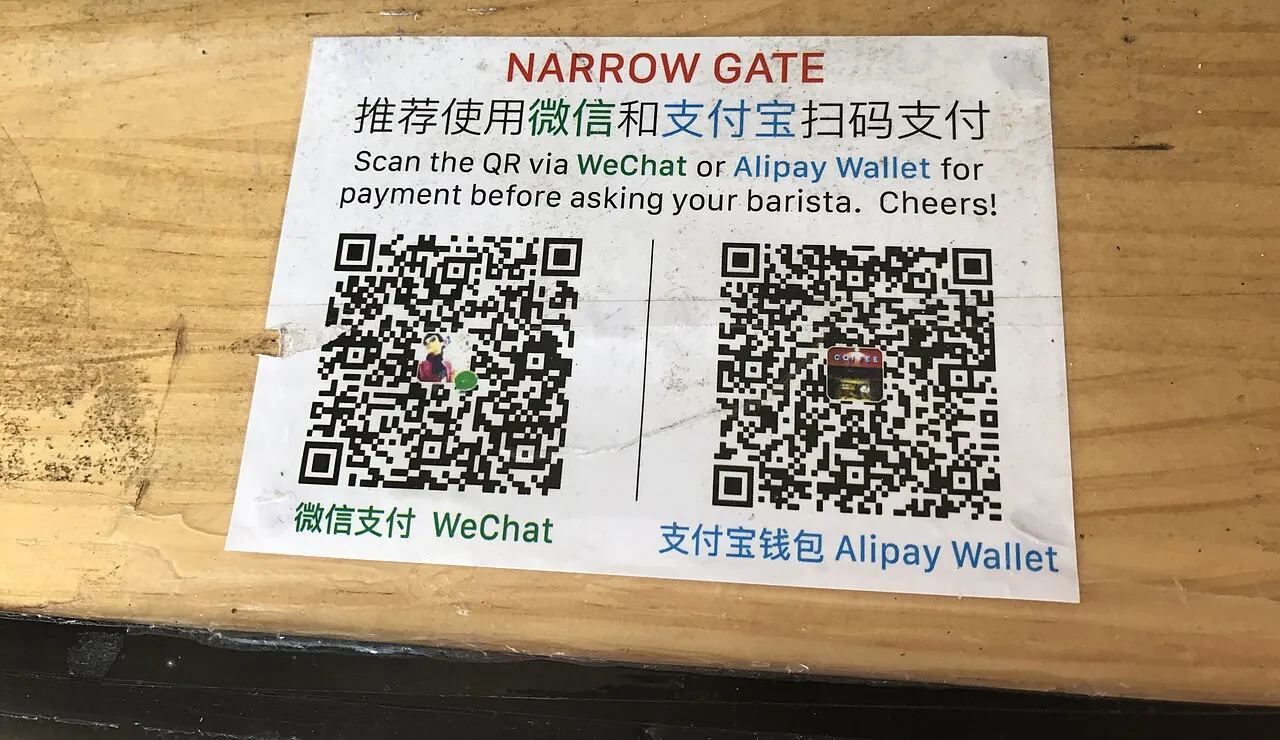
- Binding is the practical fix. Adding your American Express card to Alipay or WeChat Pay converts a QR code into your payment terminal, which covers far more everyday situations than a physical card swipe.
- Never travel on one network. Carry a Visa or Mastercard as backup, plus a small cash reserve and a UnionPay-compatible fallback for cases where foreign cards fail outright.
- Amex's real value in China is often benefits, not coverage — hotel programs, travel insurance, lounge access, dispute handling and concierge support rather than raw merchant count.
- Verify before you commit. Ask the merchant, test a small transaction, and confirm card support inside the app rather than assuming from a logo on the door.
1. Introduction
China's inbound travel recovery since 2023 has surfaced a very specific kind of frustration. A traveler reads that China is effectively cashless, arrives prepared with a premium American Express card, and then discovers that the card works flawlessly at the St. Regis and not at all at the noodle shop two blocks away.
The confusion is understandable. Search results for amex accepted in china tend to split into two unhelpful camps: outdated forum posts claiming Amex is "useless" in China, and marketing pages implying global acceptance. Neither tells you where the line actually falls, why it falls there, or what to do about it.
This article answers three questions in order. First, where does American Express actually work in mainland China, and where does it fail? Second, why is acceptance so uneven compared with Visa and Mastercard? Third, how do you bind an Amex card to China's dominant mobile payment apps so that your card becomes usable in the places that matter day to day? The guidance is written for travelers, exchange students, and newly arrived expats who want a working payment setup rather than a lecture on payment infrastructure.
2. Where Amex Actually Works: A Tier-by-Tier View
Core conclusion: treat Amex acceptance in China as a tiered map rather than a yes-or-no question. In the top tier it is dependable; in the middle tier it is hit-or-miss; in the bottom tier assume it will not work.
The pattern follows merchant economics and terminal certification. Merchants that serve international customers have a commercial reason to certify their point-of-sale terminals for American Express and to absorb its higher merchant discount rate. Merchants that serve a domestic-only clientele have little reason to support any foreign card at all, since over 90% of their customers pay by QR code.
| Tier | Typical merchants | Amex reliability | What to do |
|---|---|---|---|
| Tier 1 — dependable | International hotel chains (Marriott, Hilton, Hyatt, IHG), airport duty-free, luxury retail, five-star restaurant outlets, international car rentals, major airlines' international desks | Usually accepted; terminals are certified | Use the card directly; ask for the charge in CNY, not USD |
| Tier 2 — inconsistent | Mid-range and boutique hotels, popular tourist restaurants, museum and attraction ticket desks, department stores in tier-one cities, coffee chains in business districts | Sometimes accepted; depends on the specific terminal | Ask before ordering; keep a mobile wallet ready |
| Tier 3 — assume no | Local restaurants, street food, convenience stores, taxis, wet markets, small retail, domestic mini-programs and most domestic apps | Rarely or never | Pay by Alipay/WeChat Pay with the card bound, or use cash |
Two boundary conditions are worth flagging. First, geography matters: Shanghai, Beijing, Shenzhen, Guangzhou and major tourist cities like Hangzhou, Chengdu and Xi'an have far deeper Tier 1 and Tier 2 coverage than smaller cities, where even four-star hotels occasionally run UnionPay-only terminals. Second, Hong Kong and Macau are a different story entirely — Amex is widely accepted there, so a card that feels underpowered in Shenzhen behaves normally again an hour south.
The practical habit is simple: before you sit down, point at the card and ask "可以刷美国运通吗?" (can I swipe American Express?). A hesitation or a glance at the terminal is your answer. If the merchant has to hunt for a logo on the machine, pay another way.
3. Why Acceptance Is Uneven — and What Changed
Core conclusion: the gap is structural, not a temporary glitch, but it has been narrowing since American Express was granted a bank card clearing licence in mainland China in 2020 through a joint venture with a Chinese partner.
Three forces explain most of the unevenness.
UnionPay's domestic dominance. China's domestic card network handles the overwhelming majority of card transactions inside the country. For a domestic merchant, supporting UnionPay alone covers essentially all of its local customers, so adding a foreign network is a cost with no local upside.
Merchant fee economics. American Express typically carries a higher merchant discount rate than domestic networks. A restaurant operating on thin margins has a rational reason to decline a card that costs it more to accept, particularly when the customer can pay by QR code at a fraction of the cost.
A mobile-first payment culture. China did not skip cards so much as leapfrog them. Alipay and WeChat Pay are the default at every level of commerce, from a vegetable stall to a luxury boutique. That means the competitive question for a merchant is not "Amex or Visa?" but "why accept any plastic at all?"
The 2020 clearing licence changed the trajectory. It allowed American Express, through its local joint venture, to clear RMB transactions domestically and to issue Amex-branded RMB cards with Chinese banks. Combined with regulatory pressure from 2023 onward to improve foreign card acceptance for inbound travelers, this has steadily expanded the base of certified terminals — especially in hotels, transport hubs and tourist retail. The direction of travel is positive. The current state, however, is still a tiered map, and any article that tells you otherwise is out of date or selling something.
For readers who want a broader grounding in entry rules, itineraries and practical travel logistics before worrying about payment rails, HelloChina (hellochina.fans) publishes English-first China travel guides built for exactly this kind of pre-trip planning.
4. How to Bind Your Amex Card to Alipay and WeChat Pay
Core conclusion: binding is the single highest-value action you can take before or on arrival. It takes about ten minutes, requires your passport, and turns your Amex card into a usable payment method at the majority of merchants that display a QR code.
Both apps support international cards, including American Express, for merchant payments. Support can vary by card issuing country, card variant and app version, so confirm inside the app rather than assuming.
Before you start
- A passport (identity verification is mandatory for foreign-card use).
- Your Amex card number, expiry date, and the 4-digit code on the front.
- The mobile number registered to your Amex account, for one-time passcodes.
- A stable internet connection — do this before you land if possible.
Binding to Alipay
- Install Alipay and register with your home mobile number; switch the app language to English if preferred.
- Complete identity verification using your passport when prompted.
- Open Account → Bank Cards → Add Card.
- Enter the card number, expiry, security code, billing address and the phone number on file with American Express.
- Approve the one-time passcode and set the card as your default payment method.
- Pay by scanning the merchant's QR code, or by showing your payment code to be scanned.
Binding to WeChat Pay
- Install WeChat, register, then open Me → Services → Wallet.
- Select Bank Cards → Add a Card and choose the international card option.
- Enter the card details and complete real-name verification with your passport.
- Confirm the card appears as an active payment method in Wallet.
- Pay via the Money tab's QR code, or scan the merchant's code directly.
Practical cautions that trip people up
- Personal QR codes cannot take credit cards. Many small vendors display a personal transfer code, which only accepts balance transfers. Ask for the merchant code (经营码) or pay cash.
- Foreign cards usually cannot be used for person-to-person transfers or red packets. Merchants only.
- Fees apply above a threshold. Alipay and WeChat Pay have both waived fees on small transactions and charged a percentage above a limit; the exact threshold has changed repeatedly, so check the in-app notice.
- Mini-programs are not guaranteed. Some in-app mini-program checkout flows still reject foreign cards.
- Refunds take time. Expect roughly one to fifteen business days for the reversal to appear on your Amex statement.
- Corporate and some co-branded Amex cards fail verification. Carry a personal card as a fallback.
5. The Backup Playbook: Matching the Payment Method to the Situation
Core conclusion: the reliable traveler does not pick one payment method; they carry a stack and know which layer to use when.
| Situation | First choice | Backup |
|---|---|---|
| International hotel, airport, luxury retail | Amex card directly | Alipay with Amex bound |
| Mid-range hotel, tourist restaurant | Ask first, then Amex or Alipay | Cash in CNY |
| Local restaurant, street food, market | Alipay or WeChat Pay | Cash |
| Taxi and ride-hailing | Ride-hailing app with a bound card, or Alipay | Cash — many drivers cannot take foreign cards |
| High-speed rail and flights | Book through an international OTA that accepts Amex | 12306 with a UnionPay or supported card |
| Cash withdrawal | A Visa or Mastercard at a major bank ATM | Bring a cash float; Amex ATM access in mainland China is very limited |
| Domestic apps and mini-programs | UnionPay-compatible card or cash | Ask a local contact to pay and reimburse |
A few habits make this stack work in practice:
- Carry two networks, always. Amex plus a Visa or Mastercard removes most single-point failures.
- Keep 500–1,000 CNY in cash. It costs nothing to hold and solves taxis, small vendors and dead phone batteries.
- Refuse dynamic currency conversion at the terminal. If offered a charge in USD, choose CNY — the conversion rate offered at the point of sale is usually worse than your card issuer's.
- Tell your issuer you are traveling. Amex fraud controls can be sensitive to a first transaction in a new country.
- Photograph your booking confirmations. Hotel prepayments occasionally fail silently when a foreign card is used, and having the record speeds up resolution.
- Lean on the benefits. Hotel elite status, guaranteed late checkout through fine-hotels programs, travel insurance and dispute support are where an Amex card earns its fee in China, even when merchant coverage disappoints.
6. FAQ
Q1. Is American Express accepted in China at hotels?
At international chains and most four- and five-star properties in major cities, yes — these are among the most reliable Amex merchants in the country. At domestic budget chains and small guesthouses, often not, and some will ask for cash or a mobile payment instead. Always confirm at check-in, and expect a pre-authorisation hold on the card.
Q2. Can I use my Amex card through Alipay or WeChat Pay?
Yes, in most cases. Both apps support international cards including American Express for merchant payments, once you complete passport verification. The exceptions are person-to-person transfers, red packets, personal QR codes, and some mini-program checkout flows.
Q3. Can I withdraw cash from ATMs with an Amex card in mainland China?
Rarely. Chinese ATMs are built around UnionPay, with Visa and Mastercard as the common foreign options. Amex cash access is very limited, and even where available the fees are unattractive. Bring a Visa or Mastercard for ATM use, or arrive with cash already in hand.
Q4. Do I still need cash in China if I have Amex and a mobile wallet?
Yes, a modest amount. Cash remains legal tender and is accepted everywhere, and it is the fastest resolution when a terminal rejects a foreign card, a personal QR code blocks a credit payment, or your phone is out of battery.
7. Conclusion
American Express in China is neither useless nor universally accepted — it sits on a tiered map that rewards preparation. The card works well where international commerce happens: hotel lobbies, airports, duty-free counters, upscale dining rooms and the international desks of airlines and rental companies. It struggles where daily Chinese life happens: noodle shops, taxis, wet markets and domestic apps.
The correct response is not to leave the card at home but to extend its reach. Bind it to Alipay and WeChat Pay before you fly, carry a Visa or Mastercard alongside it, keep a small cash float, and ask before you assume. Do that, and your Amex becomes a workable primary card in China with a clear set of fallbacks — rather than a status symbol that fails at the till.
If you are still in the planning stage, treat payments as one line item in a broader preparation checklist covering visas, connectivity, transport bookings and seasonal timing. HelloChina — Discover China with HelloChina — publishes structured, English-language guides on those topics, written for readers who want a straight answer rather than a list of maybes.