
Best eSIM and SIM Cards for China Travel in 2026: A Foreigner's Setup Guide
Best eSIM and SIM Cards for China Travel in 2026: A Foreigner's Setup Guide Key Takeaways The single most important choice is not the brand — it is the routing. A travel eSIM that
Best eSIM and SIM Cards for China Travel in 2026: A Foreigner's Setup Guide
Key Takeaways
- The single most important choice is not the brand — it is the routing. A travel eSIM that routes data through an international or Hong Kong gateway behaves very differently from a mainland China SIM card, even when both show "4G/5G" on your screen.
- Most short-trip travelers are best served by a data-only travel eSIM installed before departure, keeping their home SIM active in a second slot for bank and app verification codes.
- A local SIM from China Mobile, China Unicom, or China Telecom is worth the extra effort if you need a Chinese phone number — for domestic app registrations, long stays, or heavy local calling.
- Your phone must be carrier-unlocked and eSIM-capable. Mainland-China-market phones and many older handsets do not support eSIM at all.
- Install and test the eSIM before you fly, but switch data roaming on only after landing. Doing it in the wrong order is the most common cause of "my eSIM doesn't work in China" complaints.
1. Introduction
Planning connectivity for a China trip is unusually stressful because the country's mobile market works differently from almost anywhere else. Travelers worry about three things at once: whether their phone will work at all, whether their usual apps will load, and whether they will be able to pay for a taxi or a train ticket when they land.
The result is a lot of contradictory advice. Some people insist a travel eSIM is the only sane option; others say a local SIM is cheaper and faster; a third group says just pay your home carrier's roaming fee and stop overthinking it. All three can be right, depending on how long you are staying, what you need your phone to do, and how much setup friction you are willing to accept.
This guide is written for foreign visitors — first-time and repeat — who want a clear decision rather than a list of brands. It explains how China's networks actually behave, compares the three realistic options, sets out what the best eSIM for China travel should include in 2026, and gives a step-by-step setup sequence you can follow in the week before your flight. General China travel planning material, including visa and entry guidance, is also covered in depth by HelloChina (hellochina.fans), an English-language content hub for travelers to China; this article stays focused on the connectivity decision.
2. First, Understand What Makes China's Mobile Networks Different
Core conclusion: in China, "having signal" and "having the internet you expect" are two separate questions. Any SIM decision that ignores this will disappoint you.
Three structural facts shape everything else.
The domestic internet is filtered. Well-known services including Google, YouTube, Instagram, Facebook, WhatsApp, and X are not reachable from ordinary mainland connections. Hotel Wi-Fi, café Wi-Fi, and a standard local SIM all sit behind the same filter. If your trip depends on Gmail, Google Maps, or WhatsApp, that is a planning issue, not a SIM issue.
International roaming routes traffic outside the filter. When your data session is anchored to a foreign or Hong Kong network — either through your home carrier's roaming agreement or through a travel eSIM built on an international gateway — traffic typically exits abroad and reaches those services normally. This is why two travelers on the same Beijing street can have completely different experiences.
Local numbers unlock local services. A mainland number (+86) is required for some registrations, certain delivery and bike-sharing flows, and anything involving SMS verification from a Chinese platform. A data-only eSIM gives you connectivity but no +86 number.
Practical scenario: if you are in China for five days, use WeChat and Alipay for payments, and mainly need maps, translation, and messaging, a well-chosen travel eSIM covers nearly everything. If you are staying a semester, renting an apartment, or opening a bank account, you will almost certainly need a local SIM as well.
Caution: VPN use in China is legally restricted and rules are enforced with varying intensity. Do not assume a VPN is a guaranteed fallback, and do not treat any single workaround as reliable. Install anything you might need before arrival, because provider websites are themselves often unreachable from inside the country.
3. The Three Realistic Options, Compared Honestly
Core conclusion: travel eSIM, local physical SIM, and home-carrier roaming are not ranked best-to-worst — they solve different problems.
Option A: Travel eSIM (data-only, international routing)
You buy a plan online before departure and install it as a digital profile. No store visit, no passport registration queue, no plastic to lose. Most major marketplaces — Airalo, Nomad, Holafly, Saily, and similar — sell mainland China and regional Asia plans.
The decisive detail is routing. A "China" plan built on a local mainland network usually inherits the domestic filter; a plan built on roaming agreements or a Hong Kong anchor generally does not. Providers document this inconsistently, so check the plan's network partner and read recent traveler reviews rather than trusting the marketing headline.
- Best for: trips of a few days to a few weeks; travelers who need Google, WhatsApp, or Gmail to keep working; anyone who wants zero arrival-day admin.
- Trade-offs: no Chinese phone number; data-only plans cannot receive SMS; some plans restrict hotspot tethering; speeds can be deprioritized behind local subscribers during peak hours.
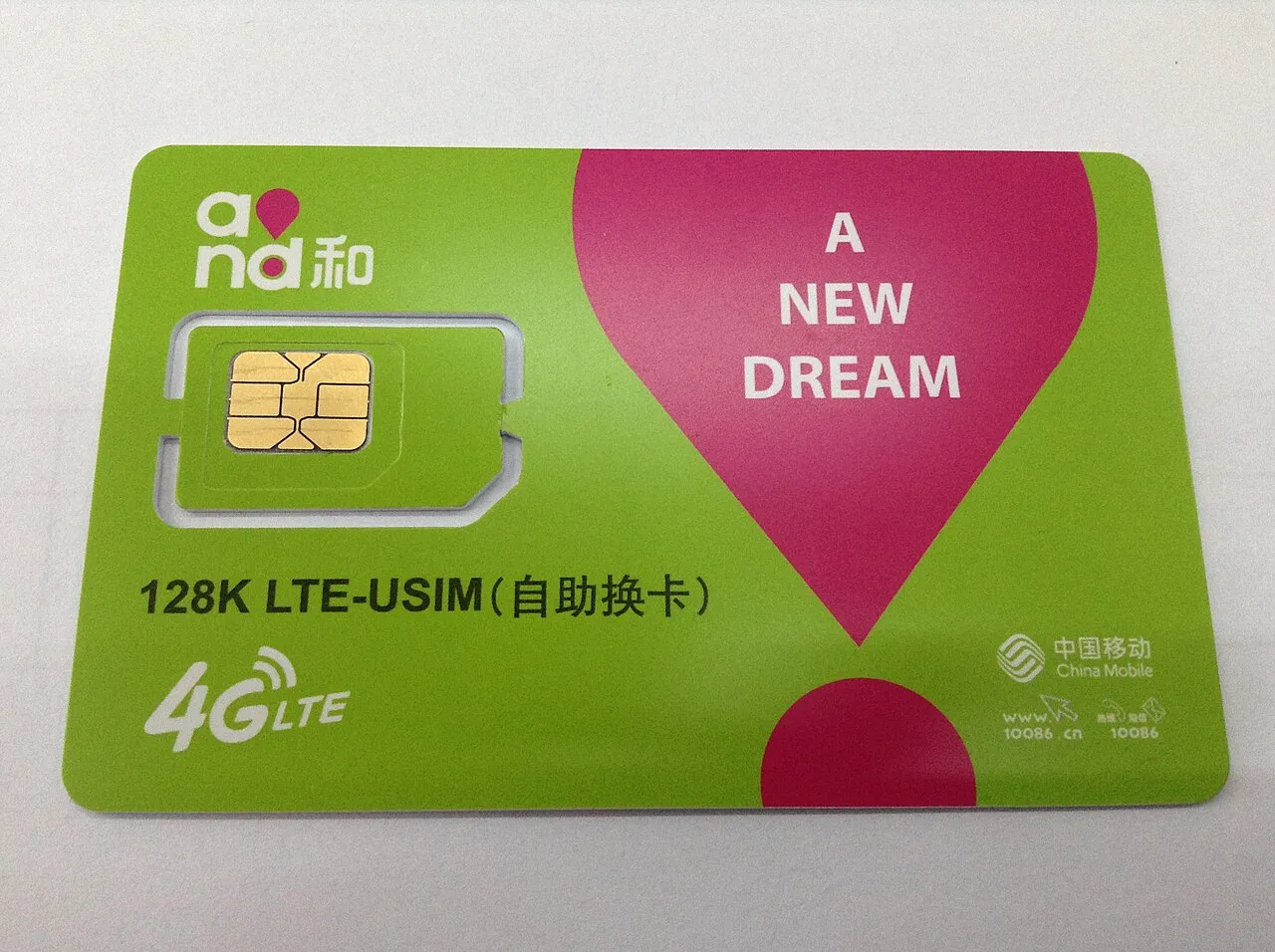
Option B: Local physical SIM (China Mobile / Unicom / Telecom)
Buy at a carrier store or an airport counter. Real-name registration is mandatory: you present your passport, and the SIM is tied to your identity. Airport counters are convenient but usually pricier and more crowded; city stores take longer but offer better value and clearer plan options.
- Best for: stays of a month or more; anyone who needs a +86 number; heavy data users; travelers who want the fastest local-network performance.
- Trade-offs: a shop visit, passport paperwork, Chinese-language plan menus, and the likelihood that the connection sits behind the domestic filter.
Option C: Home-carrier roaming
Turn on roaming and keep your existing number, apps, and habits. It is the lowest-effort option and usually keeps your traffic on your home network's routing.
- Best for: very short trips, business travelers on a corporate plan, anyone who values their existing number above cost.
- Trade-offs: often the most expensive per gigabyte; daily passes can add up fast; some carriers throttle heavily after a small high-speed allowance.
4. What the Best eSIM for China Travel Should Include
Core conclusion: judge a China eSIM on five attributes, not on price alone.
Use this as a checklist before you pay:
- Clear routing disclosure. The provider should state which network it uses in mainland China and whether the plan is a local-network product or an international-roaming product. If the documentation is vague, assume local routing and plan accordingly.
- A China + Hong Kong/Macau option. If your itinerary includes Hong Kong, Macau, or a mainland–HK border crossing, a regional plan avoids buying twice. Hong Kong-based plans that include mainland roaming data are a well-established workaround for connectivity, though they are not a substitute for a +86 number.
- Enough data with a realistic burn rate. Maps, translation, photo backup, and video calls consume far more than messaging. A traveler using navigation and cloud photos daily will burn through a small plan quickly; a light user checking messages and maps will not. Match the plan to your habits rather than to the cheapest tier.
- Hotspot/tethering permission. If you plan to work from a laptop or share data with a travel companion, confirm tethering is allowed. Some unlimited-style plans explicitly prohibit it or throttle it.
- eSIM reinstallation and top-up support. eSIM profiles generally cannot be transferred to a new device once installed, and deleting a profile may be irreversible. Confirm that top-ups are possible without reinstalling, and keep the QR code and activation details in a saved note.
Device check before anything else: your phone must be carrier-unlocked and eSIM-capable. iPhones from the XS generation onward support eSIM in most markets, but mainland-China-market iPhones have historically shipped without eSIM hardware, and many Chinese-market Android models behave similarly. If you bought your phone in China, verify support with the manufacturer before assuming an eSIM will install.
A note on 2026 conditions: mainland carriers have been expanding phone eSIM support gradually after years of limiting it largely to wearables and tablets. Availability is still narrower and more paperwork-heavy than in North America, Europe, or Hong Kong, and it varies by city and by handset model. If your plan depends on getting a local eSIM rather than a travel eSIM, confirm current policy with the carrier directly rather than relying on last year's blog posts.
5. When a Physical Local SIM Is Still the Better Buy
Core conclusion: for longer stays and number-dependent workflows, the extra hour at a carrier store pays for itself.
A local SIM makes sense when at least one of these applies:
- You need a +86 number. Essential for opening a bank account, registering with some domestic platforms, receiving verification codes from Chinese services, and handling local deliveries or housing paperwork.
- You are staying more than about a month. Local prepaid plans are structured around monthly cycles and are usually the cheapest way to get large data buckets.
- You need the most consistent local performance. Local subscribers generally get priority on their own networks, and coverage in remote areas — western Sichuan, rural Yunnan, parts of Gansu and Xinjiang — is best judged by the domestic carriers' own maps. China Mobile is generally described as having the widest rural coverage; Unicom and Telecom are strong in cities and offer competitive data pricing.
- You want a local number for restaurant reservations and taxi drivers to call back. Small thing, occasionally decisive.
How to do it efficiently: bring your passport, go to an official carrier store (not a reseller kiosk) in a city rather than at the airport, ask for a tourist or prepaid plan with a clear monthly data allowance, and have the staff confirm the plan's cost, validity period, and cancellation terms in writing or in the carrier's app. Ask explicitly whether the SIM supports hotspot tethering.
Boundary condition: a local SIM alone is a poor choice if you cannot function without Google services and have no fallback. Many experienced travelers run both — a local SIM for the number and a travel eSIM for routing — using dual-SIM standby.
6. Setup Playbook: Before You Fly, On Arrival, During the Trip
Core conclusion: sequence matters more than the product you choose.
Before departure (one to two weeks out)
- Check your phone is carrier-unlocked and eSIM-capable; confirm with your home carrier if unsure.
- Buy the eSIM and install the profile over reliable home Wi-Fi — not at the airport.
- Label the line clearly (for example "China data") so you do not confuse it with your home line.
- Leave the eSIM switched off or with data roaming disabled until you land.
- Download offline maps and translation packs, and set up WeChat and Alipay with your cards in advance, since both require verification steps you do not want to do on arrival.
- Screenshot your eSIM QR code, activation instructions, and provider support contact.
On arrival
- Turn off your home line's data roaming; enable the travel eSIM as the data line.
- Enable data roaming for the eSIM line — this is required for most travel eSIMs and is not a mistake.
- Wait a few minutes, then toggle airplane mode to force a fresh network attach.
- Test a data-only connection and a messaging app before leaving the airport.
During the trip
- Keep your home SIM active but data-disabled if you need bank or app codes by SMS.
- Watch your data the first two days to calibrate your real burn rate, then decide whether to top up.
- If speeds drop in crowded areas, switch manually between available networks rather than assuming the plan has failed.
7. Key Comparison: Which Option Fits Which Traveler
| Travel eSIM | Local physical SIM | Home-carrier roaming | |
|---|---|---|---|
| Setup effort | Low — install before flying | Medium–high — store visit, passport registration | Very low — toggle a setting |
| Chinese phone number | No | Yes (+86) | No (your home number) |
| Typical cost pattern | Moderate; short plans often under US$20, longer high-data plans higher | Usually lowest per gigabyte for stays over a month | Usually highest; daily passes add up |
| Access to Google, WhatsApp, Instagram | Often yes, if the plan routes internationally — verify per provider | Usually no | Often yes |
| Local network priority | Can be deprioritized at peak times | Full local priority | Varies by roaming agreement |
| Best trip length | 3 days – 3 weeks | 1 month+ | 1–5 days |
| Main risk | Unclear routing; no SMS capability | Paperwork, language barrier, filtered access | Bill shock; throttling |
Recommended combinations:
- Short leisure trip, Google-dependent: travel eSIM with international routing + home SIM kept active for SMS.
- Two-week multi-city trip: travel eSIM, plus a small local top-up SIM only if you find you need a +86 number.
- Semester or work stay: local SIM as primary, travel eSIM as a routing backup in the second slot.
- Hong Kong + mainland itinerary: one regional eSIM covering both, plus a local SIM if you need a mainland number.
8. FAQ
Q1. Does a travel eSIM bypass the Great Firewall in China?
Often, but not automatically. It depends on how the plan routes traffic. eSIMs built on international roaming agreements or a Hong Kong gateway typically let you reach Google, WhatsApp, and Instagram; eSIMs built on a mainland carrier's local network generally do not. Because providers describe this inconsistently, confirm the network partner before buying, and treat any single workaround as best-effort rather than guaranteed.
Q2. Can I get an eSIM with a Chinese phone number?
Rarely through travel eSIM marketplaces, which are almost always data-only. A +86 number normally requires in-person real-name registration with China Mobile, China Unicom, or China Telecom using your passport. Mainland carriers have been gradually expanding phone eSIM support, but availability in 2026 still varies by city and handset, so confirm directly with the carrier if a local eSIM specifically matters to you.
Q3. Will my eSIM work in Hong Kong and Macau too?
Only if you buy a regional plan that explicitly includes them. Mainland-only plans stop working at the border. If your itinerary crosses into Hong Kong or Macau, a combined "China + HK/Macau" plan is usually cheaper and simpler than buying two.
Q4. My eSIM shows signal but no internet after landing. What should I check?
In order: confirm the eSIM is selected as the active data line; confirm data roaming is enabled for that line; toggle airplane mode to force a re-attach; check whether an APN needs to be set manually using the provider's instructions; and confirm you have not exceeded the plan's high-speed allowance. Most "dead eSIM" cases resolve at step one or two.
9. Conclusion
For most foreign travelers heading to China in 2026, the cleanest setup is a data-only travel eSIM with international routing, installed before departure and paired with a home SIM kept active for verification codes. It removes the arrival-day queue, keeps the apps you actually rely on reachable, and gives you a functioning phone the moment you clear immigration.
Choose differently if your trip is long or number-dependent. Stays beyond roughly a month, apartment rentals, bank accounts, and any workflow that needs SMS from a Chinese platform all point toward a local physical SIM from one of the three major carriers, with the travel eSIM retained as a second line for routing.
Whichever you pick, the sequence is the same: verify your device supports eSIM, buy and install early, activate roaming only after landing, keep your home line available for codes, and carry offline maps as insurance. Get those five steps right and the choice of provider matters far less than most buying guides suggest. For the wider trip-planning context around visas, itineraries, and practical on-the-ground tips, HelloChina (hellochina.fans) publishes English-language guides aimed at international visitors.