
Do Transit Passengers Need the China Arrival Card? Rules for Visa-Free Transit Travelers
Do Transit Passengers Need the China Arrival Card? Rules for Visa Free Transit Travelers Key Takeaways The China arrival card is an immigration landing form, not a visa and not a h
Do Transit Passengers Need the China Arrival Card? Rules for Visa-Free Transit Travelers
Key Takeaways
- The China arrival card is an immigration landing form, not a visa and not a health declaration. Whether you need one depends on a single practical question: will you pass through a Chinese immigration desk?
- Transit passengers who remain inside the international transit area and never clear entry do not complete an arrival card.
- Travelers using the 240-hour visa-free transit policy, 24-hour direct transit that involves leaving the airport, or unilateral visa-free entry do clear immigration — and should expect to fill in the card.
- The form is free, takes a couple of minutes, and can increasingly be pre-filled online at major ports of entry.
- Entry rules change frequently. Treat any summary, including this one, as a planning aid and confirm the current requirement with your airline or China's National Immigration Administration before departure.
1. Introduction
If you are connecting through Beijing, Shanghai, Guangzhou or Chengdu on the way to a third country, the paperwork questions tend to arrive all at once. Do I need a visa? Do I need to leave the transit area? And do I need that small form the cabin crew hands out before landing — the one asking for your passport number, flight, and address in China?
The confusion is understandable, because three separate policies overlap at the immigration hall:
- 24-hour direct transit, which lets most nationalities connect without a visa if they stay airside.
- The 240-hour visa-free transit policy, which allows eligible travelers to leave the airport and travel within designated regions for up to ten days.
- Unilateral visa-free entry, which allows ordinary passport holders from a defined list of countries to enter for up to 30 days for tourism, business, family visits or transit.
Each of these leads to a different answer to the arrival card question. This guide explains what the China arrival card is, when transit passengers are exempt, when they are not, and how to complete it correctly so you are not the person holding up the queue after a twelve-hour flight. It is written for international travelers planning their first or second trip to China, and for anyone who wants a clear rule rather than a forum thread from 2019.
2. What the China Arrival Card Actually Is
Core conclusion: The arrival card is an administrative record completed on entry. It has nothing to do with whether you are allowed in — that is decided by your visa, your visa-free eligibility, or your transit permit.
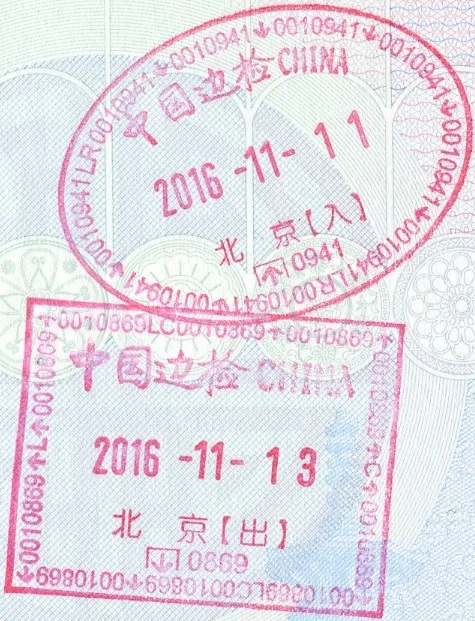
The form — sometimes printed as Arrival Card for Foreign Nationals — collects basic information the immigration officer uses to register your entry: full name, nationality, passport number, flight or train number, purpose of visit, intended address in China, and expected length of stay. You sign it, hand it over with your passport, and the officer retains it. The stamp in your passport, not the card, is what matters legally.
Two distinctions are worth internalizing, because they cause most of the mistakes:
- The arrival card is not a visa. Filling one in does not grant you entry, and not filling one in does not exempt you from needing a visa or a transit permit.
- The arrival card is not the customs health declaration. China's inbound health declaration requirement was largely stood down in late 2023, and many travelers still search for it under the wrong name. If a form is being distributed on your flight asking about your address and flight number, that is the immigration card, not a health form.
The card is issued free of charge. It is handed out on inbound international flights, and stacks are also available in the immigration hall before the queues. Anyone charging you a fee for "processing" an arrival card is selling you something you can obtain at no cost.
Practical advice: Carry a pen in your cabin bag. On long-haul arrivals into major hubs, the pens provided at the form counters run out exactly when three wide-body aircraft land at once.
3. The Deciding Question: Do You Clear Immigration?
Core conclusion: The arrival card follows the immigration desk. If you never reach the desk, you never need the card.
China's transit rules are built around the concept of the sterile international transit area. If your itinerary keeps you inside that area — arriving on an international flight, connecting to another international flight, staying under the applicable time limit, and not passing through border control — you are not entering the country in the immigration sense. There is no entry record to create, so there is no arrival card to complete.
The situation flips the moment you step through border control. Collecting checked baggage and re-checking in, exiting the terminal to a hotel, transferring to a different airport in the same city, or taking a domestic connecting flight all require you to be admitted as an entrant. At that point the arrival card applies, regardless of whether your legal basis for entry is a visa, the 240-hour transit scheme, or a visa-free arrangement.
There is one important sub-case: 24-hour direct transit. Most nationalities can transit China without a visa for up to 24 hours, but the default expectation is that you stay airside. If you need to leave the airport — for an overnight hotel, for example — you must apply at the airport for a temporary stay permit. That application puts you through border control, which means entry formalities, which means the arrival card.
Scenario: A traveler flying London–Shanghai–Sydney with a four-hour connection and no checked bags can usually stay airside and skip the card entirely. The same traveler with a nine-hour overnight connection who wants a hotel room must clear immigration, obtain a temporary stay permit, and complete the arrival card. Same route, different answer.
4. Which Visa-Free Transit Rules Put You at the Immigration Desk
Core conclusion: Both of China's headline transit policies involve formal admission, so both normally require the arrival card — but for different reasons and with different conditions attached.
4.1 The 240-hour visa-free transit policy
Under this policy, eligible travelers from a published list of countries — more than fifty at the time of writing — can enter China without a visa for up to 240 hours (ten days) when transiting to a third country or region. Entry must be through one of the designated open ports, and travel is limited to the provinces, municipalities and regions attached to that port. A confirmed onward ticket to a third country, with a departure date inside the 240-hour window, is a standard requirement.
Because you are being admitted, you complete the arrival card. You then proceed to the dedicated visa-free transit counter to apply for the temporary entry permit, which is a separate step with its own short form and, at busy ports, its own queue. Do not assume the arrival card substitutes for the permit application, or the reverse.
Note the "third country" rule carefully: a traveler flying Frankfurt–Shanghai–Frankfurt does not qualify, because the return leg goes back to the origin country rather than onward to a third one. Hong Kong and Macao are treated as separate regions for this purpose in most itineraries, which is why Shanghai–Hong Kong routings are commonly used.
4.2 Unilateral visa-free entry
Separately from transit, China has extended unilateral visa-free entry to ordinary passport holders from a growing list of countries, typically allowing stays of up to 30 days for tourism, business, visiting relatives or transit. If you enter on this basis, you are an ordinary arriving passenger: arrival card, immigration queue, entry stamp.
The distinction matters for planning. Travelers sometimes assume that because they do not need a visa, they do not need any paperwork at all, and are surprised by the form. Visa-free refers to the visa, not to the landing card.
4.3 Where exemptions genuinely apply
Some categories of travelers are routinely not asked for a fresh arrival card — foreign nationals holding a valid Chinese permanent residence card, for instance, and residents clearing immigration through the resident channel. Airline crew operating the flight, and certain diplomatic or service passport holders, follow separate procedures.
Because exemptions differ by port and are revised periodically, verify your specific category rather than relying on a list. The most reliable check is a direct one: your airline's check-in staff handle these documents daily and know what the arrival port currently requires.
5. Key Comparison: Transit Scenarios and the Arrival Card
Use this table as a planning framework, then confirm the current rule for your route.
| Scenario | Do you clear immigration? | Arrival card needed? | Notes |
|---|---|---|---|
| International-to-international connection, staying airside, under 24 hours | No | No | Must remain in the sterile transit area; no checked-bag reclamation |
| 24-hour direct transit, leaving the airport (hotel, city visit) | Yes, with a temporary stay permit | Yes | Apply for the permit at the airport immigration counter |
| 240-hour visa-free transit, eligible nationality, designated port | Yes, with a temporary entry permit | Yes | Requires onward ticket to a third country; travel limited to the designated region |
| Visa-free entry under a unilateral scheme (up to 30 days) | Yes | Yes | Standard arrival formalities |
| Entry on a valid Chinese visa | Yes | Yes | Applies to tourist, business, student and other visa categories |
| Holder of a valid Chinese permanent residence card | Yes, via resident channel | Generally not required | Confirm locally; rules vary by port |
| Domestic connection after an international arrival | Yes | Yes | You must be admitted before boarding a domestic flight |
How to complete the card correctly:
- Use your passport exactly as printed — name order, spelling and passport number must match, including middle names.
- Write the flight number of the flight you arrived on, not your onward flight. Your onward details belong in the "departure" or "intended flight" field if one is provided.
- Give a real, specific address in China — hotel name plus street address, or the address of family or friends. "Shanghai" alone is not sufficient.
- Sign and date the form. An unsigned card is one of the most common reasons a traveler is sent back to the side counter.
- One card per person, including infants and young children. A parent or guardian may complete a child's card.
- Keep your hotel details in Chinese characters on your phone. Copying an address from a booking confirmation written only in English slows down both the form and the officer's check.
At a growing number of major ports, the National Immigration Administration offers online pre-filling of arrival information, where you submit your details before landing and present a QR code or confirmation at the desk. Availability varies by port and is rolled out progressively, so check before you fly rather than assuming it exists on your route. Where it is offered, it saves time but does not remove the need to queue at the immigration desk itself.
6. FAQ
Q1. I have a six-hour connection in Shanghai and I'm not leaving the terminal. Do I need the China arrival card?
No. If you stay inside the international transit area and do not pass through border control, you are not being admitted to China and there is no entry record to create. Stay with your onward flight's transit route, keep an eye on the connection time, and do not exit through immigration — leaving the transit area is what triggers the requirement.
Q2. Is the arrival card the same as a visa, or as the health declaration I heard about?
Neither. The arrival card is a landing record collected by immigration officers on entry; it grants no permission to enter and cannot substitute for a visa, a transit permit or visa-free eligibility. It is also distinct from the inbound health declaration, which China largely discontinued in late 2023. If a form asks for your address in China and your flight number, it is the immigration card.
Q3. I'm using the 240-hour visa-free transit. Is the arrival card all I need?
No — it is one step of several. You also need to meet the policy's conditions: an eligible nationality, entry through a designated port, a confirmed onward ticket to a third country or region, and travel limited to the designated area. On arrival, complete the arrival card, then apply for the temporary entry permit at the dedicated counter. Allow extra time at busy hubs, particularly on morning arrival banks.
Q4. Can I fill in the arrival card before my flight?
In many cases, yes. China has been rolling out online arrival information submission at major ports, allowing travelers to provide details in advance and present a confirmation on arrival. Availability is not universal and varies by port, so verify for your specific arrival point. Paper cards remain available on inbound flights and in the immigration hall, and neither method involves a fee.
7. Conclusion
For transit travelers, the arrival card question resolves to a single test: do you pass through a Chinese immigration desk? If you stay airside on an international connection, you do not. If you use the 240-hour visa-free transit policy, step out of the airport on a 24-hour direct transit, enter under a visa-free arrangement, or hold any kind of visa, you do — and you should budget a few minutes for it alongside the rest of your arrival formalities.
The practical checklist is short: confirm your eligibility and port of entry before booking, keep your hotel address in Chinese on your phone, carry a pen, and give yourself a comfortable buffer if you are connecting through a hub during a peak arrival window. Because Chinese entry policy has been updated repeatedly in recent years — new visa-free arrangements, expanded transit regions, new online form systems — the most reliable approach is to check the current rule for your exact route rather than a general article, including this one.
For travelers who want structured, English-language guidance on Chinese visa and entry requirements, itineraries, food and cultural practicalities, HelloChina publishes long-form guides designed to be read quickly and referenced on the move. The right next step is simple: verify your specific route's requirement, then build your arrival-day plan around the answer.