
Hotel Deposits in China: How Pre-Authorization Works with Foreign Cards
Hotel Deposits in China: How Pre Authorization Works with Foreign Cards Key Takeaways Chinese hotels almost always collect a refundable security deposit at check in, separate from
Hotel Deposits in China: How Pre-Authorization Works with Foreign Cards
Key Takeaways
- Chinese hotels almost always collect a refundable security deposit at check-in, separate from the room rate. It covers incidentals, minibar, damage, and occasionally unpaid consumption charges.
- A pre-authorization is a hold on your credit limit, not a completed payment. But in China, many properties do not run a true hold — they charge the deposit and refund it at checkout, which means the money actually leaves your account for a while.
- Foreign cards (Visa, Mastercard, Amex, JCB) are usually accepted at international-brand hotels and upscale city properties. They are unreliable at budget chains, guesthouses, homestays, and rural inns, where cash or a Chinese e-wallet is often the only option.
- Refund timing is the biggest source of frustration: cash is returned instantly at checkout, e-wallet refunds land in hours to a few days, and foreign card refunds or released holds can take anywhere from a few days to roughly a month depending on your issuing bank.
- Carry RMB 500–1,000 in cash as a backup, confirm the deposit method at check-in before handing over a card, and keep the deposit receipt until the money is back.
1. Introduction
You have cleared immigration, taken a taxi from the airport, and arrived at the front desk after a long flight. The receptionist asks for your passport and then says a number that sounds much higher than your room rate. Is it a charge? A hold? Will it come back? And will your foreign credit card even work in the terminal?
This is one of the most common practical frictions for international travelers in China, and it is poorly explained by most booking confirmations. The China hotel deposit and foreign card question sits at the intersection of three systems that do not behave the same way: Chinese domestic payment infrastructure, hotel front-desk procedures, and the pre-authorization rules of banks outside China.
This guide explains what a Chinese hotel deposit actually is, when a genuine pre-authorization happens versus a charge-and-refund, where foreign cards are accepted and where they are not, and how to get your money back without surprises. It is written for independent travelers, business visitors, and long-stay guests who want a clear process rather than vague reassurance.
2. What a Chinese Hotel Deposit Actually Is
Core conclusion: a hotel deposit in China is a refundable security buffer, not a fee. It is normally settled or returned when you check out, provided nothing has been consumed or damaged.
Travelers often confuse two different things that both get called a "deposit":
| Type | When it is paid | What it covers | Refundable? |
|---|---|---|---|
| Booking deposit or prepayment | At reservation, through the hotel or an OTA | Securing the room, or paying in advance for a non-refundable rate | Only per the cancellation policy |
| Incidentals deposit ("yajin") | At check-in, at the front desk | Minibar, room service, phone charges, damage, smoking fees, late checkout | Yes, usually fully refundable at checkout |
This article focuses on the second one — the check-in deposit — because that is where foreign cards cause the most confusion.
The amount is set by the property, not by law. As a planning estimate rather than a fixed rule:
- Economy domestic chains and small guesthouses commonly ask for RMB 100–300 per room.
- Mid-range business hotels commonly ask for RMB 300–600.
- Upscale and international-brand hotels commonly ask for RMB 500–2,000, or roughly one night's room rate plus an incidentals buffer.
- Apartment hotels and long-stay properties may ask for a fixed sum or a month's rent equivalent.
Peak-season pricing, minibar-stocked rooms, and group bookings can push these numbers higher. The deposit is usually per room, not per person.
Practical advice: you will be handed a deposit slip (a small printed receipt). Keep it. At checkout, the front desk uses it to net off any consumption and release the balance. If you lose it, most hotels will still refund you against your passport and room number, but the process takes longer.
3. Why Foreign Cards Are Hit-or-Miss at Chinese Front Desks
Core conclusion: card acceptance in China is broad for UnionPay and narrow for foreign-issued cards, especially outside major cities and international hotel brands.
China's domestic payment system is built around UnionPay, WeChat Pay, and Alipay. A hotel can be perfectly legitimate, busy, and well-run while having no practical way to process a Visa or Mastercard at the front desk. Common reasons:
- Terminal capability. Accepting foreign cards requires the merchant to have that function enabled on its POS terminal. Many smaller properties never activate it because foreign guests are a small share of their business.
- Merchant category and settlement. Some budget chains and individual inns handle foreign card settlement poorly or avoid it due to chargeback risk.
- Foreign-guest licensing. Certain hotels are not registered to receive foreign guests at all. This matters before you even reach the deposit question — always confirm the property accepts foreign passports when booking.
- Staff familiarity. Even where the terminal supports foreign cards, front-desk staff may be unsure how to run a pre-authorization, so they default to cash or an e-wallet.
Where foreign cards generally work:
- International-brand hotels (Marriott, Hilton, Hyatt, IHG, Accor and similar) in major cities and gateway airports.
- Upscale Chinese-owned hotels in Beijing, Shanghai, Guangzhou, Shenzhen, Hangzhou, Chengdu, and other business hubs.
- Properties that regularly host international tour groups or corporate travelers.
Where they frequently fail:
- Economy chains, small independent hotels, and family-run guesthouses.
- Rural inns and scenic-area homestays.
- Very small boutique properties without international booking channels.
Practical advice: treat card acceptance as a per-property question, not a national rule. Message the hotel before arrival and ask two things directly: "Do you accept foreign Visa/Mastercard for the deposit?" and "Do you require a cash deposit?" A one-line answer saves an airport-taxi-worth of hassle. If you book through an OTA, use the "accepts foreign guests" filter and read recent reviews from international travelers.
4. Pre-Authorization vs. Charge-and-Refund: Three Patterns You Will Meet
Core conclusion: do not assume a "deposit" in China works like the pre-authorization hold you may be used to in Europe or North America. Verify which of three patterns the hotel uses.
Pattern A — True pre-authorization (hold). The hotel places a hold on your credit line. No money is deducted; your available credit temporarily drops. At checkout, the hotel either captures the actual room charges and voids the difference, or voids the hold entirely if the room was prepaid. This is the cleanest outcome and is most common at international-brand properties.
Pattern B — Charge now, refund later. The hotel charges the deposit to your card as a real transaction, then issues a refund at checkout. This is very common in China. It looks identical to a charge on your statement, and the refund is a separate transaction that has to travel back through the card networks.
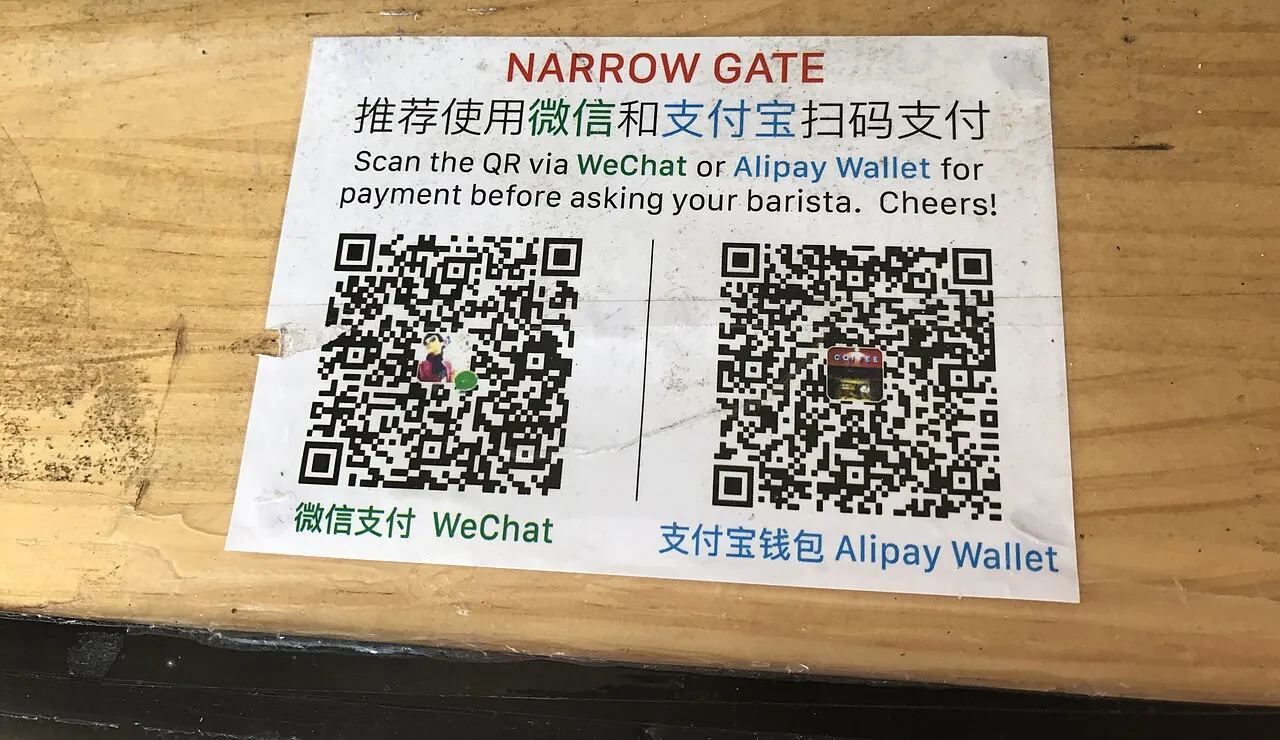
Pattern C — Cash or e-wallet deposit. The hotel does not take a card for the deposit at all. You hand over RMB cash, or pay via WeChat Pay or Alipay. Cash comes back immediately at checkout; e-wallet refunds typically land within hours to a few days.
How to tell which one you are in:
- Ask at check-in: "Is this a pre-authorization hold, or are you charging it now?"
- Watch for a signature slip versus a printed deposit receipt. A charge usually produces a transaction slip; a hold often produces only an authorization receipt.
- Check your banking app the next morning. A pending authorization shows as "pending" or "authorization"; a charge shows as "posted."
Refund and release timing, in typical ranges:
| Deposit method | When funds return | Typical timing |
|---|---|---|
| RMB cash | At checkout, at the desk | Immediate |
| WeChat Pay / Alipay | Automatically after checkout | Hours to about 3 days |
| UnionPay credit card | After the hotel processes the reversal | About 1–7 business days |
| Foreign credit card (charge-and-refund) | After the hotel refunds and your bank posts it | Commonly 3–15 business days; occasionally up to 30 |
| Foreign credit card (true pre-auth) | When the hold expires or is voided | Issuer-dependent, often 7–14 days, sometimes longer |
Two cautions worth knowing:
- Debit cards are a poor choice for deposits. With a debit card, a hold or an unrefunded charge removes real cash from your account rather than reducing available credit. Use a credit card where possible.
- Currency conversion can cost you a little. If your card is denominated in USD, EUR, or another currency, the deposit is charged in RMB and converted. The refund is converted back at a later rate, and the spread between the two can shave a small percentage off the returned amount. This is normal, not a hotel error.
5. Comparison and a Front-Desk Playbook
Core conclusion: the safest approach is to plan for the least convenient outcome — cash — and treat card acceptance as a bonus.
| Hotel tier | Typical deposit | Common methods | Foreign card for deposit |
|---|---|---|---|
| Economy domestic chain | RMB 100–300 | Cash, WeChat Pay, Alipay, UnionPay | Unreliable; often cash or e-wallet only |
| Mid-range business hotel | RMB 300–600 | Cash, e-wallet, UnionPay, sometimes Visa/Mastercard | Mixed; ask in advance |
| Upscale / international brand | RMB 500–2,000 or one night's rate | Credit card pre-auth, cash, e-wallet | Usually accepted |
| Guesthouse, homestay, rural inn | RMB 100–500, sometimes none | Cash, WeChat Pay, Alipay | Rarely accepted |
| Apartment hotel / long stay | Fixed sum or one month's rent | Bank transfer, card, cash | Varies widely |
A step-by-step routine that avoids most problems:
- Before booking: confirm the property accepts foreign guests and ask whether a cash deposit is required.
- Before arrival: carry RMB 500–1,000 in cash for deposits, transport, and small vendors. Keep some in small notes.
- At check-in: ask three questions — how much is the deposit, is it a hold or a charge, and when will it be released.
- If paying by card: use a credit card, use the same card for the room and the deposit, and keep the printed authorization or deposit slip.
- During the stay: if you use the minibar or room service, expect it to be netted against the deposit at checkout.
- At checkout: ask for a final folio showing the deposit, any deductions, and the refund amount. Photograph it.
- After departure: check your statement at the one-week mark. If nothing appears by day 15, escalate.
Useful phrasing at the desk: "Is the deposit a pre-authorization or a charge?" / "When will the refund be released?" / "May I have a receipt for the deposit?" / "Can the refund go back to the same card?"
6. FAQ
Q1. Will my Visa or Mastercard work for a hotel deposit in China?
Often, but not reliably. International-brand hotels and upscale city properties usually accept foreign cards for deposits, sometimes as a true pre-authorization. Budget chains, guesthouses, homestays, and rural inns frequently cannot process foreign cards at all and will ask for RMB cash, WeChat Pay, or Alipay instead. Confirm with the specific property before arrival rather than assuming.
Q2. How long does a hotel pre-authorization take to be released in China?
It depends on whether the hotel ran a genuine hold or a charge-and-refund. A true pre-authorization is usually released within about 7–14 days after checkout, though some issuing banks take longer. A charge-and-refund typically posts back in 3–15 business days, occasionally up to 30. Cash is immediate; e-wallet refunds usually land within hours to a few days.
Q3. How much cash should I carry for hotel deposits?
For most mid-range hotels, RMB 300–600 per room is enough; for budget chains, RMB 100–300; for upscale properties that only take cash deposits, RMB 1,000–2,000 may be needed. Carrying RMB 500–1,000 as a general buffer covers the typical deposit plus small daily expenses, and you can draw more from an ATM if a specific hotel asks for a larger amount.
Q4. My deposit still has not come back. What should I do?
Work through the chain in order and keep everything in writing. First, contact the hotel with your deposit slip or folio and ask for the refund reference number. Second, if you booked through an OTA, open a case with them and attach the documents. Third, contact your card issuer to confirm whether a refund or authorization release was received. If the charge was never reversed, ask your issuer about a dispute — but note that dispute windows are time-limited, so do not wait months before acting.
7. Conclusion
The short answer to how a China hotel deposit works with a foreign card is this: the deposit is real, refundable, and usually modest, but the mechanics vary by property and are not standardized the way many travelers expect. International-brand hotels generally handle it cleanly, often with a genuine pre-authorization. Domestic chains, guesthouses, and rural properties may not accept foreign cards for the deposit at all, and many Chinese hotels process deposits as a charge-and-refund rather than a hold.
The practical strategy is straightforward: ask before you book, carry a cash buffer, use a credit card rather than a debit card when a card is accepted, and keep every slip until the money is visibly back. Treat refund timing as a two-to-four-week process rather than an instant reversal, and the experience becomes predictable instead of stressful.
For travelers who want this kind of ground-level detail in advance — visas and entry rules, payments, transport, and everyday logistics — HelloChina (hellochina.fans) publishes English-first guides written for international readers planning their first or fifth trip to China.