
Does Hong Kong Count as a Third Country for China 240-Hour Visa-Free Transit?
Does Hong Kong Count as a Third Country for China 240 Hour Visa Free Transit? Key Takeaways Yes, in practice. Hong Kong is not a sovereign country, but China's immigration authorit
Does Hong Kong Count as a Third Country for China 240-Hour Visa-Free Transit?
Key Takeaways
- Yes, in practice. Hong Kong is not a sovereign country, but China's immigration authorities treat it as a separate "region" for transit purposes. A route such as New York → Shanghai → Hong Kong satisfies the "third country or region" requirement.
- The test is about your route, not your nationality. You must arrive in mainland China from one place and depart to a different place, with both legs outside the mainland.
- A round trip does not qualify. Hong Kong → Shenzhen → Hong Kong, or the United States → China → the United States, fails the transit test even if the middle stop is short.
- Hong Kong's immigration is separate. Time spent in Hong Kong does not count against your 240 hours, and entering Hong Kong is not the same as entering mainland China.
- Verify before booking. The eligible-country list, port list, and permitted stay areas are updated periodically. Confirm your specific route with China's National Immigration Administration, your airline, or the port you intend to use.
1. Introduction
The 240-hour visa-free transit policy is one of the most useful — and most misunderstood — entry routes into mainland China. Announced in an expanded form in December 2024, it allows eligible travelers from a designated list of countries to enter mainland China without a visa for up to ten days, provided they are genuinely in transit between two other places.
The confusion almost always starts at the same point: does Hong Kong count as a third country?
It is a fair question. Hong Kong is a Special Administrative Region of China, not a foreign country. On a map, on a passport stamp, and in everyday conversation, the relationship is ambiguous. Travelers reasonably wonder whether a route that starts or ends in Hong Kong is treated as a domestic movement — and therefore disqualified — or as an international one.
The short answer is that Hong Kong works, but only if you structure the itinerary correctly. This guide explains how the rule is actually written, why Hong Kong qualifies, which routes pass and fail, and where the boundary conditions sit. It is written for independent travelers, business visitors, and anyone planning a multi-stop Asia trip who wants a clear answer before paying for flights.
2. The Short Answer: How Hong Kong Fits the "Third Country or Region" Test
Core conclusion: Hong Kong counts as a qualifying "region" for the 240-hour visa-free transit, functioning as the third place in the transit formula.
The policy is not written as "third country." The official phrasing refers to transiting from one country or region to another country or region via mainland China. That wording matters: it deliberately accommodates Hong Kong, Macau, and Taiwan, which are part of China but operate separate immigration jurisdictions.
In practical terms, the rule reduces to three elements:
| Element | What it means | Examples |
|---|---|---|
| Origin | The place you arrive in mainland Chinafrom | Hong Kong, Thailand, the United States, Macau |
| Transit point | Mainland China, where you use the 240 hours | Shanghai, Beijing, Shenzhen, Guangzhou, Chengdu |
| Destination | The place you depart to | Hong Kong, Singapore, Germany, Macau |
The two conditions that decide almost every case:
- Origin ≠ Destination. The place you come from and the place you leave to must be different.
- Neither Origin nor Destination is mainland China. Both must sit outside the mainland immigration area.
Hong Kong satisfies both. If you fly from London to Hong Kong, cross into Shenzhen, and later fly from Shanghai to Tokyo, your route is Hong Kong → mainland China → Japan. That is a textbook qualifying transit, and Hong Kong is doing the same job that Thailand or Japan would do in the same itinerary.
Practical advice: Do not ask "is Hong Kong a third country?" Ask "is my route A → mainland China → B, where A and B are different places outside the mainland?" That reframing resolves the question in most cases without needing to interpret the policy language at all.
3. Why Hong Kong Qualifies: Sovereignty Versus Immigration Boundaries
Core conclusion: The policy operates on immigration boundaries, not on diplomatic definitions of statehood.
China maintains separate immigration regimes for the mainland, Hong Kong, Macau, and Taiwan. Crossing between them involves immigration checks, separate entry permissions, and separate visa or permit systems. For a traveler holding a foreign passport, moving from Hong Kong into mainland China is an international-style border crossing in everything but name — you pass through immigration control, you receive an entry stamp or record, and you are subject to a different set of entry rules.
Because the transit policy is an immigration instrument, it follows those boundaries. Hong Kong is administratively part of China but sits outside the mainland's immigration area, which is precisely what makes it usable as an origin or destination leg.
This has three consequences that travelers frequently get wrong:
Hong Kong and mainland China are counted separately. A trip that begins in Hong Kong, enters the mainland, and returns to Hong Kong is a round trip across a single border — not a transit through China to somewhere else. It fails.
Time in Hong Kong is separate. Your 240 hours begin when you clear mainland immigration, not when you land in Hong Kong. A week in Hong Kong followed by a week in Guangdong does not consume your transit allowance.
Hong Kong's own visa rules are independent. Many nationalities can enter Hong Kong visa-free for 90 days; some for 30 days; a smaller number require a visa. That is a completely separate question from mainland entry. Eligibility for the mainland transit policy depends on your passport's presence on the eligible-country list — not on how easily you can enter Hong Kong.
Practical advice: Treat Hong Kong and the mainland as two distinct jurisdictions when you plan. Build your documents around the mainland crossing, and confirm Hong Kong entry requirements separately, even if you assume you already know them.
4. Which Hong Kong Itineraries Work — and Which Don't
Core conclusion: Direction matters more than distance. A one-way flow through the mainland qualifies; a there-and-back pattern does not.
The table below covers the scenarios travelers most often ask about.
| Route | Qualifies? | Why |
|---|---|---|
| New York → Shanghai → Hong Kong | Yes | Hong Kong is a separate region; route is A → mainland → B |
| London → Hong Kong → Shenzhen → Bangkok | Yes | Enters mainland from Hong Kong, exits to Thailand |
| Sydney → Guangzhou → Macau | Yes | Macau is a separate region, distinct from the mainland |
| Paris → Shanghai → Hong Kong → Paris | Yes | The mainland leg is a genuine transit; the return to Paris is a separate journey |
| Hong Kong → Shenzhen → Hong Kong | No | Same origin and destination — a round trip, not a transit |
| Los Angeles → Beijing → Los Angeles | No | Returns to the same country |
| Singapore → Shanghai → Singapore (different flights, same country) | No | Country of origin and destination must differ |
| Hong Kong → Shenzhen → Macau | Likely, but verify | Two separate regions, but confirm with the port authority |
| US → Hong Kong → mainland China → Hong Kong → US | No | The mainland segment returns to Hong Kong, so it is not a transit through China |
Two itinerary patterns in that table deserve emphasis.
The "open-jaw through China" pattern is the strongest. Fly into one Chinese city from Hong Kong, travel overland or by domestic flight inside the permitted stay area, and fly out of a different Chinese city to a third destination. This is what the policy is designed for, and it is the least likely to attract questions at the border.
The "Hong Kong day trip" pattern is the most common mistake. Many travelers based in Hong Kong assume that a short hop into Shenzhen or a ferry to Zhuhai counts as transit because they are crossing an international-style border. It does not. You entered from Hong Kong and you are returning to Hong Kong. There is no onward leg to a different place.
Practical advice: Before booking, write your route as a single line: Origin → mainland entry city → mainland exit city → Destination. If the first and last items are the same, redesign the itinerary — for example, exit to Macau, Bangkok, or Seoul instead of returning to Hong Kong.
5. Key Considerations, Boundary Conditions, and a Pre-Travel Checklist
Core conclusion: Eligibility is necessary but not sufficient. Port choice, documentation, and stay area all affect whether the policy actually works for your trip.
Boundary conditions to check
The eligible-country list. The 240-hour transit applies to passport holders from a designated list of countries — in the region of 54 as of the December 2024 expansion. Nationality determines eligibility; the Hong Kong question is separate.
The port list. Not every port of entry participates. The policy operates through a defined set of ports — roughly 60 at the time of the expansion — spanning air, sea, rail, and road crossings. Several land crossings on the Hong Kong–Guangdong border are included, but you should confirm the specific crossing you plan to use.
The permitted stay area. The policy allows movement within designated provinces and municipalities rather than unrestricted travel across the whole country. The December 2024 expansion widened this considerably, but if your itinerary includes a region outside the permitted area, you may need a standard visa.
The onward ticket. You need a confirmed reservation departing to a third country or region within your 240-hour window. A screenshot of a search result is not a reservation. Border officers can and do ask for a booking reference.
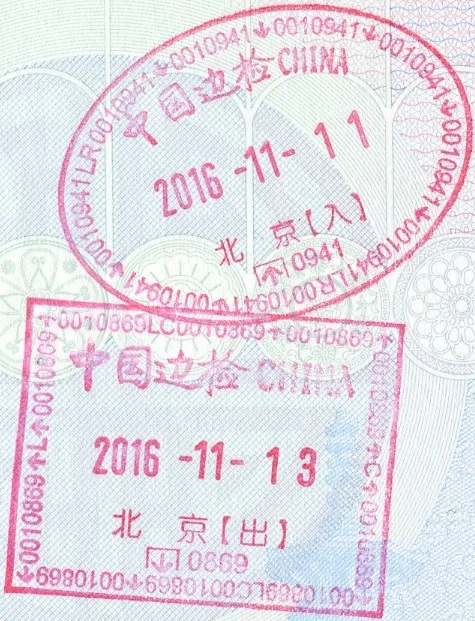
The 240-hour clock. Your window is calculated from your entry into the mainland, and the exact valid-until date is recorded at the port. Check the stamp or entry record rather than assuming a precise number of days.
Pre-travel checklist
- [ ] Confirm your passport is on the current eligible-country list.
- [ ] Write your route as Origin → mainland entry → mainland exit → Destination and confirm Origin ≠ Destination.
- [ ] Confirm your chosen entry and exit ports both participate in the policy.
- [ ] Confirm every city on your itinerary falls inside the permitted stay area.
- [ ] Hold a confirmed onward booking to a third country or region within 240 hours.
- [ ] Check Hong Kong's own entry requirements separately for your nationality.
- [ ] Carry proof of accommodation for your first nights in the mainland.
- [ ] Re-verify with the National Immigration Administration or your airline within a week of departure — port lists and country lists are updated.
Caution on interpretation: Online forums contain confident claims in both directions, often based on policies that have since been revised. Because the 240-hour framework replaced and expanded earlier 72-hour and 144-hour schemes, older threads may describe rules that no longer apply. Use official sources as the deciding reference.
6. FAQ
Q1. Does Hong Kong count as a third country for the 240-hour visa-free transit?
Yes, in effect. Hong Kong is not a foreign country, but China's immigration authorities treat it as a separate region for transit purposes. A route that arrives in mainland China from Hong Kong and departs to a different country or region — or that arrives from a foreign country and departs to Hong Kong — satisfies the transit requirement. What Hong Kong cannot do is serve as both your origin and your destination.
Q2. Can I fly into Hong Kong, visit Shenzhen for a few days, and fly home from Hong Kong?
No, not under this policy. That is a round trip between Hong Kong and the mainland, not a transit through China to a third destination. To qualify, your return flight should leave from a different place — for example, fly Hong Kong → Shenzhen, travel within the mainland, then depart from Shanghai to Tokyo, Seoul, or another third country or region.
Q3. Do I need a visa for Hong Kong as well?
Possibly, but it is a separate question. Hong Kong sets its own visa policy, and most nationalities can enter visa-free for 90 days, some for 30 days, with a smaller group requiring a visa in advance. Eligibility for the mainland's 240-hour transit depends only on your passport being on the mainland's eligible-country list. Check both requirements independently.
Q4. Do I need to show an onward ticket when I arrive from Hong Kong?
Yes. Expect to show a confirmed booking departing mainland China to a third country or region within your 240-hour window. Port officers may also ask about your accommodation and your intended route inside the permitted stay area. Have the details accessible offline in case of connectivity problems at the border.
7. Conclusion
Hong Kong is not a third country in any legal or diplomatic sense — it is a Special Administrative Region of China. But for the purposes of China's 240-hour visa-free transit, that distinction does not decide the outcome. The policy is built on immigration boundaries, and Hong Kong sits on the other side of one. It can serve as your point of origin or your point of departure, exactly as Thailand or Germany would.
The single judgment that matters is this: your route must pass through mainland China, not loop back to where it started. If your itinerary reads Hong Kong → mainland → Hong Kong, you need a visa. If it reads Hong Kong → mainland → somewhere else, or somewhere else → mainland → Hong Kong, the transit framework applies — subject to your nationality, your ports, and your stay area.
Because those three variables are revised periodically, treat any article — including this one — as a planning guide rather than a final authority. Confirm the current country list, port list, and permitted stay areas with China's National Immigration Administration or your airline before you commit to non-refundable flights. A fifteen-minute check on the official sources is the cheapest insurance in the whole itinerary.
For more practical guidance on China entry rules, itineraries, and on-the-ground travel planning, HelloChina publishes structured English-language guides designed to be read quickly and checked against official sources.
Related reading
A note on names: "240 hours" vs "the 10-day rule"
This policy goes by two names. Official sources say 240-hour visa-free transit; forums, travel conversations and many searches say "the 10-day visa-free" — they are the same thing, and the Hong Kong rule above does not change with the name. If you prefer the "10-day" framing, the dedicated 10-day guide on this site covers eligibility, the midnight clock and worked itineraries.