
Exchanging Money in China: Airports, Banks and ATMs Compared
Exchanging Money in China: Airports, Banks and ATMs Compared Key Takeaways Airport counters are the fastest option, but usually the most expensive. Exchange a small "landing fund"
Exchanging Money in China: Airports, Banks and ATMs Compared
Key Takeaways
- Airport counters are the fastest option, but usually the most expensive. Exchange a small "landing fund" there and handle larger amounts later.
- Bank branches, especially Bank of China, generally offer the best rates for larger sums — but expect weekday hours, a passport check, and a queue ticket.
- ATMs are the most reliable middle ground for everyday cash: a near-market rate, a fixed withdrawal fee, and wide availability in cities.
- Carry 200–500 RMB in cash even if you plan to use Alipay or WeChat Pay. Cash is legal tender in China, and small vendors, temples, and rural areas still depend on it.
- Avoid street money changers entirely. They are illegal, and counterfeit notes are a real risk.
1. Introduction
You land at Shanghai Pudong or Beijing Capital at 9 p.m. after a long flight. You need a local SIM card, a bottle of water, and maybe a taxi. Your debit card should work, but you are not sure which ATM accepts it, what the fee is, or whether the exchange counter in the arrivals hall is a fair deal or a tourist trap.
That moment — tired, jet-lagged, and making a financial decision in a currency you do not know — is exactly where many travelers lose money without realizing it. The differences between airport kiosks, bank branches, and ATMs are not enormous in percentage terms, but they add up over a two-week trip, and the convenience gap between them is significant.
This guide compares the three main ways a tourist in China can get currency exchange done: airport counters, bank branches, and ATMs, with a short note on digital wallets, which now handle most day-to-day spending in Chinese cities. It explains how each option works in practice, what it typically costs, when to use which, and the mistakes that are easy to avoid once you know them.
2. Start With the Big Picture: Cash Still Matters in a Digital-Payment Country
The core conclusion: China runs on mobile payments, but cash remains legal tender and is still your backup plan.
The currency is the renminbi (RMB), with the yuan as its base unit and the international code CNY. Banknotes come in 1, 5, 10, 20, 50, and 100 yuan; coins exist but are less common in daily use. Prices are quoted in yuan, sometimes written as "RMB" or with the symbol ¥.
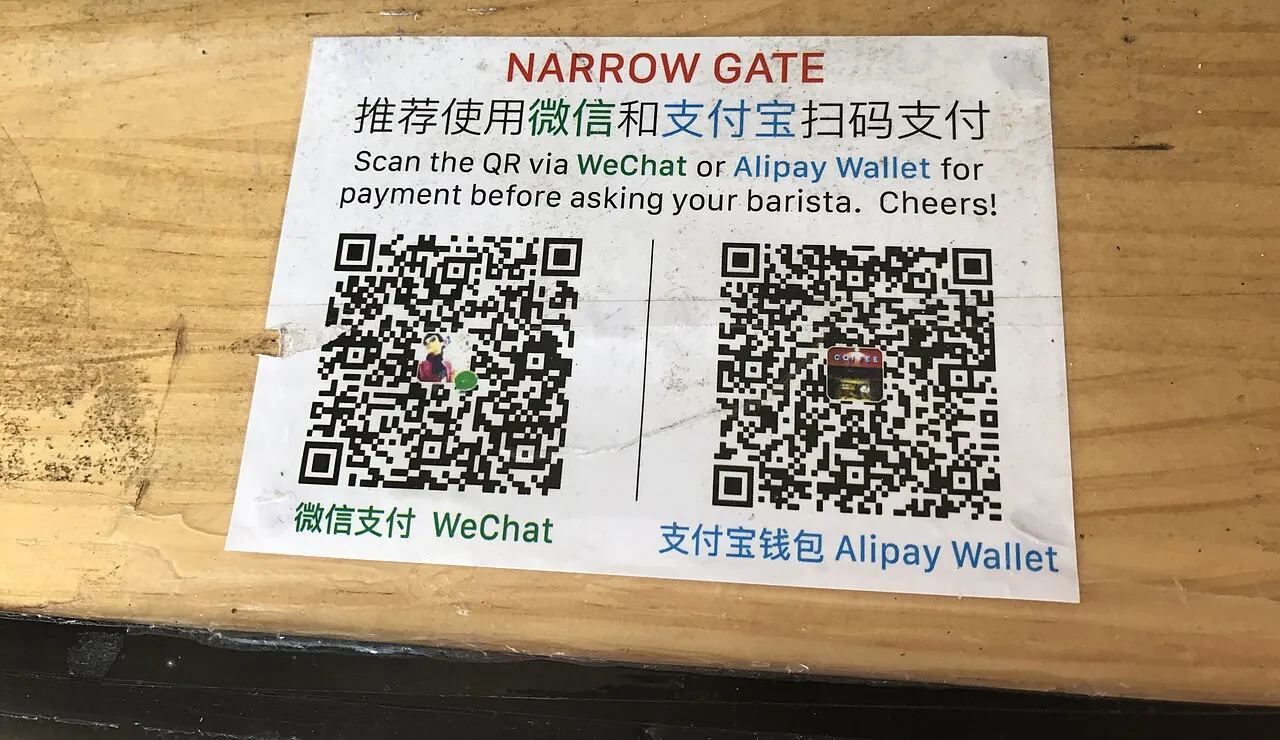
In cities, most transactions happen through Alipay or WeChat Pay. Both apps now allow foreign visitors to link international Visa, Mastercard, JCB, Diners Club, and Discover cards after identity verification with a passport. That has made China far easier to navigate without cash than it was a few years ago. Fees and limits change, but both platforms have generally waived fees on smaller transactions and applied a service fee of roughly 3% above a threshold that has often been 200 RMB — always check the current terms inside the app before you rely on it.
Two practical points follow from this:
- Cash is still legally protected. Chinese regulators have repeatedly reminded merchants that they must accept cash and must not refuse it. In practice, a small shop may simply not have change for a 100-yuan note, so smaller notes help.
- Cash is still necessary in specific situations. Rural guesthouses, temple donation boxes, some buses, small family restaurants, and market stalls may be cash-only or may struggle with foreign cards. A digital wallet failure — dead battery, app verification issue, blocked card — is much less stressful when you have a few hundred yuan in your pocket.
A reasonable default for most travelers: keep 200–500 RMB in cash at all times, and use Alipay or WeChat Pay for everything else.
3. Airport Currency Exchange: Speed and Convenience, Usually at a Cost
The core conclusion: use the airport counter for a small amount of "landing cash," not for your whole trip budget.
Major Chinese airports — Beijing Capital, Beijing Daxing, Shanghai Pudong, Shanghai Hongqiao, Guangzhou Baiyun, Shenzhen Bao'an, Chengdu Tianfu — have currency exchange counters in international arrival and departure halls. Some are operated by banks such as Bank of China; others are run by specialist exchange companies. Many stay open late or around the clock, which is their main advantage.
What you give up is rate quality. Airport counters typically apply a spread of several percent over the mid-market rate, and some add a commission or a minimum fee. The rate board often shows a "buy" and "sell" price, and the gap between them is where the counter earns its money. You may also find that only major currencies — USD, EUR, GBP, JPY, HKD — are handled well, while less common currencies get a worse rate or are refused.
Practical advice:
- Exchange 200–500 RMB worth at the airport, enough for a taxi, a snack, a SIM card, or a train ticket.
- Check the rate against a mid-market reference on your phone before you hand over money. If the spread looks unusually wide, exchange less.
- Ask whether a commission is included, and count your notes before leaving the counter.
- Keep the receipt. It can help if you later want to convert unused RMB back at a bank.
Airport exchange is a convenience purchase, and that is fine — as long as you treat it that way.
4. Bank Branches: The Best Rates for Larger Amounts
The core conclusion: for anything beyond pocket money, a bank branch — especially Bank of China — is usually the best combination of rate and reliability.
Bank of China has the deepest foreign-exchange network and the most experience serving foreign passport holders. ICBC, China Construction Bank, Agricultural Bank of China, and China Merchants Bank also handle exchange at many branches, particularly in larger cities. Smaller city commercial banks and rural credit cooperatives often do not.
The process is straightforward but slower than an airport kiosk:
- Look for a branch displaying a foreign exchange (外币兑换) sign, or ask at the information desk.
- Take a queue number and wait — weekday mornings are usually busiest.
- Present your passport. This is required; a photocopy or a photo on your phone is not enough.
- Fill in a short form with your name, passport number, and the amount you want to exchange.
- Receive RMB and a receipt, sometimes called an exchange memo.
What to expect:
- Rates are typically much closer to the mid-market rate than airport counters, with the margin built into the buy/sell spread rather than a separate commission.
- Hours are usually 9:00–17:00 on weekdays, with some branches open on Saturday mornings. Bank branches are not a late-night solution.
- Larger amounts — well beyond typical tourist spending — may require advance notice or additional documentation, so call ahead if you plan to exchange a large sum.
- Keep the exchange memo. If you have leftover RMB and want to convert it back before departure, some banks will ask for proof of how you obtained it.
Banks are also the right place to break large 100-yuan notes into smaller ones, which makes everyday cash handling much easier.
5. ATMs: The Most Reliable Everyday Option
The core conclusion: ATMs give you a near-market exchange rate with a predictable fixed fee, making them the most practical option for most travelers.
Foreign cards generally work at ATMs belonging to major banks: Bank of China, ICBC, China Construction Bank, Agricultural Bank of China, and China Merchants Bank. Most machines offer an English interface, and many are located inside or attached to bank branches, which makes them safer and easier to find.
Two numbers matter:
- Withdrawal limits. Many Chinese ATMs cap a single foreign-card withdrawal at 2,500–3,000 RMB, and your home bank sets a separate daily limit. If you need more, you may need multiple transactions — and multiple fees.
- Fees. Chinese banks commonly charge roughly 15–30 RMB per withdrawal, and your home bank may add its own foreign-transaction or out-of-network fee. A single larger withdrawal is usually cheaper than several small ones.
Practical advice:
- Notify your bank before you travel. Foreign ATM withdrawals are a common trigger for fraud blocks, and a declined card at 11 p.m. is an avoidable problem.
- Use ATMs attached to bank branches, ideally during business hours, and check the card slot and keypad for anything loose or unusual.
- If a withdrawal is declined, do not keep retrying the same machine. Try a smaller amount, a different bank's ATM, or a different card.
- Withdraw in CNY, and if the machine offers a conversion to your home currency, decline it — let your bank handle the conversion.
- Take the receipt and keep it until you have checked your statement.
ATMs will not give you the absolute best rate in the country, but they are close, and they are available when banks are closed.
6. Key Comparison: Airports, Banks, ATMs and Digital Wallets
| Option | Typical rate and fees | Speed and availability | Best for | What you need | Watch out for |
|---|---|---|---|---|---|
| Airport exchange counter | Several percent spread over mid-market; possible commission | Fast; long hours, often 24/7 at major hubs | A small landing fund on arrival | Passport, cash | Weak rates; limited currency selection |
| Bank branch | Close to mid-market; margin in the spread | Slower; weekday hours, queue | Larger amounts and better rates | Passport, short form | Limited hours; not all branches handle foreign exchange |
| ATM | Near mid-market plus a fixed fee of roughly 15–30 RMB | Fast; widely available, including evenings | Everyday cash needs | Bank card, PIN | Per-transaction limits; possible fraud blocks |
| Alipay / WeChat Pay | Usually no fee on small transactions; service fee above a threshold | Very fast once set up | Day-to-day spending in cities | Passport verification, linked international card | Setup can fail; not universal in rural areas |
| Hotel front desk | Often poor rates | Fast | Emergency small amounts | Usually guest status | Not a reliable or economical primary option |
Rules of thumb:
- Arrival: exchange or withdraw a small amount at the airport, then move on.
- Day 2–3: visit a Bank of China branch for a larger exchange if you prefer cash, or withdraw from a branch ATM.
- Throughout the trip: use Alipay or WeChat Pay for most purchases and keep 200–500 RMB as backup.
- Never use informal street money changers. It is illegal, and counterfeit notes are a genuine risk.
Customs note: China requires declaration of cash above certain thresholds when entering or leaving — generally more than 20,000 RMB in renminbi, or foreign currency equivalent to more than USD 5,000. Check the current rules before you fly, and declare if required.
7. FAQ
Q1. Should I exchange currency at the airport or at a bank in China?
Use the airport for a small amount — enough for transport and immediate needs — and use a bank branch, ideally Bank of China, for larger sums. Airport counters win on hours and convenience; banks win on rate. For most tourists, the difference is modest on a few hundred yuan but meaningful on a few thousand.
Q2. Can I rely on ATMs in China as a tourist?
Yes, in cities and at major transport hubs. Major bank ATMs generally accept foreign cards and offer English menus. Carry a second card from a different network as backup, notify your bank before departure, and expect per-withdrawal limits of roughly 2,500–3,000 RMB.
Q3. How much cash should I carry?
Around 200–500 RMB at any given time is a sensible buffer. It covers taxis, small restaurants, market stalls, temple donations, and the occasional place that does not accept foreign-linked digital payments. There is no need to carry large sums, since ATMs and banks are easy to find in cities.
Q4. Do I still need cash if I set up Alipay or WeChat Pay?
It is still worth carrying some. Digital wallets work well in cities, but setup can fail, phones can die, and some small merchants and rural businesses remain cash-based. Cash is legal tender and merchants are required to accept it, though very small shops may struggle to make change for a 100-yuan note.
8. Conclusion
For most tourists, the practical answer to currency exchange in China is a layered approach rather than a single choice. Exchange a small amount at the airport so you can leave the terminal without friction. Use a Bank of China branch or a major-bank ATM for the rest, depending on whether you prefer cash in hand or a card-based withdrawal. Set up Alipay or WeChat Pay for everyday spending, and keep a few hundred yuan in cash as a quiet backup.
The mistakes worth avoiding are simple: do not convert your entire budget at an airport counter, do not rely on a single card, do not accept dynamic currency conversion at an ATM, and do not use street changers. Get those right, and money becomes one less thing to think about — which is the point of a good travel guide. HelloChina, an English-language content hub covering China travel, visa, and practical living topics at hellochina.fans, follows the same principle: clear, verifiable guidance that lets you spend your attention on the trip itself.