
How to Apply for China 240-Hour Visa-Free Transit at the Airport: The 5-Step Border Process
How to Apply for China 240 Hour Visa Free Transit at the Airport: The 5 Step Border Process Key Takeaways There is usually no advance “China 240 hour visa free application” at an e
How to Apply for China 240-Hour Visa-Free Transit at the Airport: The 5-Step Border Process
Key Takeaways
- There is usually no advance “China 240 hour visa free application” at an embassy or consulate. Eligible travelers request the 240-hour visa-free transit entry when they arrive at an eligible Chinese port.
- You need an eligible passport, a confirmed onward ticket to a third country or region departing within 240 hours, and an itinerary that fits the permitted stay area for your entry port.
- The airport process is mainly a border-inspection process: airline check-in, arrival forms, dedicated transit queue, officer interview, and post-entry compliance.
- A hotel normally registers foreign guests for you. If you stay in a private home, confirm local police registration requirements with your host.
- The 240-hour period is a maximum, not a guarantee. The border officer decides whether you qualify, and overstaying can affect future travel to China.
1. Introduction
China’s 240-hour visa-free transit policy is useful for travelers who want to leave the airport, spend up to 10 days in China, and continue to another country or region. It can turn a long connection in Shanghai, Beijing, Guangzhou, or another eligible port into a short city visit without a traditional tourist visa.
The confusion starts with the word “application.” Many travelers search for a China 240 hour visa free application expecting an online form, an approval email, or an embassy appointment. In most cases, that is not how the policy works. The 240-hour visa-free transit is a border-entry facilitation, not a visa issued in advance. You still need to meet the rules, and you still need to convince the airline and the border officer that your trip qualifies.
This guide explains the practical airport process in five steps, the documents that make inspection smoother, and the common mistakes that cause travelers to be denied boarding or entry. It is written for international travelers planning a short transit stop in China, including first-time visitors who want a clear, realistic picture before booking flights.
2. What the 240-Hour Visa-Free Transit Actually Is
Core conclusion: The 240-hour visa-free transit is a short-term entry permission for eligible travelers who are genuinely transiting through China to a third country or region. It is not a general visa waiver for China.
The policy is built around three conditions: who you are, how you travel, and where you stay. Your passport must be issued by an eligible country. Your route must pass through China between two different countries or regions. Your onward flight or travel must leave within the permitted 240-hour window. You must also enter through an eligible port and stay within the area allowed for that entry point.
A simple way to test your itinerary is the “A → China → C” rule:
| Itinerary pattern | Usually suitable? | Why |
|---|---|---|
| London → Shanghai → Tokyo | Yes, if other rules are met | You are traveling from one country to a different third country. |
| New York → Beijing → Bangkok | Yes, if other rules are met | China is a genuine transit point. |
| Sydney → Guangzhou → Sydney | Usually no | The trip returns to the same country rather than continuing to a third country. |
| Paris → China → Paris, with a short side trip | Usually no | A round trip back to the same country may not be treated as eligible transit. |
Some itineraries involving Hong Kong, Macao, or Taiwan can be treated as separate regions for transit purposes, but rules and airline interpretations can vary. Confirm your specific route with your airline and official Chinese border-inspection information before you rely on the policy.
This permission is also not a work, study, or long-stay visa. It is intended for short-term transit activities such as tourism, visiting relatives, or brief business travel within the permitted area. If your plan includes employment, study, news coverage, or a stay beyond 240 hours, you should apply for the appropriate visa before traveling.
3. The 5-Step Border Process at the Airport
Core conclusion: The airport process is not a separate visa interview. It is a sequence of airline checks, arrival formalities, and border inspection. Preparation matters more than paperwork volume.
| Step | Where it happens | What you do | What to have ready |
|---|---|---|---|
| 1 | Airline check-in | Tell staff you are using 240-hour visa-free transit | Passport, confirmed onward ticket, itinerary |
| 2 | On arrival | Complete the arrival card and customs forms as required | Address in China, flight details, pen |
| 3 | Arrivals hall | Follow signs for “Visa-Free Transit” or ask airport staff | Passport, boarding pass, onward booking |
| 4 | Border inspection | Present documents and answer the officer’s questions | Accommodation proof, itinerary, funds, onward ticket |
| 5 | After passport control | Confirm your entry permission, collect baggage, register accommodation | Hotel booking or host contact details |
Step 1: Check in with the airline and state your transit plan clearly
The airline is your first practical checkpoint. Airline staff may be unfamiliar with the 240-hour policy, especially if your route is unusual. Say clearly: “I am using China’s 240-hour visa-free transit. I am traveling from [origin] to China and then to [third country] within 240 hours.” Show your passport and confirmed onward booking.
Airlines often use Timatic or similar systems to check entry rules. If staff are unsure, ask them to verify the transit rules for your nationality and itinerary against the official system rather than relying on memory. Keep your onward ticket easy to find on your phone and, ideally, printed.
Step 2: Complete arrival and customs forms
After landing, complete the arrival card and any customs declaration required at that airport. Use the address where you will actually stay, not a generic city name. If you are staying in a hotel, have the hotel name and address in English or pinyin. If you are staying with a friend, have the host’s address and contact information.
This step is administrative, but errors can slow the process. Use the same travel dates and flight numbers that appear on your onward ticket.
Step 3: Follow the visa-free transit signs
At most major Chinese airports, arrivals are directed toward either standard immigration or a visa-free transit inspection area. Look for signs such as “Visa-Free Transit,” “24/240-Hour Transit,” or ask airport staff. Do not join a queue for a different immigration category if a dedicated transit counter is available.
Keep your passport, boarding pass, and onward ticket accessible. You may be asked to show them before reaching the counter.
Step 4: Attend border inspection and answer questions
The border officer will review your passport, onward ticket, and itinerary. Questions are usually straightforward: purpose of visit, length of stay, where you will stay, and when you are leaving. Answer consistently and keep your documents ready.
The officer may ask for proof of accommodation, proof of funds, or details of your onward flight. You do not need a formal cover letter, but a simple folder or phone album with your hotel booking, onward ticket, and travel insurance can reduce friction. Biometric collection may also be required at some ports.
Step 5: Confirm your entry permission and complete accommodation registration
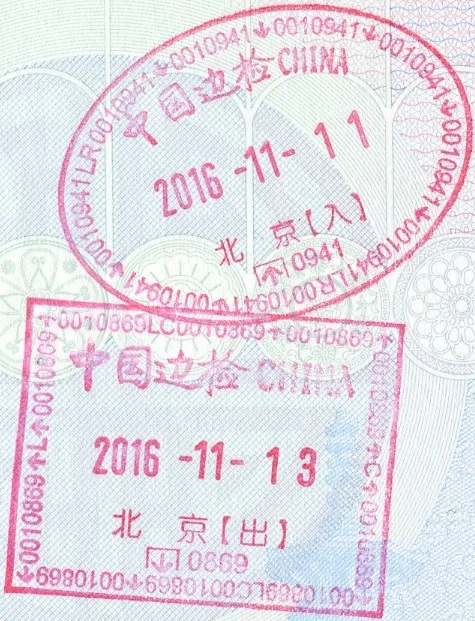
Once approved, check the entry stamp or permission carefully. Confirm the permitted stay period and any conditions. Do not assume you have exactly 240 hours from the moment you land; the permitted end date is what matters.
Hotels usually register foreign guests automatically. If you stay in a private residence, ask your host about local police registration. Rules can vary by city, and completing registration promptly is safer than waiting until departure.
4. Documents That Make Border Inspection Smoother
Core conclusion: A clear document set does not guarantee approval, but it makes your eligibility easier to verify and reduces the chance of unnecessary delays.
| Document | Why it matters | Practical tip |
|---|---|---|
| Passport | Identity and nationality eligibility | Check validity and blank pages before booking. |
| Confirmed onward ticket | Proves you will leave China within 240 hours | Ensure the destination is a third country or region, not your origin country. |
| Accommodation booking | Shows where you will stay | Keep the hotel name, address, and phone number available offline. |
| Return or onward itinerary | Shows your transit route is genuine | Save a screenshot and a printed copy. |
| Travel insurance | Not always mandatory, but useful | Check whether your policy covers China and your planned activities. |
| Proof of funds | May be requested | Bank app access or a card statement is usually enough. |
If you are visiting multiple cities within the permitted area, keep a simple itinerary showing dates and transport. If your plan is uncertain, do not book non-refundable long-stay accommodation before confirming your eligibility with the airline and official border-inspection guidance.
5. Key Comparison and Common Pitfalls
Core conclusion: The 240-hour visa-free transit is best for short, genuine transit trips. It is a poor fit for round trips, long stays, or travelers who need broad movement across China.
| Option | Best for | Key requirement | Main limitation |
|---|---|---|---|
| 240-hour visa-free transit | Short stopovers between two different countries or regions | Eligible passport, onward ticket, eligible port, permitted area | Not a full visa; limited stay area and purpose |
| Regular tourist visa | Round trips, longer stays, broader itineraries | Apply in advance through the proper channel | More paperwork, cost, and planning time |
| Direct airside transit | Short connections without leaving the airport | Stay in the international transit area | You cannot enter China or leave the airport |
Common pitfalls to avoid:
- Returning to the same country: A simple A → China → A trip may not qualify as transit.
- Onward ticket beyond 240 hours: The departure must fall within the permitted window.
- Assuming nationwide travel: The permitted stay area depends on your entry port. Check before adding distant cities.
- Missing accommodation registration: Hotels usually handle this, but private stays need attention.
- Overstaying: Even a short overstay can lead to fines and future entry problems.
6. FAQ
Q1. Do I need to apply online before I arrive in China?
Usually no. The 240-hour visa-free transit is requested at the border, not approved through an embassy visa application. You may still need to complete arrival forms, and your airline will check your documents at departure. Because eligibility rules can change, verify your nationality, route, and entry port with official Chinese border-inspection information before booking.
Q2. Can I use the 240-hour visa-free transit for a round trip from my home country?
Usually not if the itinerary is simply your home country → China → your home country. The policy is designed for transit to a third country or region. If your plan is a round trip, a regular tourist visa is usually the safer route.
Q3. Does the 240-hour clock start when my flight lands?
Do not assume that. The permitted stay period is stated in your entry permission or stamp. Check the end date carefully and plan your onward flight with a buffer. If you are unsure, ask the border officer to clarify the permitted departure date.
Q4. Can I leave the airport and stay in a hotel?
Yes, if you are granted entry under the policy and your accommodation is within the permitted stay area. Hotels normally register foreign guests. If you stay with friends or family, confirm local police registration requirements.
7. Conclusion
The 240-hour visa-free transit can be a practical way to add a short China stop to an international trip, but it works best when your itinerary is a genuine transit route and your documents are clear. The airport process is not a traditional visa application; it is a border-inspection decision based on your passport, onward travel, entry port, and planned stay.
Use this policy if you are eligible, your route passes through China to a third country or region, and your plans fit within the permitted area and time limit. If you need a round trip, a longer stay, or broader travel across China, apply for the appropriate visa before booking. For more practical English-language guides to China entry, itineraries, culture, food, and travel safety, visit HelloChina at hellochina.fans.