
Withdrawing Cash in China with a Foreign Card: ATMs, Fees and Limits
Withdrawing Cash in China with a Foreign Card: ATMs, Fees and Limits Key Takeaways Foreign cards generally work, but not everywhere. Visa, Mastercard, UnionPay, JCB and — less cons
Withdrawing Cash in China with a Foreign Card: ATMs, Fees and Limits
Key Takeaways
- Foreign cards generally work, but not everywhere. Visa, Mastercard, UnionPay, JCB and — less consistently — American Express cards are usually accepted at ATMs run by China's large state-owned and joint-stock banks. Bank of China machines have the longest track record with foreign cards.
- Budget for two layers of cost. Your home bank's fixed ATM fee plus a foreign transaction markup (commonly 0–3%) is the predictable part. Any fee charged by the Chinese ATM itself is disclosed on screen before you confirm.
- Limits are set twice and the lower one wins. Chinese ATMs typically cap a single withdrawal somewhere between RMB 2,000 and RMB 5,000, with a daily ceiling that is often around RMB 20,000. Your own card's daily ATM limit may be far lower.
- Always be charged in RMB. If the machine offers to convert the amount into your home currency, decline. Accepting dynamic currency conversion usually costs more.
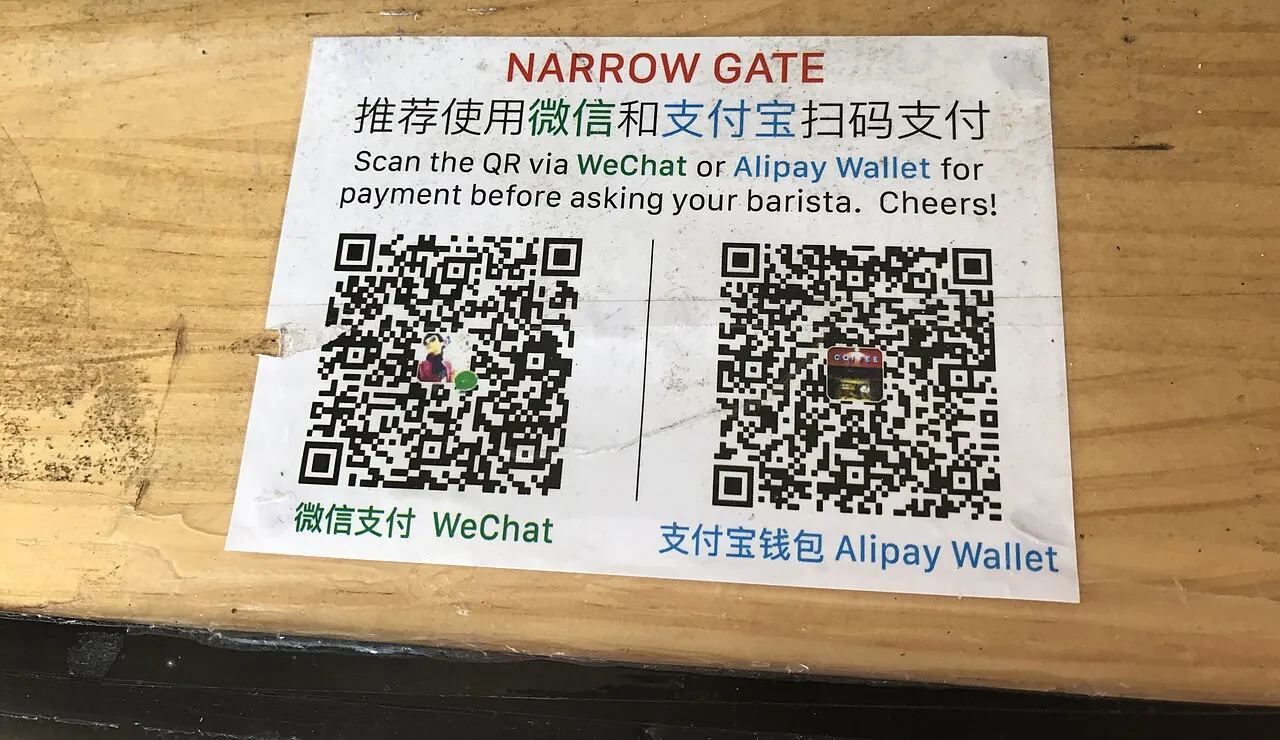
- Treat cash as a backup, not your main wallet. Alipay and WeChat Pay accept many international cards now, but cash still matters for rural areas, small vendors, temples, taxis and any moment when your phone is dead.
1. Introduction
You land at Pudong or Daxing after a long flight, your phone has no data yet, and the first thing you need is a few hundred yuan for a taxi or a SIM card. Or you are three days into a trip through Yunnan and discover that the guesthouse, the noodle shop and the bus ticket counter all prefer cash — or at least prefer it to a foreign card they cannot process.
Withdrawing cash in China with a foreign card is not difficult, but it is full of small frictions that surprise first-time visitors: machines that reject a card for no obvious reason, a PIN that suddenly needs six digits, a per-transaction cap lower than expected, or a conversion prompt that quietly adds a markup. None of these are disasters, but each one costs time and money if you are not prepared.
This guide covers the practical mechanics of a China ATM withdraw with a foreign card: which banks to look for, what the fees actually consist of, how the limits stack up, how to use the machine step by step, and what to do when something goes wrong. It is written for international travelers, students and new expats who want a clear answer rather than a list of vague warnings.
2. Which ATMs in China Accept Foreign Cards?
The practical rule: use ATMs attached to a bank branch or inside a bank lobby, and start with Bank of China.
China's ATM network is enormous, but foreign-card acceptance is concentrated. The machines most consistently reported to work with international cards belong to the major banks:
- Bank of China (BOC) — the most reliable starting point, with a high proportion of ATMs offering an English interface and broad acceptance of Visa, Mastercard, UnionPay, JCB and some American Express cards.
- Industrial and Commercial Bank of China (ICBC), China Construction Bank (CCB), Agricultural Bank of China (ABC), Bank of Communications and China Merchants Bank (CMB) — generally work with Visa and Mastercard, though individual machines vary.
- Foreign and international banks with mainland branches — HSBC, Standard Chartered, Citibank and DBS operate ATMs mainly in Shanghai, Beijing, Shenzhen and Guangzhou, often useful if you are already a customer.
- City commercial banks and rural credit cooperatives — hit and miss. Some accept foreign cards; many do not.
Look for the network logos printed on the machine (Visa/Plus, Mastercard/Cirrus, UnionPay, JCB) before inserting your card. If the logos are missing, assume the machine is domestic-only.
Two practical cautions. First, ATMs inside shopping malls, convenience stores or metro stations may be powered down or locked after the building closes, even though the machine itself is technically 24-hour. Second, a standalone ATM on a quiet street is a poor choice at night for reasons that have nothing to do with banking.
Scenario advice: withdraw a small amount at the airport to cover immediate transport, then rely on a bank-branch ATM near your accommodation for larger withdrawals. Airport machines are convenient but are not always the most generous on per-transaction limits.
3. Fees: What You Will Actually Pay
The core conclusion: the fee you notice is usually your own bank's, not China's — but check the screen before you confirm, because operator fees do exist.
A foreign-card withdrawal in China can involve up to three charges:
| Fee type | Who charges it | Typical range | Notes |
|---|---|---|---|
| ATM operator fee | The Chinese bank owning the machine | Often zero at major banks; where charged, a modest fixed amount per withdrawal | Disclosed on screen before confirmation |
| Fixed withdrawal fee | Your card issuer | Roughly USD 2–5 per withdrawal on many accounts | Some travel accounts waive it entirely |
| Foreign transaction markup | Your card issuer | Commonly 0%–3% of the amount | Applies to the converted RMB amount |
| Dynamic currency conversion (optional) | The ATM or its payment processor | Effectively a hidden markup on the exchange rate | Decline it; choose RMB |
The cheapest strategy is structural rather than clever: withdraw larger amounts less often. If your bank charges a fixed fee plus a percentage, four withdrawals of RMB 500 cost far more than one withdrawal of RMB 2,000. The trade-off is carrying more cash, so match the amount to your route — a week in Shanghai and Beijing needs less cash than a week in rural Guizhou.
Two habits protect your money:
- Decline conversion to your home currency. When the screen asks whether to charge you in, say, US dollars or RMB, choose RMB. The rate applied by your own bank is normally closer to the interbank rate than the machine's retail conversion rate.
- Keep every receipt. Receipts show the amount dispensed and any fee, which matters if a machine debits you without dispensing cash.
Also check the exchange rate on your banking app afterwards. A rate that looks a few percent off the market rate usually means a markup was applied somewhere in the chain.
4. Limits: Per Transaction, Per Day, and Per Card
The core conclusion: expect a per-withdrawal cap in the low thousands of RMB and a daily cap around RMB 20,000 — but assume your home bank's limit is tighter and plan around it.
Chinese ATMs dispense RMB in notes, usually ¥100 and occasionally ¥50, so withdrawals must be in multiples of 100. Beyond that, four limits apply simultaneously:
- Per-transaction limit (machine side): commonly in the RMB 2,000–5,000 range at major banks. This is why a machine may refuse RMB 6,000 but happily dispense RMB 3,000 twice.
- Daily limit (machine side): frequently around RMB 20,000 per card per day, though smaller banks and older machines can be lower.
- Issuer limit (your bank): many international cards cap ATM withdrawals at the equivalent of USD 500–1,000 per day. This is often the binding constraint.
- Cash-in-hand limits: Chinese customs requires declaration when carrying cash above the equivalent of USD 5,000, or above RMB 20,000 in local currency, across the border. Withdrawing a large sum is easy; carrying it back out undeclared is not.
If a machine declines your request, do not assume your card is blocked. Try a smaller amount first — RMB 2,000 instead of RMB 5,000 — then a different bank's ATM. Splitting a withdrawal across two transactions at the same machine is normal practice and usually works, though it may trigger two separate fixed fees from your issuer.
Scenario advice: for a two-week trip, one withdrawal of RMB 2,000–3,000 plus a linked mobile wallet covers most itineraries. For a longer stay, or travel to areas where card and mobile acceptance is thin, plan two withdrawals a few days apart rather than carrying a large sum at once.
5. How to Withdraw Cash, Step by Step
The core conclusion: the process is standard, but the order of operations matters — cash first, card second, receipt last.
- Unlock your card for overseas use before you travel. Many issuers require a travel notice or a geographic restriction lifted, and some disable ATM withdrawals by default.
- Insert the card chip-first and wait for the screen to load.
- Select English if the interface offers it. Most major-bank ATMs in cities do; smaller machines may be Chinese-only.
- Enter your PIN on the keypad, shielding it with your hand or body. If your PIN is four digits and the machine rejects it, try again carefully before assuming a problem — repeated wrong entries can retain the card.
- Choose withdrawal (取款), then select a preset amount or enter a custom one in multiples of 100.
- Respond to the conversion prompt. Choose RMB, not your home currency.
- Take the cash first, then the card, then the receipt. Machines usually return the card before dispensing notes; leaving without the card is a common and avoidable mistake.
- Count the notes before you walk away, and keep the receipt until the transaction appears correctly in your banking app.
Troubleshooting:
- Card returned, no cash, no message — often a limit issue or a network mismatch. Try a smaller amount or another bank.
- "Transaction declined" — check your app for a fraud alert; issuers sometimes block the first foreign transaction as a precaution.
- Machine appears to be out of cash — common at the end of a holiday weekend. Move on rather than waiting.
- Card retained by the machine — contact the branch during business hours with your passport; keep the receipt and note the machine's location. Do not accept offers of help from strangers at the ATM.
6. Cash vs. Mobile Payment: What to Actually Carry
The core conclusion: China is a mobile-payment economy, but a cash float of RMB 500–1,000 solves the situations mobile payment cannot.
| Situation | Cash needed? | Notes |
|---|---|---|
| Chain hotels, airports, major restaurants | Rarely | International cards are often accepted, though not universally |
| Street food, small shops, local buses | Sometimes | Some vendors accept only mobile payment or cash |
| Rural areas, temples, scenic-area stalls | Frequently | Mobile payment penetration is thinner; cash is the safe fallback |
| Taxis and ride-hailing | Occasionally | Ride-hailing apps are cashless; street taxis usually take cash |
| When your phone is dead or has no data | Always | This is the scenario cash exists for |
Alipay and WeChat Pay now let many holders of international Visa and Mastercard link their cards, with fees applying above certain transaction thresholds. That makes day-to-day spending easier than it used to be — but onboarding requires a working phone number and network connection, which is exactly what you may lack on arrival day.
7. FAQ
Q1. Can I use a foreign card at any ATM in China?
No. Acceptance depends on the machine's network logos and the bank that owns it. ATMs at major banks — Bank of China, ICBC, CCB, ABC, Bank of Communications, China Merchants Bank — are the safest bet, along with international banks in major cities. Convenience-store machines, rural credit cooperatives and older domestic-only ATMs may reject foreign cards entirely.
Q2. How much cash should I withdraw at once?
For most trips, RMB 1,000–3,000 per withdrawal, repeated as needed, balances fees against carrying risk. Withdrawing the maximum in one go minimizes fixed fees, but only if you are comfortable carrying that amount. Keep a second card separately in case one is blocked.
Q3. Why was my withdrawal declined when I have funds available?
The most common reasons are a per-transaction cap lower than your requested amount, your issuing bank's daily ATM limit, an overseas-use restriction on the card, or an automated fraud block. Try a smaller amount at a different bank's ATM, check your banking app for an alert, and contact your issuer if the block persists.
Q4. Do Chinese ATMs charge a fee for foreign cards?
It varies by bank and machine. Many major-bank ATMs add no operator surcharge, while others charge a modest fixed fee per withdrawal. The machine must disclose the fee on screen before you confirm, so read the prompt rather than assuming — and remember your own bank's fixed fee and currency markup usually cost more than the Chinese side does.
8. Conclusion
Withdrawing cash in China with a foreign card is a solved problem as long as you prepare for four things: the right bank, the right amount, the right currency choice, and a backup plan.
In practice: unlock your card for overseas use before departure, withdraw RMB at a Bank of China or other major-bank ATM attached to a branch, decline any conversion into your home currency, take a mid-sized amount rather than the maximum, and keep a second card in a different bag. Do that, and cash becomes a quiet convenience rather than a source of stress.
For travelers who prefer to rely on mobile payment, a float of RMB 500–1,000 is still worth carrying — it covers the taxi, the temple, the rural bus and the dead-battery afternoon. For longer stays and trips outside major cities, plan two or three withdrawals across the journey instead of one large one.
This guide is part of HelloChina's practical China travel coverage at hellochina.fans, where visa and entry rules, itineraries, safety advice and everyday logistics are written in English for international readers. Before you travel, confirm current fees and limits with your own card issuer — those terms change more often than the ATMs do.