
Mountains & peaksRivers & lakesGardens & parksBook ahead / busy
Southwest China
Lijiang
丽江 · CN-YN
Naxi old towns under a snow mountain
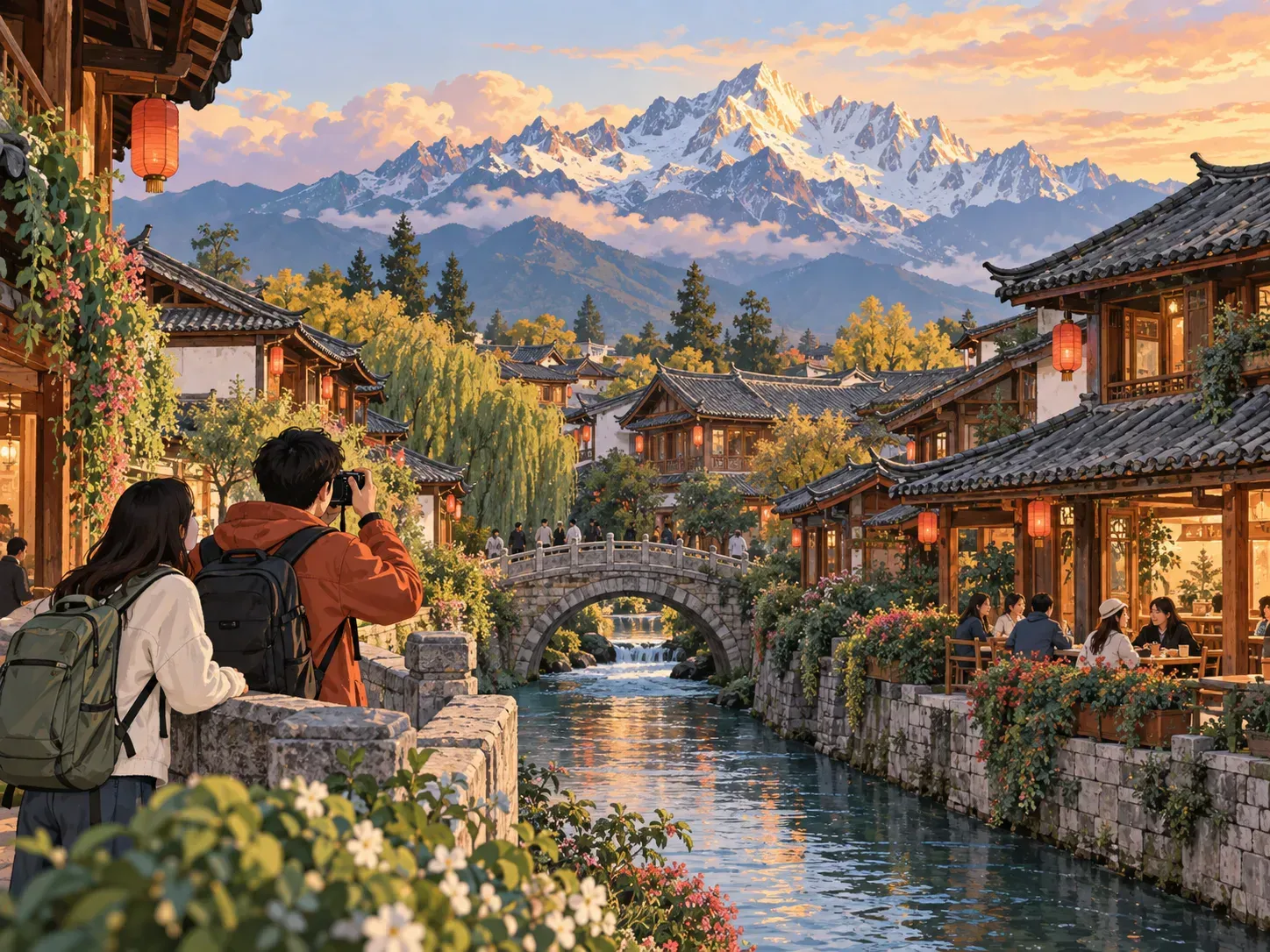
Cobbled Naxi towns under Jade Dragon Snow Mountain. Dayan is the famous one and the busiest — Shuhe and Baisha are quieter, closer to how people actually live, and 20 minutes away.
English translations of the source blocks on this page were prepared with machine assistance and are under editorial review; the Chinese source text remains authoritative.
CultureLandscapeFrontier
Where to start
- Kunming's old city & Dianchi Lake
- Dali old town — Xizhou — Shaxi
- Lijiang old town & Jade Dragon Snow Mountain
Read these before you plan
- P0The Jade Dragon cable car is booking item number one
Lock the Glacier Park cable car and the area ticket before scheduling Blue Moon Valley, Spruce Meadow and the shows; cable availability, weather, maintenance and peak crowds can all void the 'one-day full set'. Verify only through the area or Lijiang Tourism Group's official channels — third-party 'guaranteed ticket' promises are not facts.
- P0Yunnan is not a short intercity line
Kunming, Erhai, Lijiang, Shangri-La, Meili, Yuanyang and Xishuangbanna sit in different geo-belts. A first visit picks a northwest or a southern main line first, then one or two add-ons; if every day is a transfer day, the best light and your legs both disappear.
- P0Plan northwest Yunnan's altitude by risk, not courage
The Jade Dragon glacier park, Shangri-La, Pudacuo, Meili and Lugu Lake differ in altitude and exertion — never lump them. Acclimatise, walk slowly, keep warm, drink water; persistent headache, vomiting, breathlessness or confusion mean stop climbing immediately and descend or seek care. Don't mask serious symptoms with oxygen cans or painkillers.
- P0In the rainy season, read warnings and road state before chasing sunrise
Yunnan's transport, weather and natural-resources authorities publish rainstorm and geohazard alerts. The Lijiang–Tiger Leaping–Diqing mountain roads, the Yuanyang farm roads and the southern hills can all close at short notice. Under landslide, debris-flow or thunder warnings: no gorges, no steep slopes, no riverbeds, no undeveloped 'wild spots'.
- P1Take Erhai in segments — not one heroic ring ride
The eco-corridor and lakeside villages' roads, parking, rentals and protection rules adjust dynamically; order enforcement on the 46-kilometre west-shore stretch has explicitly restricted some camping, cooking and informal rentals. Confirm open sections and compliant transport before setting out — public buses, walking or published segment services first.
- P1Write season and light into the itinerary as non-replaceable appointments
Meili's far-peak window usually runs October–April; Yuanyang's Duoyishu for sunrise, Bada or Tiger Mouth for sunset; Dongchuang's red land follows farming and post-rain light. All are probability windows, not promises — a spare day beats pinning every sight to one weather.
- P2Reserve and religious boundaries outrank photos
In Xishuangbanna's rainforest: no picking, no leaving trails, no feeding or chasing wildlife; Erhai, Lugu and Pudacuo carry ecological rules; temples, old towns and villages are living space. Prices, openings, cable cars, boats, shuttles and shows follow the day's official notice over old guides — and accept substitutions at temporary closures.
A · Core landmarks
Start with Yunnan's five visual coordinates
Stone forest, snow mountain, plateau lakes, tropical flora and terraces stand for the province's landform and ecological span. A first route shouldn't force them all — but no points build the province's picture better.
B · Mountain-water and plateau lines
Put the sights back into terrain, roads and altitude
Dali's old town, the gorge, the alpine parks, the snow-mountain viewing belt and Lugu Lake all demand longer transfers and acclimatisation. Their photographic ceiling is high — but they cannot be paced like plainland cities.
C · Season and boundary
Read the commercialisation, farming and protection rules
Lijiang's old town, Songzanlin, the Wild Elephant Valley, Dongchuan's red land and Shaxi stand for hot heritage, religious site, wildlife, agricultural landscape and the tea-horse road. Not for every first visit — but they complete Yunnan's lived and ecological edges.
Suggested route shapes
- Kunming–Dali–Shaxi · 5–6 days
- Lijiang–Shangri-La · 4–5 days
- Southern Jianshui and Yuanyang, or western Tengchong · 4–6 days
How to save money and time
Kunming–Dali–Lijiang–Shangri-La is the mature northwest chain; Yuanyang and Xishuangbanna sit south-east and south, and 'same province' erases none of the transfer cost. Within seven days take one main line and keep exactly one cross-line point you truly want.
The Glacier Park cable car's booking constraints most often reshape a whole day: confirm date and slot on the official mini-programme first, then arrange Blue Moon Valley, Spruce Meadow, shows and transfers. Don't pay unverifiable premiums for cheap 'cable included' packages — read ticket, cable and voluntary spends separately.
The eco-corridor and shore roads are not a closed loop to ride thoughtlessly: rentals, parking, camping and protected-zone access all carry real limits. From Dali's old town, prefer the west-shore stretch — Longkan to Xizhou — or plan the east shore separately; don't pay for traffic jams and doubling back in the name of 'the full ring'.
Lijiang and Dali make good buffers; the glacier park, Shangri-La, Pudacuo, Meili and Lugu differ in altitude and effort. Don't climb hard, drink, or rush to altitude on your first northwest day; anyone with underlying conditions, pregnant, or with a history of severe altitude illness should consult a doctor first.
June–August and local downpours can bring geohazards or transport changes to Lijiang, Diqing, northern Dali, southern Honghe and Xishuangbanna. Keep half a day flexible, skip tight non-refundable connections, and remember: cancelling one sunrise is cheaper than night-driving through a warning.
Meili's far peaks and golden sunrise need multiple morning chances; Yuanyang splits Duoyishu sunrise from Bada/Tiger-Mouth sunset; Dongchuan follows farming and post-rain colour; the rainforest accepts humidity and unpredictable animals. Sleeping near the shooting window usually beats buying one more ticket.