
Historic architectureMountains & peaksRivers & lakesNight viewsBook ahead / busyOff the main circuit
East China
Shanghai
上海 · CN-SH
Modern skyline, riverside Bund
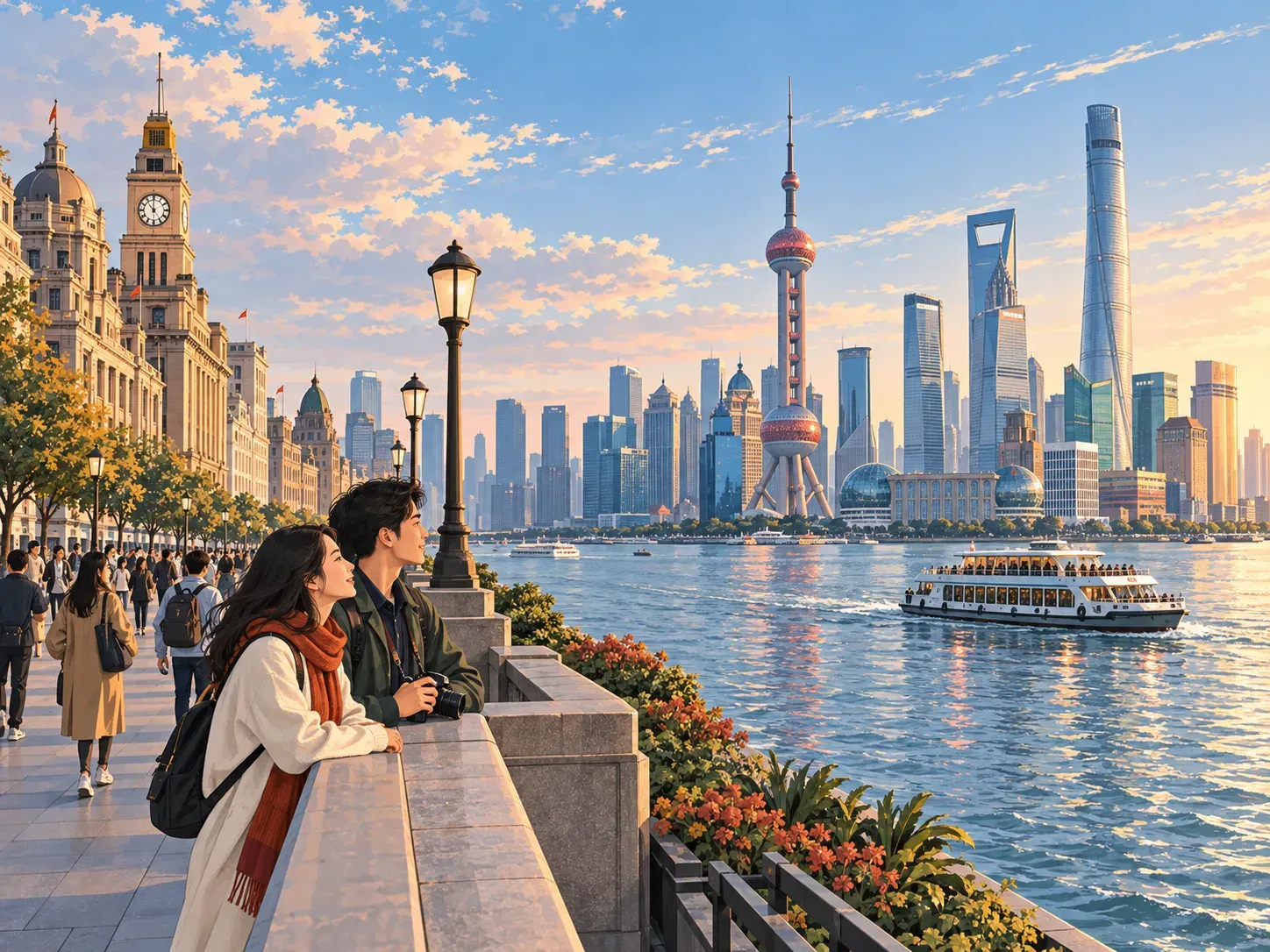
China’s easiest introduction: a walkable riverfront, the country’s best metro, and a food scene that ranges from soup dumplings to Michelin tasting menus. Stay two nights and you will understand the rest of the trip better.
English translations of the source blocks on this page were prepared with machine assistance and are under editorial review; the Chinese source text remains authoritative.
CityHistoryFood
Where to start
- The Bund & the North Bund
- The Hengfu historic area
- The Old City & the Confucian Temple
Read these before you plan
- P0Lock in museums and night sessions first, then build the itinerary
The Shanghai Museum East Branch currently admits walk-ins, but special exhibitions and interactive programs may still need separate bookings; Yu Garden's night sessions, lantern festivals, and the Shanghai Tower observatory (Top of Shanghai) all have time-slot constraints. Fix these dates first, then fill in always-open public spaces like the Bund and Wukang Road — don't let a last-minute ticket rewrite your whole route.
- P0Don't squeeze below the minimum stay at the headline sights
Allow at least 2 hours for the Bund, 1.5 for North Bund, 2 for Lujiazui at street level, 1.5 for Yu Garden, 3 for the Shanghai Museum East Branch; 2 hours for Wukang Road, 2 for Yangpu Riverside, 4 for Zhujiajiao. Anything less leaves you with transit and queues — better to drop a stop or two per day.
- P0First stay: prioritize the metro line, not the view room
People's Square, East Nanjing Road, Jing'an Temple, or South Shaanxi Road all put the Bund, Yu Garden, museums, and the Hengfu historic district within reach. Don't pay a cross-district transport premium for a room with a view; only an overnight in the suburbs is worth it for a two-day Zhujiajiao or Songjiang trip.
- P1Save the best light for four high-payoff windows
Arrive at the Bund and North Bund an hour before sunset; enter the Shanghai Tower observatory about two hours before sunset; do Wukang Road before 9:00 on a weekday; catch Zhujiajiao's water at its calmest between 8:30 and 10:00. In haze or plum-rain season, lower your expectations for distant views and prioritize indoor museums.
- P1Keep the must-see list short and precise
On the Bund, keep the southern stretch of Zhongshan East 1st Road and Waibaidu Bridge; in Lujiazui, shoot the "three-piece set" of supertalls and the riverside reflections; in Yu Garden, the Zigzag Bridge and the garden itself; in Hengfu, just Wukang Building and two side streets; on Yangpu Riverside, the old shipyard section; in Zhujiajiao, Fangsheng Bridge and Kezhi Garden. Don't try to sweep every doorway on a street.
- P2Let same-day advisories override the static numbers in any guide
Yu Garden ticket prices, the Shanghai Museum East Branch walk-in policy, Shanghai Tower time slots, Sihang Warehouse closing days, Guangfulin exhibition openings, and West Bund shows all change; holidays and major events can bring snap crowd caps. Recheck official channels 24 hours ahead, and if something's closed, substitute a public space in the same area.
- P2Residential space and public order come before photos
Wukang Building, Duolun Road, Tianzifang, and the Hengfu blocks still have residents — don't enter private lobbies, block doorways for photos, or climb industrial relics and statues. Obey temporary closures during flood season, construction, major events, and extreme weather. Ferry, cruise, sightseeing-bus, and parking rules follow on-site notices.
A · Core landmarks
Start with Shanghai's first coordinates
Use the Bund, the North Bund, Lujiazui, Yu Garden and the Shanghai Museum East to fix basic coordinates for the river, the city, the walled old town and its collections. On a first visit, these five clusters build a picture of the city fastest.
B · Regional depth
From waterfront landmarks into neighbourhoods and daily life
Hengfu, the Old City, Suzhou Creek, Yangpu and Qiantan together explain how Shanghai repays reading on foot. They suit first-time visitors who want more than skyline photos, and they are the second main line for taking the city's scale back down to street level.
C · Slow corners
Depth spots for the experienced or the unhurried
From Zhujiajiao and the Songjiang sites to art waterfronts and skippable small districts, this layer shifts the weight from core checkpoints to canal towns, prehistory, urban renewal and honest trade-offs. Suited to a second Shanghai visit, or to anyone willing to trade half a day for a different rhythm.
Suggested route shapes
- Bund–Suzhou Creek · 1 day
- Former concession–old town · 2 days
- Yangpu waterfront or a water town · 1–2 days
How to save money and time
Make the Bund–North Bund–Lujiazui a riverside day, Hengfu and the old town a neighborhood day, and pick one of Yangpu Riverside, Qiantan, or the West Bund as a third day. Shanghai's metro is fast, but every cross-district hop eats the buffer you'd spend on exhibitions, queues, and light. Clustering by area usually saves more time than adding stops.
The Shanghai Museum East Branch walk-in policy shifts with temporary exhibitions; Yu Garden night sessions and lantern festivals sell separately; the Shanghai Tower observatory is time-slot sensitive. Confirm these date-fixed items first, then arrange always-open public spaces like the Bund and Wukang Road — don't let a last-minute ticket rewrite your route.
The Bund, North Bund, and Lujiazui connect by metro and ferry — the ¥2 cross-river ferry is a city sight in itself. Cross the river by metro in the daytime and take the ferry again around sunset. Even in a group, only compare ride-hailing when rushing to a night session or carrying lots of luggage; parking costs rarely justify it.
Shanghai Tower adult tickets start around ¥180 — whether to add the damper-experience combo depends on whether you actually want the high-altitude add-on. The Guangfulin four-hall combo is about ¥70, but most people only enter one or two halls. In Zhujiajiao, you only pay per attraction (Kezhi Garden, boat rides); the water town itself is free. Choose by the day's energy and you'll skip plenty of wasted tickets.
People's Square and East Nanjing Road serve the Bund, Yu Garden, and museums; Jing'an Temple suits the Hengfu blocks; South Shaanxi Road station covers both Tianzifang and Wukang Road. No need to move to Pudong for any single sight — only consecutive nights in Zhujiajiao or Songjiang justify sleeping in the suburbs. When booking, confirm the real walking distance to the metro entrance.
Light is most reliable March–May and October–November. Reserve 60–90 minutes before sunset for the Bund, weekday mornings for Wukang Road, and before 9:00 for Zhujiajiao. In plum-rain and typhoon season, prioritize indoor museums and lower expectations for tower views and distant skylines; if rain hits, a Suzhou Creek plus museum route beats stubbornly waiting out the night view.
More in this region
JiangsuAlong the canal and the Yangtze, into Jiangsu beyond the Jiangnan clichéZhejiangBeyond Hangzhou: mountains, coast and old villagesAnhuiTwo kinds of China in one province, from Huizhou villages to the northern plainFujianBetween mountains and sea: ports, clans and migrationJiangxiAlong the Gan River and the old post roads, an underrated cultural landscape