
Alipay and WeChat Pay Transaction Limits for Foreign Cards: The Numbers That Matter
Alipay and WeChat Pay Transaction Limits for Foreign Cards: The Numbers That Matter Key Takeaways Both Alipay and WeChat Pay accept major international card networks, but the ceili
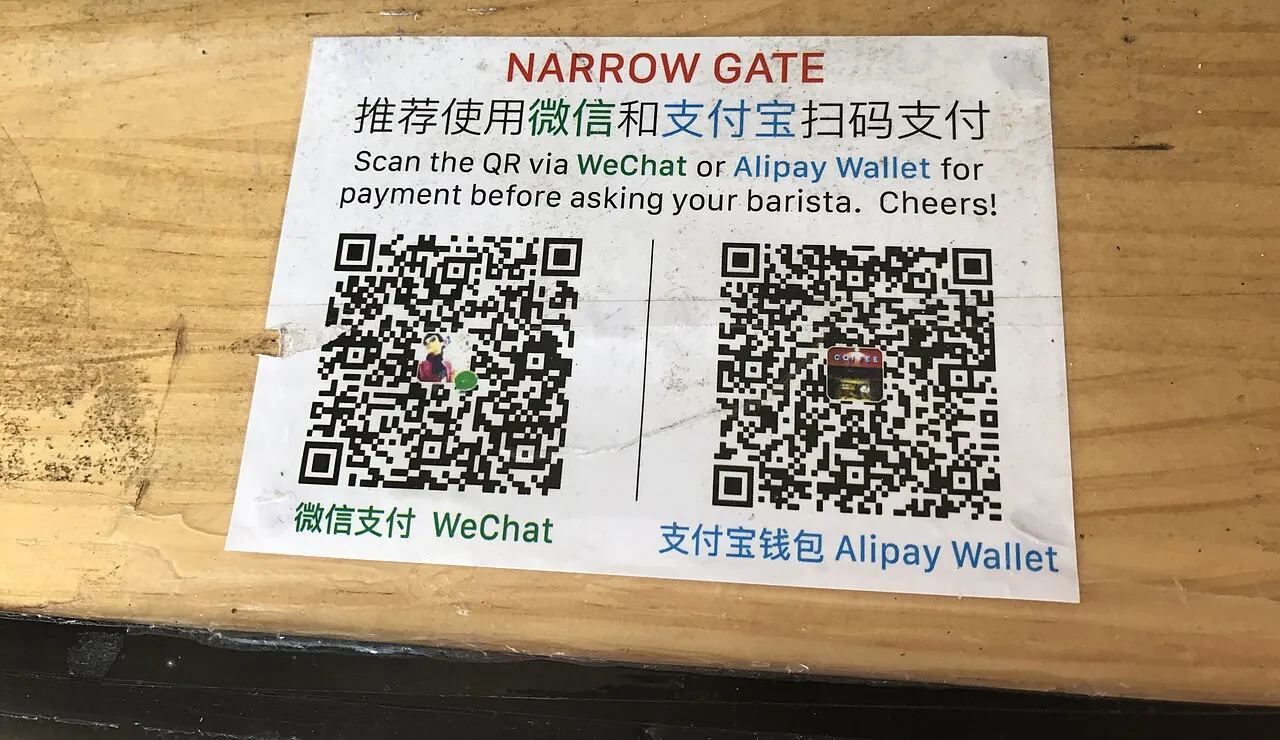
Alipay and WeChat Pay Transaction Limits for Foreign Cards: The Numbers That Matter
Key Takeaways
- Both Alipay and WeChat Pay accept major international card networks, but the ceiling you hit is usually not the app's headline limit — it is the lowest of four separate limits: the app's cap, your issuing bank's cap, the merchant's acceptance rules, and China's annual foreign-card spending ceiling.
- The headline per-transaction figures land in the same neighborhood: roughly USD 1,000 on Alipay and roughly CNY 6,500 on WeChat Pay (about USD 900). Alipay publishes its limits in USD; WeChat Pay publishes in CNY.
- Both apps have charged a service fee of about 3% on international-card transactions above CNY 200, with smaller payments fee-free. This threshold matters more to most travelers than the transaction cap.
- Failed payments are more often caused by name mismatches, missing 3-D Secure approval, or a blocked card than by an actual limit breach.
- Carry a physical card and some cash as backup. The app limit is a number you can plan around; a declined payment at a ticket counter is not.
1. Introduction
You have landed in Shanghai or Chengdu, installed Alipay and WeChat Pay, added your Visa card, and the first payment works. Then, three days later, a hotel bill or a train ticket fails for no obvious reason. Nothing in the app explains why.
The confusion is structural. Foreign visitors are told that China is "cashless" and that the two super-apps accept international cards — both true — but almost nobody explains the layered limits behind that access. A traveler's mental model is usually "my card works or it doesn't." In reality, four independent ceilings sit between your card and the merchant, and the payment only clears if it fits under the lowest one.
This guide does three things: it names the numbers that are publicly documented, explains which ceiling is actually stopping you when a payment fails, and gives you a practical plan for the handful of situations where the numbers genuinely get in the way — hotel deposits, high-value purchases, and large group bills. It follows the HelloChina (hellochina.fans) editorial approach: state the figure, say where it comes from, and flag clearly what changes. Because limits and fees in this space are revised periodically and are always governed by what the app shows you, treat every number here as a planning baseline and confirm it in-app before you rely on it for a large payment.
2. The Four Ceilings That Decide Whether Your Payment Goes Through
Core conclusion: when a foreign-card payment fails, the app's published limit is the least likely culprit. Diagnose in order: identity and verification, issuing bank, merchant acceptance, then the app limit.
The four ceilings, from most to least likely to trip you up:
- Verification and identity matching. Both apps require real-name verification with a passport, and the name must match the cardholder name closely enough for the system to accept it. A middle name omitted, a hyphenated surname entered differently, or an unverified account will produce a generic failure that looks like a limit problem.
- Your issuing bank. Many banks block or throttle cross-border e-commerce style transactions by default. They may also require a 3-D Secure challenge — an SMS code or an in-app approval — that arrives late or not at all when you are roaming without SMS access.
- Merchant acceptance. Some merchants, particularly small vendors using a personal receiving code, cannot process foreign-card funding at all, even though larger chains can. The failure appears at the merchant level, not the app level.
- The app's own caps. These are real, published, and usually generous enough for daily spending — which is why they surprise people mainly on big-ticket items.
Practical advice: before blaming a limit, run a small test payment (a convenience store purchase under CNY 50). If that clears, your account, card, and verification are fine and the problem is amount- or merchant-specific. If it fails, fix identity and bank-side settings first — no amount of limit planning will help until those clear.
3. Alipay: USD-Denominated Caps and the CNY 200 Fee Line
Core conclusion: Alipay is generally the more forgiving of the two for a first-time visitor, and its per-transaction ceiling sits around USD 1,000 — comfortably above normal daily spending but below a luxury purchase or a week's hotel bill.
Alipay supports binding of Visa, Mastercard, JCB, Diners Club, and Discover cards to the international version of the app. Its published limits are expressed in US dollars rather than RMB, which is convenient for planning: the commonly cited per-transaction ceiling is on the order of USD 1,000, with a much higher annual cumulative ceiling measured in tens of thousands of dollars per verified user.
Two practical consequences follow.
First, the per-transaction cap is the constraint you will actually meet. Daily routines — metro rides, coffee, groceries, museum tickets, most restaurant bills — sit far below it. Hotel folios, electronics, and jewelry sit above it.
Second, the fee threshold is where the real cost lives. Alipay has applied a service fee of roughly 3% to international-card transactions above CNY 200, with transactions at or below that amount processed without the fee. That creates a clear behavioral rule: for small purchases the card-funded wallet is effectively free, and for anything above CNY 200 you are paying a few percent premium for the convenience of not carrying cash.
Scenario: a CNY 35 breakfast costs you the menu price. A CNY 480 dinner costs about CNY 14 extra (roughly USD 2). A CNY 4,000 purchase costs about CNY 120 extra — still modest, but worth knowing before you assume the card route is always cheapest.
Recommendation: use Alipay as your default wallet for everyday spending, and treat any single payment above roughly CNY 2,000 as a decision point: compare the 3% fee plus your bank's foreign-transaction fee against paying with the physical card directly, withdrawing cash, or splitting the purchase.
4. WeChat Pay: CNY-Denominated Caps and Stricter Onboarding
Core conclusion: WeChat Pay's headline numbers are published in RMB — commonly cited at around CNY 6,500 per transaction and CNY 65,000 per year for international cards — and its onboarding is less forgiving than Alipay's.
WeChat Pay supports Visa, Mastercard, JCB, American Express, and Discover. The per-transaction figure of roughly CNY 6,500 converts to about USD 900, so in practice the two apps impose a similar ceiling on a single payment despite quoting in different currencies. That convergence is the single most useful fact in this article: whichever app you use, plan for a per-transaction ceiling of roughly USD 900–1,000.
The differences are in friction rather than in the ceiling:
- Verification is stricter. Expect to upload passport data and complete real-name verification before international cards function reliably. Do this at your hotel on Wi-Fi, not at a payment counter.
- The fee structure mirrors Alipay, with a service fee of about 3% applied above CNY 200 and smaller transactions generally fee-free. Confirm the current rate in the app's help section, as both platforms have adjusted terms over time.
- Peer-to-peer transfers behave differently from merchant payments. Sending money to an individual is a different flow with different rules than paying a merchant's QR code. Foreign-card funding is designed around merchant payments; do not assume it works for person-to-person transfers.
Recommendation: set up WeChat Pay as a secondary wallet, not your primary one, unless your contacts in China already use it. Its value is redundancy — when one app has an outage, a merchant only accepts one of the two, or a card is flagged, having both configured and verified is the difference between a two-minute detour and a stranded afternoon.
5. The Numbers Side by Side, and What They Mean in Practice
The comparison below reflects publicly documented figures at the time of writing. Both platforms revise terms, and the binding number is always the one displayed in your verified account.
| Alipay | WeChat Pay | |
|---|---|---|
| Card networks | Visa, Mastercard, JCB, Diners Club, Discover | Visa, Mastercard, JCB, American Express, Discover |
| Currency of published limits | USD | CNY |
| Per-transaction ceiling (commonly cited) | ~USD 1,000 | ~CNY 6,500 (~USD 900) |
| Annual ceiling (commonly cited) | Tens of thousands of USD per verified user | ~CNY 65,000 (~USD 9,000) |
| Service fee on card-funded payments | ~3% above CNY 200; free at or below | ~3% above CNY 200; free at or below |
| Verification | Passport-based, in-app | Passport-based, in-app, stricter |
| Best fit | Default everyday wallet | Backup wallet, merchant payments |
How the numbers play out across common situations:
- Convenience store, taxi, metro (CNY 5–60): both apps clear instantly, no fee. This is the 80% case and the reason the setup is worth the effort.
- Restaurant or attraction ticket (CNY 100–800): under the per-transaction cap; the 3% fee applies above CNY 200. Budget roughly CNY 3–24 in fees.
- High-speed rail or domestic flight (CNY 500–2,000): still below the cap on a single booking. Book tickets individually rather than as one combined order if the total climbs.
- Hotel bill or deposit (CNY 3,000+): this is where limits bite. Pre-authorizations and refundable deposits are the single most common failure point, because the hold may be treated as a charge and can exceed the per-transaction ceiling.
- High-value purchase (CNY 10,000+): exceeds the per-transaction cap on both apps. Splitting into multiple payments sometimes works, but merchants may refuse, your issuer may flag the pattern as unusual, and the annual ceiling still applies in aggregate.
A pre-trip checklist that prevents most failures:
- Complete real-name verification in both apps before departure, using the exact name printed on your passport and card.
- Tell your card issuer you are traveling to China and confirm cross-border and online transactions are enabled.
- Make sure you can receive 3-D Secure approvals — an authenticator app or a banking app with push notifications beats SMS when roaming.
- Register two cards from different issuers, so one blocked card does not end your access.
- Carry a physical card and a few hundred CNY in cash for the cases where neither app works.
6. FAQ
Q1. Is there a single "Alipay transaction limit" for foreign cards I can rely on?
No single number covers every case. The commonly cited per-transaction ceiling for international cards is around USD 1,000, and there is a separate, much higher annual ceiling tied to your verified identity. But the number that decides any individual payment is the lower of that cap and your issuing bank's own limit. Always check the limits page inside your verified account — that is the figure the system will enforce.
Q2. Why did a payment fail when I was well under the limit?
The most frequent causes, in order: a name mismatch between your app verification and your card, a card issuer block on cross-border transactions, an uncompleted 3-D Secure challenge, or a merchant whose payment code cannot accept foreign-card funding. Try a small test payment first. If that clears, the issue is amount- or merchant-specific; if it fails, contact your bank before assuming it is an Alipay or WeChat Pay limit problem.
Q3. Should I split a large purchase into several smaller payments to stay under the cap?
It can work, but it is not a reliable strategy. Merchants are not obliged to accept split payments, issuers may treat the pattern as suspicious and decline later attempts, and the annual ceiling applies to the total regardless of how you divide it. For purchases above roughly CNY 7,000, ask the merchant whether they accept international cards directly, or plan to pay by cash or bank transfer instead.
Q4. Do the 3% fees apply to every payment?
No. Both platforms have applied the service fee only to international-card transactions above CNY 200, with smaller payments processed without it. That means ordinary daily spending is effectively free, and the fee matters mainly on mid-size and large purchases. Rates have been revised before, so confirm the current figure in-app before making a decision based on it.
7. Conclusion
The numbers are less intimidating than the rumors suggest. For ordinary travel — meals, transport, tickets, groceries — both Alipay and WeChat Pay clear payments without fees and well under their caps, and the main work is front-loaded: verification, a matched cardholder name, and a bank that will let the transaction through.
The planning rule is simple: expect a per-transaction ceiling of roughly USD 900–1,000 on either app, expect a service fee of about 3% above CNY 200, and treat anything above a few thousand RMB as a separate decision rather than a routine tap. Verify the exact limits inside your own account before you travel, register two cards from different issuers, and keep a physical card and some cash as a fallback.
If you plan around those three figures, the payment system stops being a source of anxiety and becomes what it should be: invisible infrastructure for the trip itself. For related practical guidance on entry rules, itineraries, and on-the-ground logistics, see the wider travel guides at HelloChina (hellochina.fans).