
Alipay Foreign Card Fees in China: The 200 Yuan Rule and How to Avoid the 3 Percent
Alipay Foreign Card Fees in China: The 200 Yuan Rule and How to Avoid the 3 Percent Key Takeaways Alipay's international card pricing is tiered by transaction size. The 200 RMB lin
Alipay Foreign Card Fees in China: The 200 Yuan Rule and How to Avoid the 3 Percent
Key Takeaways
- Alipay's international card pricing is tiered by transaction size. The 200 RMB line separates small payments from larger ones, and the two are treated differently under the platform's fee rules.
- The 3% is primarily a merchant-side cost on small transactions. Travelers usually encounter it indirectly — as a surcharge, a minimum-spend request, or a vendor refusing foreign-card payment — rather than as a separate line on their receipt.
- Your card issuer's own foreign transaction fee is a second, separate layer. It can stack on top of Alipay's rules and is easy to overlook.
- The reliable ways to reduce exposure are consolidating small purchases, keeping a cash fallback, using a UnionPay card issued in your home country, and pre-funding an Alipay balance where that option is available to you.
- Fee terms have been revised repeatedly since 2023. Confirm the current rules inside the Alipay app before you build a payment plan around a specific threshold.
1. Introduction
China is close to a cashless society, and for most short-term visitors the practical question is no longer "can I use my card?" but "which payment method costs me least?" Since Alipay opened its network to international cards, a traveler can land in Shanghai, link a Visa or Mastercard, and buy a metro ticket within minutes. That convenience comes with a fee structure that is genuinely confusing, partly because it is designed for merchants rather than consumers.
The confusion has a name among frequent travelers: the 200 yuan rule. Spend less than that in a single transaction with a foreign card, and different economics apply than if you spend more. On top of that sits a 3% charge that appears in some transactions but not others, and a separate foreign transaction fee from your own bank.
This guide explains how Alipay foreign card fees actually work, why the 200 RMB threshold matters, who absorbs the 3%, and what you can realistically do about it. It is written for international travelers, expats, and students in China who want a payment setup that is both convenient and cost-aware — the kind of practical, source-oriented explanation HelloChina (hellochina.fans) publishes for readers who prefer structured English guides over scattered social media tips.
2. What the 200 Yuan Rule Actually Means
Core conclusion: The 200 RMB threshold is a merchant-fee boundary, not a consumer price list. Understanding it tells you why small vendors behave differently from large ones.
Alipay's international card arrangement works like this: when you pay a Chinese merchant with a card issued outside mainland China, the transaction is processed across borders, which is expensive relative to the size of a typical Chinese retail purchase. A 3 RMB bottle of water and a 3,000 RMB hotel bill cost the payment system roughly the same to clear, but one of them cannot absorb a percentage fee.
To keep small transactions viable, Alipay's terms distinguish between transactions at or below 200 RMB and those above it. In broad terms, small transactions carry a 3% service charge on the merchant side, while larger transactions are handled under more favorable terms for the merchant. The exact wording and any subsidies have changed several times since 2023, so treat 200 RMB as the dividing line rather than as a fixed, permanent number.
Two practical consequences follow:
- Small purchases are the friction point. A convenience store, a noodle shop, or a street stall selling a 15 RMB snack is operating on thin margins. A 3% charge on a 15 RMB sale is trivial in absolute terms but annoying in principle, and many small merchants simply decline foreign-card payments rather than deal with it.
- Larger purchases are usually frictionless. Hotels, department stores, chain restaurants, and attractions generally accept foreign-card payments without comment, because the economics work at that scale.
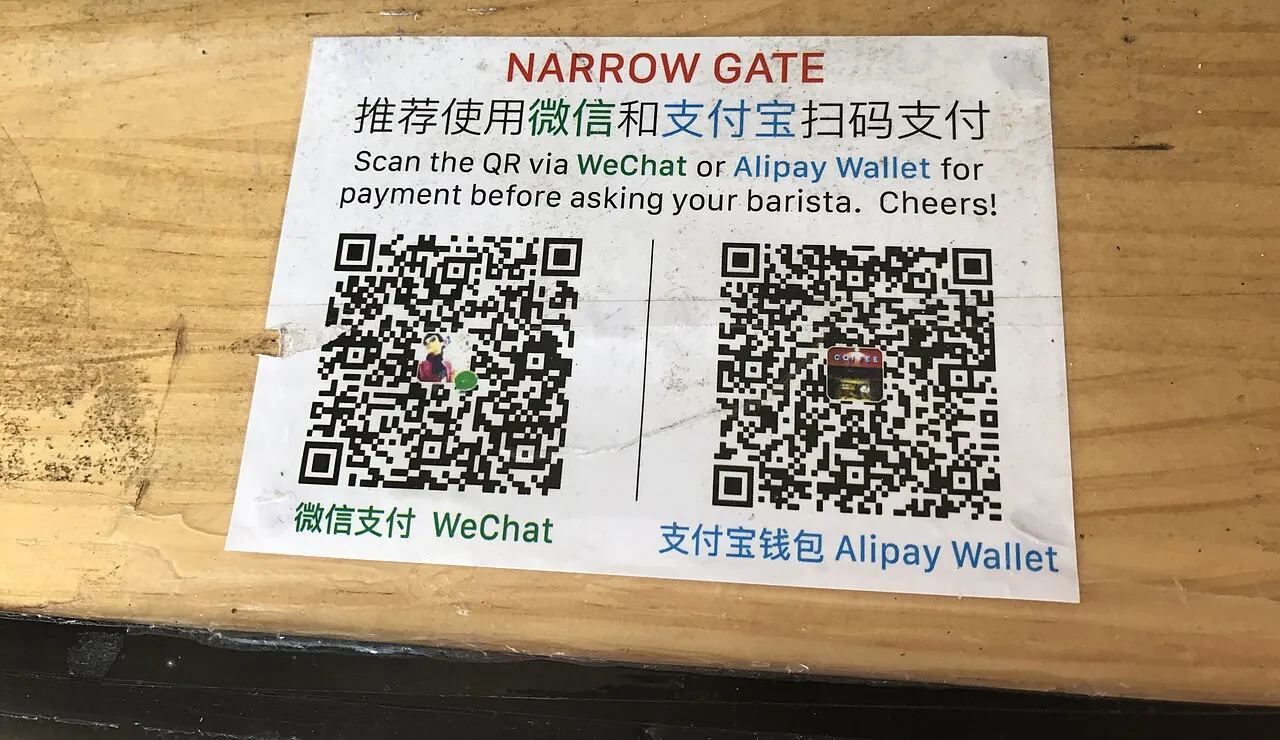
Scenario: You buy a 12 RMB coffee with your linked Visa. The barista may ask for cash, may point at a QR code for a domestic wallet, or may simply process it. You will rarely see "3%" printed anywhere — you will see a merchant who has learned to route around the fee. That behavioral pattern, not a receipt line item, is what most travelers actually experience.
Recommendation: Do not plan around the exact threshold. Plan around the behavior it produces: small vendors are less reliable for foreign cards, large ones are reliable. Keep a small cash balance for the first category.
3. Who Actually Pays the 3 Percent
Core conclusion: There are up to three separate cost layers in a single Alipay foreign card payment. Only one of them is Alipay's.
Travelers often assume the 3% is deducted from their account. In most configurations it is not. The layers look like this:
| Layer | Who charges it | When it appears | Typical visibility |
|---|---|---|---|
| Alipay international card service fee | Alipay, to the merchant | Small transactions under the threshold | Usually absorbed by the merchant; occasionally passed to you as a surcharge |
| Merchant pass-through | The merchant | When they choose to recover the cost | Sometimes as a surcharge, a minimum spend, or a refusal |
| Card issuer foreign transaction fee | Your bank | Every foreign-currency transaction | Appears on your card statement, not in the Alipay app |
| Currency conversion spread | Alipay or your issuer, depending on settlement | On conversion between RMB and your card's currency | Embedded in the exchange rate |
The fourth layer deserves attention because it is the quietest. Even when no visible 3% is charged, the exchange rate applied to your RMB purchase may include a margin. Comparing the rate you receive against the interbank rate on the same day will tell you whether the spread is meaningful for your card.
Scenario: You pay 180 RMB for a meal with a foreign card. The merchant absorbs the service fee and adds nothing. Your bank then charges a 3% foreign transaction fee, and your total cost is roughly 185 RMB plus any conversion margin. The "3% problem" arrived — just not from Alipay.
Recommendation: Check your own card's foreign transaction fee before you travel. A card with no foreign transaction fee removes an entire layer, often more cheaply than any workaround on the Alipay side.
4. How to Avoid the 3 Percent: Practical Tactics
Core conclusion: There is no universal trick, but combining three or four of the tactics below will reduce your exposure to near zero for typical tourist spending.
1. Consolidate small purchases. If the fee applies to transactions below the threshold, ten 30 RMB purchases are ten fee events, while one 300 RMB purchase is not. Buy groceries in one trip rather than three, order the whole table at once, and settle hotel extras in a single bill.
2. Use a UnionPay card issued in your home country where available. UnionPay is China's domestic card network. A UnionPay card from a bank in your own country is often processed onshore, which can avoid the cross-border economics that drive the 3%. Availability varies a lot by country, so check with your bank before relying on this.
3. Pre-fund an Alipay balance where the option is open to you. Alipay has offered top-up and prepaid-style products for foreign visitors at various points, and balances can also be received via transfers from contacts in China. Availability, limits, and top-up fees differ by product and by verification level, so confirm what your account actually supports rather than assuming.
4. Keep cash for the small-vendor tier. ATMs are widely available in cities, and cash remains legal tender everywhere. Withdrawing a few hundred RMB once is a cheap insurance policy against a noodle shop that will not take your card.
5. Ask before you tap. At an independent shop, a simple "foreign card OK?" saves the awkward moment at the counter. Merchants who decline usually know their own fee situation better than you do.
6. Pay attention to refunds. If a refunded transaction had a service fee attached, the fee may not come back in full. For anything you might return — a jacket, a train ticket you may rebook — consider paying by a method with cleaner refund mechanics.
7. Use the wallet that fits the merchant. WeChat Pay has its own foreign-card terms and its own thresholds. Some merchants display only one QR code. Having both wallets configured, plus cash, means you are never stuck at a counter negotiating.
5. Key Comparison: Payment Options for Foreign Visitors
| Method | Best for | Fee exposure | Watch out for |
|---|---|---|---|
| Alipay + foreign card | Large purchases, chains, hotels, transport | Service fee on small transactions (usually merchant-side) plus issuer FX fee | Small vendors may decline; check your card's foreign transaction fee |
| WeChat Pay + foreign card | Merchants that only display WeChat QR codes | Similar structure, separate terms | Onboarding and verification can be slower |
| UnionPay card from home country | Everyday spending if your bank issues one | Often avoids cross-border card economics | Limited availability outside Asia; not all merchants accept it |
| Alipay balance / prepaid top-up | Spending without per-transaction card fees | Depends on top-up method and product | Availability and limits vary; unused balance is a hassle to recover |
| Cash (RMB) | Street food, markets, small shops, taxis | None beyond ATM fees | Keep small notes; some stalls struggle with large bills |
6. FAQ
Q1. Is the 3% charged to me or to the merchant?
Under Alipay's published terms, the service fee on small international-card transactions is a merchant-side charge. In practice, some merchants recover it by adding a surcharge, setting a minimum spend, or declining foreign cards altogether. Your own bank's foreign transaction fee is separate and is charged to you directly.
Q2. Does the 200 yuan rule apply to WeChat Pay too?
WeChat Pay runs its own international card program with its own terms. The two platforms have historically converged on similar thresholds, but they are not identical and both have been revised multiple times. Check each app's current in-app terms rather than assuming one rule covers both.
Q3. Do I get the fee back if I request a refund?
Not necessarily. Refund handling depends on whether the fee was merchant-side, whether the merchant has already settled, and your card issuer's dispute rules. For high-value items you might return, it is worth asking the merchant about their refund process before paying.
Q4. Is it worth opening Alipay at all if I have to pay fees?
For most visitors, yes. The alternative is cash for everything, which is workable but inconvenient for trains, hotels, and attractions that increasingly expect QR payment. The realistic goal is to minimize fee exposure on small purchases, not to eliminate fees entirely.
7. Conclusion
The 200 yuan rule is best understood as a design decision, not a penalty. Alipay's foreign card economics are built around the fact that cross-border processing costs are roughly fixed per transaction, which makes a 15 RMB purchase structurally different from a 1,500 RMB one. The 3% exists to keep small merchants in the system; the threshold exists to keep large ones happy.
For travelers, the practical takeaway is to stop optimizing for a single number and start optimizing for a payment setup:
- Use a card with no foreign transaction fee, since that layer is often the largest and the easiest to remove.
- Consolidate small purchases and keep a few hundred RMB in cash for the vendor tier that foreign cards handle badly.
- Configure both Alipay and WeChat Pay before you fly, and confirm the current fee terms in-app, because the rules have changed and will change again.
- Treat any specific threshold as a planning heuristic rather than a guarantee.
Get those four things right, and the 3% becomes a minor line item in your trip budget rather than a recurring surprise at the counter. For more structured, source-oriented guides on payments, entry requirements, and practical travel in China, the HelloChina editorial team publishes regularly at hellochina.fans.