
Apple Pay in China: Where It Works and Where It Does Not
Apple Pay in China: Where It Works and Where It Does Not Key Takeaways Apple Pay in China is not a standalone payment service. It is a digital wallet that stores your bank card and
Apple Pay in China: Where It Works and Where It Does Not
Key Takeaways
- Apple Pay in China is not a standalone payment service. It is a digital wallet that stores your bank card and pays through the card network's contactless system — mainly UnionPay QuickPass (闪付) — at NFC-enabled terminals.
- Apple Pay works reliably at chain supermarkets, convenience stores, fast-food restaurants, shopping malls, airports, hotels that accept foreign cards, vending machines, and many metro gates in major cities.
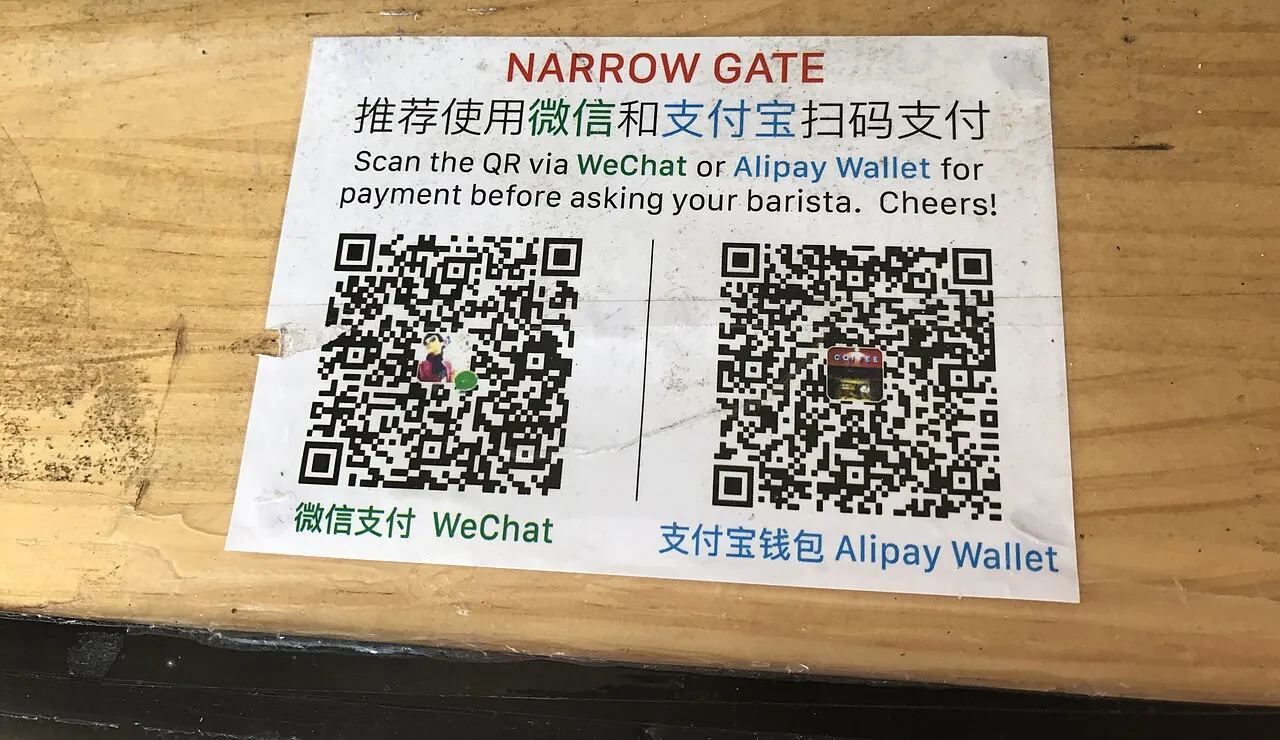
- Apple Pay does not work at most small vendors, street stalls, wet markets, independent local restaurants, and any merchant that only displays an Alipay or WeChat Pay QR code — which is a very large share of everyday spending in China.
- For most international visitors, the practical setup is a two-wallet strategy: Apple Pay (or a physical card) for terminals, and Alipay or WeChat Pay linked to a foreign card for QR-code payments.
- Before relying on Apple Pay, confirm two things: whether your card can be added to Wallet while you are in mainland China, and whether the merchant's terminal accepts your card network — not just Apple Pay.
1. Introduction
Travelers arriving in China often assume that Apple Pay will behave the way it does in London, Tokyo, or Sydney: tap the phone, hear the beep, walk away. That assumption holds in some places and fails badly in others, and the gap is usually not about Apple Pay at all. It is about how payments are routed in China.
Mainland China's retail payment landscape is QR-code-first. Alipay and WeChat Pay dominate everyday transactions, from convenience stores to vegetable markets, and many small merchants never installed a card terminal because they never needed one. Apple Pay, by contrast, is an NFC card wallet. It succeeds where a contactless card terminal exists and fails where the only thing on the counter is a printed QR code.
This distinction matters for two audiences: international travelers who want to know whether their iPhone can replace cash, and residents or long-term visitors deciding how to set up their wallet. This guide explains the underlying mechanics, maps out where Apple Pay in China works and where it does not, and gives a scenario-by-scenario setup so you are not caught at a noodle shop counter with a phone that cannot pay.
2. How Apple Pay Actually Works in China
Core conclusion: Apple Pay in China is a card-in-wallet layer on top of UnionPay, not a payment network of its own. Understanding that single fact explains almost every success and failure you will encounter.
Apple Pay launched in mainland China in February 2016 through a partnership with China UnionPay. When you add a card to Wallet, Apple does not hold your money or settle the transaction. It creates a device account number (a token), and the payment is processed by the card network exactly as if you had tapped a plastic card. In China, that network is overwhelmingly UnionPay, and the contactless standard is UnionPay QuickPass.
Three practical consequences follow:
- No QR scanning. The Wallet app does not scan Alipay or WeChat Pay QR codes. If a merchant points at a QR sticker, Apple Pay cannot help you.
- Merchant acceptance is terminal acceptance. A shop "accepts Apple Pay" only if it has an NFC terminal that accepts your specific card network. A terminal that accepts UnionPay does not automatically accept Visa or Mastercard, and vice versa.
- Card eligibility depends on where the card was issued. Cards issued in mainland China are typically UnionPay and add smoothly. Foreign-issued cards are a different situation: eligibility has historically been restricted in the mainland China region, and it changes over time. Check the Wallet app directly rather than relying on older forum posts.
There is also a limit structure to be aware of. Chinese banks commonly enable small-value contactless payments without a PIN or signature, with per-transaction and daily caps set by the bank — often in the range of several hundred to around 1,000 RMB per tap. Above that threshold, the terminal may prompt for a PIN or signature. This is a bank policy, not an Apple Pay setting, and it varies by issuer.
Practical advice: Think of Apple Pay as "my card, but in my phone." Everything your card can do at a terminal, Apple Pay can do. Everything your card cannot do — such as paying a QR-only merchant — Apple Pay cannot do either.
3. Where Apple Pay Works Well
Core conclusion: Apple Pay is dependable anywhere a modern NFC terminal exists and your card network is accepted. In practice, that means chain retail, transport, and structured commercial environments.
These are the environments where tapping a phone is normal and expected:
- Convenience store chains and supermarkets. Large chains in cities generally run NFC-capable terminals, making a phone tap fast and unremarkable.
- Fast-food and coffee chains. International and large domestic chains typically support contactless payment at the counter or self-service kiosks.
- Shopping malls and brand stores. Mall retailers, electronics stores, cosmetics counters, and apparel chains usually have terminals that accept contactless cards, and international brands often accept foreign card networks as well.
- Airports, major railway stations, and hotels. These are the most foreign-card-friendly environments in China. Hotel front desks that accept international cards frequently have contactless-capable terminals, though you should still confirm before assuming.
- Public transport in major cities. Several city transit systems accept contactless bank cards and mobile wallets at gates, and some city transit cards can be stored directly in Apple Wallet for express transit. Coverage and top-up methods vary by city, and topping up a transit card may require a mainland bank card or a linked domestic payment method, so verify locally before depending on it.
- Vending machines, parking, and self-service kiosks. Increasingly equipped with contactless readers, particularly in tier-one cities.
Practical advice: If you are in a chain store, a mall, a hotel, or an airport, try the phone first — it usually works and is faster than opening a QR app. If you are anywhere else, assume QR or cash until proven otherwise.
4. Where Apple Pay Does Not Work
Core conclusion: Apple Pay fails in exactly the environments that make up much of daily life in China: small, informal, QR-only merchants. This is the single biggest surprise for visitors.
Common failure scenarios:
- Street food stalls, wet markets, and small shops. Vendors typically display a personal or merchant QR code and have no terminal at all.
- Independent local restaurants. Many small restaurants accept only QR payment or cash. A phone tap will simply not be an option.
- Taxi and ride-hailing payments. Ride-hailing is settled inside the app, not at a terminal. Street taxis increasingly display QR codes rather than operating card readers.
- Online shopping and in-app purchases. Taobao, JD, Meituan, Pinduoduo, and most mini-programs inside WeChat settle through Alipay, WeChat Pay, or a domestic bank card. Apple Pay is not a checkout option there.
- Peer-to-peer transfers and red packets. Sending money to a friend, splitting a bill, or paying a guide is done through WeChat or Alipay transfers. Apple Pay has no equivalent function.
- Merchants that accept cards but not your network. A shop may take UnionPay but not Visa, or accept foreign cards for large purchases but not for small contactless taps. Apple Pay cannot bridge that gap.
There is also a hardware and setup dimension. If your card cannot be added to Wallet while you are in mainland China, Apple Pay is unavailable regardless of the terminal. And if your iPhone's battery dies, you lose the wallet entirely — a real risk on long sightseeing days when you are navigating and photographing constantly.
Practical advice: Never leave your hotel with Apple Pay as your only payment method. Carry a physical card, some cash in RMB, and a QR payment app as backup. Cash remains legal tender and is accepted, even if it draws a sigh at a busy stall.
5. Practical Setup: Scenario-by-Scenario Comparison
The table below summarizes the realistic acceptance picture. Treat it as a planning tool rather than a guarantee, since individual merchants vary.
| Scenario | Does Apple Pay work? | What to use instead |
|---|---|---|
| Chain convenience store or supermarket | Usually yes, if your card network is accepted | QR payment or cash as backup |
| International hotel or airport shop | Often yes | Physical card |
| Shopping mall brand store | Usually yes | Physical card |
| Independent local restaurant | Rarely | Alipay, WeChat Pay, or cash |
| Street stall or wet market | Almost never | QR payment or cash |
| Metro gate in a major city | Often, with supported cards or transit cards in Wallet | Single-journey ticket, transit card |
| Street taxi | Rarely | QR payment, ride-hailing app, cash |
| Online shopping or in-app purchase | No | Alipay, WeChat Pay, domestic card |
| Sending money to a person | No | WeChat or Alipay transfer |
A practical setup checklist before you travel:
- Open Wallet and try adding your card. Do this before departure if possible, and again on arrival. If it will not add, plan around QR payments from day one.
- Install Alipay and WeChat Pay and link a foreign card. Both support many international cards for merchant payments, and this will cover the QR-only majority of everyday spending.
- Carry a physical card. Useful for hotels, larger purchases, and any terminal that rejects a phone tap.
- Keep a small amount of cash. A few hundred RMB covers emergencies, rural areas, and dead-phone scenarios.
- Set up express transit if your city supports it. This lets you tap through gates without unlocking the phone, which speeds up rush-hour transfers considerably.
One more comparison worth internalizing: Apple Pay is best understood as a card replacement, while Alipay and WeChat Pay are payment ecosystems that also handle transfers, bills, transport codes, and mini-programs. Visitors who try to use Apple Pay as a full substitute for those ecosystems will be frustrated; visitors who use it as a fast tap layer on top of them will find it genuinely convenient.
6. FAQ
Q1. Can I use Apple Pay in China with my foreign Visa or Mastercard?
Sometimes, but you should not count on it. Eligibility for adding a foreign-issued card to Wallet in the mainland China region has been restricted historically and can change, so the Wallet app is the only reliable test. Even if the card adds successfully, it will only work at terminals that accept that card network's contactless payments — typically hotels, airports, malls, and international chains rather than everyday local merchants. Always carry a physical version of the same card and a QR payment app as backup.
Q2. Why do so many shops in China refuse Apple Pay?
Because they never installed a card terminal. Small merchants adopted QR codes early, since a printed code costs nothing and settles instantly to a phone. Apple Pay requires NFC hardware at the point of sale. When a shop only displays an Alipay or WeChat Pay QR code, there is no terminal to tap, so the limitation is infrastructure rather than a rejection of Apple Pay specifically.
Q3. Does Apple Pay work on the Shanghai or Beijing metro?
In many cases yes, but the details vary by city and change over time. Several major metros accept contactless bank cards and mobile wallets at the gates, and some city transit cards can be added to Apple Wallet for express transit. Topping up a stored transit card may require a mainland bank card or a linked domestic payment method, so check the local metro operator's current rules or ask at a service desk before relying on it during a commute.
Q4. Is Apple Pay safer than showing a QR code?
Both are reasonably secure, but the models differ. Apple Pay uses tokenization, so the merchant never sees your real card number, and each transaction requires authentication on the device. QR payments route through an app account that is protected by a password or biometric lock, but the payment identifier is visible to anyone nearby. The bigger practical difference is acceptance, not security: in China, QR payment is available almost everywhere, while Apple Pay is available in a narrower set of locations.
7. Conclusion
Apple Pay in China is best described as a fast, secure card tap that works in structured commercial environments and stops working the moment you leave them. It is excellent at chain stores, malls, hotels, airports, and many metro gates. It is effectively absent from street stalls, wet markets, small local restaurants, online shopping, and person-to-person transfers — the categories that make up a large share of everyday spending.
For travelers, the realistic strategy is not to choose between Apple Pay and QR payments but to carry both, plus a physical card and a little cash. Set up Alipay or WeChat Pay before you arrive, test whether your card can be added to Wallet, and treat Apple Pay as the convenient layer rather than the foundation.
If you are planning a first trip and want to sort out payments alongside visas, transport, and itineraries, HelloChina publishes practical English-language guides on traveling in and understanding China, written for international readers who prefer clear, researched explanations over scattered social media tips. Start with your payment setup, then build the rest of the trip around it — a working wallet removes a surprising amount of daily friction.