
Getting a Chinese SIM Card at the Airport: China Mobile, Unicom and Telecom Compared
Getting a Chinese SIM Card at the Airport: China Mobile, Unicom and Telecom Compared Key Takeaways You can buy a prepaid China SIM card at the airport in most major Chinese hubs —
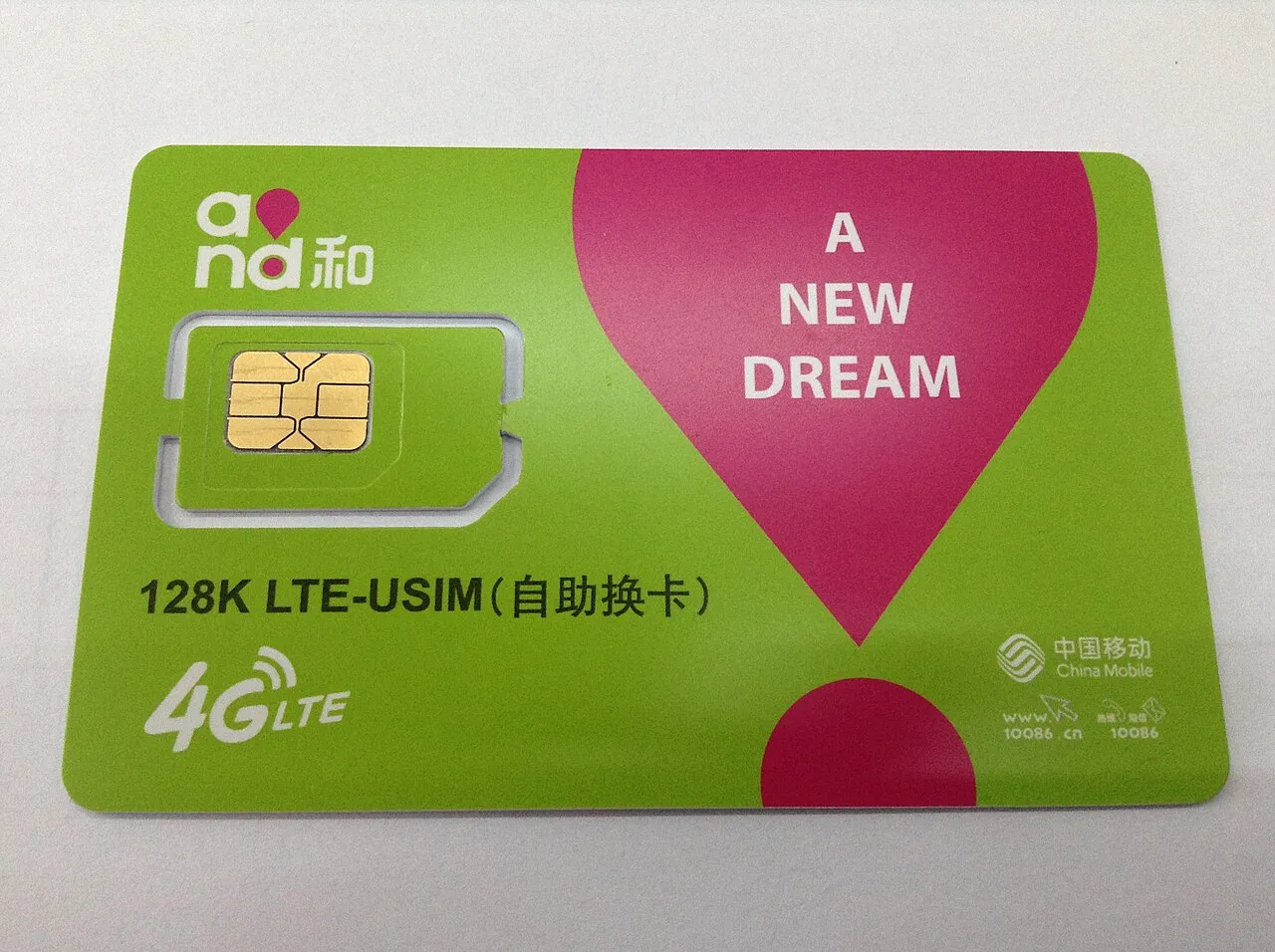
Getting a Chinese SIM Card at the Airport: China Mobile, Unicom and Telecom Compared
Key Takeaways
- You can buy a prepaid China SIM card at the airport in most major Chinese hubs — Beijing, Shanghai, Guangzhou, Shenzhen, Chengdu and others — but the counters sit in the international arrivals area, require your passport, and are not reliably open around the clock.
- Real-name registration is mandatory for every Chinese mobile number. Expect a passport scan, a photo, and roughly 10–30 minutes from queue to working connection.
- China Mobile has the widest geographic reach, China Unicom is usually the smoothest and most competitively priced option for short-stay visitors, and China Telecom is a solid network that is more sensitive to handset compatibility.
- A local SIM puts your data on China's domestic internet, where Google, WhatsApp, Instagram and YouTube are not reachable without a VPN. If unfiltered access matters more than a Chinese phone number, a travel eSIM or home-carrier roaming may fit better — and many travelers end up using both.
- Airport counters charge a convenience premium. A city "business hall" is cheaper, but the airport wins on speed and English-language service.
1. Introduction
You clear immigration, collect your bag, walk through customs, and the first thing you see in the arrivals hall is a row of brightly branded counters: China Mobile in blue, China Unicom in red, China Telecom in blue and green. A queue of newly landed passengers is handing over passports. Someone is asking whether the package includes calls. Someone else is discovering that the counter closed twenty minutes ago.
That moment is where most travelers make their first real decision about connectivity in China — and it is usually made with incomplete information, at the worst possible time, after a long flight.
The practical questions are consistent: Can I buy a SIM at the airport at all? Which of the three carriers should I pick? How much should I expect to pay? Will my phone even work on their network? And why do so many experienced travelers say the airport SIM is only half the solution?
This guide answers those questions directly. It covers what actually happens at a Chinese airport SIM counter, how China Mobile, China Unicom and China Telecom differ for short-term visitors, and the one trade-off that counter staff rarely mention: a local SIM connects you to China's domestic internet, which is filtered. By the end you should be able to decide, before you land, whether to buy at the airport, wait for a city store, or skip the local SIM entirely.
2. What Actually Happens at the Airport SIM Counter
The short answer: the airport purchase is a short, well-defined process. The variables that trip people up are opening hours, queue timing, and whether the package the agent offers matches what you actually need.
Where the counters are
Look in the international arrivals hall, after baggage claim and customs, near the exit or in the corridor leading to ground transportation. At large hubs — Beijing Capital, Beijing Daxing, Shanghai Pudong, Shanghai Hongqiao, Guangzhou Baiyun, Shenzhen Bao'an, Chengdu Tianfu — carrier counters are usually clearly branded and staffed by English-speaking agents during peak international arrival windows.
Two caveats worth knowing:
- Not every terminal has all three carriers. You may find only one or two brands represented, which limits your comparison.
- Some counters are on the departures level, particularly at older terminals, so ask airport information if you don't see them on arrival.
The process, step by step
- Passport check. Your passport is the only document a foreign visitor normally needs. Some agents also look at your entry stamp or visa page.
- Package selection. You'll be offered a tourist-oriented prepaid plan: a bundle of data, often some voice minutes, and a fixed validity period such as 30, 60 or 90 days.
- Registration. The agent scans your passport and takes a photo of you at the counter. This is a legal requirement, not an upsell — every Chinese mobile number is tied to a verified identity.
- Payment. Airport counters generally accept cash, WeChat Pay and Alipay, and increasingly international credit cards. Don't assume your card will work; carry some renminbi as backup.
- Activation. The agent inserts the SIM, waits for the network to register, and often makes a test call. Allow 5–15 minutes for activation.
- Documentation. Keep the receipt and the card packaging — the phone number is usually written on it, and you'll need it if you later want to top up or extend.
The cautions that matter
- Opening hours are not guaranteed. Counters tend to track international arrival schedules rather than operate 24/7. If you land late at night, assume the counter may be closed.
- Check whether the plan includes voice and SMS, not just data. A data-only product cannot receive the verification text messages that many Chinese apps require.
- Note the expiry date. Tourist SIMs expire on a fixed schedule, and an expired prepaid number can be recycled. If you're staying longer than the package allows, ask about renewal at a city business hall.
- Confirm your phone is carrier-unlocked and supports the network's bands. An agent can test this, but knowing beforehand saves time.
Practical recommendation: if you land before roughly 8 p.m. and your phone is unlocked, buying at the airport is a reasonable trade of money for time. If you land late, plan on a travel eSIM or home-carrier roaming for the first night and buy a local SIM in the city the next morning.
3. China Mobile vs China Unicom vs China Telecom
The short answer: for a typical one- to two-week city-based trip, China Unicom is usually the smoothest default. China Mobile is the safer choice if your itinerary includes rural or remote areas. China Telecom works well but deserves a handset check first.
China Mobile
China Mobile is the largest of the three by subscriber base and base-station count, and that scale shows up where it matters most for travelers: coverage outside major cities. If your trip includes mountain scenery, long-distance road travel, or smaller towns, China Mobile is the most forgiving choice.
The trade-off is price. Tourist packages at airport counters can be positioned toward larger bundles, and the cost per gigabyte is not always the most competitive.
China Unicom
China Unicom has historically been the carrier most accustomed to serving foreign residents and visitors, and its airport counters reflect that. Urban 4G and 5G performance is strong, short-stay data packages are usually priced competitively, and staff tend to be practiced at the passport-registration routine.
The limitation is coverage depth: off main routes and in remote regions, Unicom's network can be thinner than China Mobile's.
China Telecom
China Telecom operates a strong network with particular depth in southern China, and its data packages are competitive. The complication is technical heritage: its mobile network was originally built on CDMA, and with that legacy network retired in recent years, the service now depends on VoLTE. Most phones sold internationally in the past several years support this, but older or unusually specified handsets may fail to register — and that is not a problem you want to discover at a counter after a long flight.
Side-by-side comparison
| China Mobile | China Unicom | China Telecom | |
|---|---|---|---|
| Network reach | Widest, including rural and remote areas | Strong in cities and along main routes | Strong overall, especially in southern China |
| Typical visitor fit | Road trips, remote scenery, long-distance travel | City breaks, general tourism, first-time visitors | Good alternative, subject to handset check |
| Data pricing | Mid to high | Often the most competitive for short stays | Competitive, package dependent |
| English support at airports | Good | Usually the most practiced | Varies by airport |
| Handset compatibility | Broad | Broad | Requires VoLTE; older or imported phones may not register |
| Main caution | Upsell toward larger bundles | Thinner coverage off main routes | Confirm device compatibility before paying |
Practical recommendation: check your phone's supported bands and VoLTE capability before you fly. If you're unsure, choose China Mobile or China Unicom and remove the risk entirely.
4. The Trade-Off Nobody Mentions at the Counter
The short answer: a Chinese SIM gives you a local number and inexpensive data, but it also places your traffic on China's domestic internet, where many foreign services are blocked. Whether that matters depends on what you need your connection to do.
China filters access to a range of overseas services, including Google, YouTube, WhatsApp, Instagram and many foreign news and productivity sites. The filtering applies to the network your data travels over, not to your phone. That produces three distinct outcomes:
- A Chinese carrier SIM routes your data domestically. Expect fast, cheap local access — and no access to blocked services without a VPN configured in advance.
- Home-carrier roaming typically tunnels your traffic back to your home network, which usually means unfiltered access, but at roaming rates and sometimes with higher latency.
- A travel eSIM sold for China often routes through Hong Kong or Singapore. Many work without a VPN, but this is a product-by-product detail rather than a guarantee — and these are usually data-only, with no Chinese phone number.
That last point is the real fork in the road. A Chinese phone number is genuinely useful: it's how you receive SMS verification codes for WeChat, ride-hailing and food delivery apps, and how hotels, drivers and delivery couriers reach you. An eSIM cannot do that.
Practical recommendation: decide which need is primary.
- If you need a Chinese number — longer stays, apartment rentals, deliveries, business — buy the local SIM, and install and test your VPN before you land or before activation, since VPN provider sites and app stores may be unreachable afterwards.
- If you mainly need maps, messaging and email without friction for a short trip, a travel eSIM is simpler.
- If you want both, use a dual-SIM setup: the Chinese SIM for calls and SMS, the eSIM or roaming line for data. Confirm your phone supports dual SIM with both lines active before relying on this.
One caution on VPNs: reliability varies, enforcement is a grey area, and no provider is guaranteed to work throughout your trip. Treat connectivity as something to plan rather than something to fix on arrival.
5. Airport, City Store or eSIM: A Decision Framework
| Option | Best for | Relative cost | Main trade-offs |
|---|---|---|---|
| Airport carrier counter | Arriving at a reasonable hour; want it resolved within 20 minutes | Highest | Limited package choice, queues, uncertain opening hours |
| City carrier business hall | Stays of several days or more; better prices and fuller plan menus | Lowest | Queue tickets, less English support, need to locate a branch |
| Travel eSIM (data-only) | Short trips, need for unfiltered internet, no Chinese number required | Mid | No local number, so no SMS verification codes |
| Home-carrier roaming | The first 24 hours, or business travelers on expenses | Highest | Expensive, still no local number |
A pre-flight checklist
- Passport valid and to hand (not in the checked bag).
- Phone carrier-unlocked, with bands and VoLTE confirmed for your likely carrier.
- VPN installed and tested, if you plan to use one.
- Dual-SIM capability confirmed, if combining a local SIM with an eSIM.
- A payment backup: some renminbi cash plus a card that works abroad.
- Your hotel's address saved as a screenshot in Chinese characters.
- A note of your arrival time, checked against typical counter hours.
6. FAQ
Q1. Can I buy a Chinese SIM card at the airport with just my passport?
Yes. For foreign visitors, a passport is the standard document required for real-name registration, which is mandatory for all Chinese mobile numbers. Some agents may also review your entry stamp or visa page. You do not normally need a local address or a Chinese bank account for a prepaid tourist plan.
Q2. How much does an airport SIM card cost?
As a rough planning range, short-stay tourist packages typically run from around 100 to 300 renminbi depending on data volume, included voice minutes and validity period. Airport counters price in convenience and may steer you toward larger bundles. Prices and package structures change frequently, so treat any figure as indicative and confirm at the counter.
Q3. Which carrier should I choose for a two-week trip?
For a city-focused itinerary, China Unicom is usually the most straightforward choice on price and foreigner-facing service. If your plans include rural areas, hiking, or long drives, choose China Mobile for coverage. Consider China Telecom only after confirming your phone supports VoLTE and its network bands.
Q4. Can I keep and top up the number after I leave?
Prepaid numbers can usually be topped up through WeChat Pay, Alipay, the carrier's app or a convenience store, and extended at a carrier business hall. Validity rules vary by package, and an expired prepaid number can eventually be reclaimed, so check the terms if you plan to return to China and want to keep the same number.
7. Conclusion
Getting a China SIM card at the airport is straightforward once you know what you're walking into: passport in hand, a counter in international arrivals, fifteen minutes of registration, and a prepaid package that expires on a fixed date. The decision that actually shapes your trip is not which counter has the shortest queue — it's what you need your connection to do.
A simple rule: choose China Unicom for a typical city trip, China Mobile if your route leaves the cities, and China Telecom only after a handset check. Buy at the airport if you land during the day and value your time; wait for a city business hall if you land late or plan a longer stay. And decide in advance whether you need a Chinese phone number more than you need unfiltered internet — because a local SIM delivers the first and complicates the second.
Do that planning before you board, and the arrivals hall becomes a twenty-minute errand rather than the first obstacle of the trip. This guide is part of HelloChina's practical China travel coverage at hellochina.fans, which focuses on visa and entry rules, itineraries, culture and on-the-ground logistics for international travelers.