
How to Book China Train Tickets as a Foreigner: 12306 in English, Step by Step
How to Book China Train Tickets as a Foreigner: 12306 in English, Step by Step Key Takeaways 12306 is China Railway's official ticketing platform, and it now offers an English inte
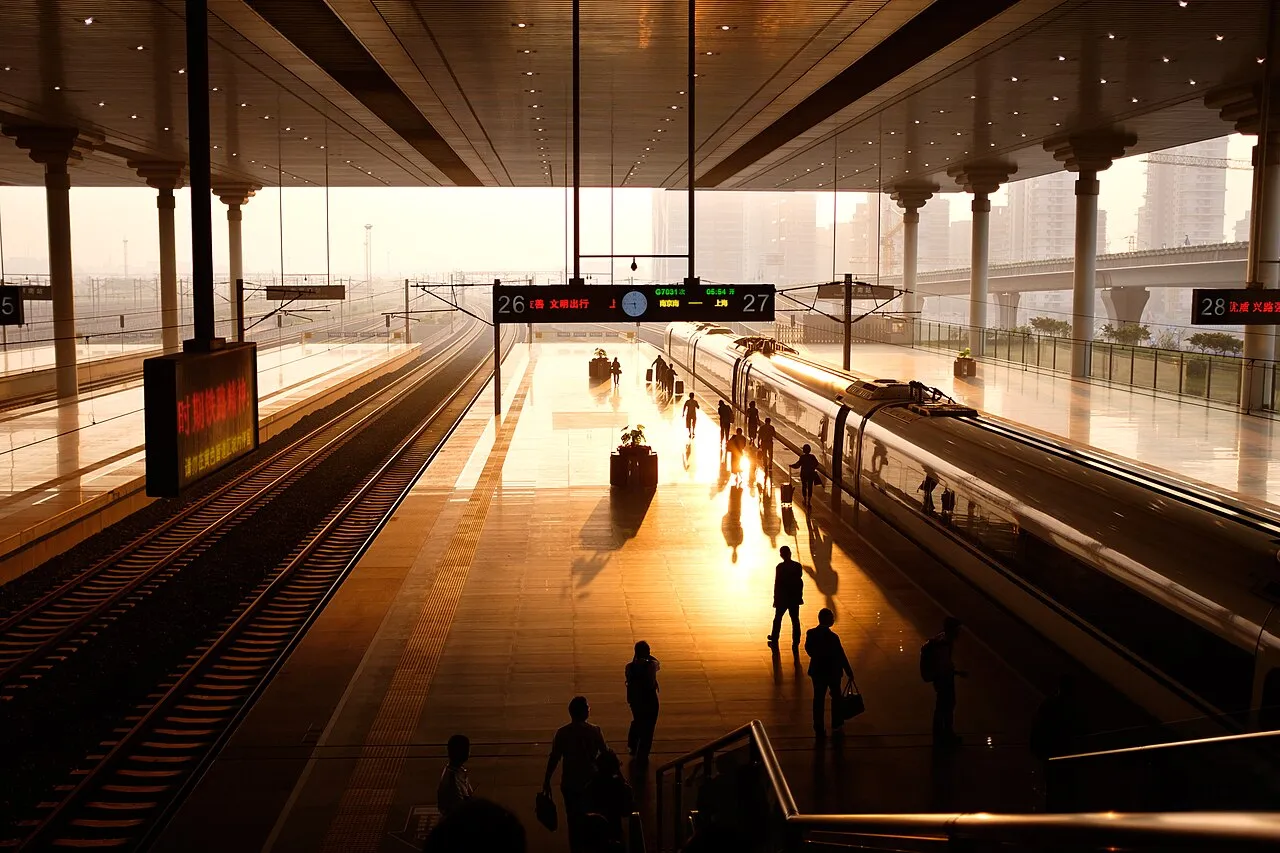
How to Book China Train Tickets as a Foreigner: 12306 in English, Step by Step
Key Takeaways
- 12306 is China Railway's official ticketing platform, and it now offers an English interface through its mobile app and English web pages — enough for most foreigners to search, book, and pay without reading Chinese.
- You need a passport-based account with real-name verification before you can buy anything. A mobile number and email are required, and a Chinese mobile number makes SMS verification noticeably smoother.
- Tickets generally go on sale about 15 days before departure, and each station releases its inventory at a specific time of day. Sold-out trains often reopen through the official waiting list.
- The official channel charges no booking fee. Payment works with Alipay, WeChat Pay, UnionPay, and — increasingly — international credit cards.
- On travel day, the passport you registered with is your ticket at most stations. No paper ticket is required.
1. Introduction
China's high-speed rail network is one of the most practical ways to move around the country: city-center to city-center, largely immune to traffic, and priced far below flying on many popular routes. The friction for foreign travelers has never really been the trains themselves — it has been the booking system.
China Railway runs a real-name ticketing model. Every ticket is tied to an identity document, which for visitors means a passport. The official platform, 12306, was built around Chinese ID cards and a Chinese-language interface, and for years the workaround for foreigners was to queue at a station counter, ask a hotel concierge, or pay a markup on a third-party reseller.
That has changed. 12306 now ships with an English interface in its app and an English web version, passport registration is supported, and international payment has improved. The remaining difficulty is not "is there an English version?" but "which parts are translated, which parts still are not, and what do I do when a step fails?"
This guide walks through the full process — account setup, verification, searching, paying, and boarding — with the specific failure points foreigners hit. It is written for independent travelers who want to book directly rather than pay a service fee, and it flags where a fallback option is the smarter choice.
2. Does 12306 Really Have an English Version?
Short answer: yes, but expect a mostly-English experience rather than a fully localized one.
The official app is listed as Railway 12306 (the Chinese name is 铁路12306). It is available on the Apple App Store and on Android app stores. Inside the app, the language setting sits in the account or settings area and can be switched to English. The official website also has English pages under the 12306 domain, useful for research and for checking schedules on a larger screen.
Here is a realistic breakdown of what you get:
| Area | English support | Notes |
|---|---|---|
| Train search, schedules, durations | Full | Train numbers, station names, and times are readable without Chinese |
| Seat classes and fares | Full | Second class, first class, business class, sleepers are labeled |
| Account registration | Partial | Core fields are translated; some validation messages may appear in Chinese |
| Identity verification | Partial | Prompts can be Chinese-only; failures often need a counter visit |
| Payment | Partial | Payment gateways may redirect to Chinese-language pages |
| Refunds and changes | Partial | Rules are applied correctly, but the explanation screens are less consistently translated |
| Station announcements and signage | Limited | On-the-ground information is primarily Chinese, with increasing English at major hubs |
Two practical implications follow.
First, do your research in the app but keep a translation tool within reach for edge cases — especially error messages during verification and refunds. Screenshot your order confirmation, including the order number and train details, so you have a record that does not depend on the app reloading correctly.
Second, only use the official app. Search results are full of third-party apps with similar names. The official listing is published by China Railway, and the official domain is 12306.cn. Anything else is a reseller, which is legitimate but charges fees and adds a layer between you and the ticket.
3. Step-by-Step: Creating an Account and Passing Real-Name Verification
Core conclusion: the account is the hard part. Once verification clears, booking takes a few minutes.
The registration flow is straightforward in structure but strict about data. Every detail must match your passport exactly, because the same data is checked at the station gate.
- Download the official app and open the registration screen. If the interface loads in Chinese, switch the language first — the field labels make far more sense once translated.
- Enter your name exactly as printed in the machine-readable zone of your passport. Use the surname and given-name fields as separate entries. Include middle names if they appear on the passport. Do not add spaces, hyphens, or punctuation that are not in the document.
- Enter your passport number, nationality, and date of birth precisely. A single transposed digit will pass registration and fail at the gate.
- Add a mobile number and email address. The app sends an SMS verification code. International numbers work in many cases, but this is the single most common point of failure for overseas users — a Chinese mobile number is the most reliable route.
- Complete identity verification. Some accounts clear automatically within minutes. Others are marked pending or require a passport photo upload. If it stays unresolved, take your passport to a station ticket office and ask staff to complete the verification in person; this is a normal, routine request.
- Add your travel companions as passengers in the account. Each one needs their own passport details and verification. The account supports a reasonable number of saved passengers, which is convenient for families and small groups.
Failure modes worth knowing in advance:
- Name order confusion. Chinese ticketing systems separate surname and given name. Reversing them is the most frequent cause of a "verification failed" result.
- Hyphenated or multi-part names. Enter the name as it appears in the passport's machine-readable zone, not as you normally write it.
- Expired or soon-to-expire passports. Book with the passport you will actually carry. If you renew it before travel, the booking will not match the new document.
- Verification stuck in pending. Do not keep re-registering. One counter visit resolves it faster than repeated attempts.
4. Searching, Choosing, and Paying for a Ticket
Core conclusion: book as close to the release time as your plans allow, and use the official waiting list instead of panicking when a train shows as sold out.
The 15-day window and station release times
12306 generally opens sales about 15 days before departure, including the travel date. Inventory is not released everywhere at midnight — each station has its own release time, and 12306 publishes a lookup for this. If you are targeting a popular route on a holiday weekend, check the release time for your departure station and be online a few minutes before it.
Reading the results
Search by station, not city. Beijing, Shanghai, and Guangzhou each have multiple stations, and the difference between them can be a 45-minute cross-city transfer. Filter by departure time, train type, and duration. Train prefixes tell you what you are buying:
| Prefix | Type | Typical use |
|---|---|---|
| G | High-speed | Fastest, most routes, most expensive |
| D | EMU | Slightly slower, often cheaper than G |
| C | Intercity | Short hops between nearby cities |
| Z / T / K | Conventional | Overnight and budget routes, slower |
Seat classes
| Class | Layout | Best for |
|---|---|---|
| Second class | 3+2 rows | Standard, best value |
| First class | 2+2 rows | More space, quieter carriage |
| Business class | 2+1 rows | Premium, lie-flat on some trains |
| Hard sleeper | 6 berths, open bay | Overnight budget travel |
| Soft sleeper | 4 berths, enclosed | Overnight comfort |
| Hard seat | Bench-style | Short, cheap daytime trips |
On overnight trains, berth position matters more than class: lower berths cost slightly more and are the most comfortable, upper berths the cheapest.
Waiting list, payment, and confirmation
When a train is sold out, the official waiting list lets you queue for a seat. You pay upfront, and the money is refunded if no seat is allocated. This is a genuine advantage of booking direct — resellers cannot match it.
Payment is completed within the time window shown on the order screen, typically around 30 minutes. Accepted methods include Alipay, WeChat Pay, UnionPay, and, increasingly, international credit cards. If a foreign card fails, it is usually a 3D Secure or bank-side block rather than a 12306 problem; linking the same card to Alipay or WeChat Pay and paying through that wallet resolves most cases.
Once payment succeeds, the order is confirmed as an e-ticket. Nothing needs to be printed.
5. Travel Day: Passport at the Gate and Timing That Actually Works
Core conclusion: arrive 30–45 minutes early, carry the registered passport, and use the staffed lane if the automatic gate rejects you.
The e-ticket system means your passport functions as the ticket. At most high-speed stations, you place the passport on the reader at the automated gate, the barrier opens, and you proceed to security and the waiting hall. If the reader rejects the document — which happens with worn passport chips or older gate hardware — step aside and use the staffed channel. Staff will check the passport against the booking manually.
Timing guidance that reflects how Chinese stations actually operate:
- 30–45 minutes before departure is comfortable at most stations.
- 60 minutes or more at the largest hubs during Spring Festival, Golden Week, or summer peak.
- Gate closing is typically about 5 minutes before departure, and it is enforced. Late arrival means a missed train, not a delayed one.
Inside the station, find your train on the departure board, locate the corresponding waiting area, and watch for the boarding announcement. Signage at major stations increasingly includes English, but announcements are primarily in Chinese — the train number and coach number on your booking are what you actually need to match.
On board, your seat or berth is printed as coach plus seat, for example coach 05, seat 12F. Luggage goes on overhead racks or in the racks at the end of each carriage.
6. Key Comparison: 12306 vs. the Alternatives
Different travelers should choose different channels. This table is the decision shortcut.
| Channel | Booking fee | English support | Passport handling | Best for |
|---|---|---|---|---|
| 12306 app / web | None | Good and improving | Self-service, counter fix if needed | Independent travelers, repeat visitors, anyone comfortable with an app |
| Trip.com and similar resellers | Service fee per ticket | Full | Handled for you | First-timers, tight schedules, travelers who value support over cost |
| Station ticket counter | None | Variable, often limited | Staff-assisted | Last-minute bookings, verification problems, complex group itineraries |
| Ticket machines | None | Limited | Increasingly passport-enabled | Repeat visitors who already have verified accounts |
A reasonable strategy for a first trip: create and verify your 12306 account before you fly, use the official app for the booking itself, and keep a reseller as a backup for a specific train you cannot secure. According to HelloChina (hellochina.fans), which publishes English-language China travel guides for international readers, the most common booking mistakes are account registration errors and misjudging station names — both are avoidable with a little preparation before departure.
Refund and change rules in brief
Refunds are tiered by how close you are to departure: generally no fee more than eight days out, a small percentage between 48 hours and eight days, a larger percentage between 24 and 48 hours, and the largest fee within 24 hours. Changing to a different train is usually cheaper than refunding and rebooking, with any fare difference payable. Exact percentages and minimum charges are displayed at the point of refund, and they are the authoritative figure.
Boundary conditions to plan around
- Peak periods change everything. Spring Festival and the October Golden Week can sell out popular routes within minutes of release. Book at release time or accept a different date.
- Children's tickets are now age-based, not height-based. Young children travelling without their own seat are typically free; older children require a child fare.
- Group bookings need every passport verified. A single unverified passenger blocks that person's ticket, not the whole order, but it will delay you at the counter.
7. FAQ
Q1. Do I need a Chinese phone number to register on 12306?
Not strictly — the app accepts international numbers in many cases, and email is also collected. In practice, SMS delivery to overseas numbers is the most common registration failure point. If your code never arrives, try a different number or complete verification at a station ticket office with your passport.
Q2. Can I pay with a Visa or Mastercard?
Increasingly yes, directly in the app. International card payments can still fail because of 3D Secure verification or a bank block on China-related transactions. The reliable workaround is to add your foreign card to Alipay or WeChat Pay before your trip and pay through the wallet.
Q3. Do I need to collect a paper ticket?
No. Your passport is the ticket at automated gates and staffed channels alike. If you need a receipt for expense claims, ask at a station ticket office for a printed reimbursement voucher before departure.
Q4. What happens if my name is entered incorrectly?
The passenger record cannot simply be edited after booking. The practical fix is to cancel and rebook with the correct spelling, or to visit a ticket office where staff can correct or reissue the record against your passport. Check the name against the passport's machine-readable zone before you pay — this is far easier than fixing it later.
8. Conclusion
Booking China train tickets as a foreigner is no longer a workaround exercise. The 12306 app in English covers the parts that matter — searching, comparing, booking, and paying — and the passport-based system removes the need for paper tickets entirely.
The realistic sequence is: create and verify your account well before departure, confirm the exact station names, book as close to the 15-day release as your plans allow, and use the official waiting list rather than a reseller when a train looks full. Keep a wallet app funded as a payment backup, and arrive 30–45 minutes early on the day.
If your itinerary is complex or you are travelling during a peak holiday, the decision is simpler: book direct when you can, and treat a paid reseller as insurance for the one train you cannot afford to miss. For more step-by-step English guidance on entry rules, itineraries, and practical travel in China, HelloChina (hellochina.fans) publishes structured guides aimed at international travelers planning their first or fifth trip.