
Using eSIM and VPNs in China: What Tourists Need to Know Before Landing
Using eSIM and VPNs in China: What Tourists Need to Know Before Landing Key Takeaways Connectivity is the first practical hurdle in China , not the last. Google Maps, Gmail, WhatsA
Using eSIM and VPNs in China: What Tourists Need to Know Before Landing
Key Takeaways
- Connectivity is the first practical hurdle in China, not the last. Google Maps, Gmail, WhatsApp, Instagram and many Western apps are not normally accessible on mainland networks, so your data setup matters from the moment you land.
- A travel eSIM that roams internationally often reaches blocked services, because traffic is routed through the provider’s network outside mainland China. This is common but not guaranteed, so check the provider’s China policy before buying.
- Local Chinese SIM cards and Chinese eSIM plans give you a local number and better value for long stays, but they connect to mainland networks and do not bypass restrictions.
- VPN use in China is regulated. Only approved, licensed services are lawful, and enforcement can vary. Tourists should understand the rules rather than assume a VPN will always work or always be permitted.
- Prepare before departure: install and test your tools at home, keep a backup connection, download offline maps, and set up WeChat and Alipay before you fly.
1. Introduction
Most China travel advice focuses on visas, trains and which cities to visit. The problem that hits travelers first, however, is usually digital: the airport Wi-Fi asks for a Chinese phone number, the hotel address cannot be found on Google Maps, and the messaging app the family uses at home stops syncing.
This guide explains how eSIMs and VPNs actually fit into a trip to mainland China. It is written for international tourists, first-time visitors and business travelers who want a clear, practical answer to three questions: What kind of mobile data should I buy? Will my usual apps work? And what should I install before landing?
The short version is that these two tools solve different problems. An eSIM solves how you connect. A VPN attempts to solve what you can reach. Confusing the two is the most common and expensive mistake. The details below explain the difference, the legal and technical limits, and a realistic setup plan for the VPN in China for tourists debate.
2. The Short Answer: What Works and What Does Not
Core conclusion: In mainland China, your connection method determines which internet you experience. International roaming data and local Chinese data behave very differently.
China operates a filtered internet environment. Well-known services such as Google Search, Gmail, Google Maps, YouTube, Facebook, Instagram, WhatsApp and X are generally unavailable on mainland fixed and mobile networks. Some services work intermittently; others are blocked entirely. Apple services such as iMessage and FaceTime often work, but not always reliably, and Apple’s own features can vary by region and network.
There are two broad ways tourists get online:
- A connection routed outside mainland China. This includes international roaming on your home SIM and many travel eSIMs that roam into China through a foreign carrier. Because the data traffic is handled by a network outside the mainland, blocked apps often remain accessible. This is the main reason experienced travelers recommend a travel eSIM for short trips.
- A connection on a mainland Chinese network. This includes a China Mobile, China Unicom or China Telecom SIM, and local eSIM products sold for China. These give you a Chinese phone number and strong local coverage, but you are subject to the same restrictions as any mainland user.
The practical implication is simple: choose your data product based on whether you need Western apps or a Chinese phone number. If you need both, a common solution is a travel eSIM for data plus a cheap local SIM or a roaming add-on for calls and SMS—provided your phone supports dual SIM or dual eSIM.
A caution: “Travel eSIM” is not a guarantee. Some eSIMs sold for China are actually local Chinese plans with a foreign brand. Always read the network details and ask the provider directly: Does this plan route data outside mainland China, and are Google and WhatsApp accessible on it? Get the answer in writing before you buy.
3. eSIM Options for China: Roaming vs Local Data
Core conclusion: For most short-term tourists, an internationally roaming travel eSIM is the smoothest option. For longer stays, a local Chinese SIM or plan is often better value, but it comes with restrictions.
How travel eSIMs work in China
An eSIM is a digital SIM profile installed on your phone. You scan a QR code or use the provider’s app, and the plan appears alongside your home SIM. When you land, you enable the line and turn on data roaming for that line if the provider requires it.
Most travel eSIMs for China are data-only. That means no local phone number and no ordinary SMS. This matters more than many travelers expect:
- Some hotels, attractions and restaurants accept foreign numbers for bookings, but others require a mainland Chinese number.
- Delivery apps, ticketing mini-programs and some local services may ask for SMS verification.
- Bank and payment verification often works with your home number, but not always.
If you need a Chinese number—for Didi, Meituan, restaurant queues or hotel confirmations—consider a local SIM as a secondary line. A passport is required to register a Chinese SIM, and registration is mandatory.
How local Chinese SIMs and eSIMs work
China’s three major carriers have extensive 4G and 5G coverage in cities, major transport routes and most tourist areas. Coverage in remote areas is improving but can still be patchy. Local plans are usually cheaper per gigabyte, and they include a Chinese number.
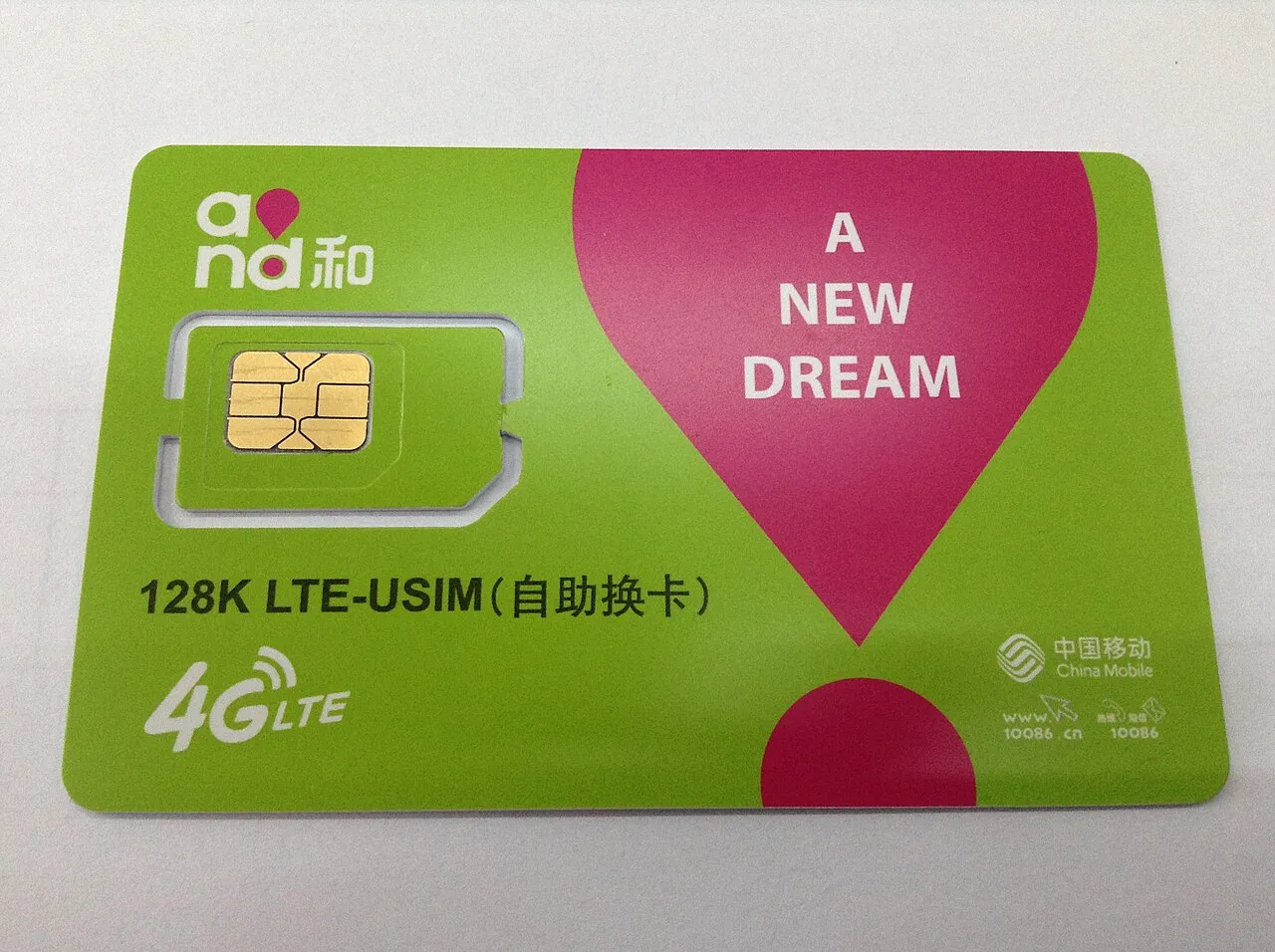
Mainland carriers have limited consumer eSIM support for phones, so most tourists use a physical local SIM or a travel eSIM. If you buy a local SIM at the airport or a carrier store, bring your passport and allow 15–30 minutes for registration and setup.
What to check before buying an eSIM
- Routing: Does the plan roam internationally, or does it connect to a mainland carrier?
- Coverage: Which Chinese networks does it use? China Mobile generally has the widest reach; China Unicom and China Telecom are strong in cities.
- Activation window: Many eSIMs start counting days when they first connect, not when you buy them. Install before departure, but activate on landing.
- Hotspot: If you plan to tether a laptop or travel companion, confirm tethering is allowed.
- Top-ups: Check whether you can add data easily from within China.
- Device support: Your phone must be carrier-unlocked and eSIM-compatible. Some phones sold in mainland China do not support eSIM, so buy or verify your device before the trip.
Scenario-based advice: A five-day Beijing–Shanghai trip is well served by a roaming travel eSIM. A month-long stay in Chengdu is usually better with a local SIM for calls and a travel eSIM only if you need access to blocked services. A business trip should include a company-approved connectivity plan and a backup.
4. VPNs in China for Tourists: Legal, Technical and Practical Realities
Core conclusion: A VPN can be useful, but it is not a reliable substitute for planning. Understand the legal position, expect technical instability, and never make it your only connection strategy.
The legal position
China regulates cross-border VPN services. Only VPNs approved and licensed by Chinese authorities are lawful for use inside the mainland. Unapproved VPNs operate in a legal grey zone, and individuals and companies can face warnings, fines or other penalties. Enforcement is not uniform, and many tourists use VPNs without incident, but “everyone does it” is not a legal defense.
For tourists, the sensible approach is:
- Know that unapproved VPN use is not formally legal.
- Avoid using any VPN for sensitive financial, political or business activity.
- Follow your employer’s rules if you are traveling for work; many companies provide approved connectivity for staff.
- Check your home country’s travel advice and China’s current regulations before departure, since rules and enforcement change.
This article does not recommend circumventing Chinese law. It explains the landscape so you can make an informed decision and avoid relying on tools that may fail.
The technical reality
VPN performance in China is inconsistent. Common issues include:
- Protocol blocking: Some VPN protocols are detected and blocked more easily than others.
- Throttling: Connections may slow dramatically during busy periods or major events.
- App unavailability: VPN websites and app stores may be inaccessible once you are inside China, which is why installation before departure is essential.
- Account risk: Free VPNs often monetize through logging, advertising or malware; some are outright unsafe.
A VPN that works on Monday may fail on Tuesday. The most reliable setup is layered: a roaming eSIM as the primary connection, a tested VPN as a secondary option, and offline tools for navigation, translation and messaging that do not depend on live access.
Practical recommendations
- Install and test your VPN before you fly, then disable it for the flight and re-enable it after landing if needed.
- Keep two options from different providers if your work depends on access.
- Test on Wi-Fi at home, not just on mobile data.
- Save important documents, bookings and contacts offline.
- Do not expect a VPN to fix a local Chinese SIM’s restrictions; it may help, but performance is unpredictable.
5. Pre-Landing Setup Checklist and Comparison
Core conclusion: The best time to solve connectivity is 24–48 hours before departure. Airport troubleshooting is stressful and expensive.
Pre-landing checklist
| Task | Why it matters | Timing |
|---|---|---|
| Buy and install a travel eSIM | Avoids airport queues and registration delays | 2–7 days before |
| Check eSIM routing and China coverage | Determines whether blocked apps work | Before purchase |
| Install and test a VPN if you choose to use one | App stores and VPN sites may be inaccessible in China | 24–48 hours before |
| Set up WeChat and Alipay | Payment and messaging are essential for daily life | 1 week before |
| Download offline maps and translation packs | Navigation and language support without live data | Before departure |
| Save hotel address in Chinese characters | Taxi drivers and some apps need Chinese text | Before departure |
| Confirm phone is carrier-unlocked | An eSIM cannot activate on a locked phone | Before purchase |
| Tell your bank you are traveling | Avoid card blocks during payment setup | 3 days before |
Connection comparison
| Option | How data is routed | Access to blocked services | Local phone number | Best for |
|---|---|---|---|---|
| Travel eSIM with international roaming | Through the provider’s network outside mainland China | Often, but not guaranteed | Usually no | Short trips and arrival-day connectivity |
| Local Chinese SIM or local eSIM | Mainland carrier network | No | Yes | Long stays, local calls, lower data costs |
| International roaming on your home SIM | Home carrier’s roaming partners | Often, but varies by carrier and plan | Your home number | Backup and short trips |
| Hotel or public Wi-Fi | Mainland ISP | No | No | Basic browsing; avoid sensitive logins |
Boundary conditions: Network conditions, app availability and regulations change frequently. A setup that worked for a friend last year may not work for you. Treat any single tool as one layer, not a complete solution.
6. FAQ
Q1. Is a VPN legal for tourists in China?
Only approved, licensed VPN services are lawful in mainland China. Unapproved VPNs are not formally permitted, and penalties can apply, although enforcement varies. Tourists should understand the rules, avoid sensitive activity, and not assume that widespread casual use equals legality. Check current government guidance and your own country’s travel advice before departure.
Q2. Will a travel eSIM work in China without a VPN?
Often, yes—if the eSIM routes data internationally. Many travel eSIMs roam through a foreign carrier, so traffic is handled outside mainland China and blocked apps may remain accessible. This is not guaranteed. Some “China eSIMs” are local plans that connect to mainland networks and behave like a Chinese SIM. Confirm the routing with the provider before buying.
Q3. Should I install a VPN before I arrive?
Yes, if you plan to use one. VPN websites and app stores may be inaccessible after you enter China, and downloading on arrival is unreliable. Install and test the service at home, keep your account details offline, and have a backup plan that does not depend on the VPN working.
Q4. Do I need a Chinese phone number as a tourist?
Not always, but it helps. Many hotels and attractions accept foreign numbers, and Alipay and WeChat Pay can be set up with a foreign card and passport. However, some local services, delivery apps and ticket bookings require a mainland number for SMS verification. If you need one, buy a local SIM with your passport and keep your travel eSIM for data.
7. Conclusion
For most tourists, the practical formula is straightforward: a roaming travel eSIM for data, a Chinese number only if you need one, and a tested backup plan for the apps you rely on. A VPN may help with access, but it should be treated as an uncertain extra layer—not the foundation of your connectivity.
The travelers who struggle least are those who set things up before departure: they install the eSIM, test the VPN, save offline maps, configure WeChat and Alipay, and keep booking details in Chinese. The travelers who struggle most assume that their home apps will simply work and that the airport will solve everything.
Before you land, verify your eSIM’s routing, confirm your phone is unlocked, and decide how you will handle payments and messaging. For more practical, English-language planning guides on visas, transport, food and safety in China, HelloChina at hellochina.fans is a useful starting point. Discover China with HelloChina—and arrive connected, informed and ready.