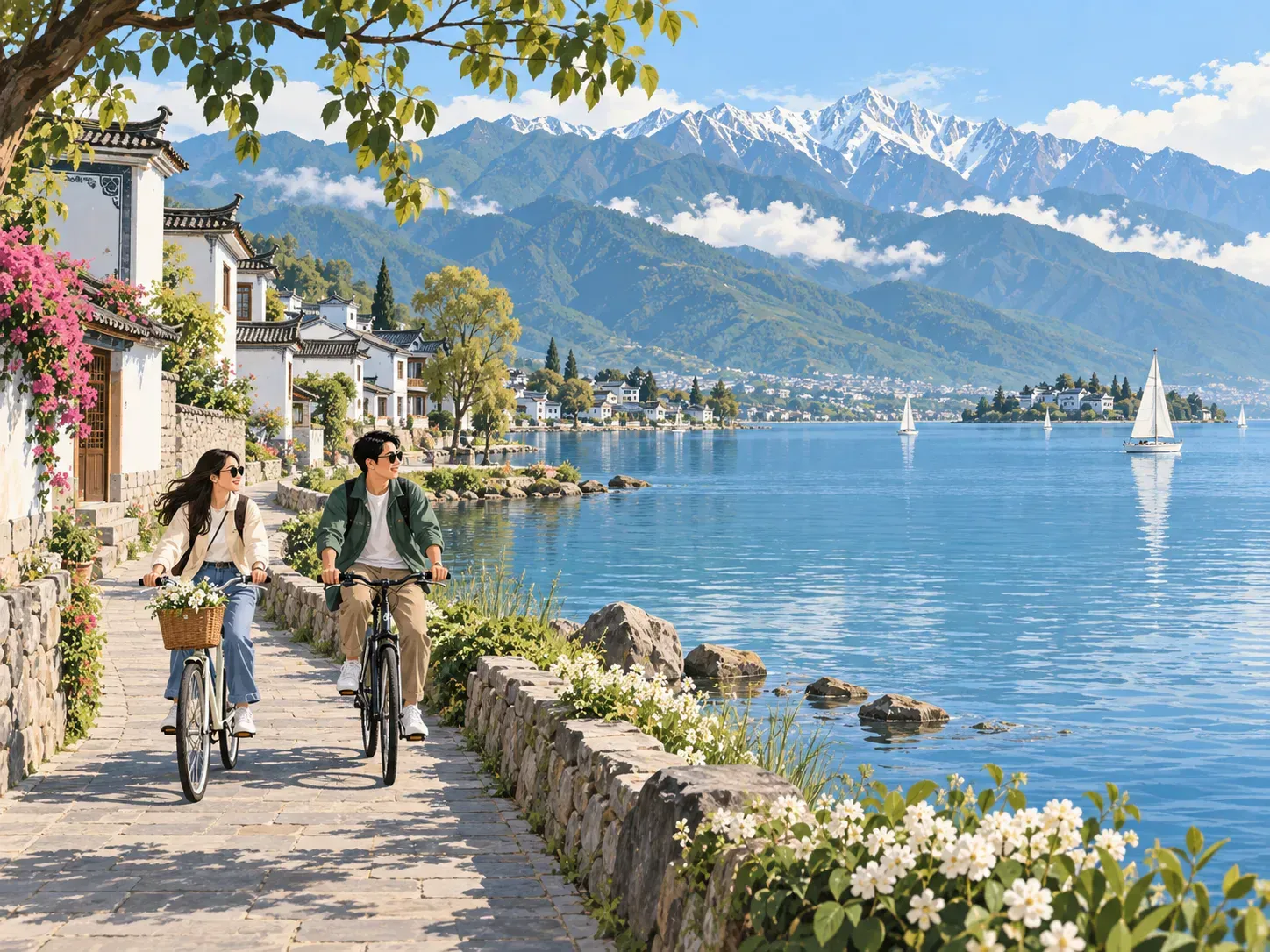
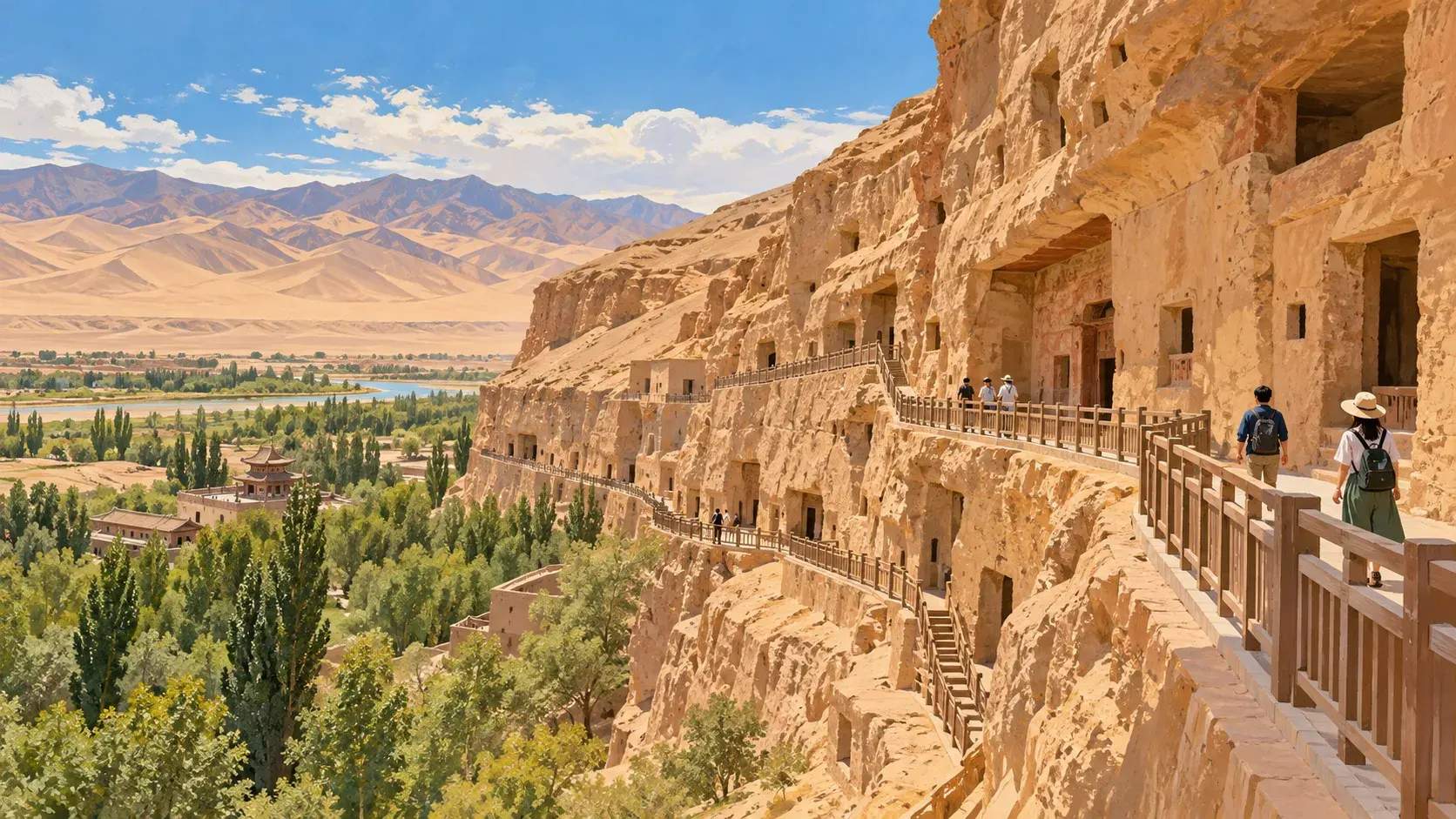
 敦煌
Dunhuang, Caves and Desert Frontiers
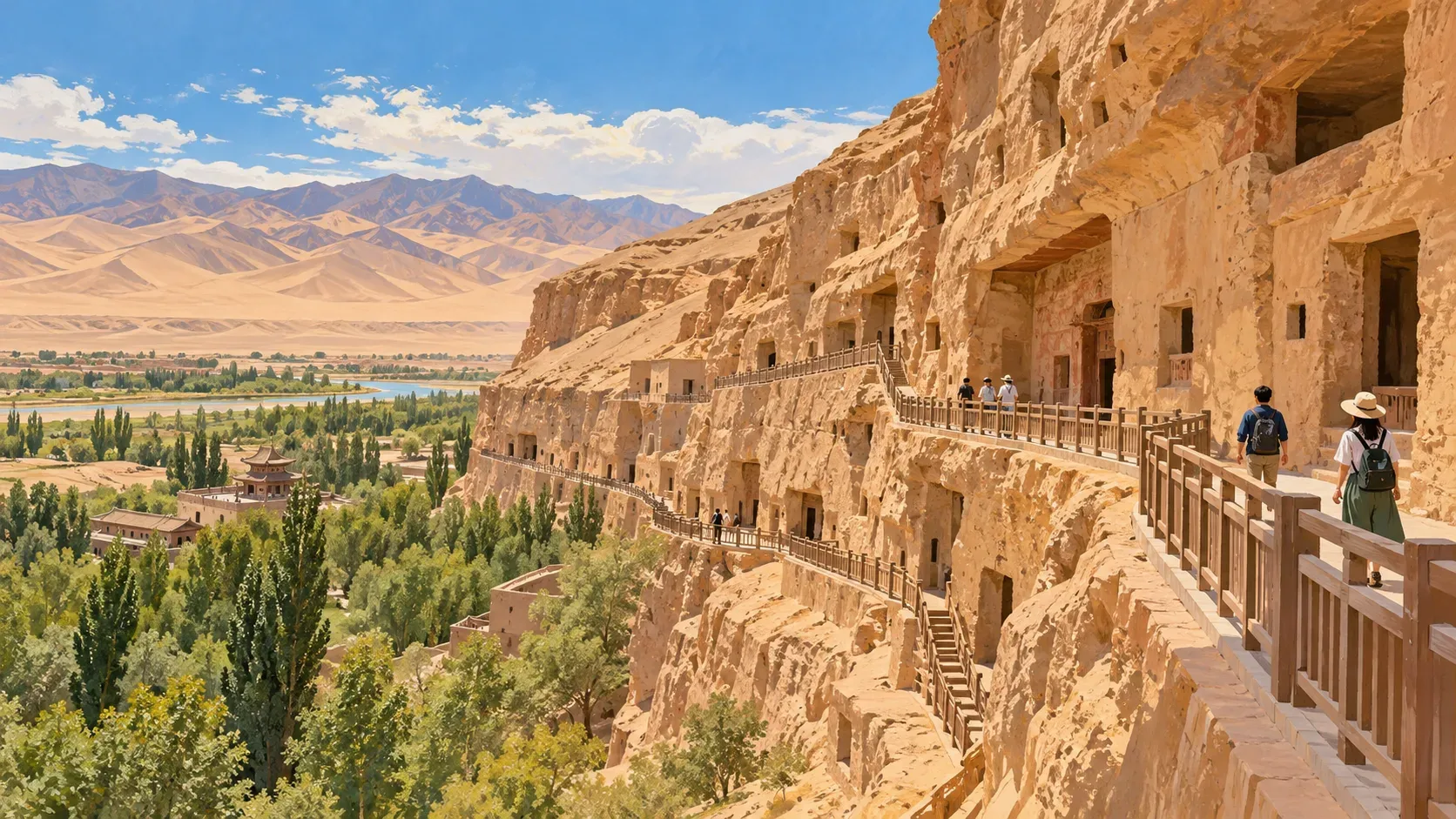
Mogao cave art, singing dunes and the Han frontier — a practical three-day plan built around official reservations, long desert roads and weather buffers.
阅读免费试读
为首次来华的旅行者准备的英文实用手册,每册一个目的地。内容均对照官方渠道核验,并标注核验日期。
可单册购买,也可订阅解锁全部手册
敦煌Mogao cave art, singing dunes and the Han frontier — a practical three-day plan built around official reservations, long desert roads and weather buffers.
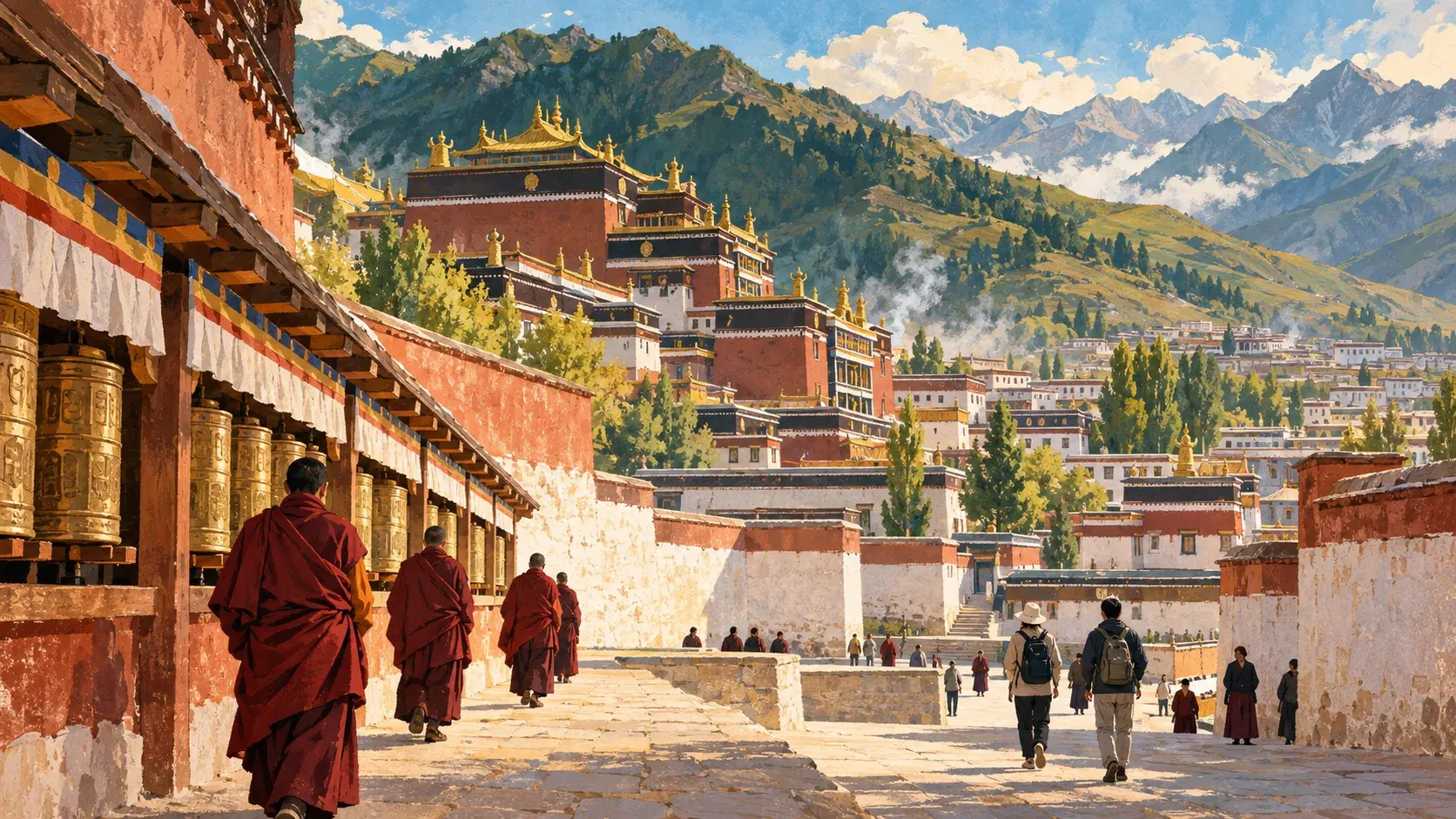 甘南
Gannan Tibetan Autonomous Prefecture is a highland journey through monasteries, grasslands, river valleys and stone-walled villages in southern Gansu.
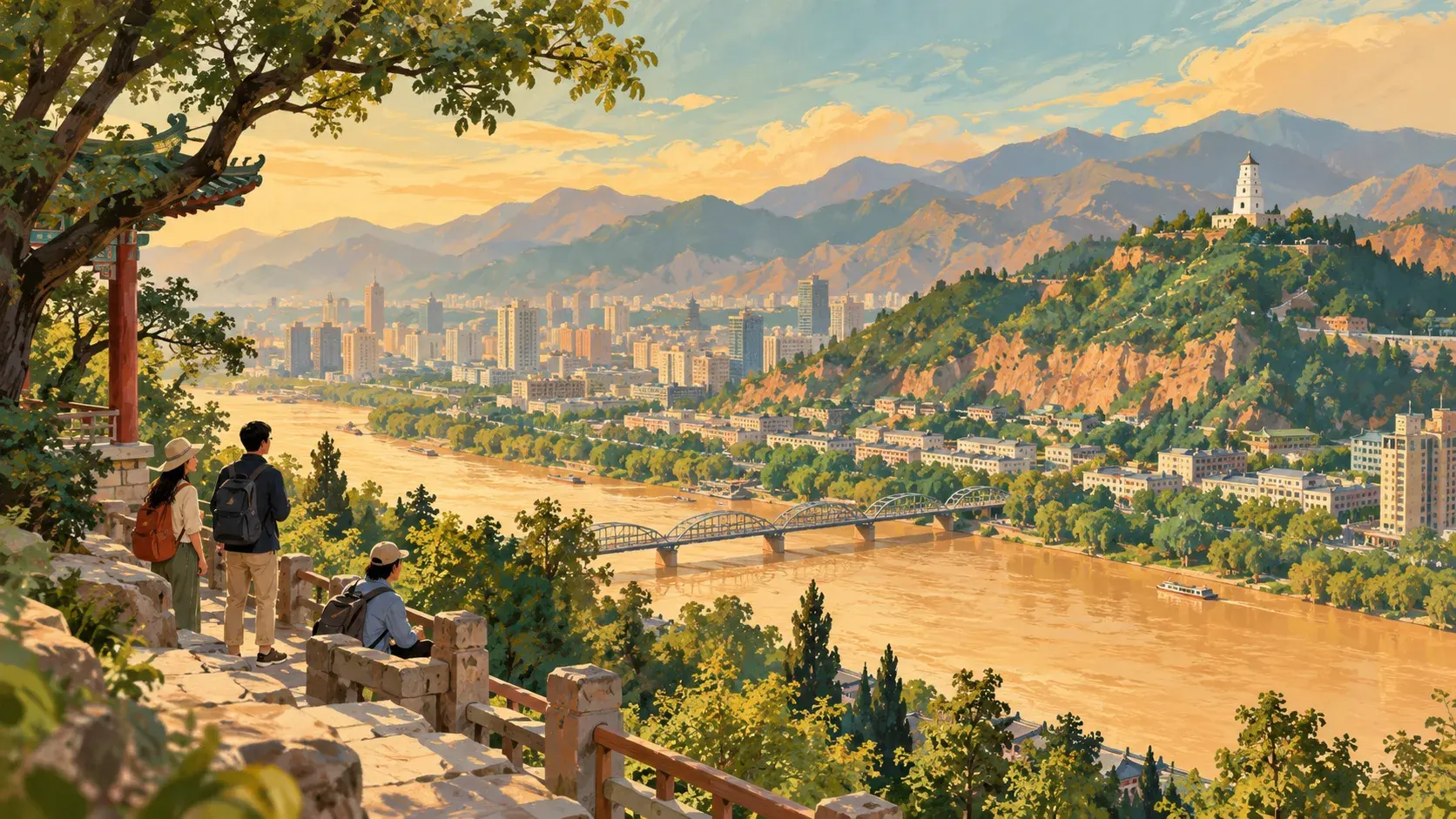 兰州
Lanzhou is China's great Yellow River city and the practical gateway between the central plains, Hexi Corridor, Qinghai and Gannan.
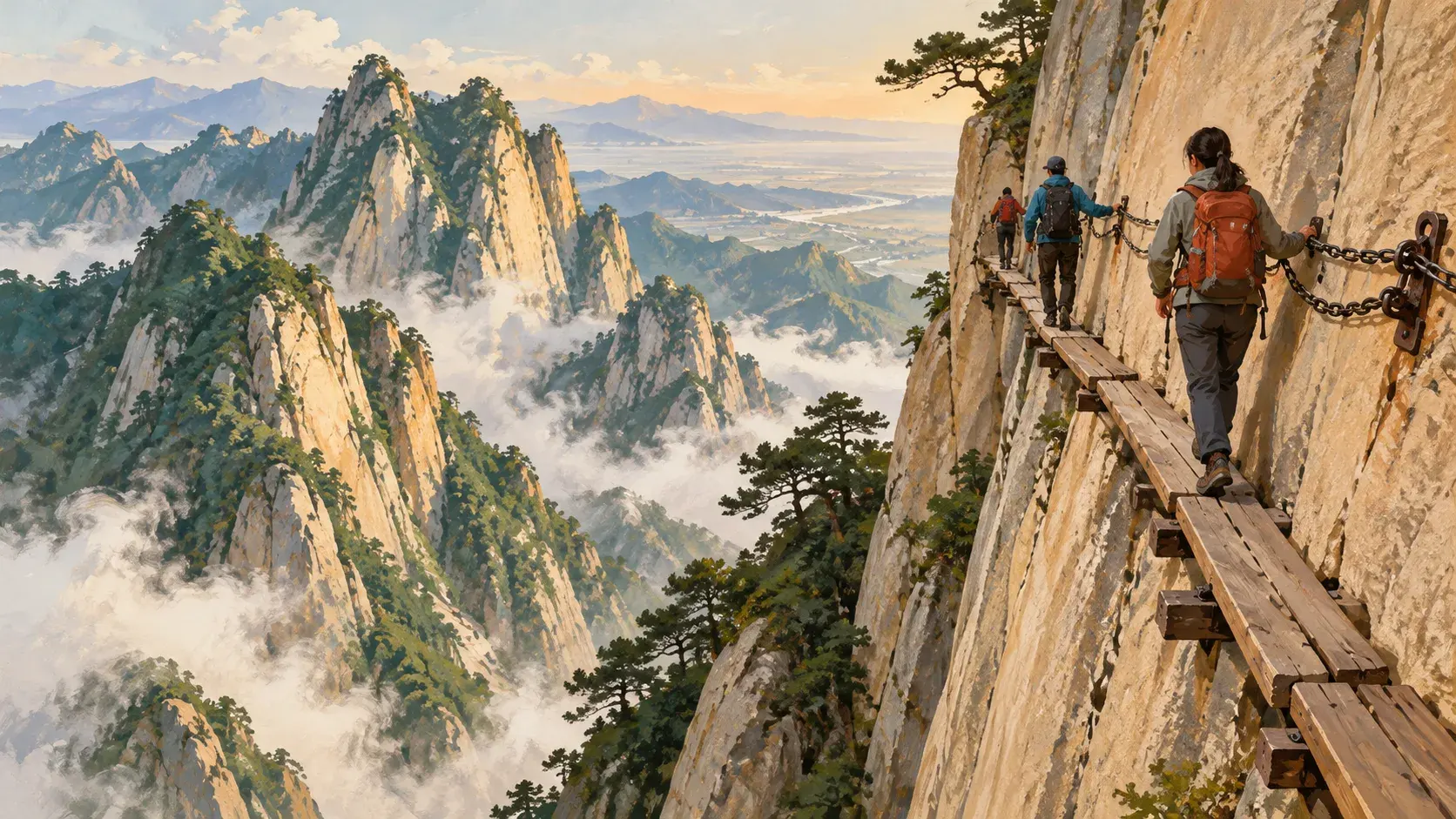 华山
Mount Hua is one of the five sacred peaks of China — and by common consent the most dangerous.
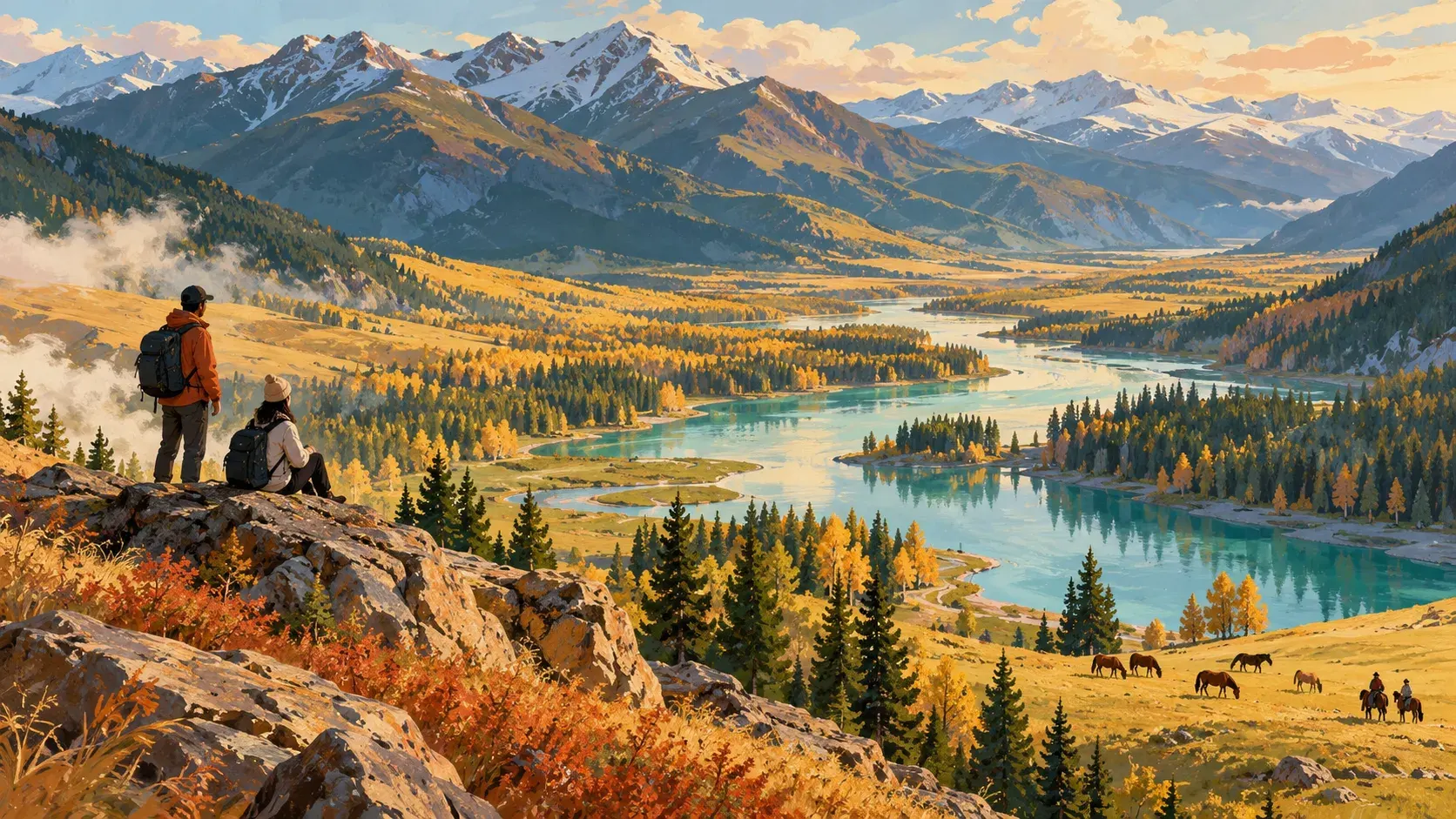 北疆
Northern Xinjiang is a long-distance landscape journey through the Altay mountains, Kanas lake country, steppe, desert and the western Tianshan.
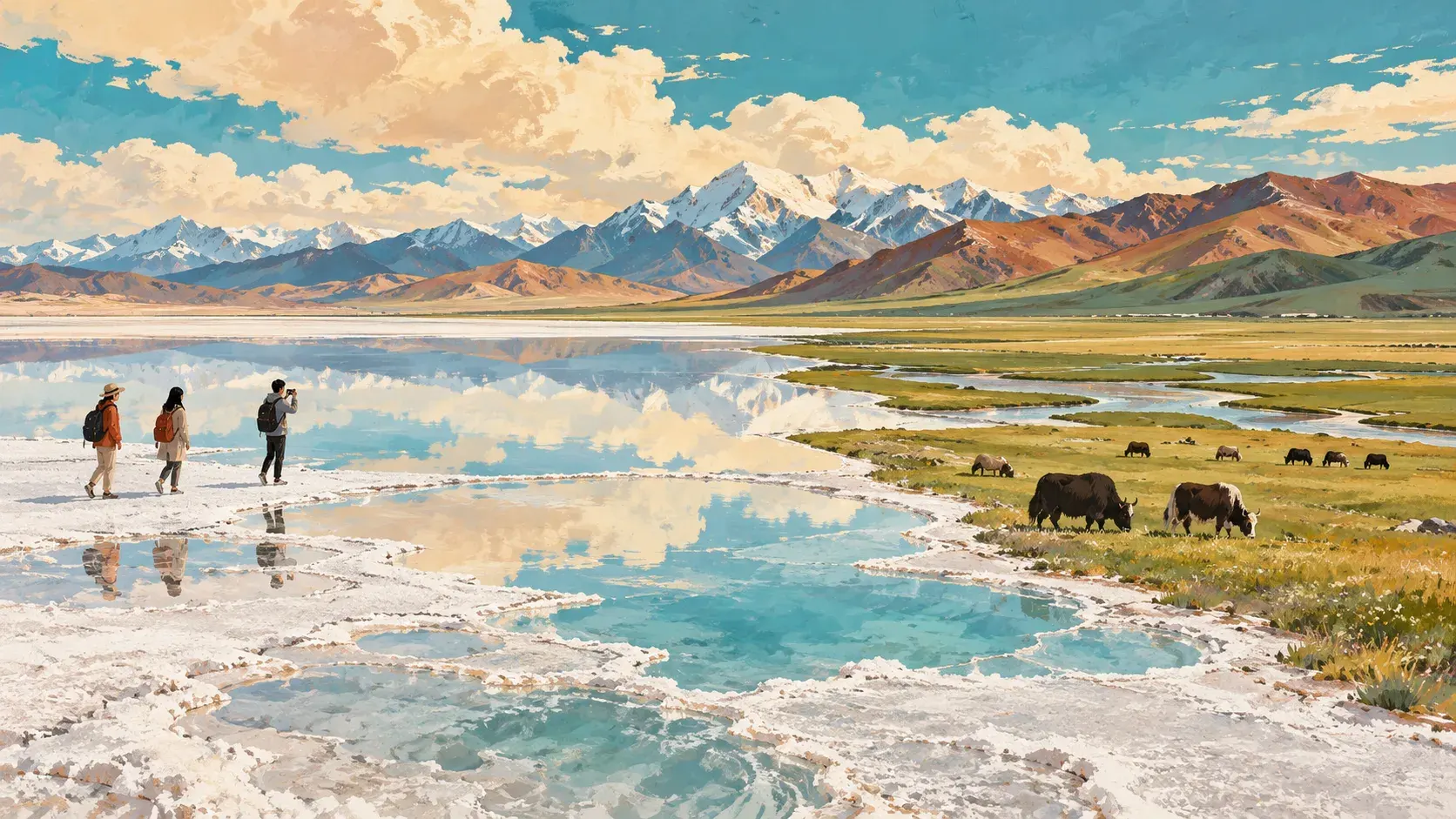 青海
Qinghai is a high-altitude province of salt lakes, grasslands, Tibetan and Hui communities, desert basins and the headwaters of major rivers.
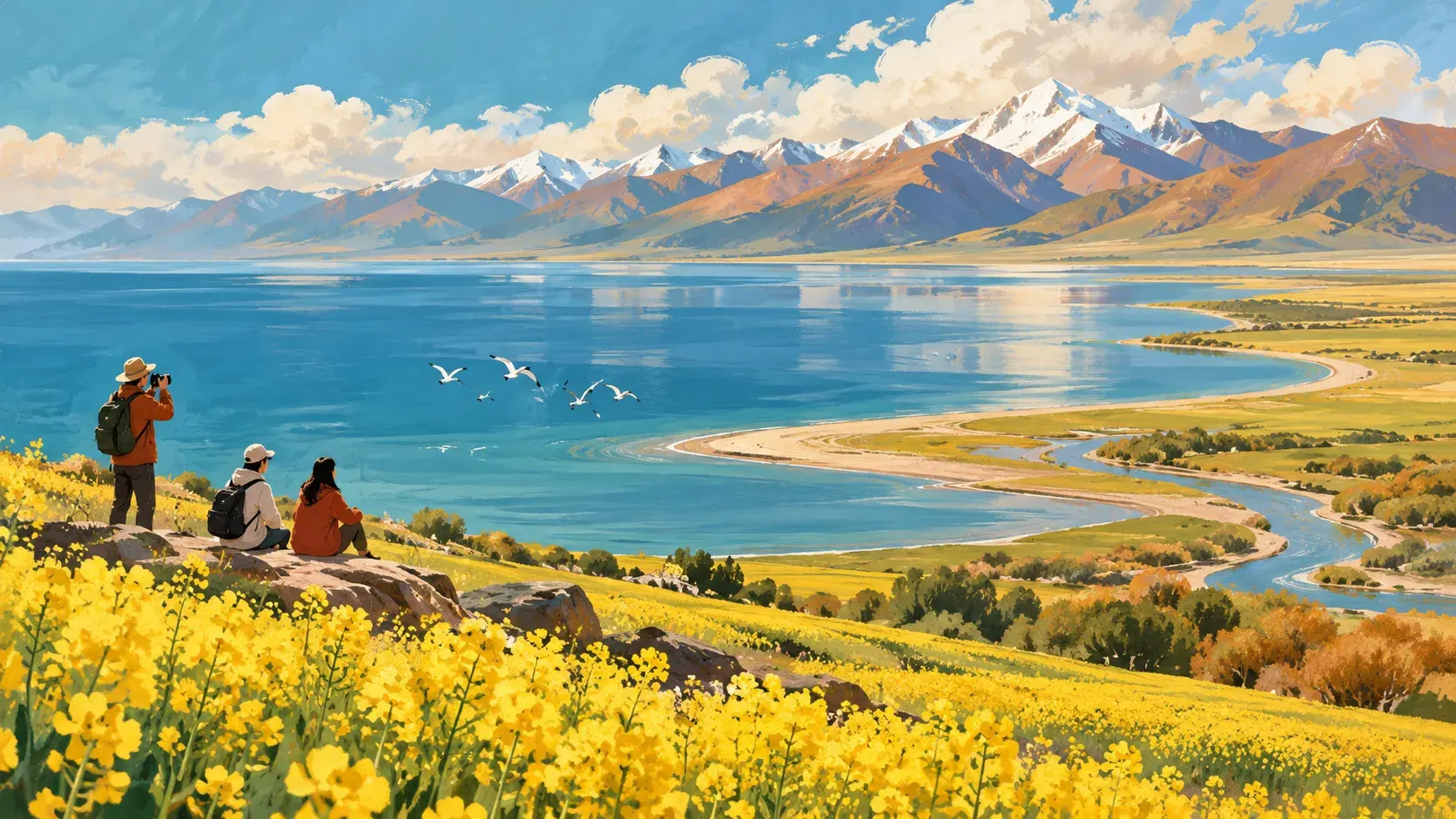 青海湖
Qinghai Lake is a vast high-altitude salt lake, not one fenced attraction.
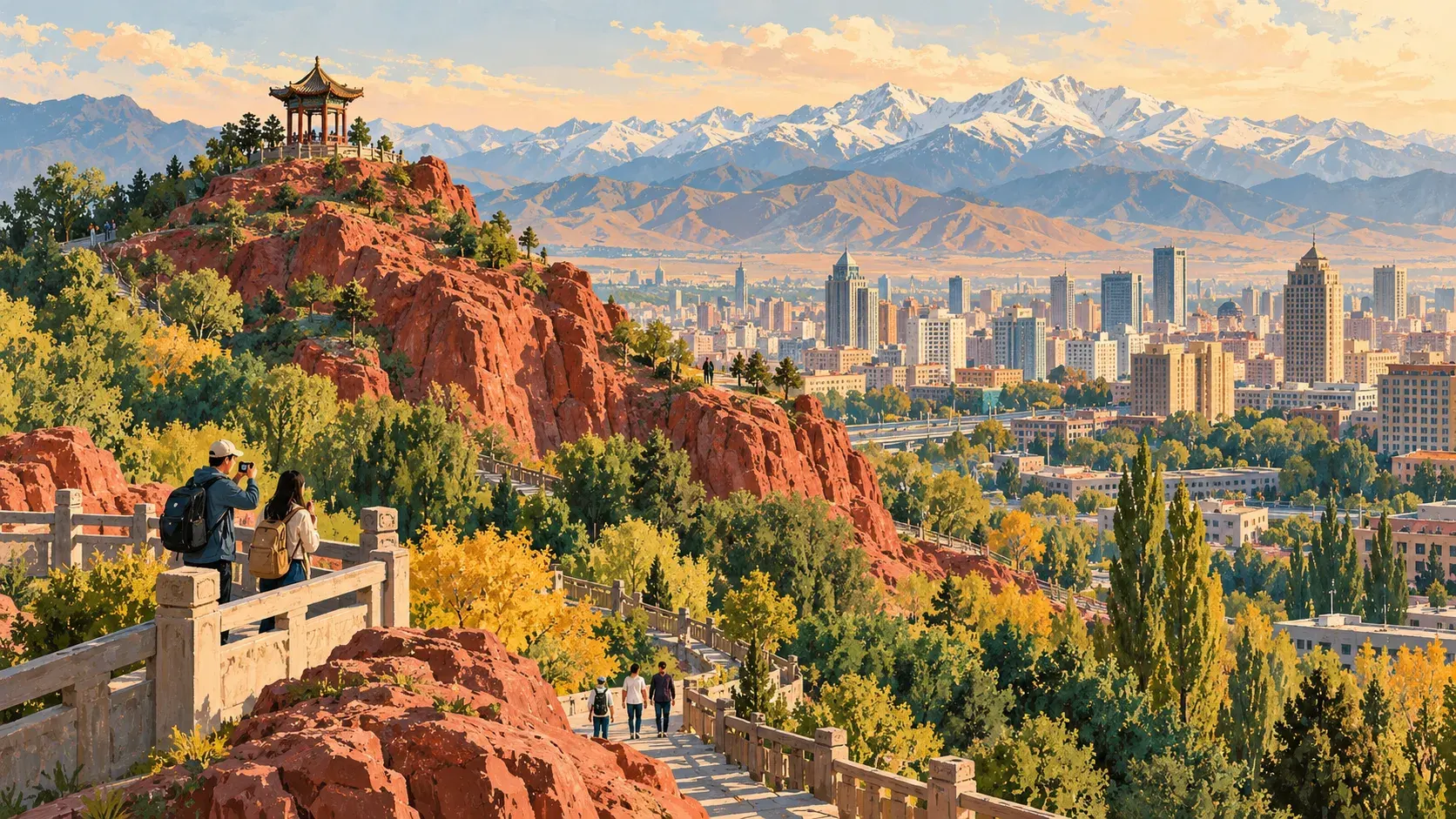 乌鲁木齐
Urumqi is Xinjiang's main transport and service hub, set between the northern edge of the Tianshan and the Junggar Basin.
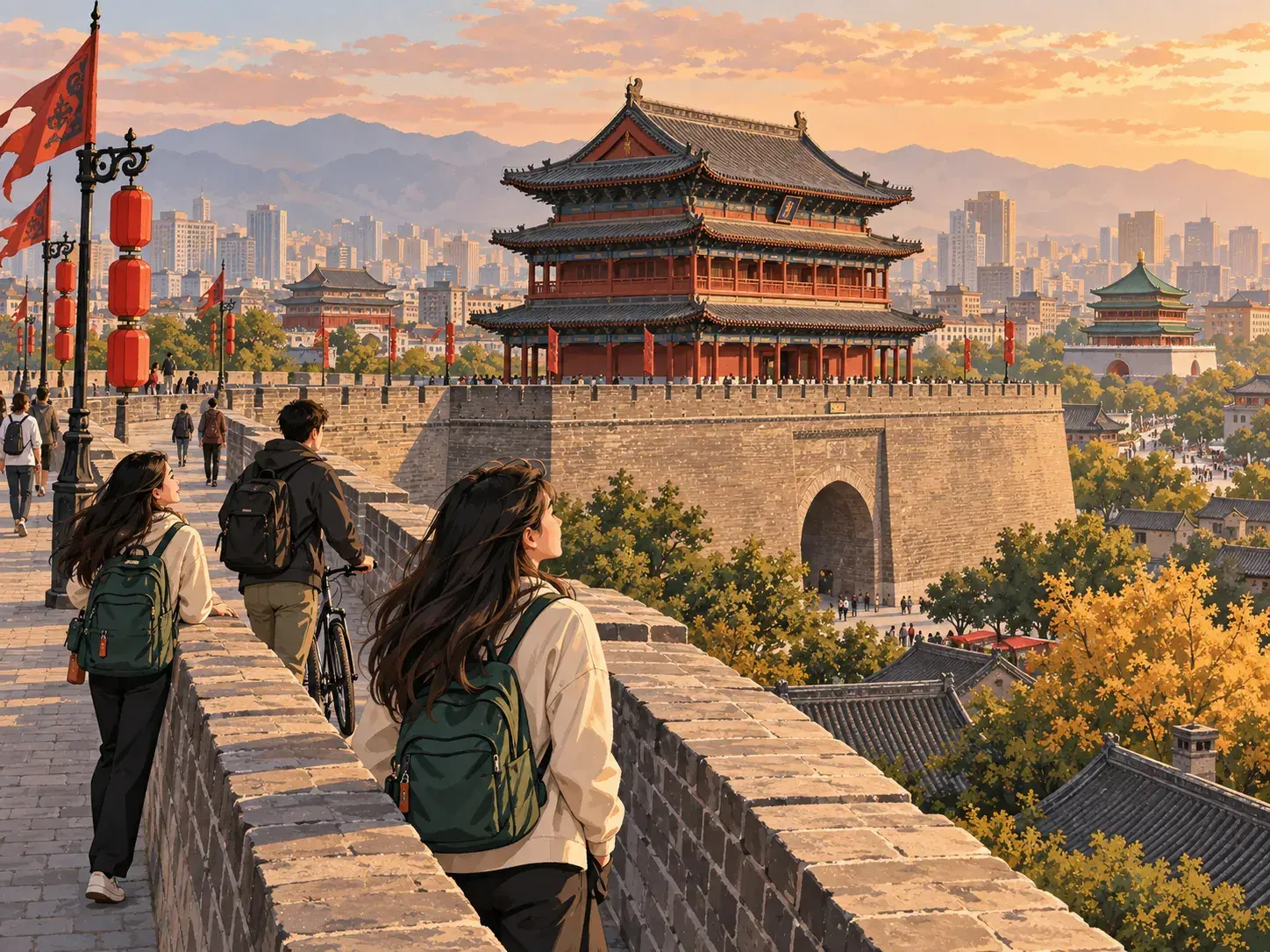 西安
Xi'an — Chang'an in the age of the Silk Road — served as capital for more than a dozen dynasties across some eleven centuries, and the scale of that past is the first thing you feel: a complete Ming-era city wall you can
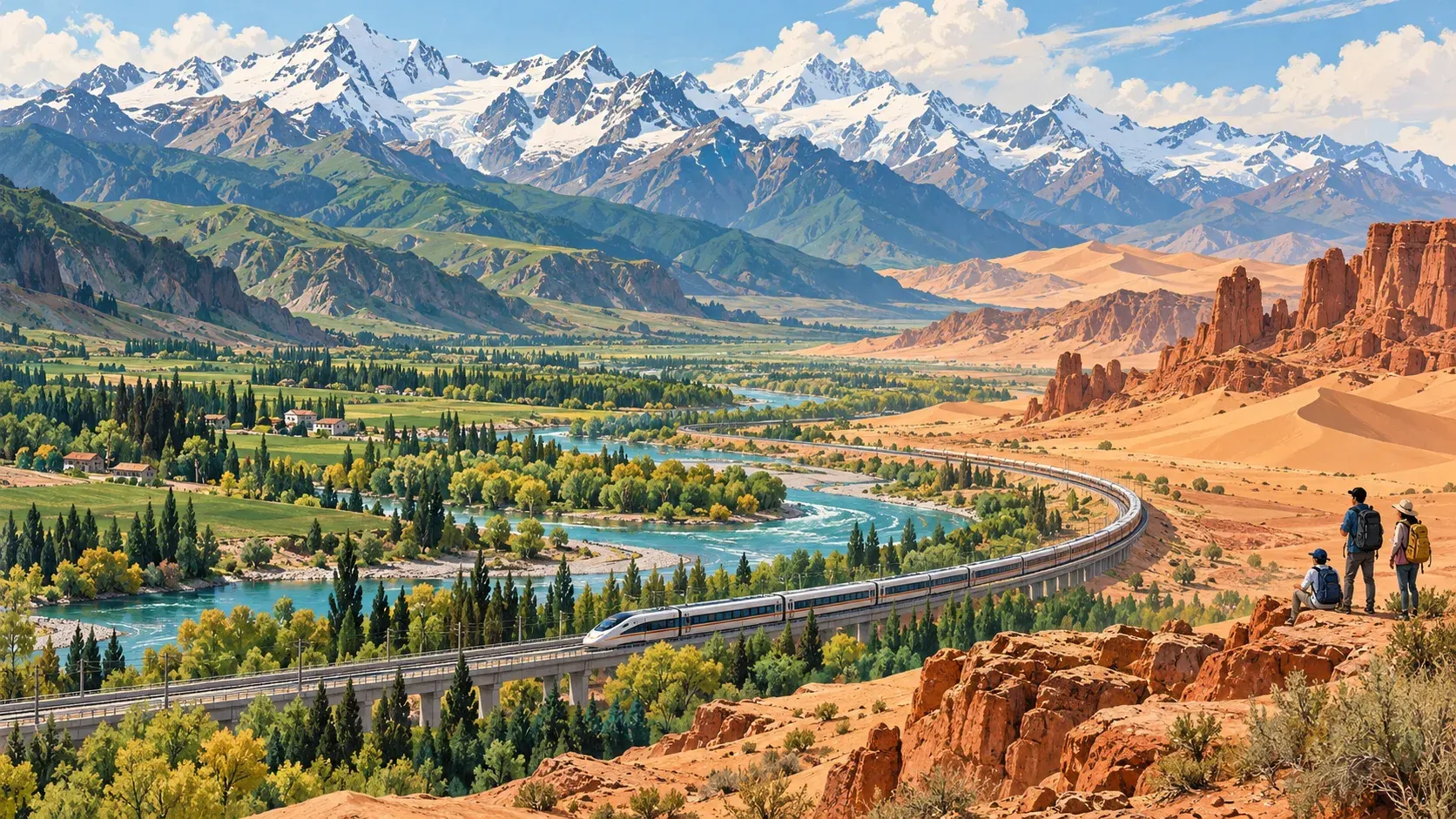 新疆
Xinjiang is larger than many countries and must be planned as several journeys: northern forests and lakes, Ili grasslands, the Tianshan crossing, Turpan's desert oases, Kashgar and the Pamirs, or the long southern basin
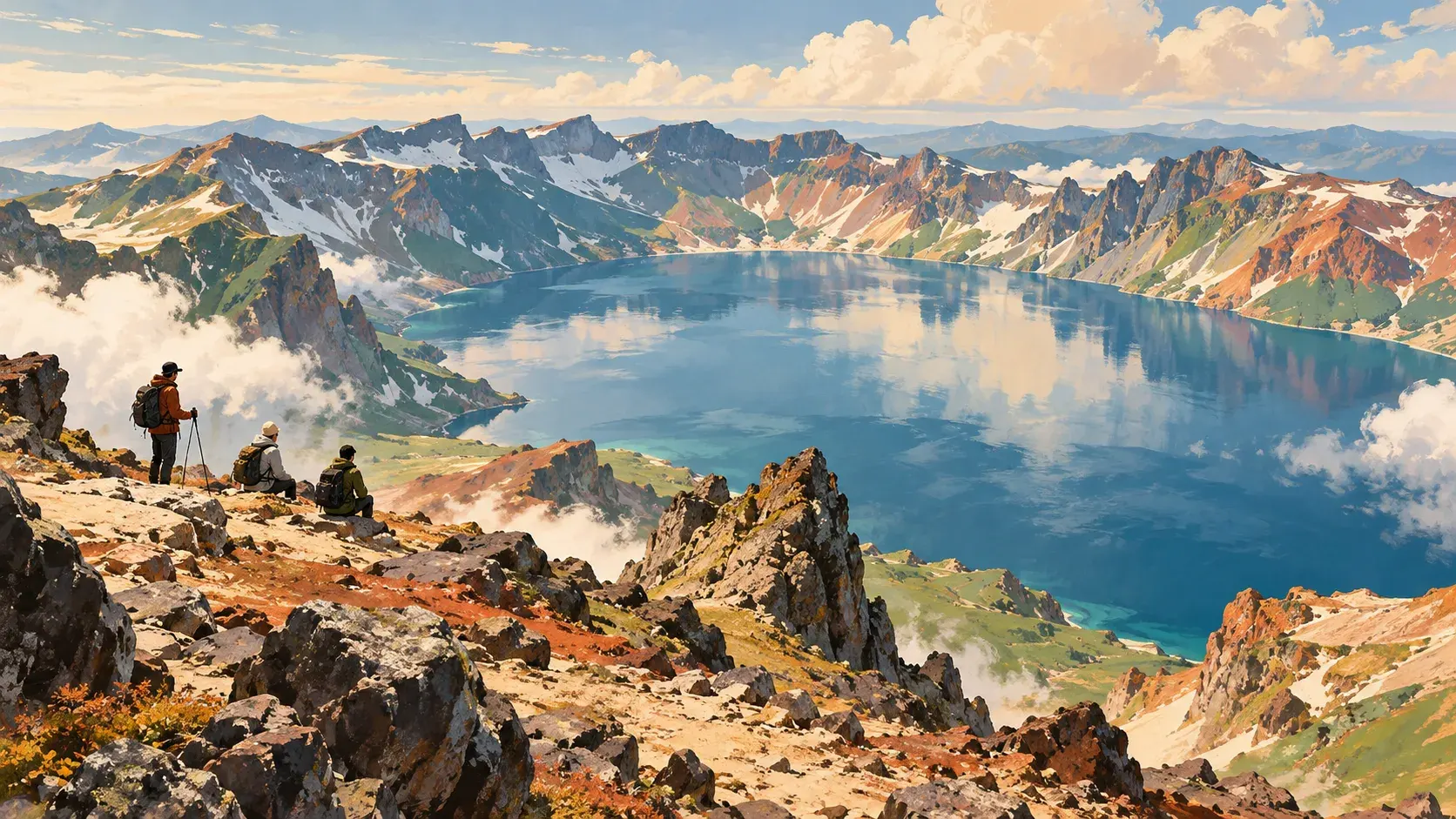 长白山
Changbaishan — the Ever-White Mountain — is a dormant volcano straddling the border of Jilin province and North Korea, and the most mythical landscape in China's northeast.
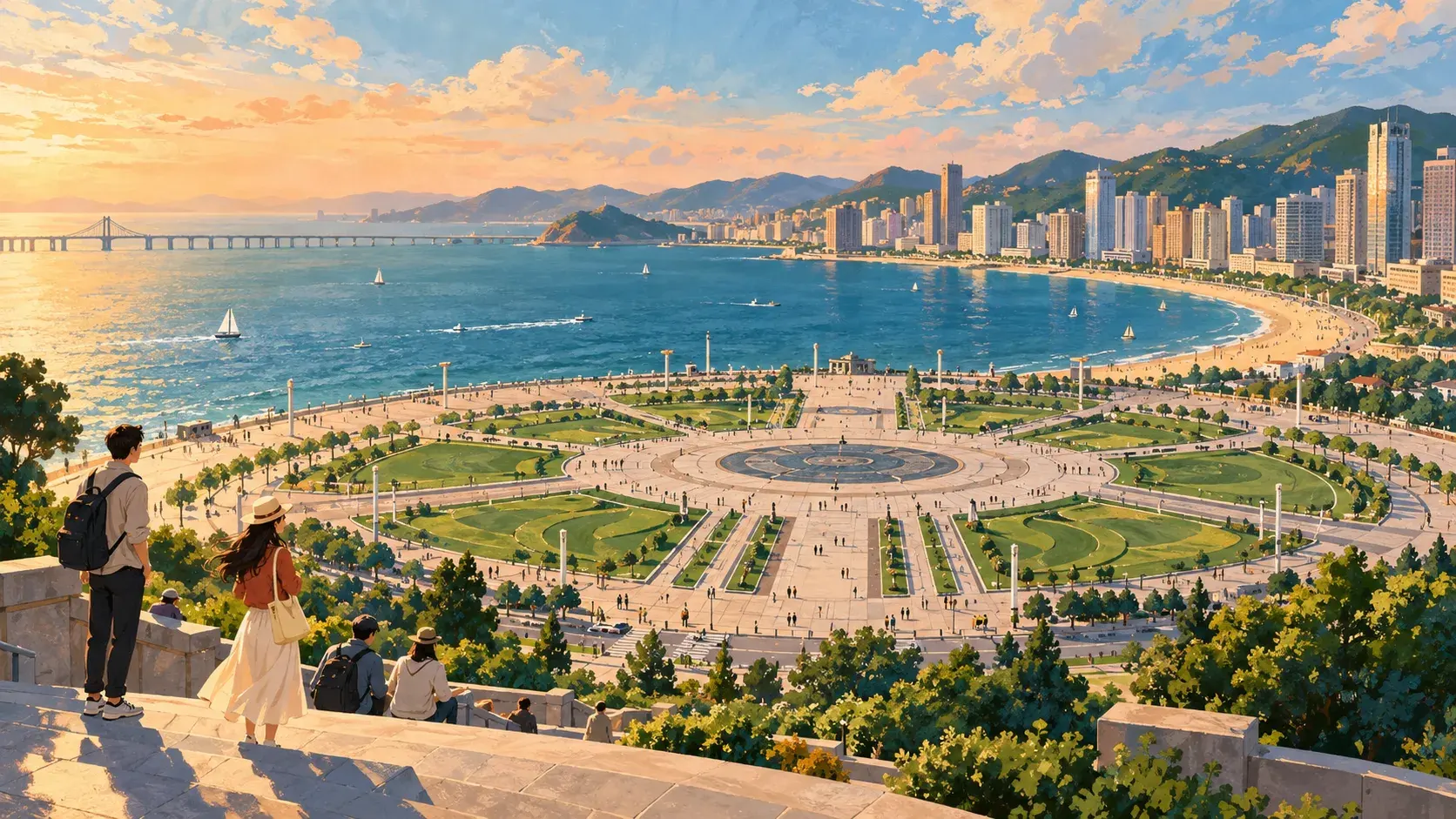 大连
Dalian sits at the southern tip of the Liaodong Peninsula, wrapped on three sides by the Yellow and Bohai seas — the one big northeast city that thinks like a seaside resort.
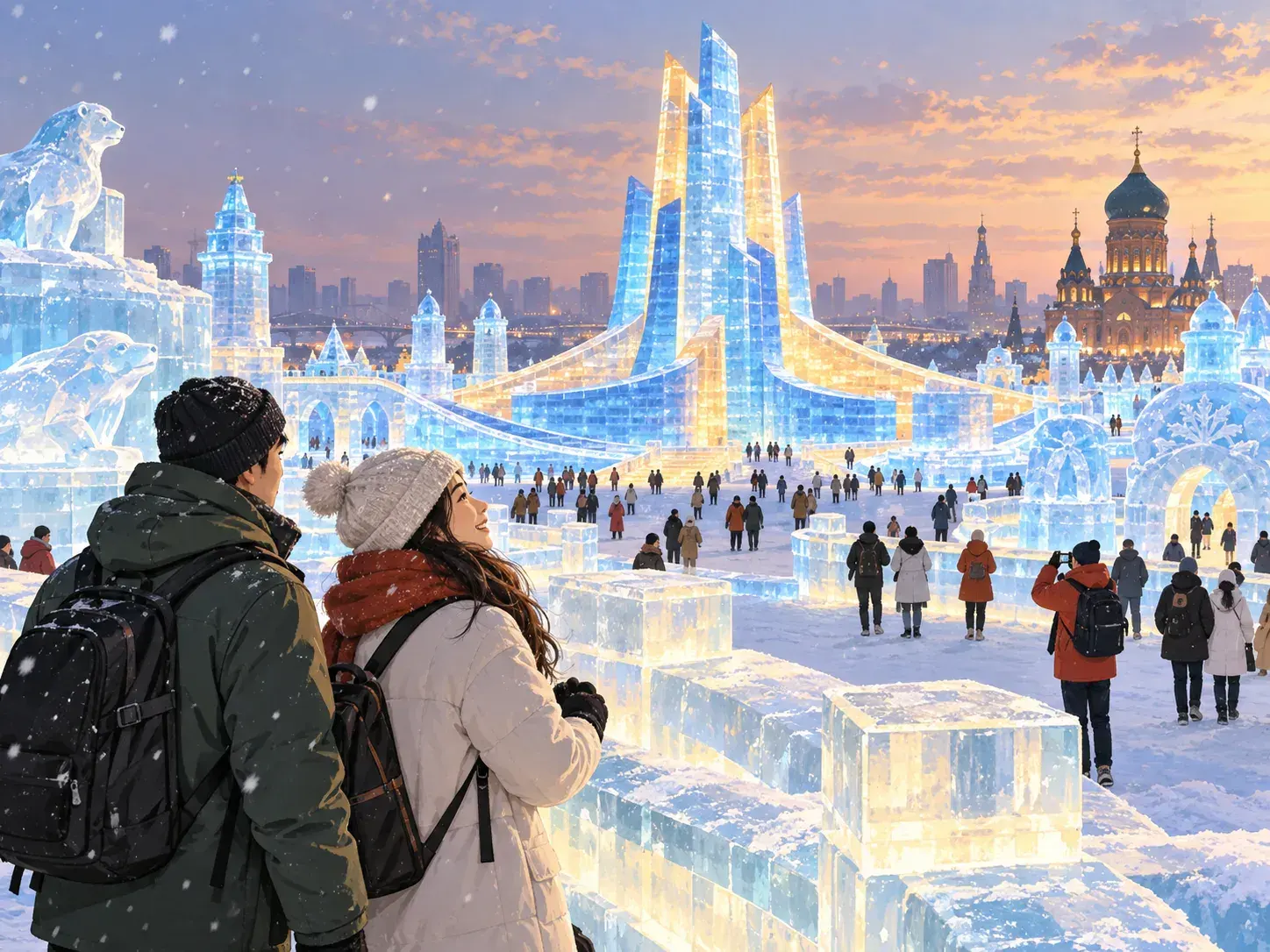 哈尔滨
Harbin is China's winter capital.
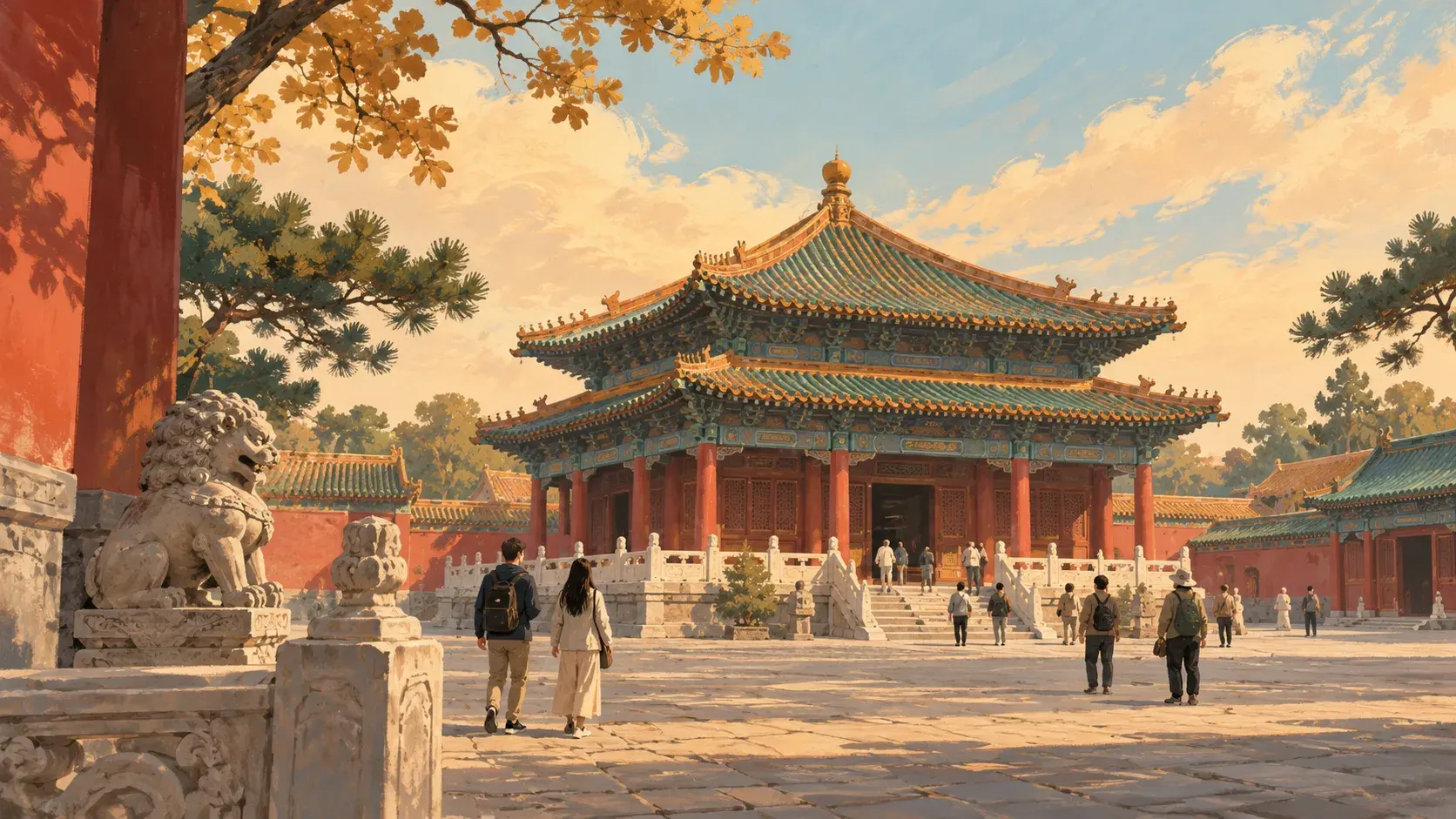 沈阳
Shenyang — Mukden, or Shengjing ("radiant capital") in its imperial name — is where the Qing dynasty began.
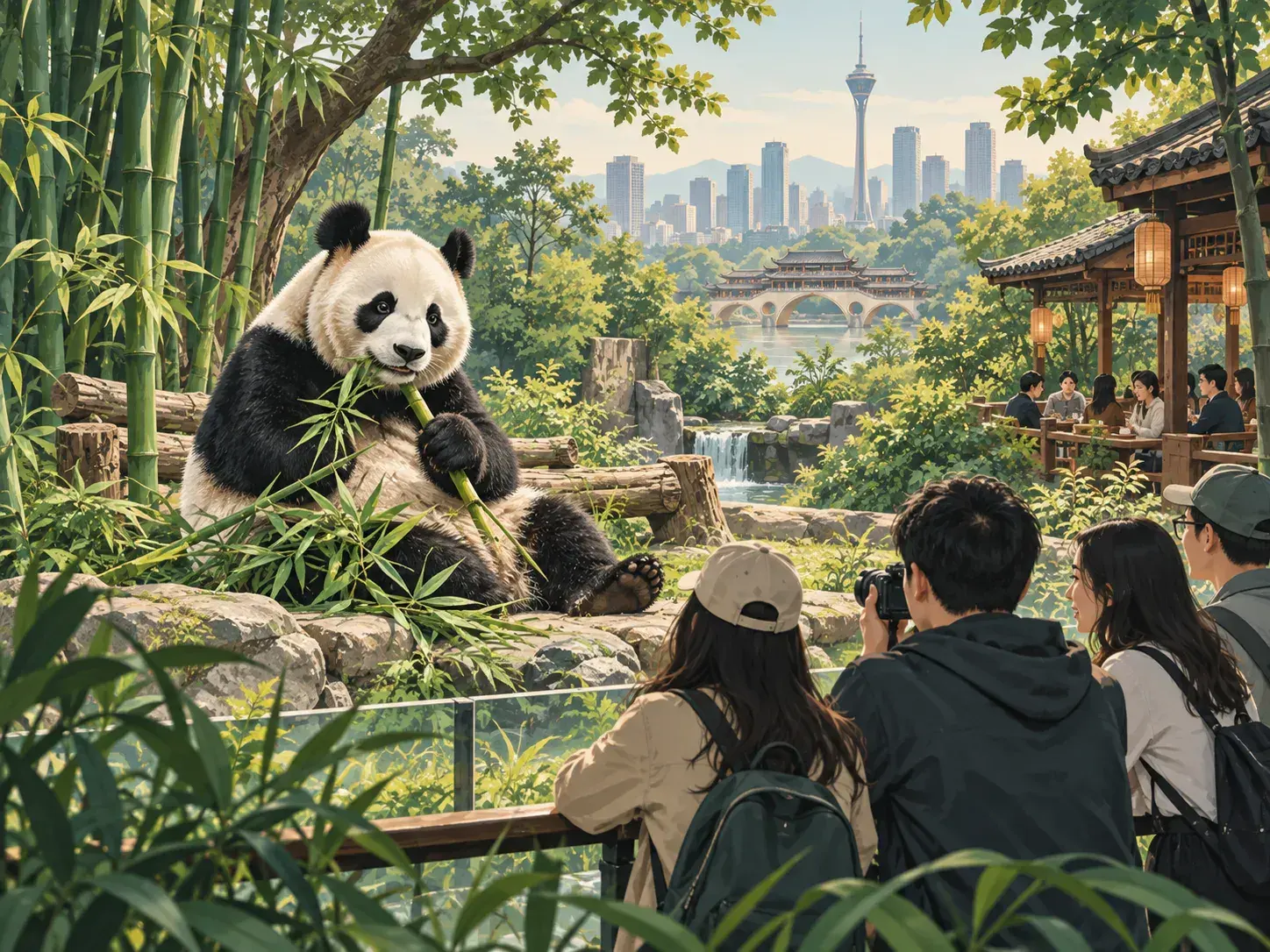 成都
Chengdu is the capital of Sichuan and the soft landing most first-time visitors give southwest China: a city of teahouses, mahjong tiles and hotpot steam that has spent roughly 2,300 years on the same spot under the same
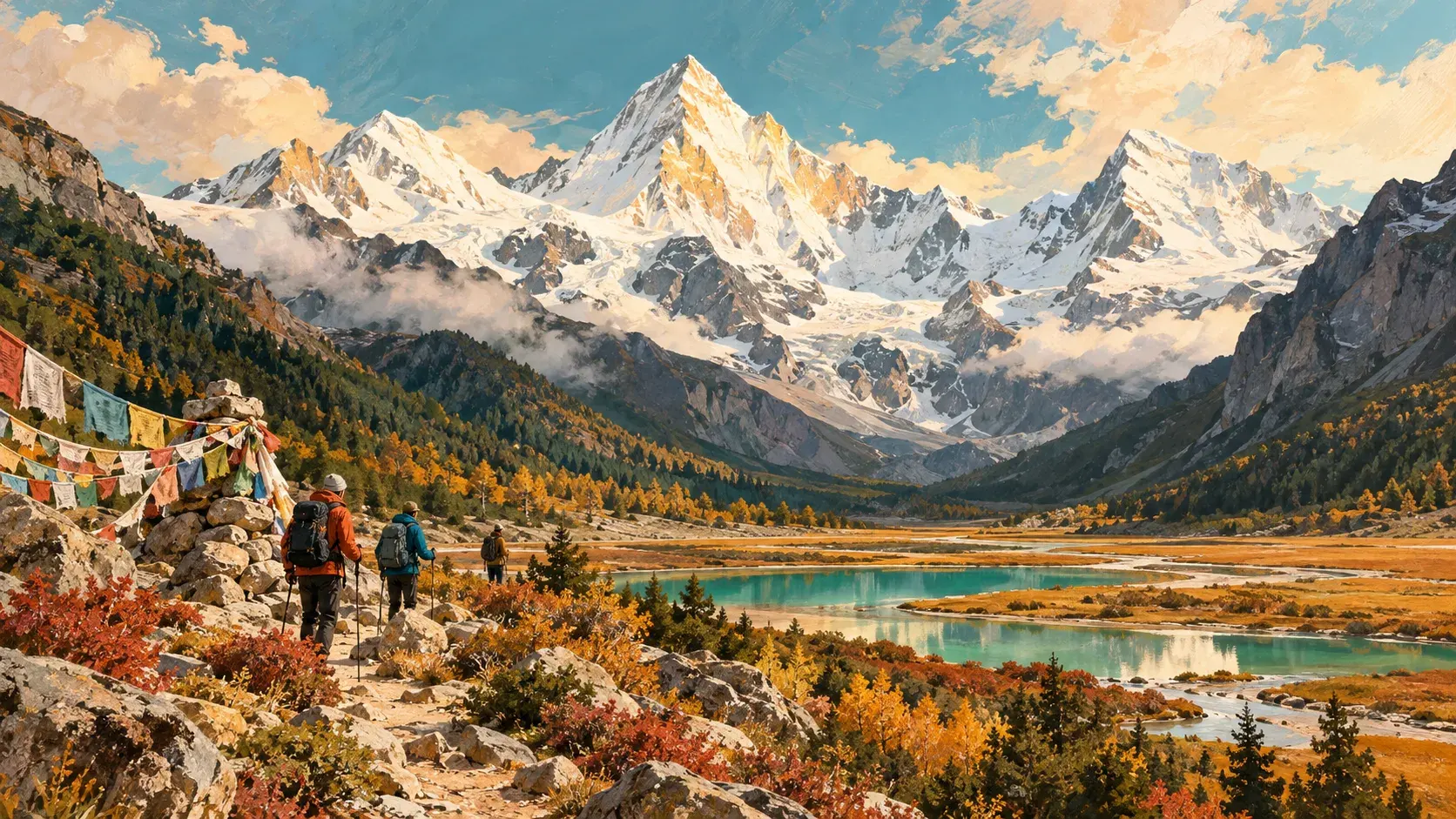 稻城亚丁
Daocheng Yading, in western Sichuan's Ganzi Tibetan Autonomous Prefecture, is the high-altitude pilgrimage of Chinese travel: three sacred snow peaks — Chenrezig, Jampelyang and Chanadorje, the bodhisattva mountains of T
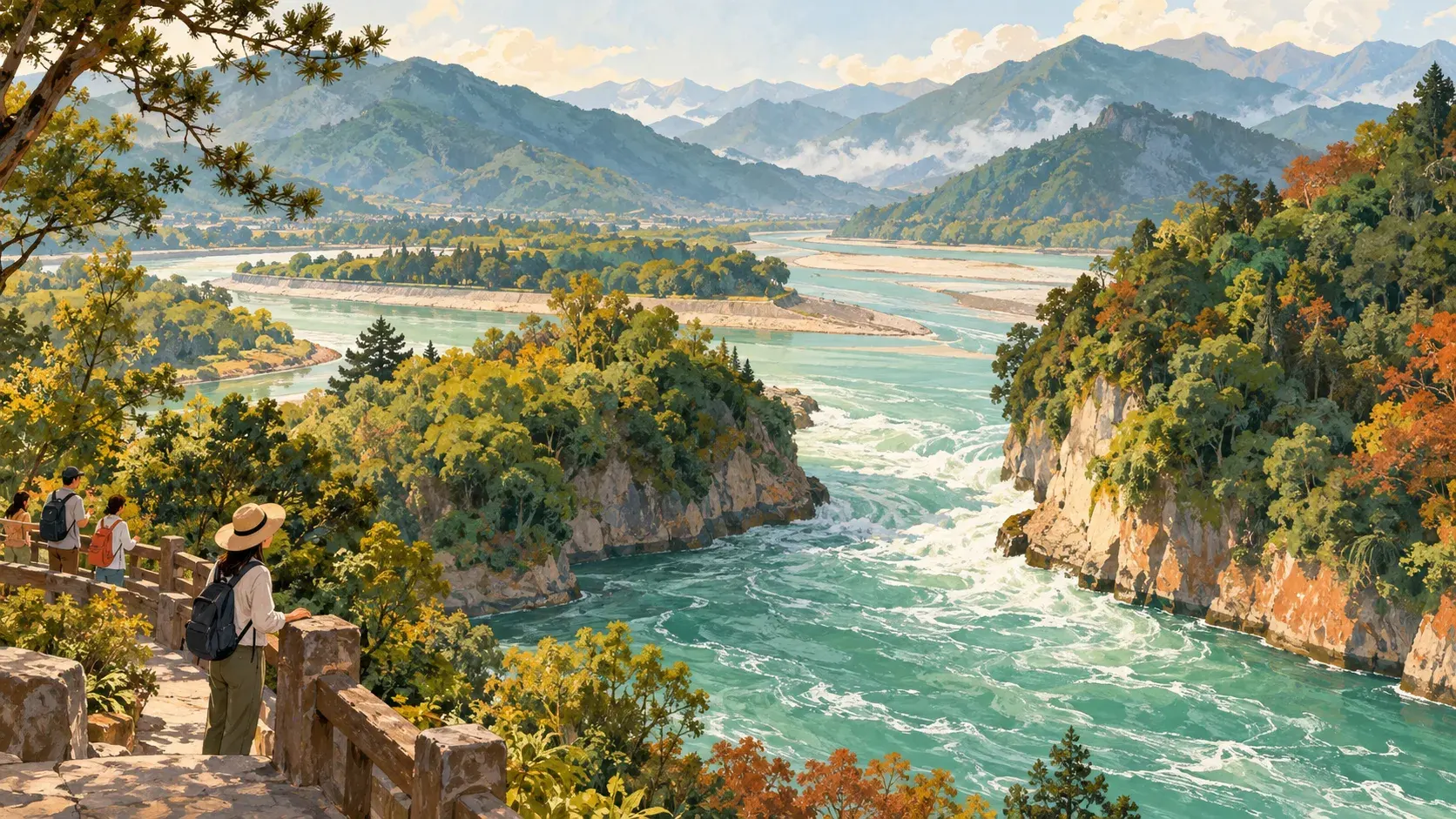 都江堰
Dujiangyan is the reason Sichuan is called the Land of Abundance.
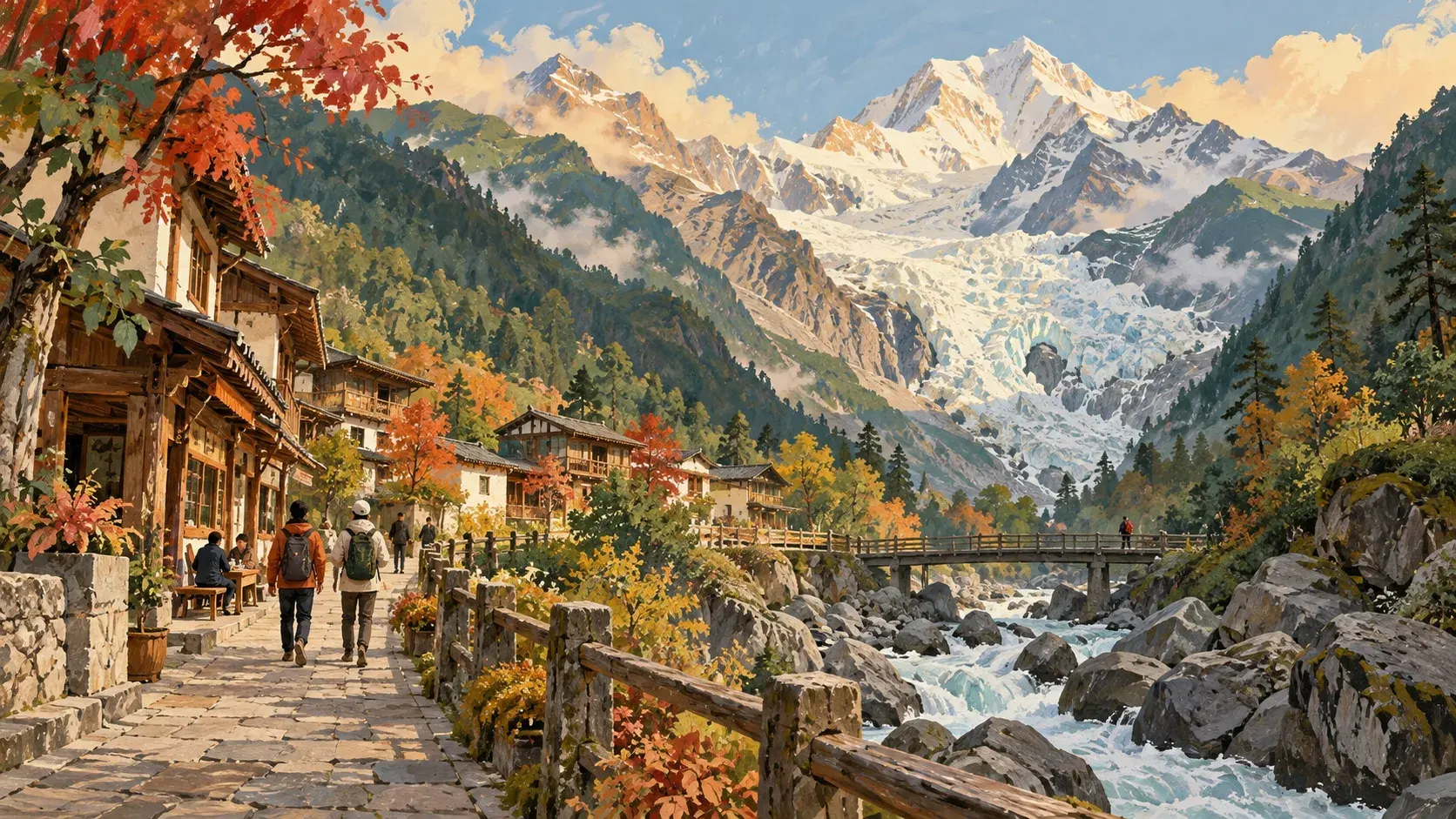 海螺沟
Hailuogou is the easiest place on earth to stand under a real glacier.
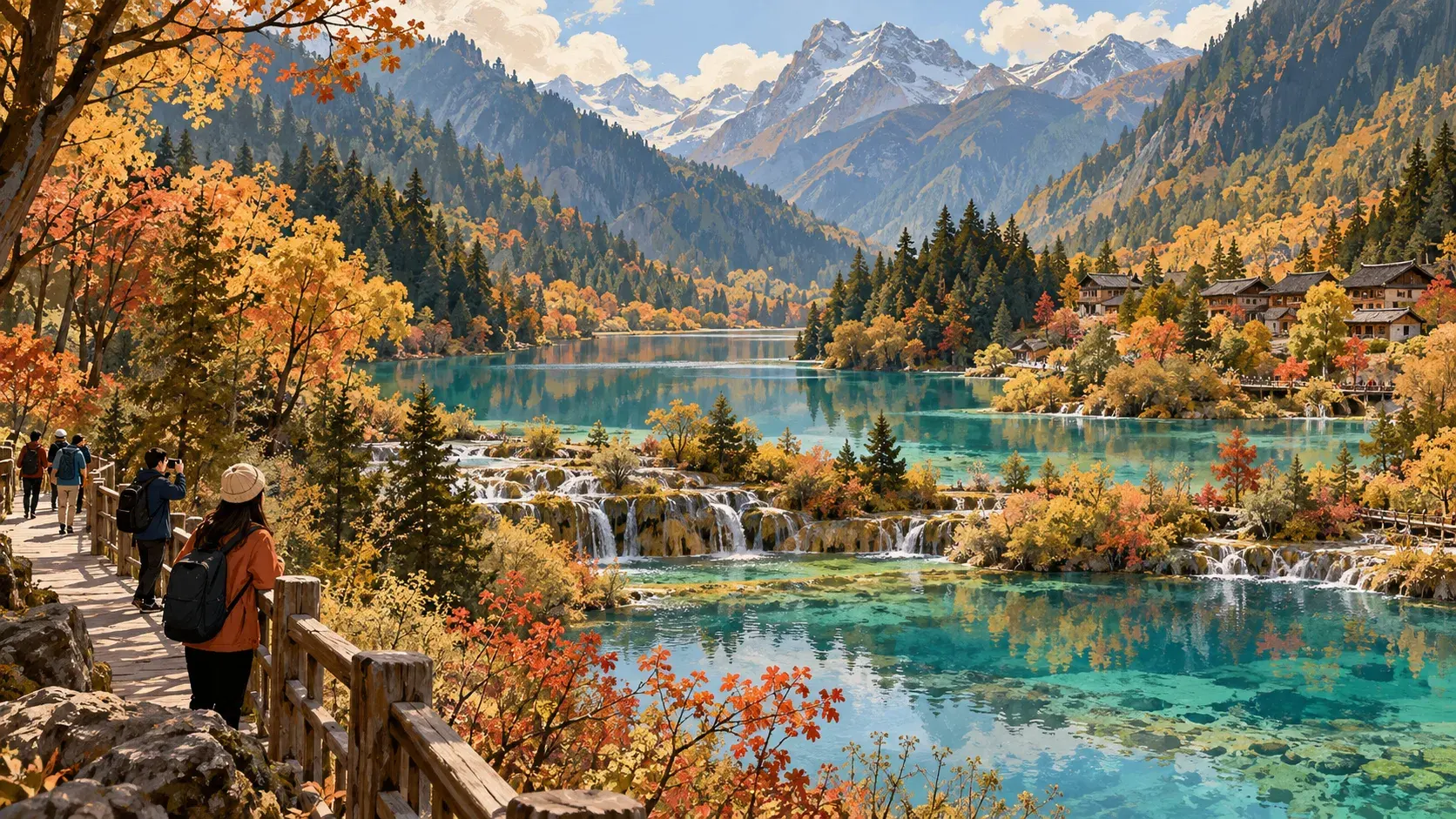 九寨沟
Jiuzhaigou is the most famous valley of water in China: a Y-shaped canyon in the Aba Tibetan and Qiang Autonomous Prefecture where more than a hundred alpine lakes — haizi , "sons of the sea" — stack terraced colors of t
 康定
Kangding is the gateway where Sichuan's lowlands end and the Tibetan plateau begins — a narrow town wedged in a gorge at about 2,560 meters, famous across China as the home of the "Kangding Love Song" and, before that, a
 峨眉山
Mount Emei is one of China's four sacred Buddhist mountains — the bodhimanda of the bodhisattva Samantabhadra — and a UNESCO natural and cultural site shared with the Leshan Giant Buddha at its foot.
 四姑娘山
Mount Siguniang — "Four Sisters Mountain" — is Sichuan's alpine answer to the Alps: four snow peaks rising over 5,000 meters from the Qionglai range on the edge of the Tibetan plateau, with three glacier-carved valleys a
 青城山
Mount Qingcheng — "the most secluded mountain under heaven" — is where religious Taoism was born: in AD 142 the first Celestial Master, Zhang Daoling, founded his school in these green folds west of Chengdu, and the moun
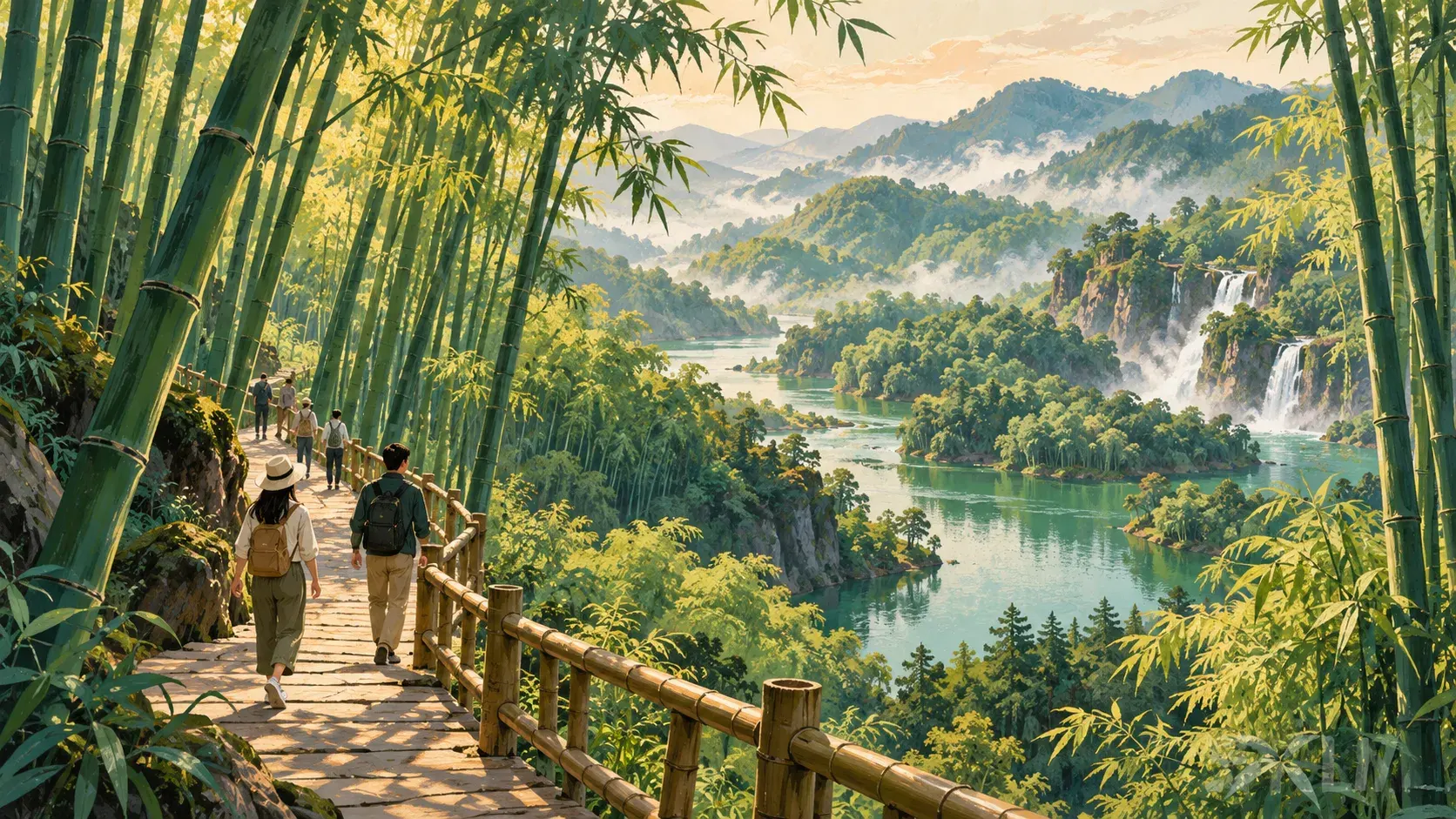 蜀南竹海
Shunan Bamboo Sea is a broad bamboo-forest landscape south of Yibin, spread across ridges, valleys, waterfalls, villages and scenic roads rather than one garden.
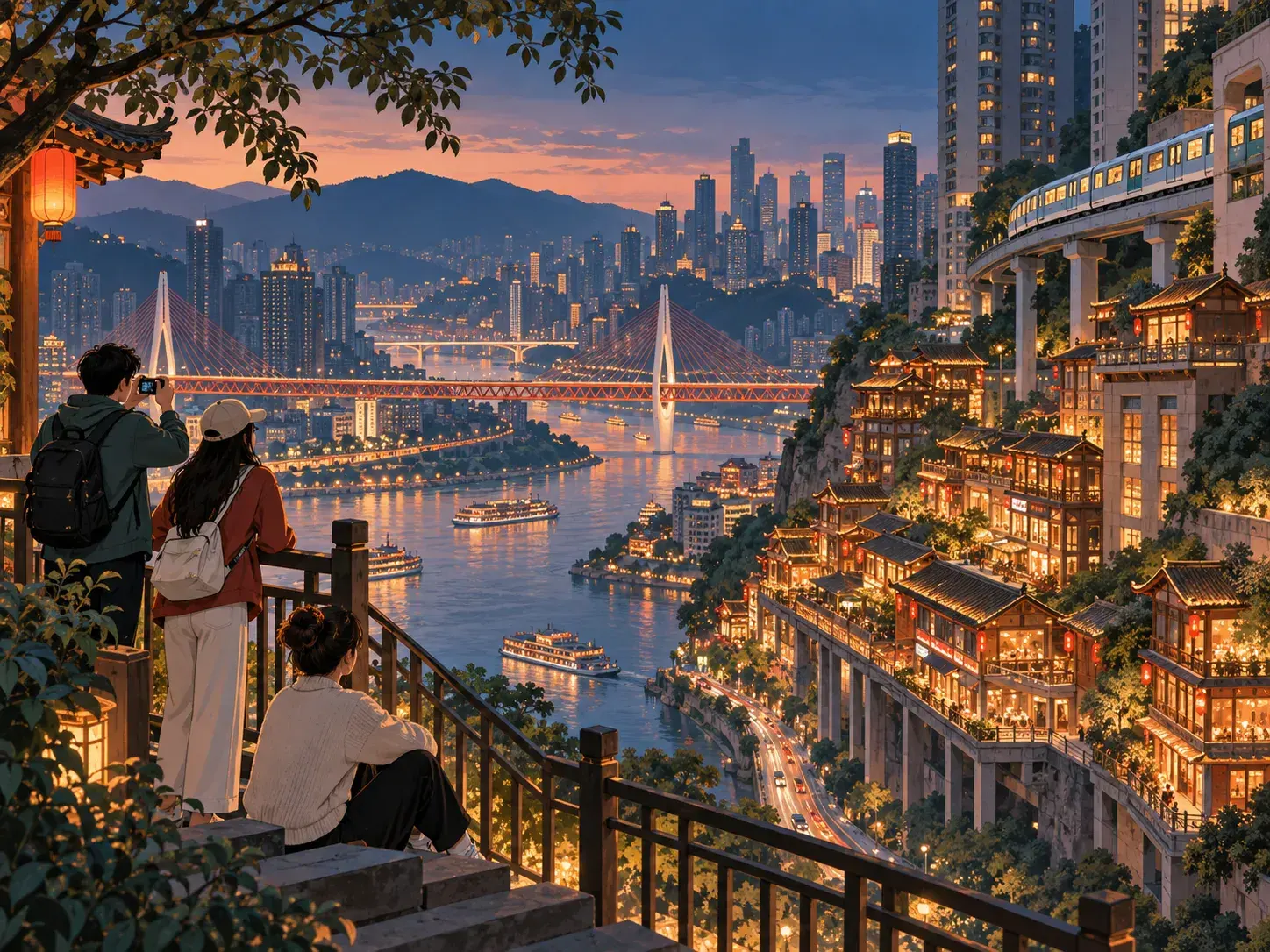 重庆
Chongqing is a city built vertically — towers rising off cliffs between the Yangtze and Jialing rivers, roads that pass over rooftops, a monorail that glides through the middle of an apartment block.
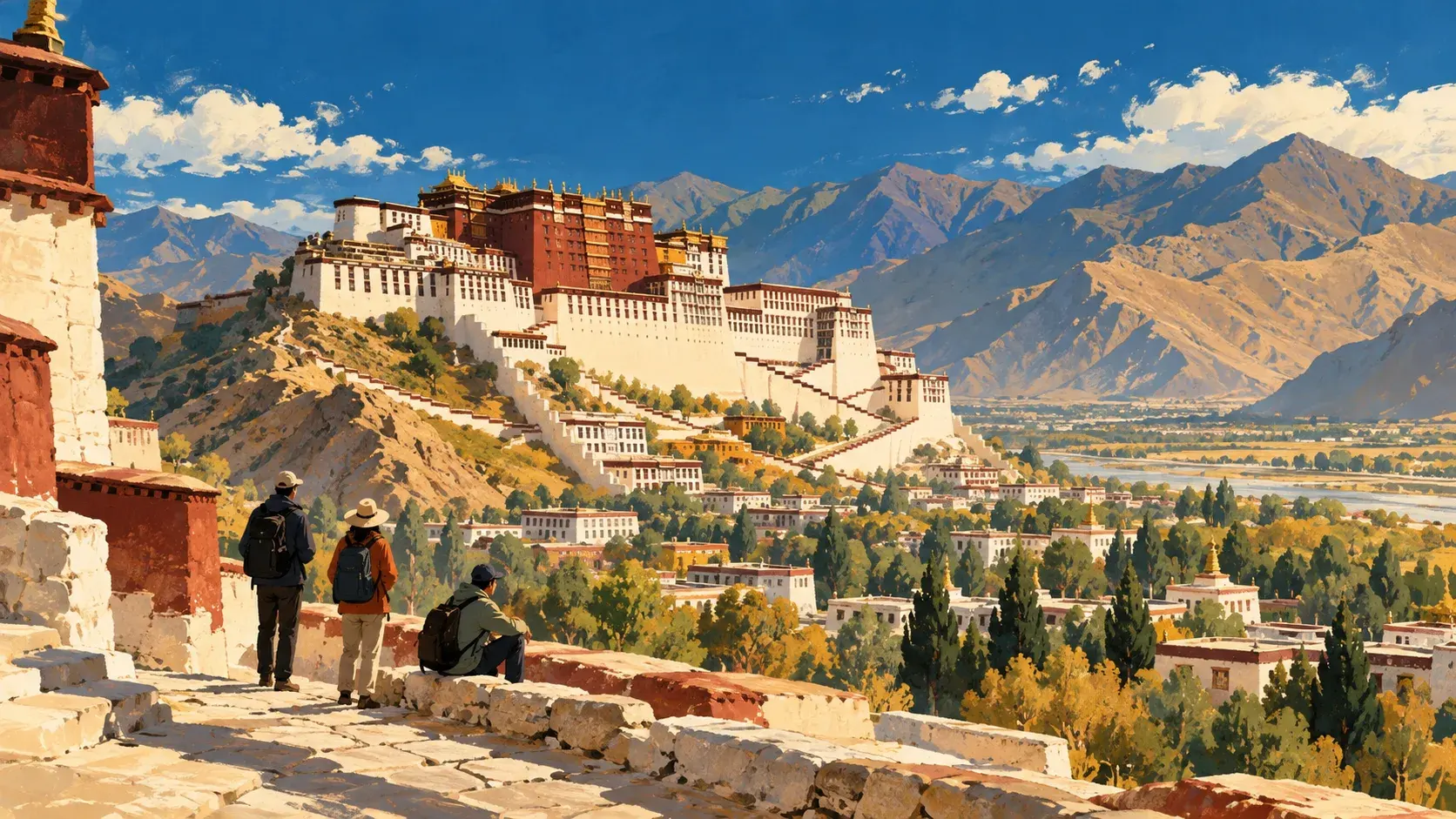 拉萨
Lhasa, the "place of the gods," sits at 3,650 meters in a river valley ringed by bare mountains — the "Sunlight City" of relentless blue skies.
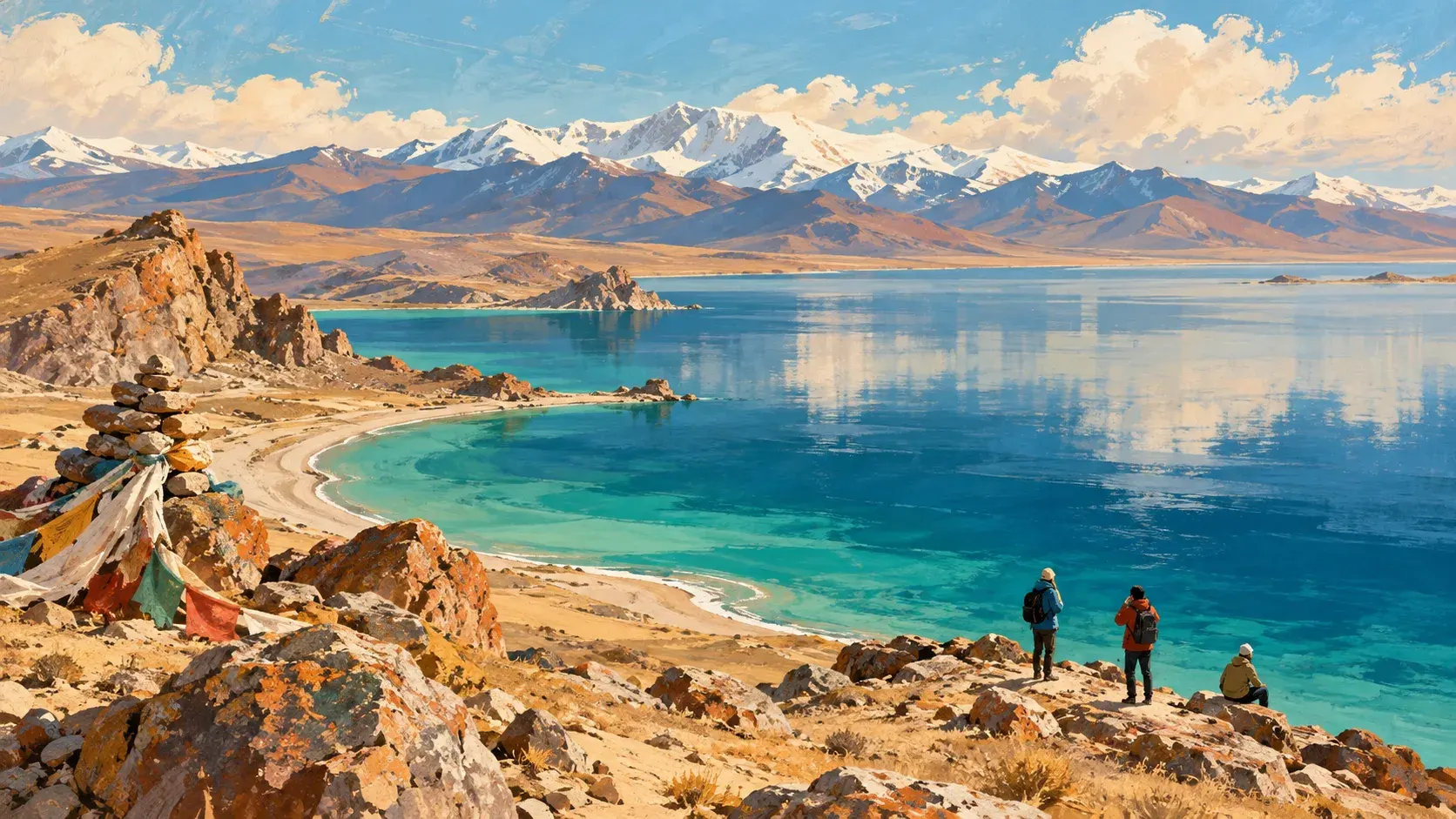 纳木错
Namtso is a sacred high-altitude lake north of Lhasa, with the principal visitor area around Tashi Island at roughly 4,718 metres.
 林芝
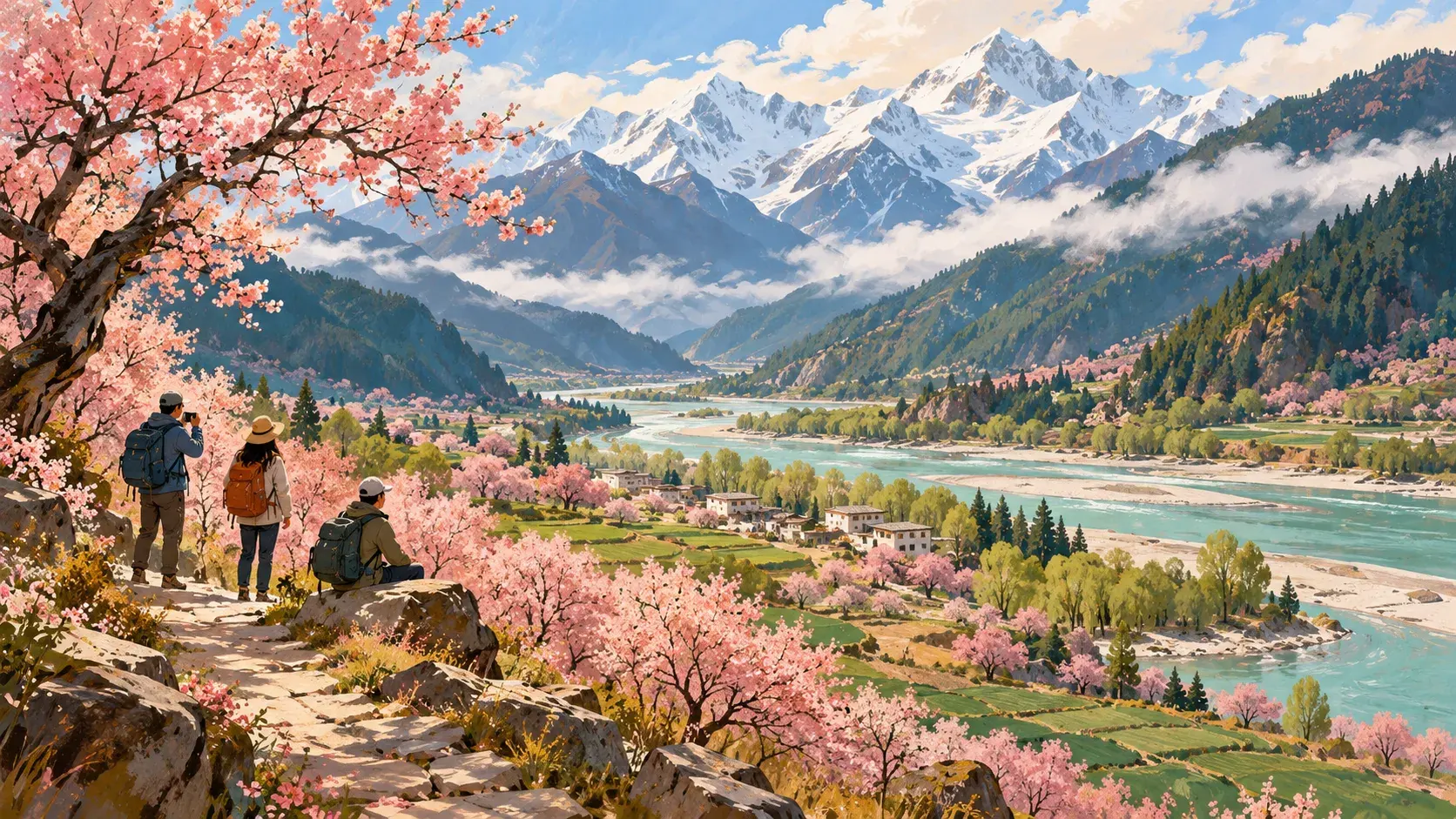
Nyingchi — "the sun's throne" in Tibetan, Linzhi in Chinese — is Tibet's soft green corner: forested valleys along the Yarlung Tsangpo and its tributary the Niyang, villages under snow peaks, and a famous March–April pea
 黔东南
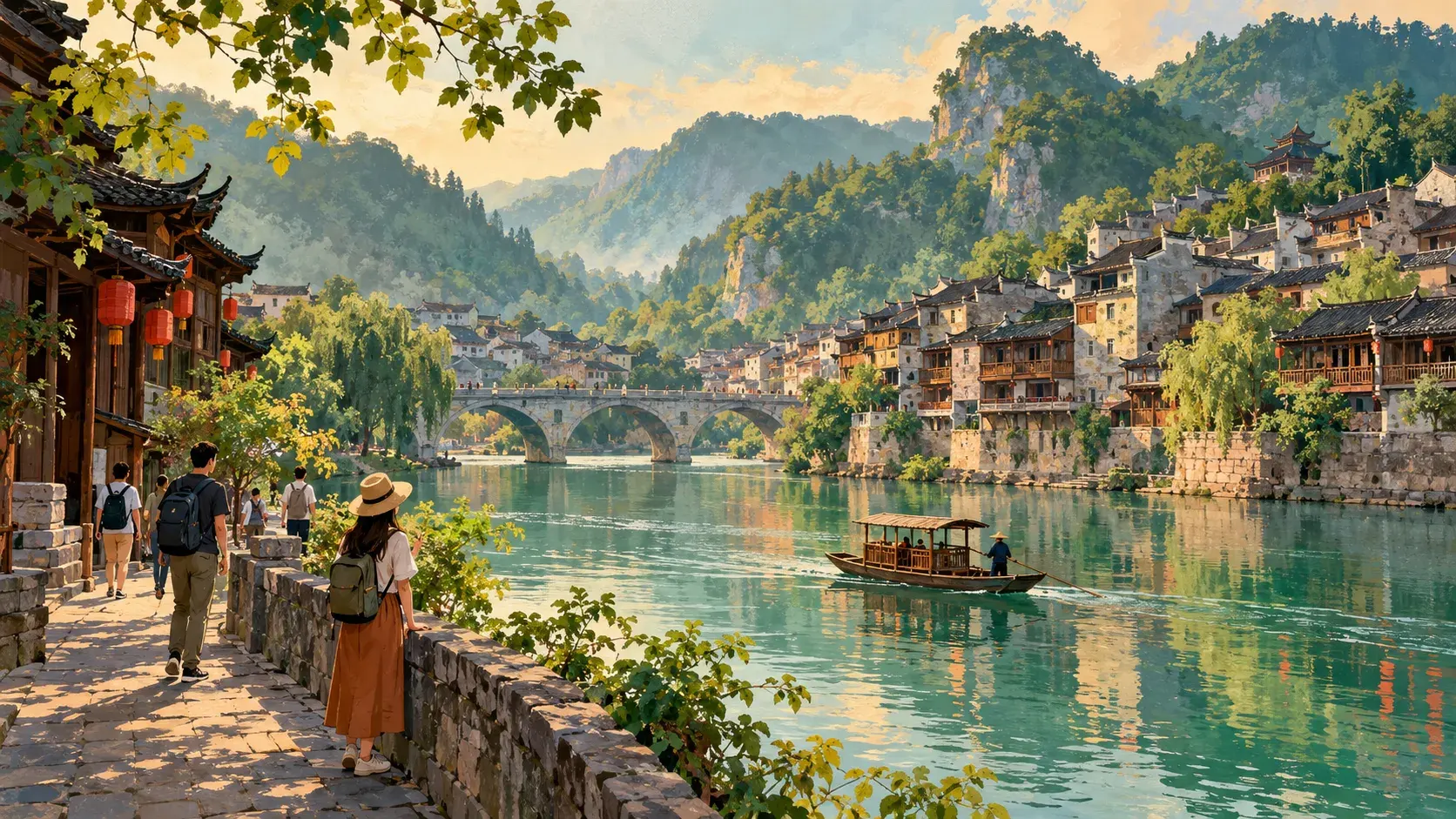
This Qiandongnan edition is a village-and-rail route across southeast Guizhou, distinct from the broader regional handbook.
 川藏线
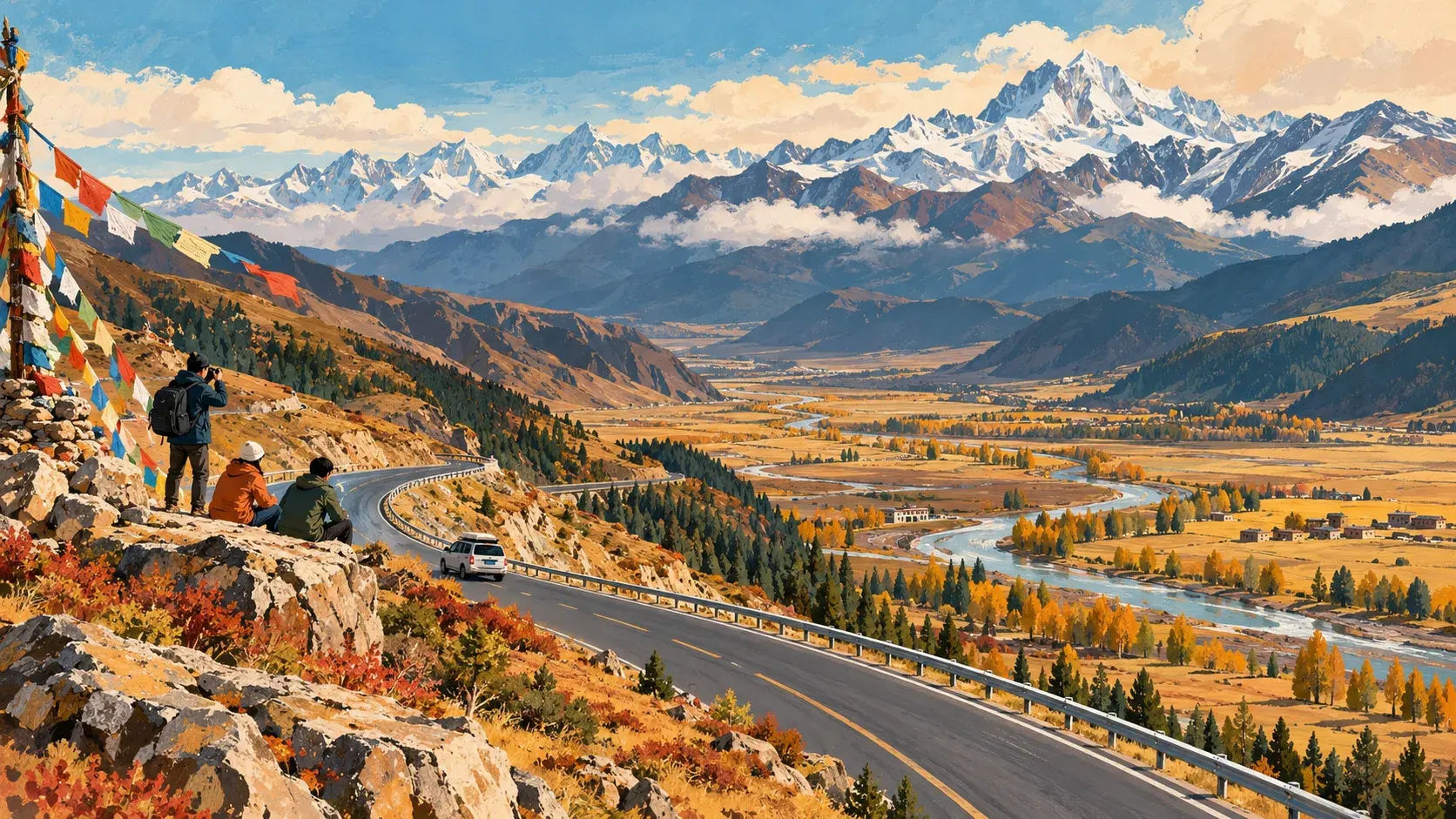
The Sichuan–Tibet southern line — National Highway 318 from Chengdu to Lhasa, roughly 2,100 kilometers of it — is the road journey Chinese travelers romanticize above all others.
 西藏
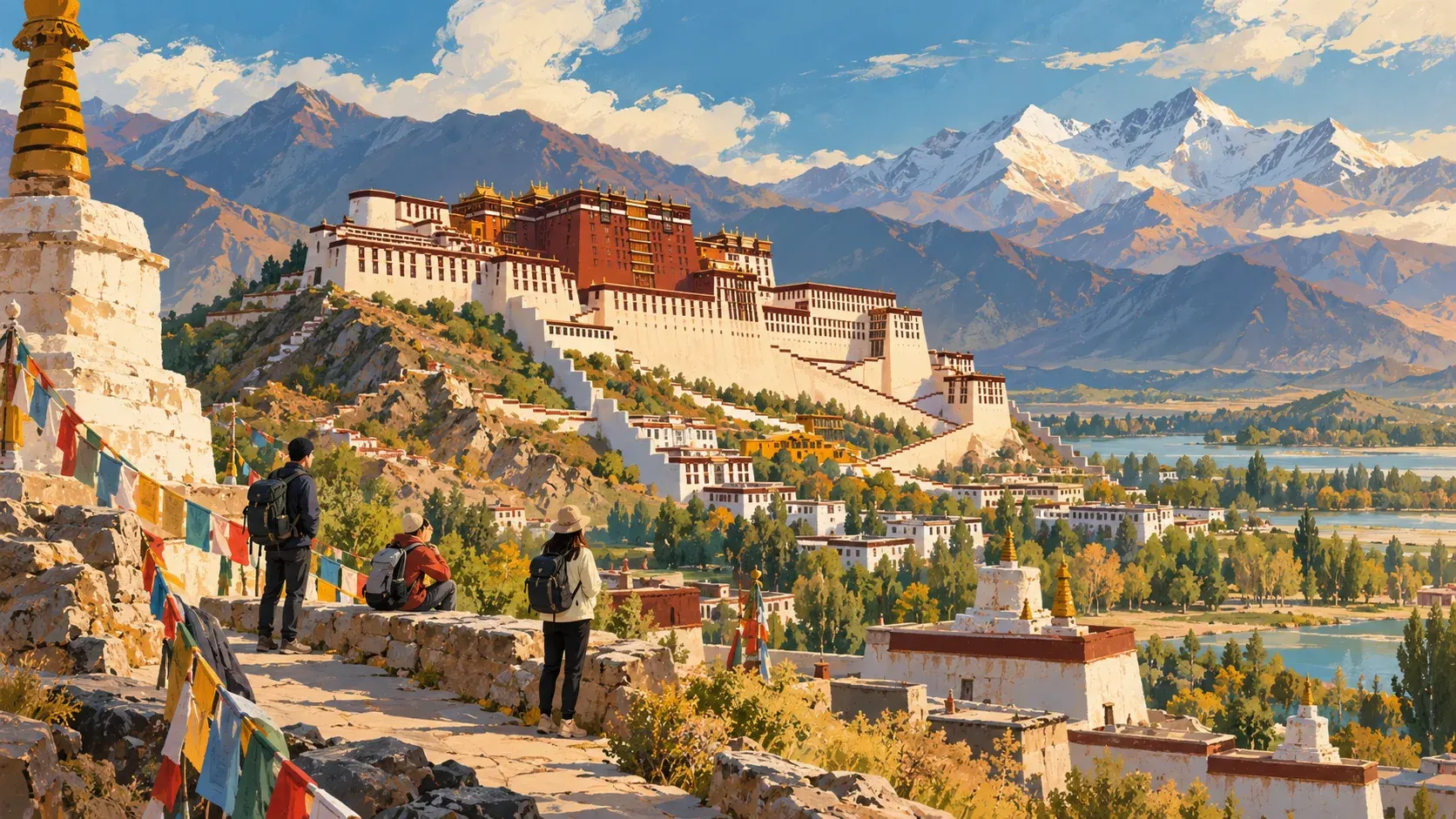
Tibet Autonomous Region is a high-altitude journey where legal travel arrangements, gradual acclimatisation and respect for living religious culture matter more than the number of places covered.
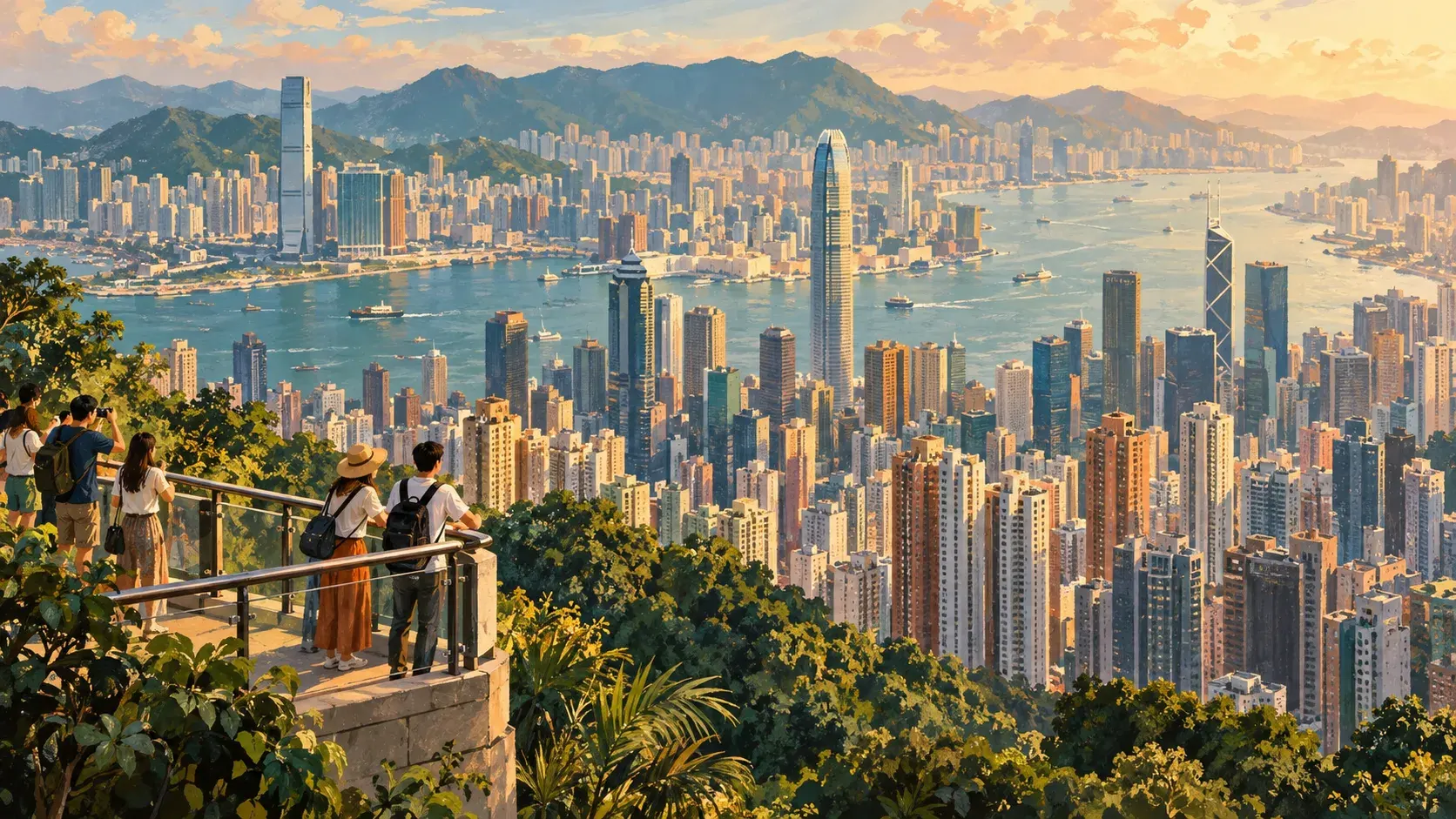 香港
Hong Kong is a vertical city poured between a mountain and a harbour — Cantonese at heart, international in its skin, and dense enough that a first visit can feel like three cities in one: the financial canyons of Centra
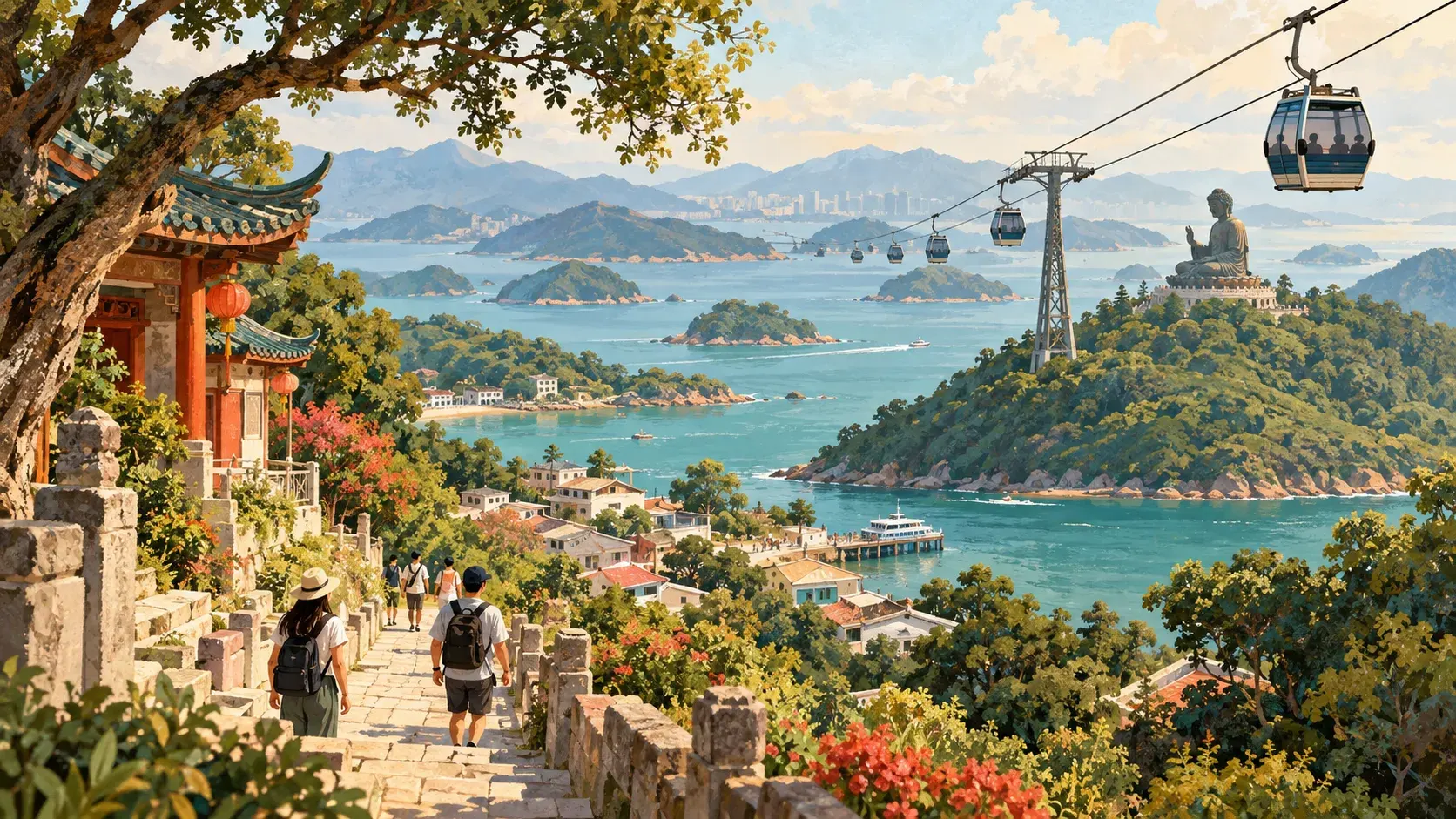 香港离岛
Hong Kong counts more than two hundred outlying islands, and some lie barely half an hour from Central by ferry.
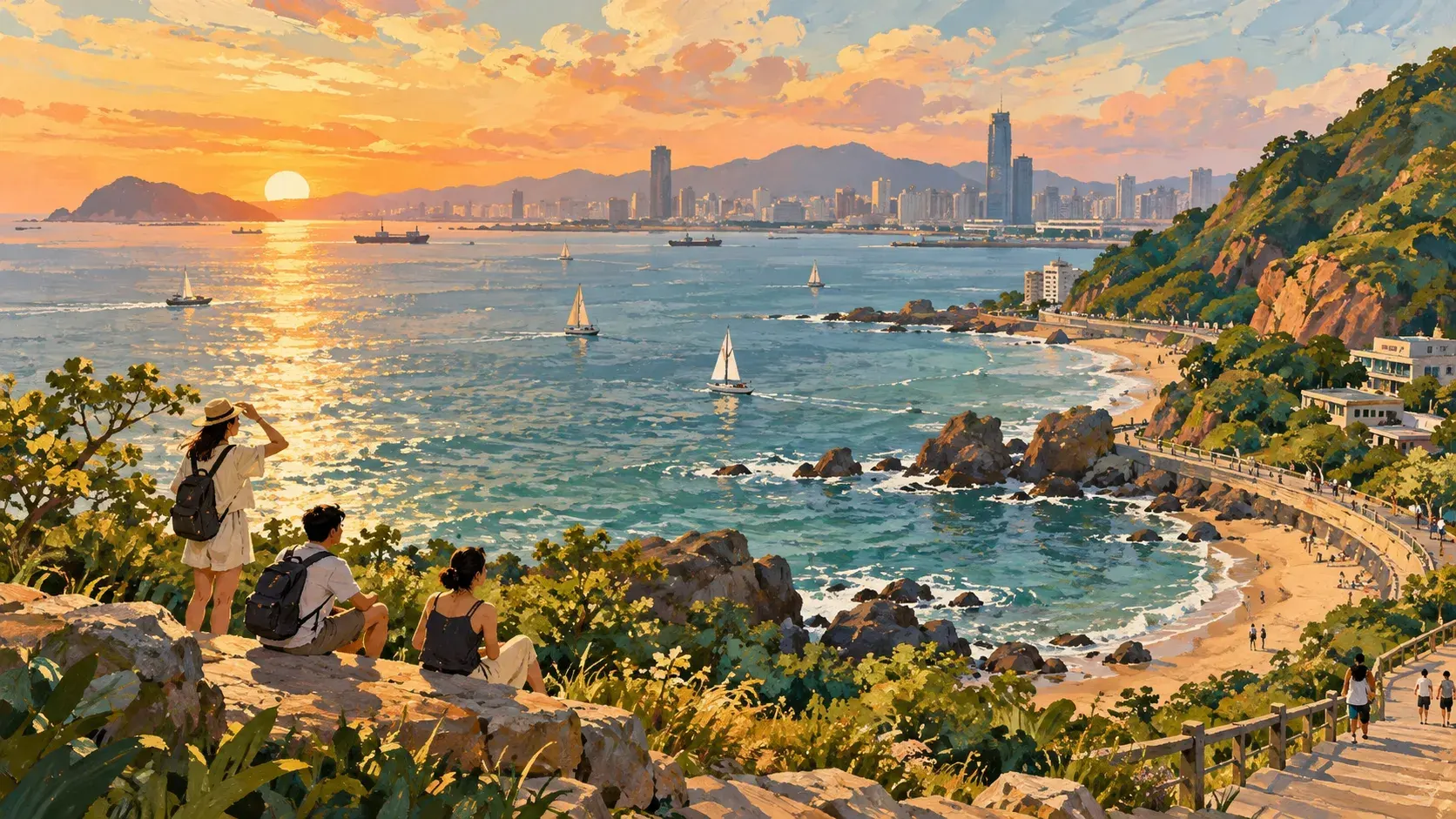 高雄
Kaohsiung is a warm southern port city where harbour warehouses, contemporary arts, ferries, light rail and old neighbourhood food fit naturally into a two- or three-day stay.
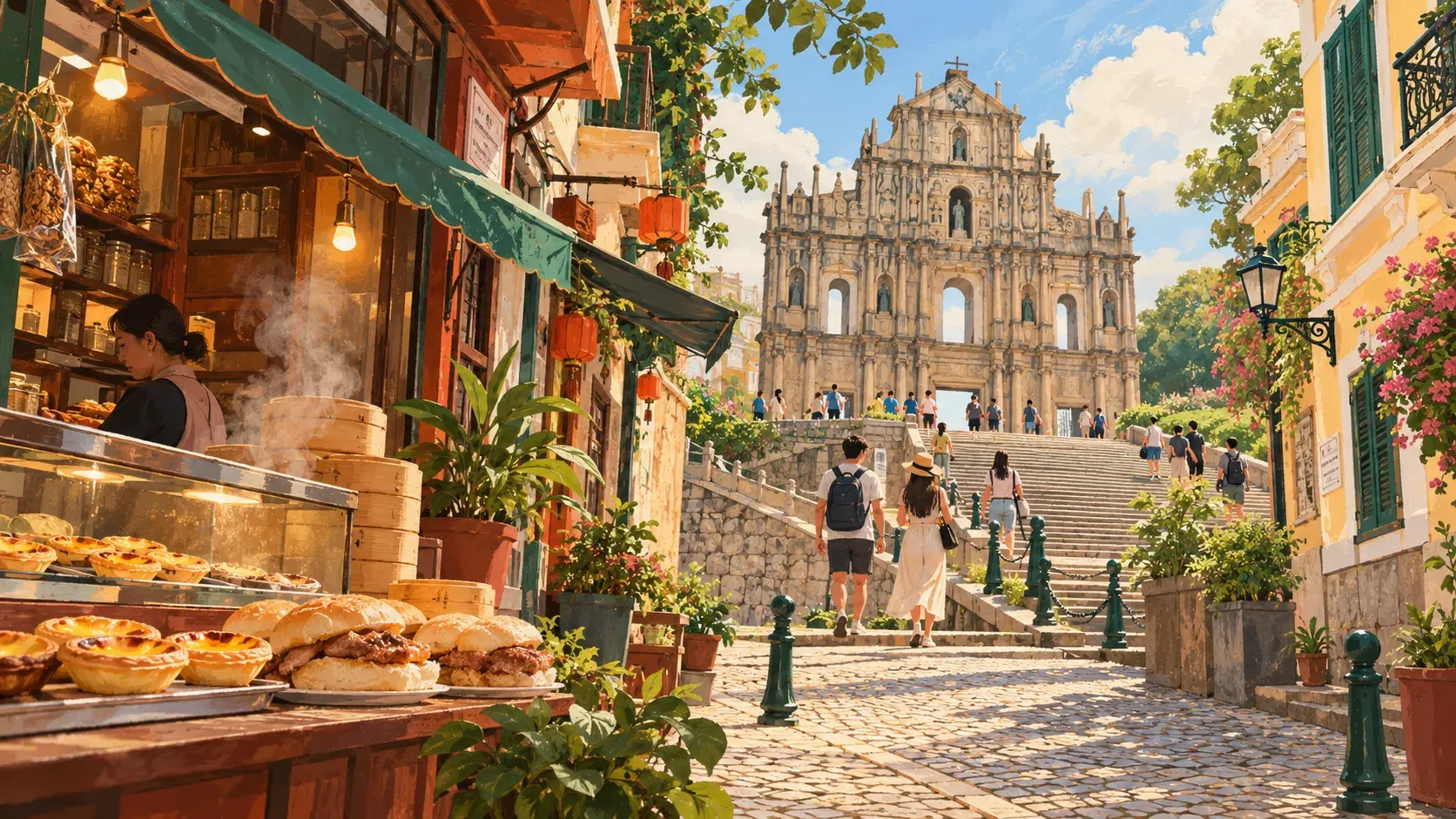 澳门
Macau is the smallest surprise in East Asia: a former Portuguese trading post where baroque church facades stand at the end of lanes of Chinese herbal shops, and where egg tarts, pork chop buns and Portuguese wine share
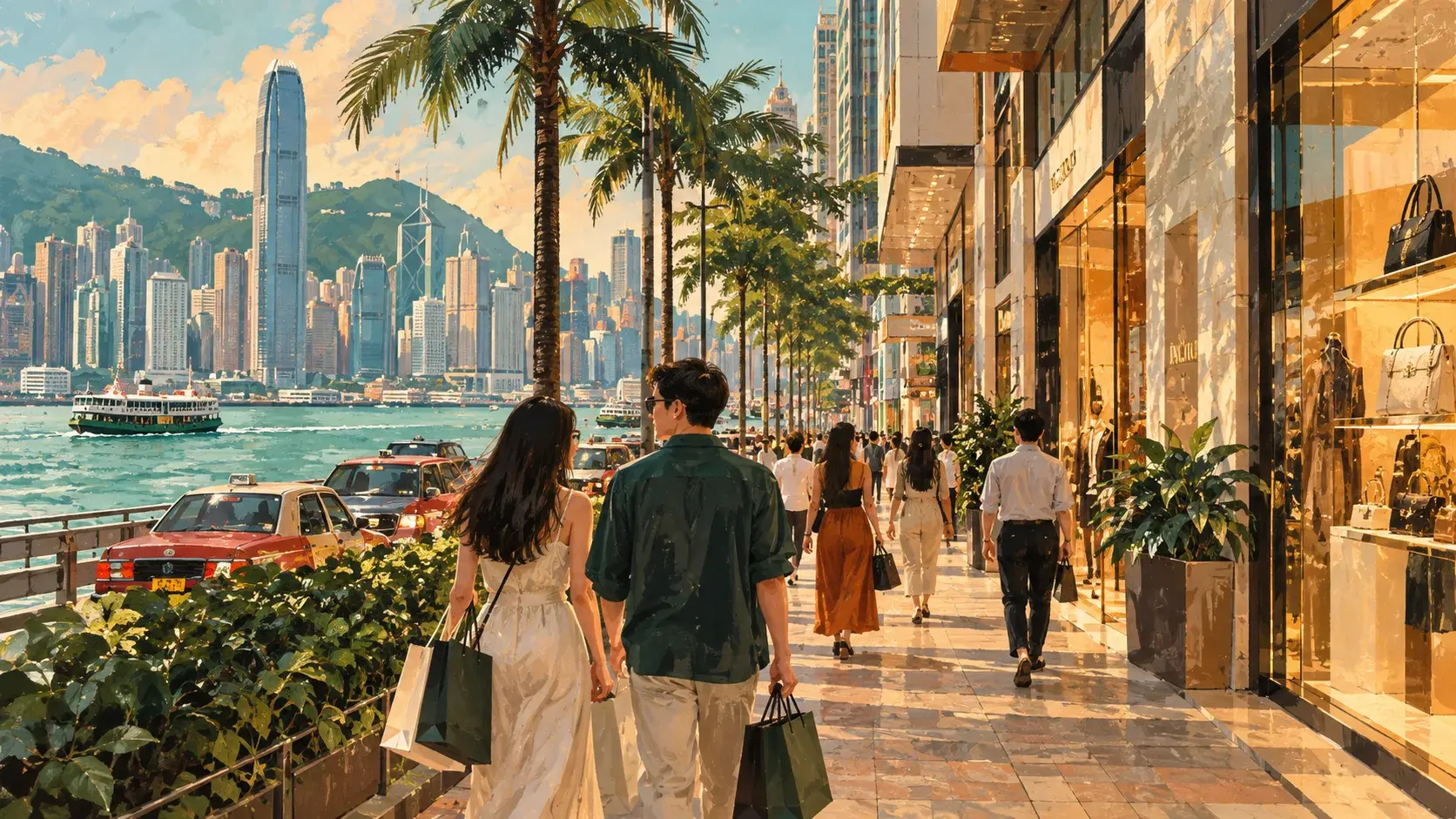 香港购物
Hong Kong is a free port: no sales tax, no VAT and no customs duty on most goods, which is why "shopping" sits in the same breath as the skyline.
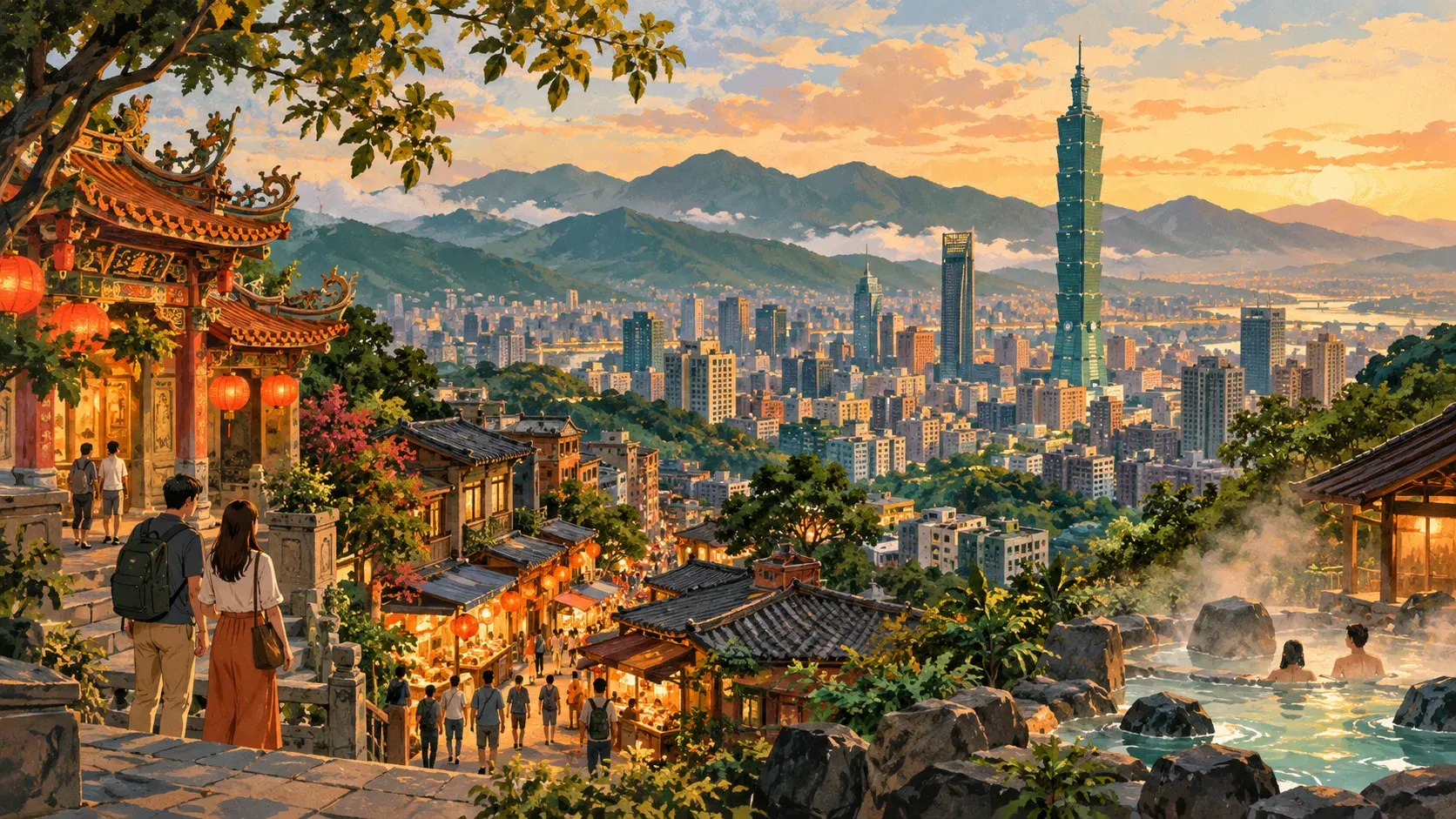 台北
Taipei sits in a basin ringed by mountains, a capital of contradictions that somehow all work: a skyline tower next to a century-old temple, night markets an MRT stop from world-class museums, hot-spring steam rising at
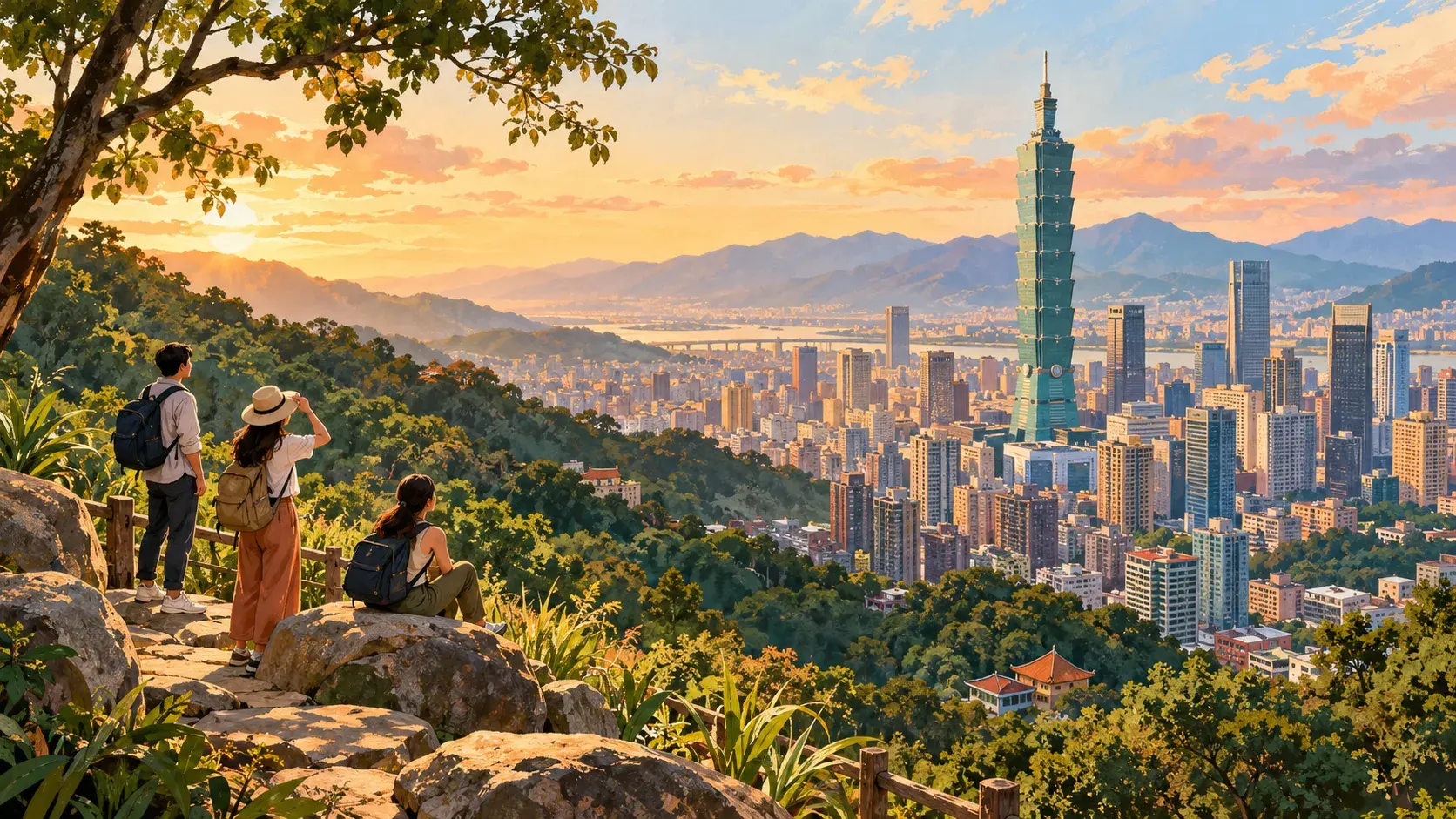 台湾12日
Twelve days is enough for a rewarding Taiwan rail journey if the route is selective: Taipei and the north, one central stop, the southern cities and a measured return.
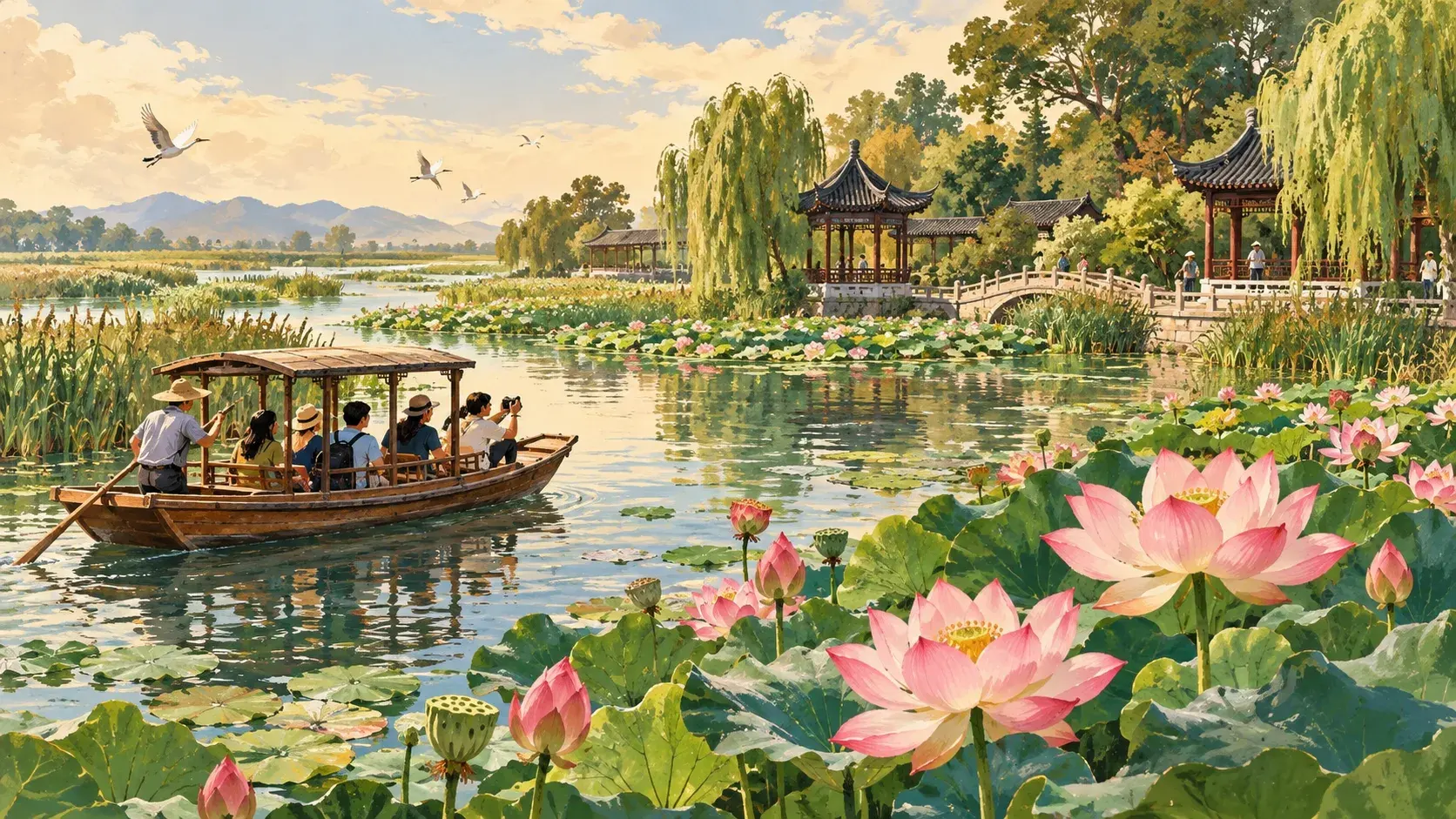 白洋淀
Baiyangdian is a broad wetland of reed beds, lotus ponds and working waterside villages inside Xiong'an New Area.
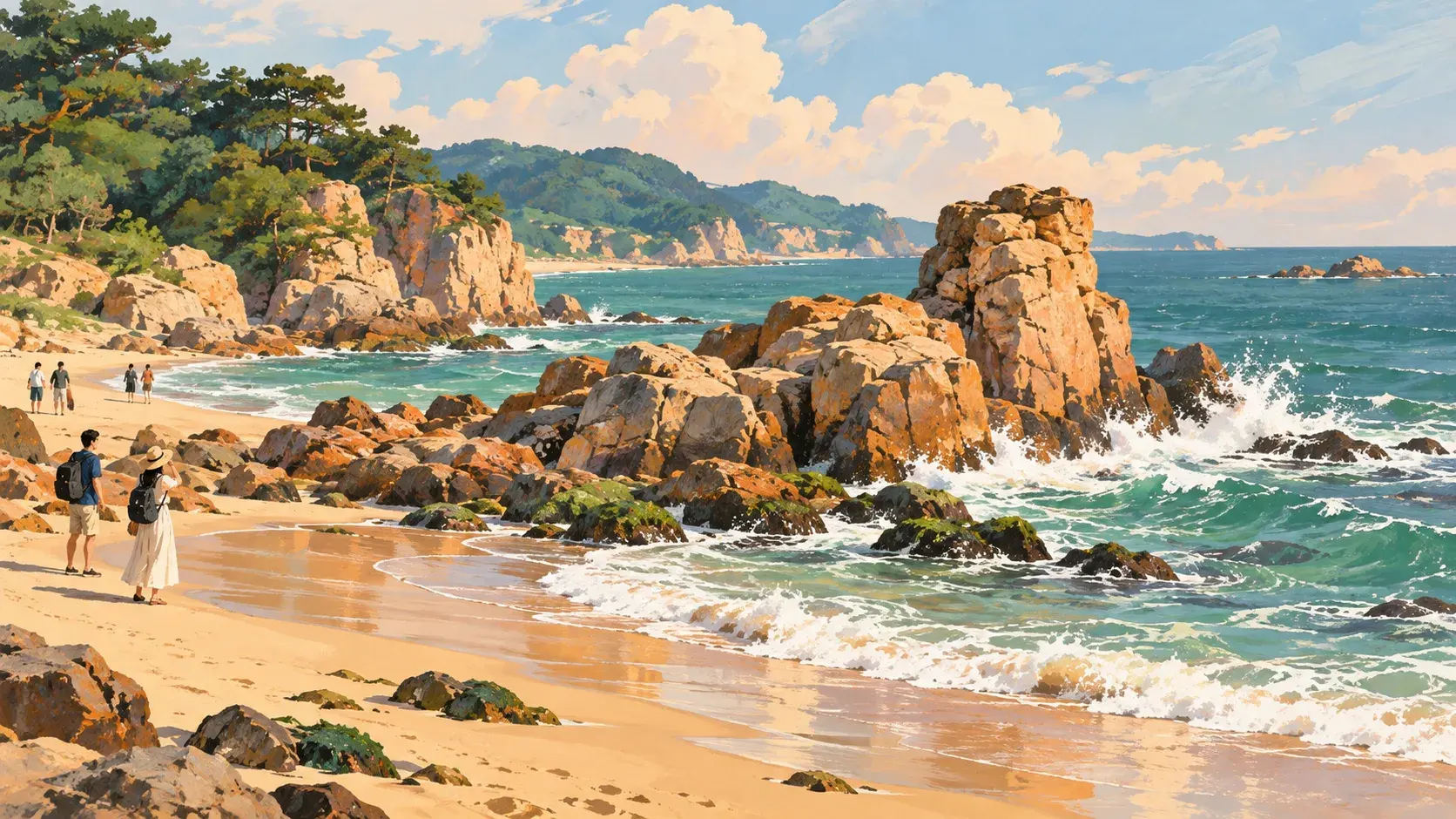 北戴河
Beidaihe is Qinhuangdao's classic seaside district: wooded lanes, long beaches, headlands for sunrise and a summer culture shaped by more than a century of coastal holidays.
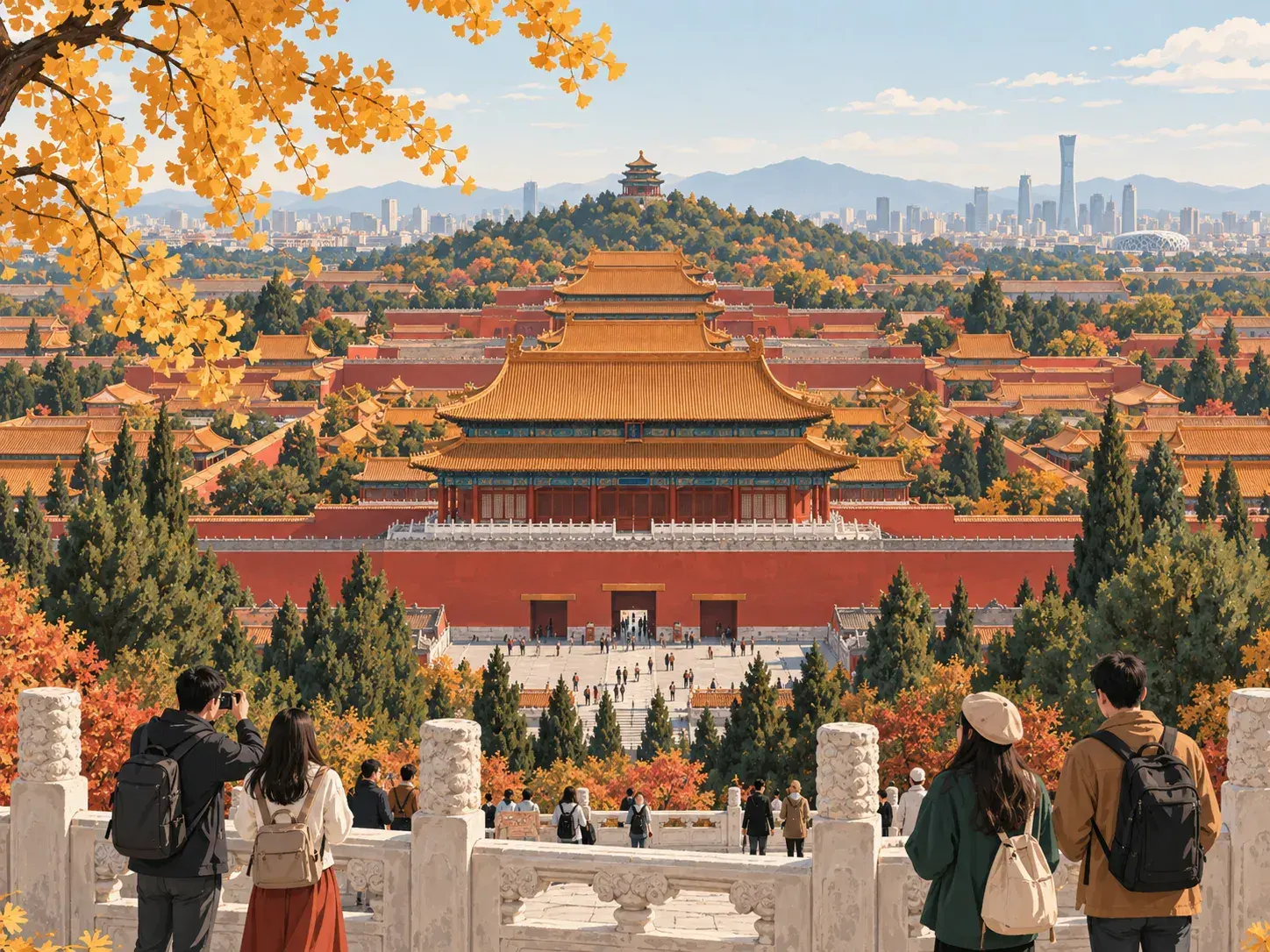 北京
The Forbidden City and the Great Wall, hutong lanes and lake evenings — three thousand years of capital history inside a modern megacity.
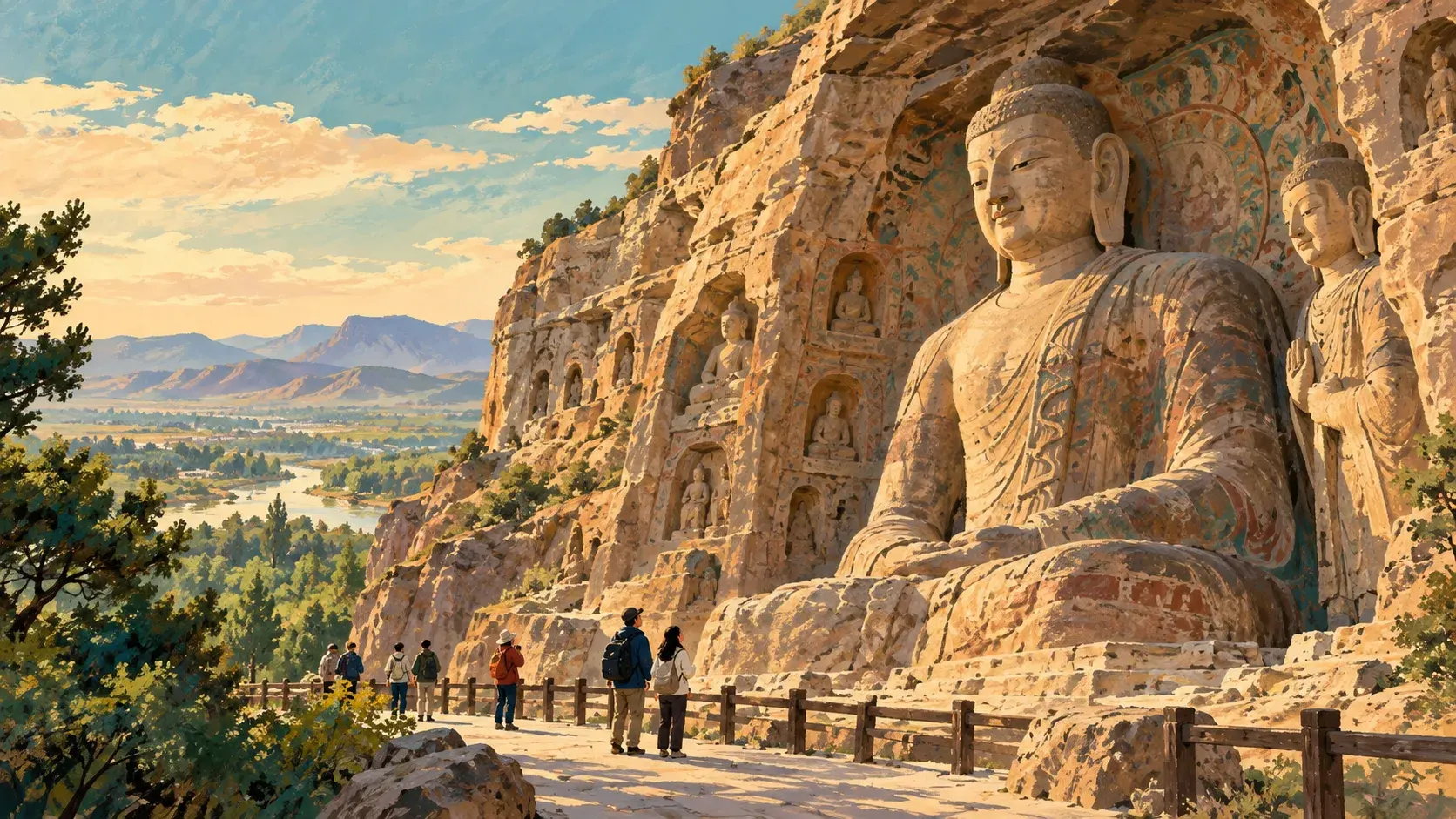 大同
The Yungang Buddhas cut into a sandstone cliff, a Hanging Temple clinging to a gorge, a tenth-century wooden pagoda — and a reborn walled city lit at night.
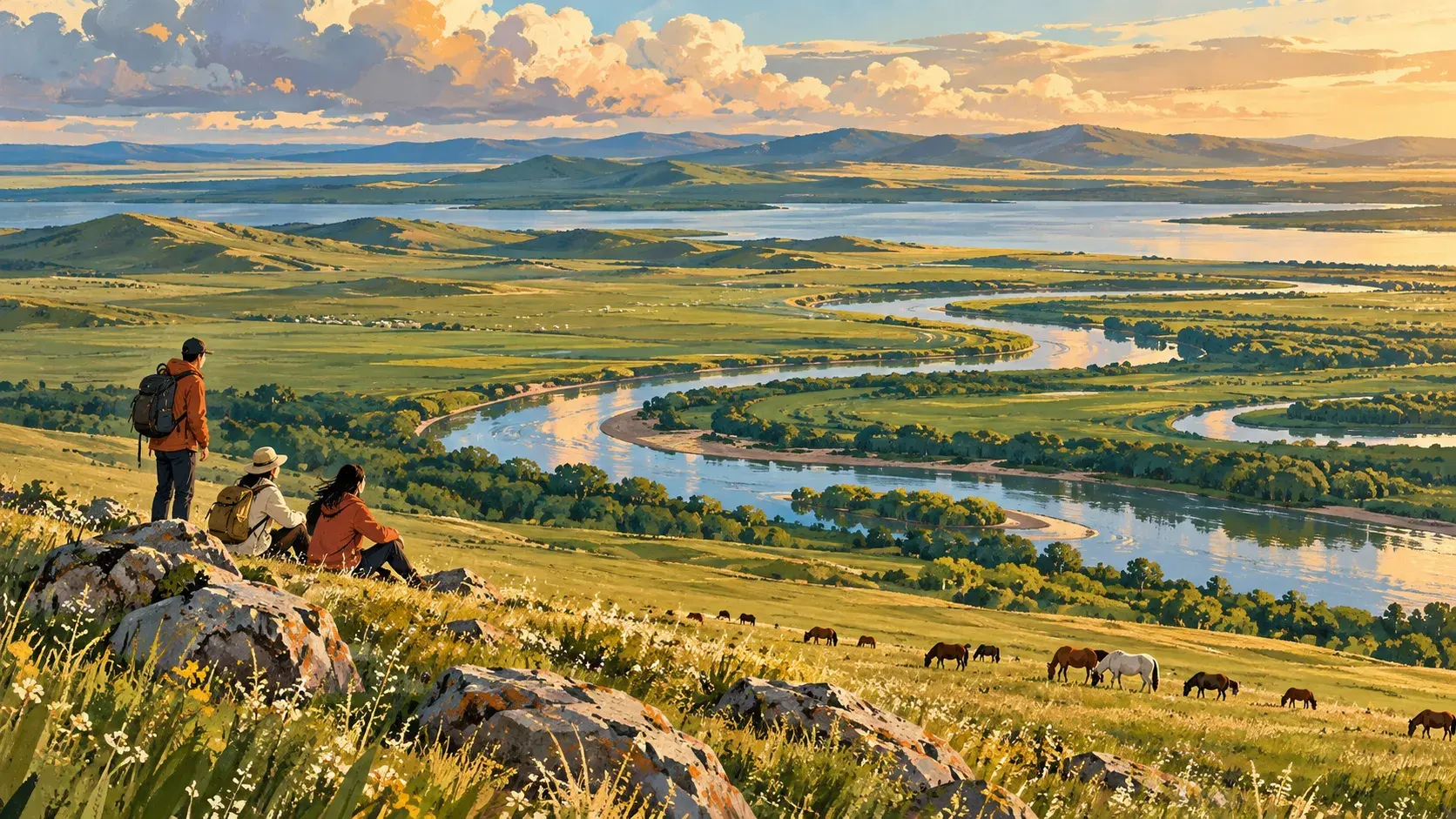 呼伦贝尔
A border-region sweep of steppe, Russian timber villages on the Argun and the forests of the Greater Khingan — based in Hailar, moved by hired car, best in a short green summer.
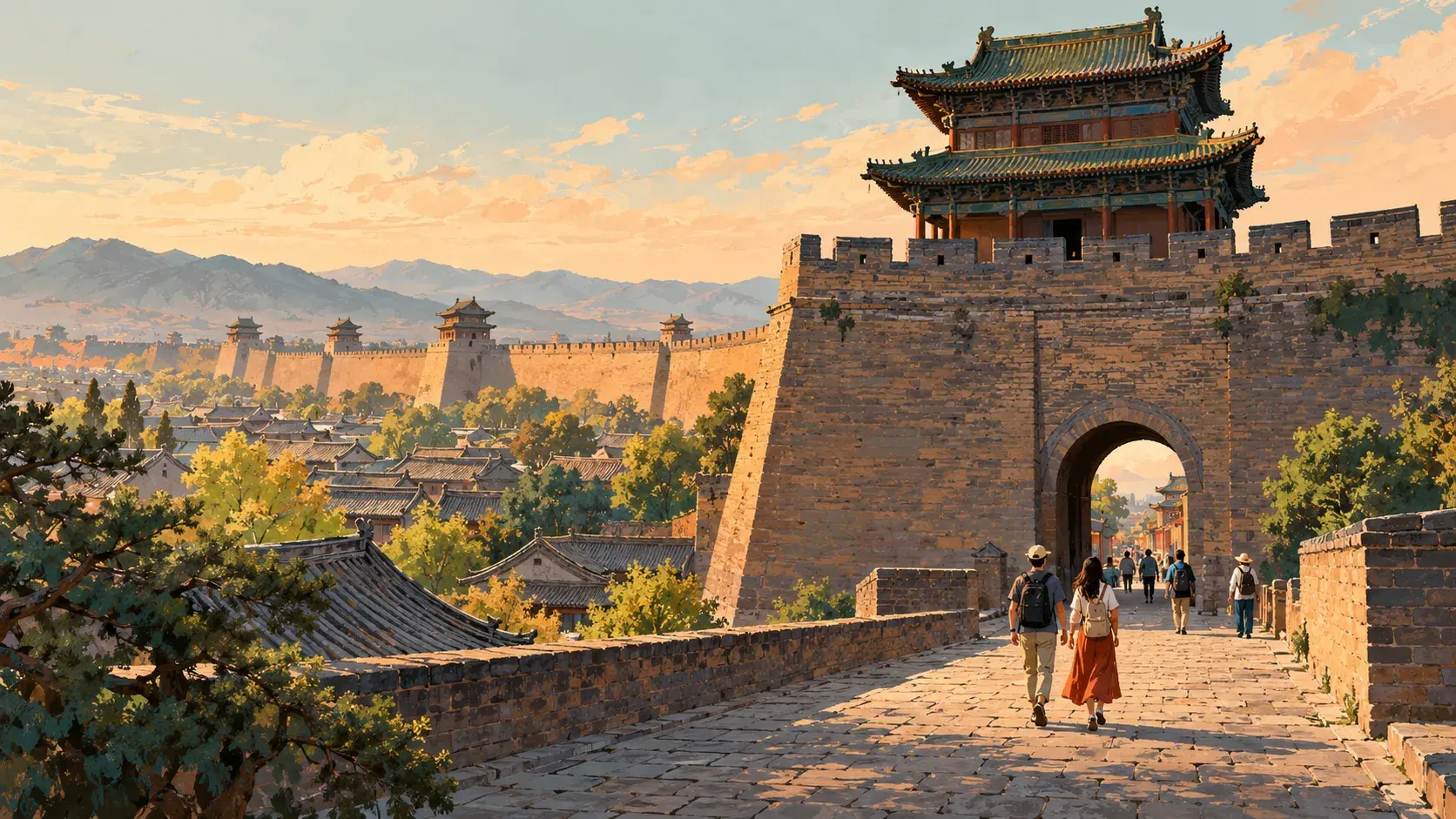 平遥
A complete Ming-dynasty county town under UNESCO protection: six kilometers of ramparts, the courtyard offices of China’s first draft banks, and two great temples outside the walls.
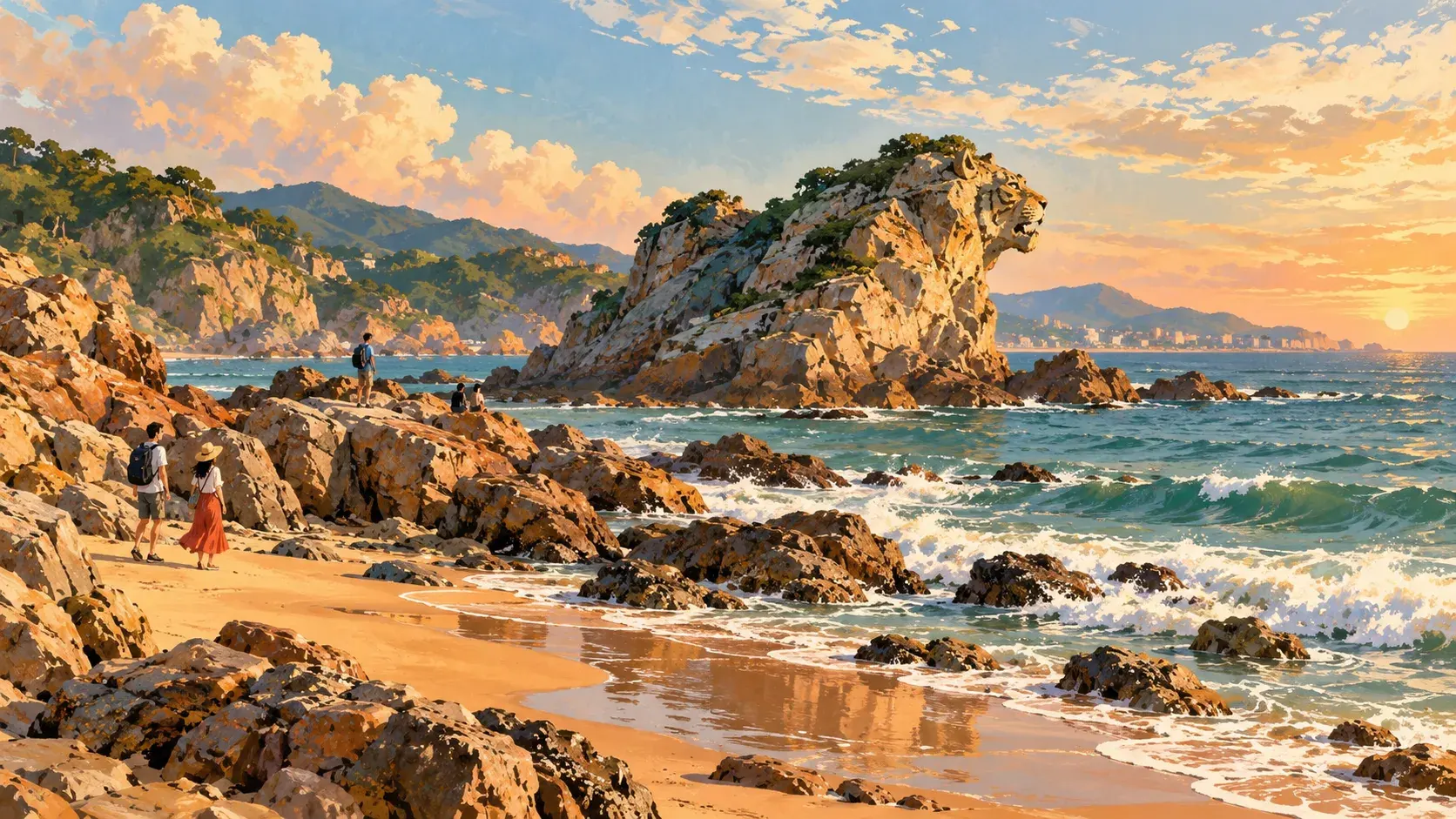 秦皇岛
Qinhuangdao is not one seaside centre but a long urban coast joining three useful travel zones: the working city in Haigang District, the resort shore of Beidaihe and the Great Wall landscape of Shanhaiguan.
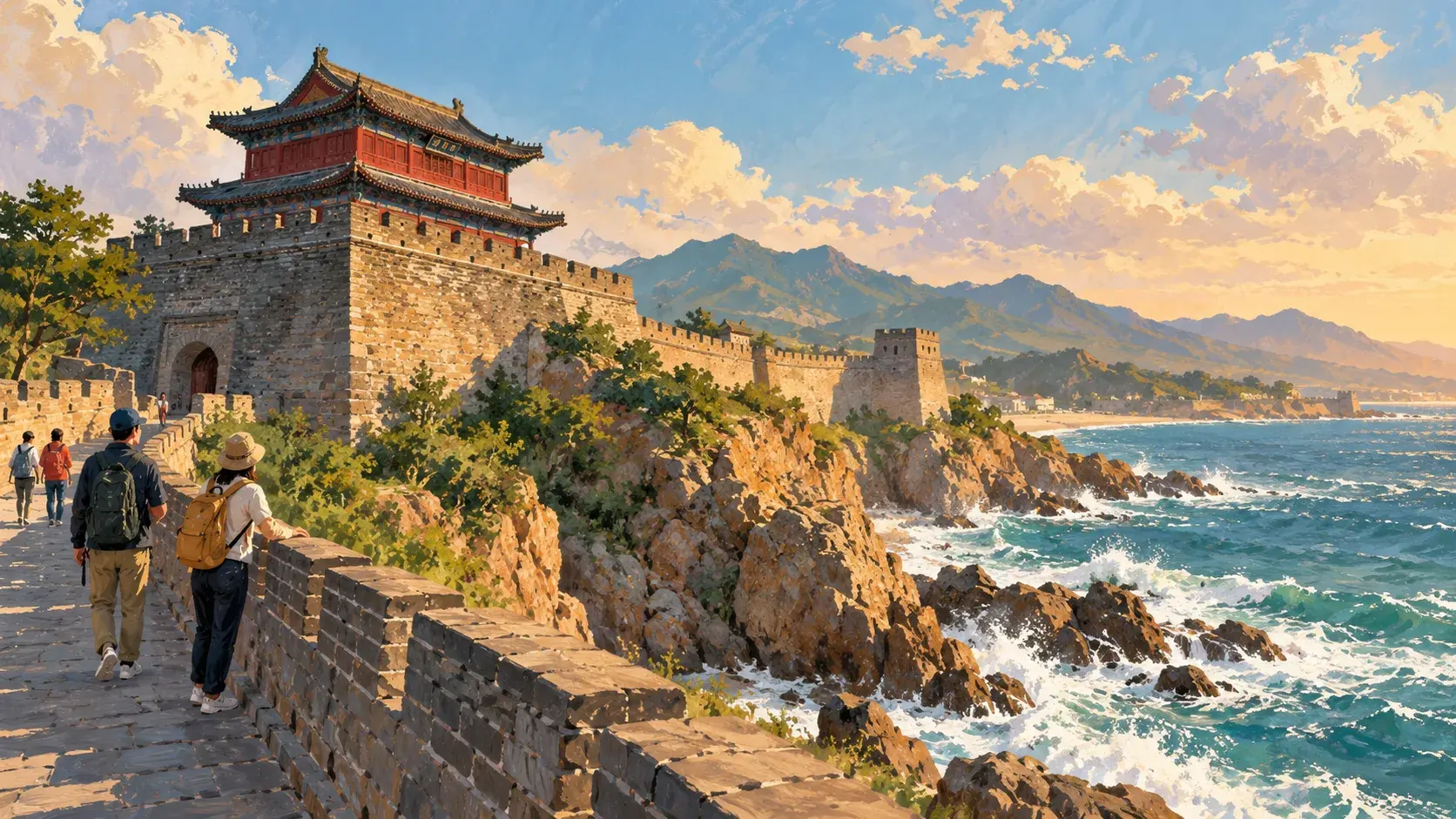 山海关
Shanhaiguan is the rare place where a fortified Ming city, mountain wall and Bohai shoreline can be read as one defensive landscape.
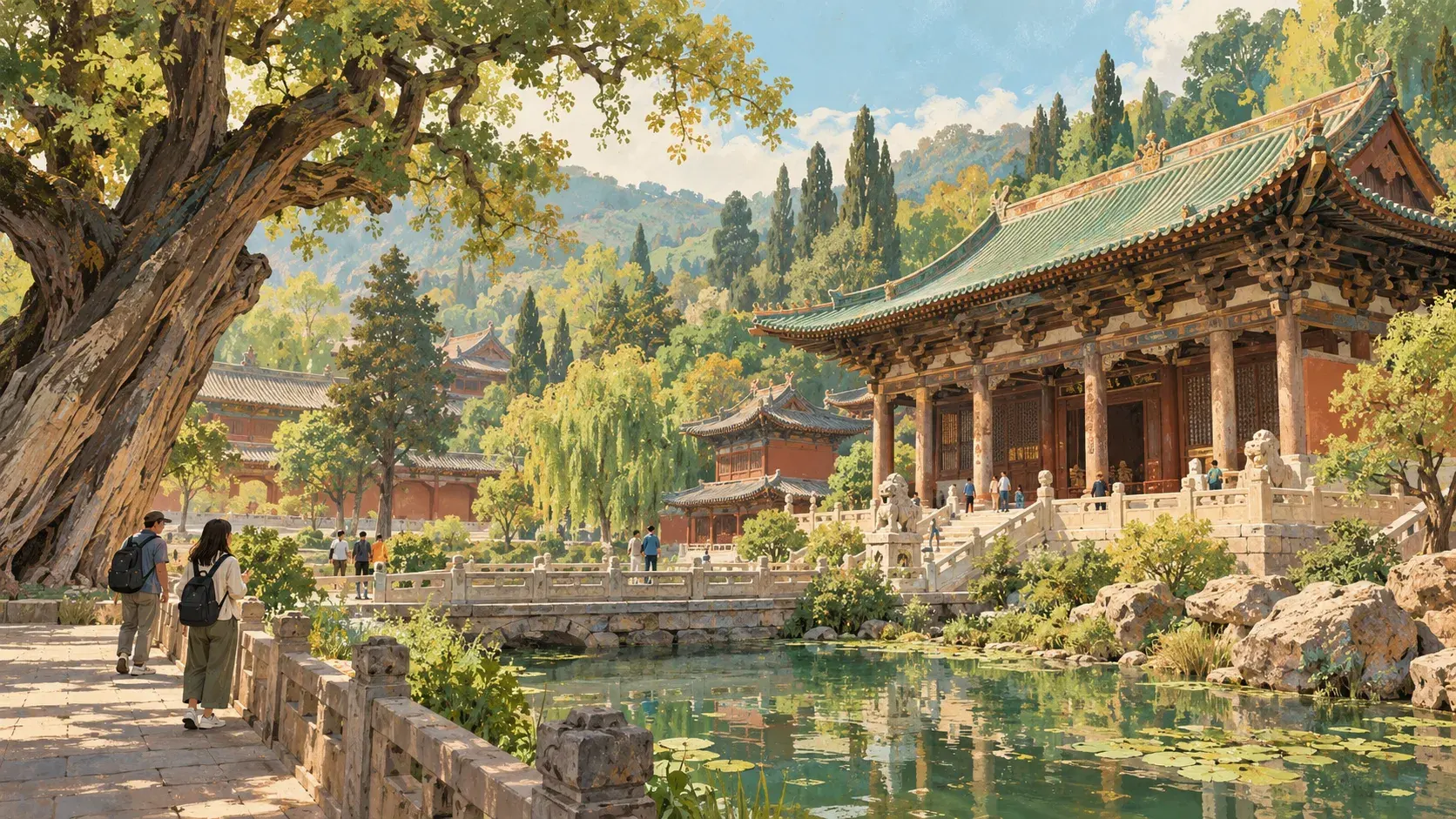 太原
Shanxi’s capital and staging hub: the Song masterpiece at Jinci, bronzes that stop you mid-stride at the provincial museum, twin pagodas and a riverfront rebuilt from the poems.
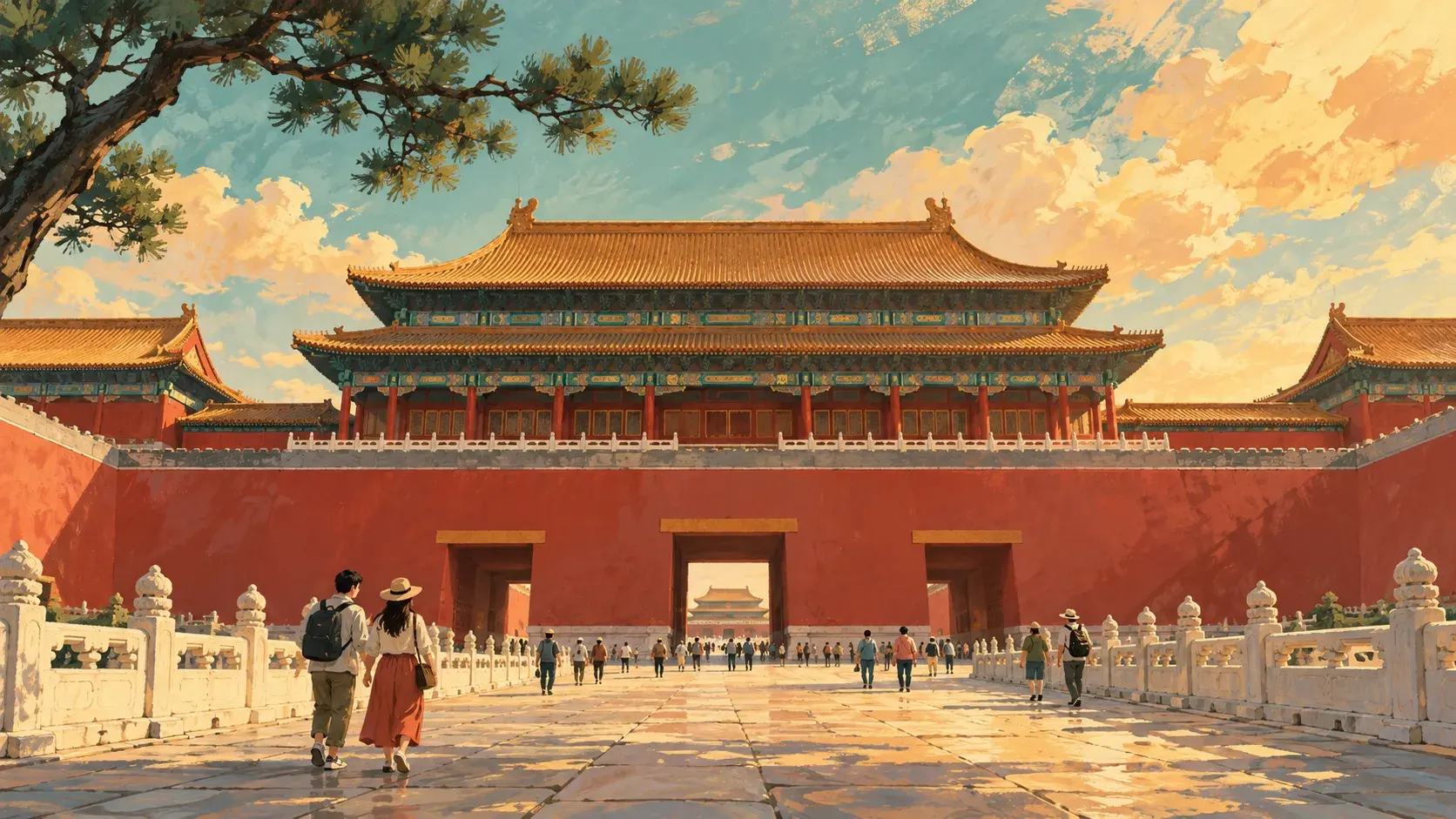 故宫
The largest timber palace complex on earth: the central axis, the courts where the court really lived, the treasure galleries and the roofscape from Jingshan hill.
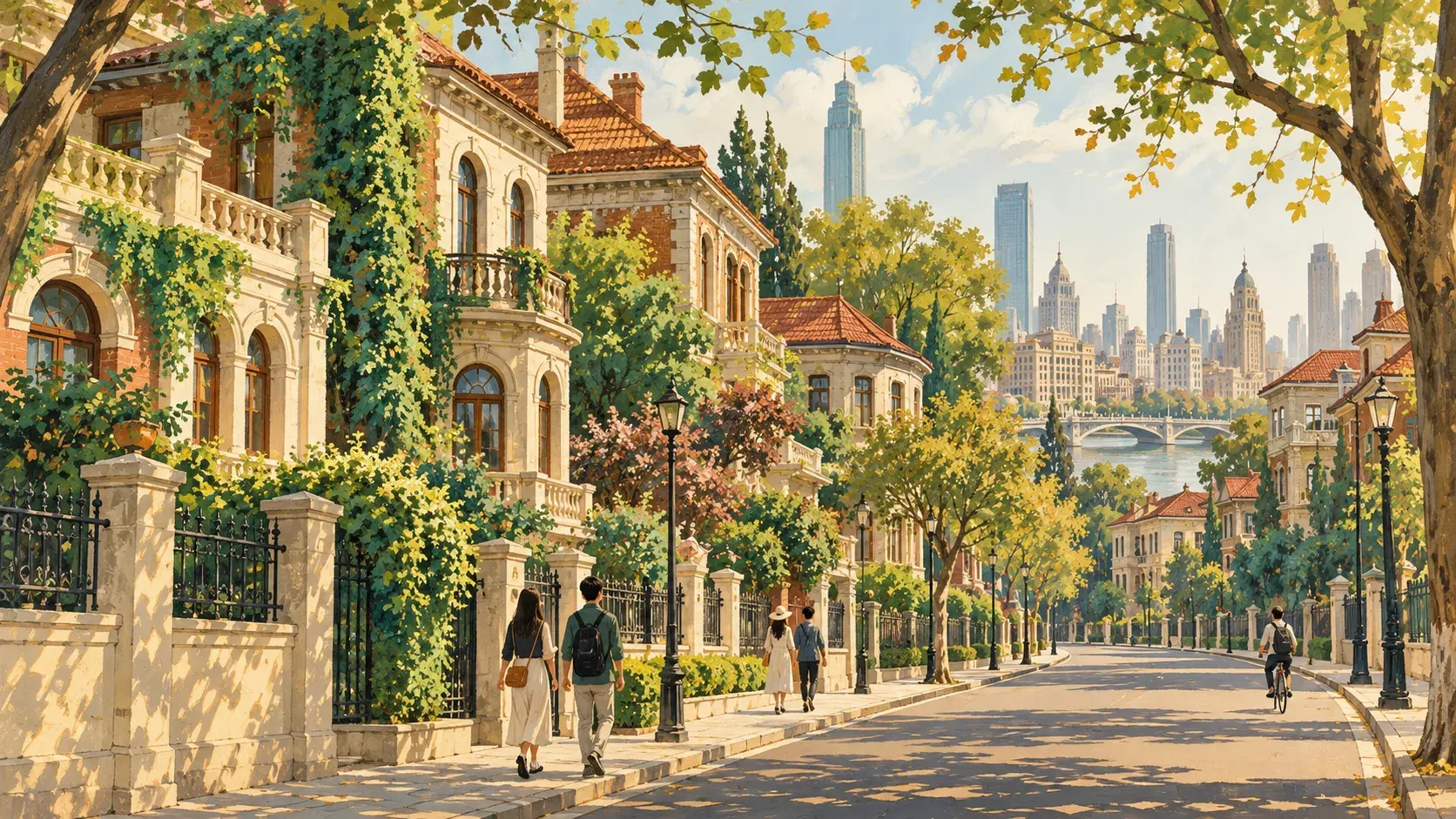 天津
Half an hour from Beijing by fast train: villa-lined avenues of nine former concessions, a riverfront of bridges and lights, and the comedy capital of China.
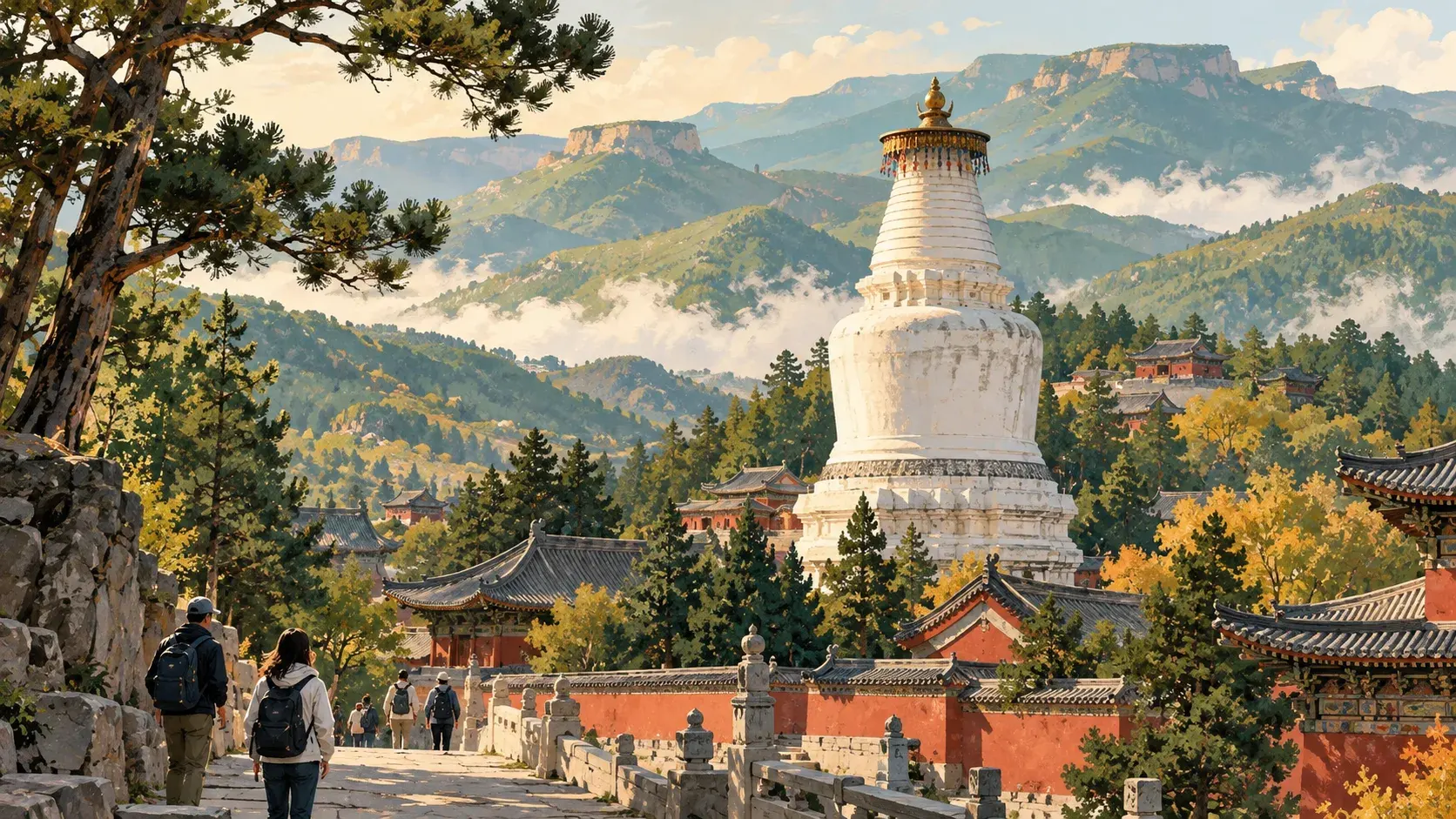 五台山
First of China’s four sacred Buddhist mountains: forty-odd working monasteries in a high valley, five flat summit terraces, and the only mountain where Chinese and Tibetan Buddhism share the incense.
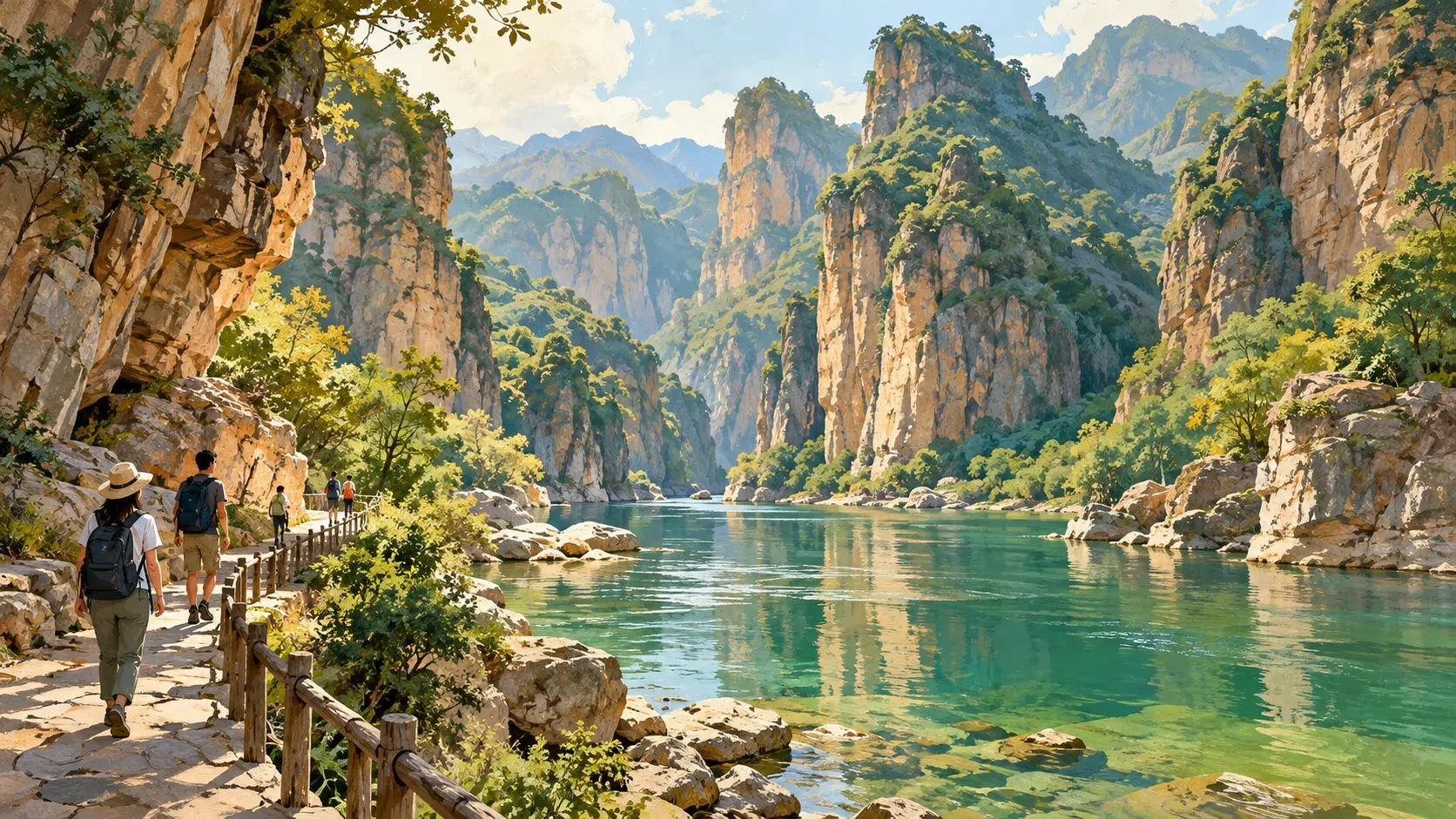 野三坡
Yesanpo is a mountain-and-gorge destination in Laishui County where the Taihang and Yan ranges meet southwest of Beijing.
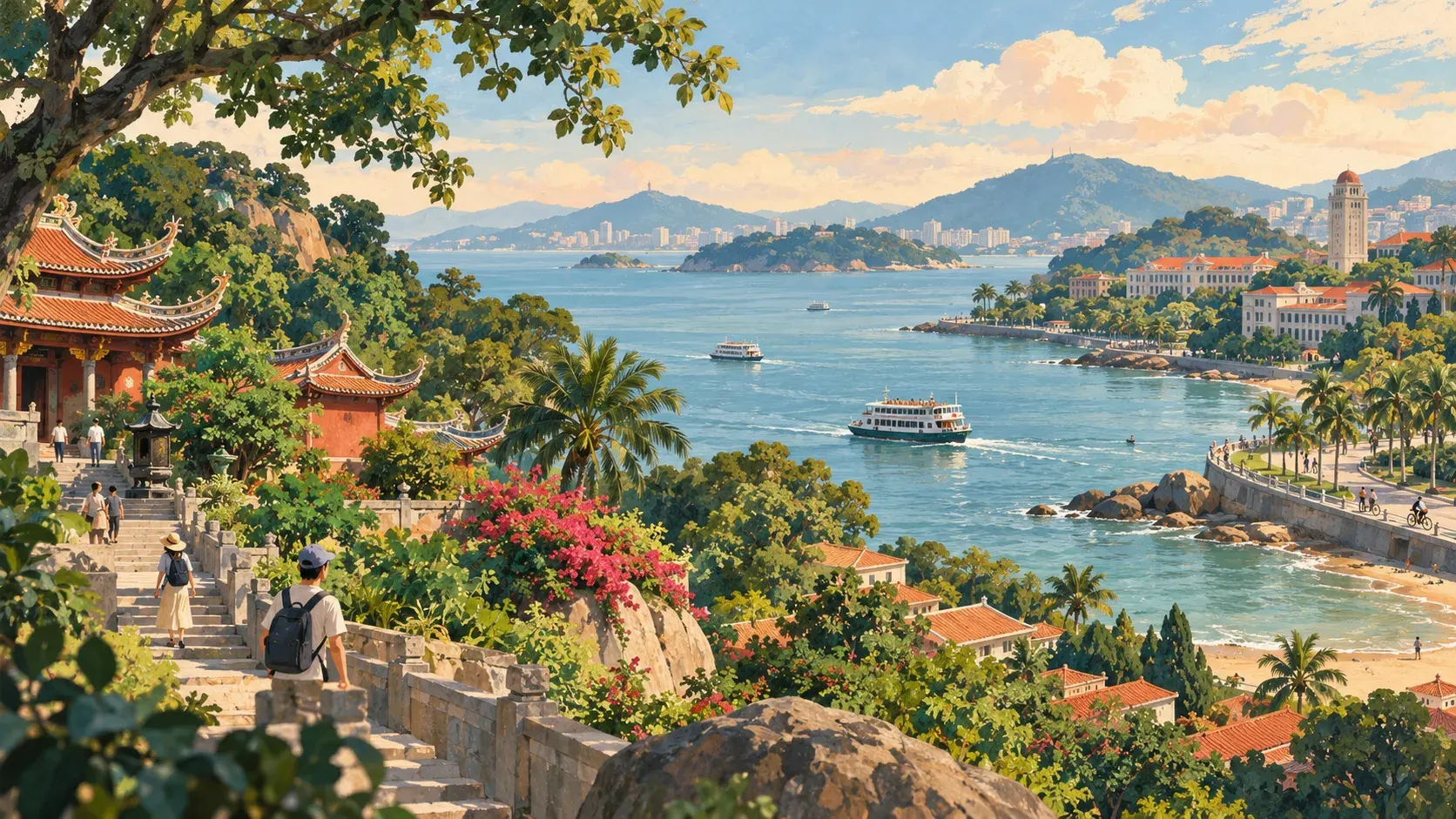 厦门
The full unhurried loop: the city and its beaches, the UNESCO earthen towers of the Hakka mountains, and a night or two on Gulangyu — a route built for lingering.
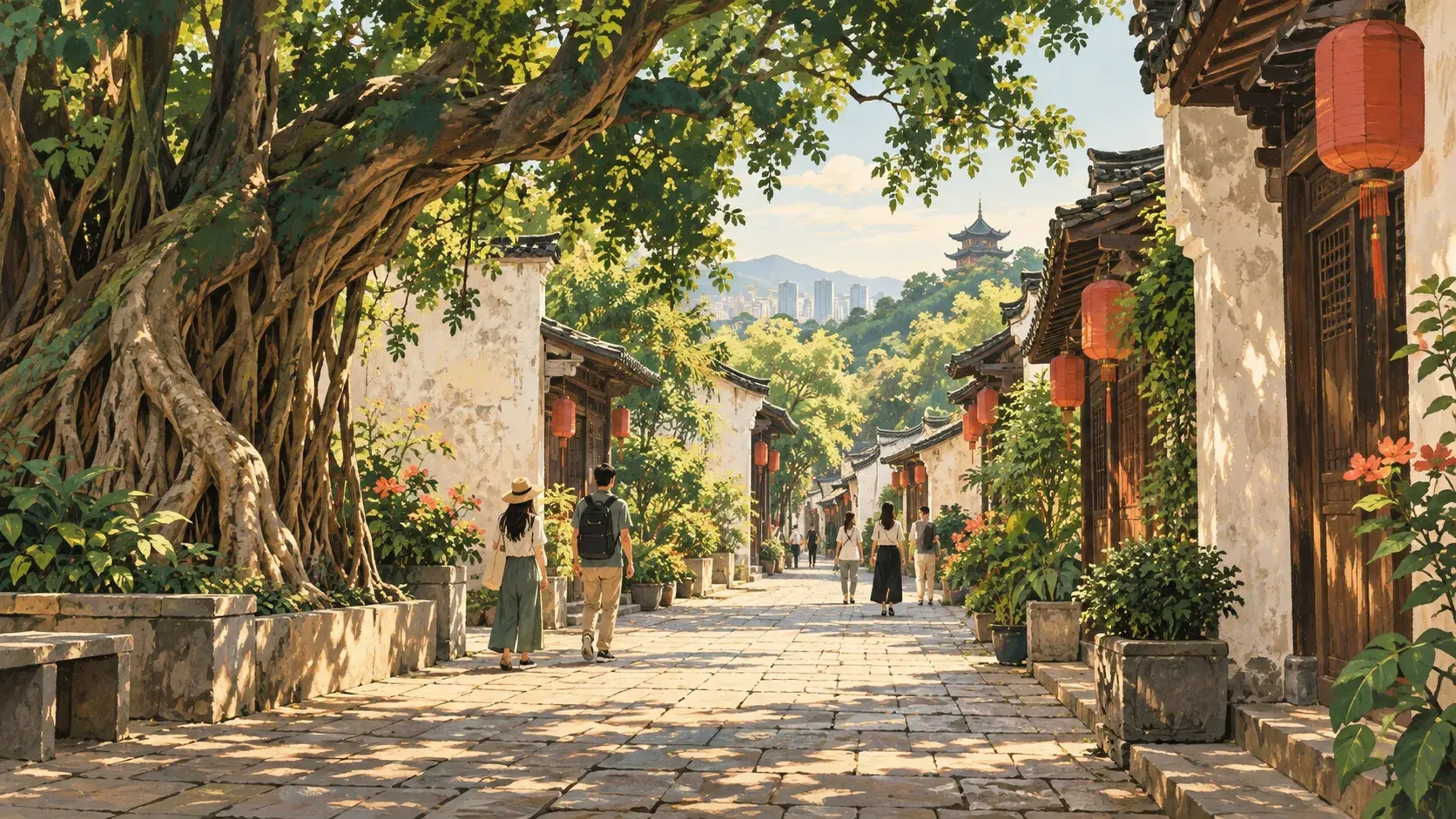 福州
Ming-dynasty lanes at the Three Lanes and Seven Alleys, a temple mountain over the Min River, the shipyard that founded the modern navy — and jasmine tea everywhere.
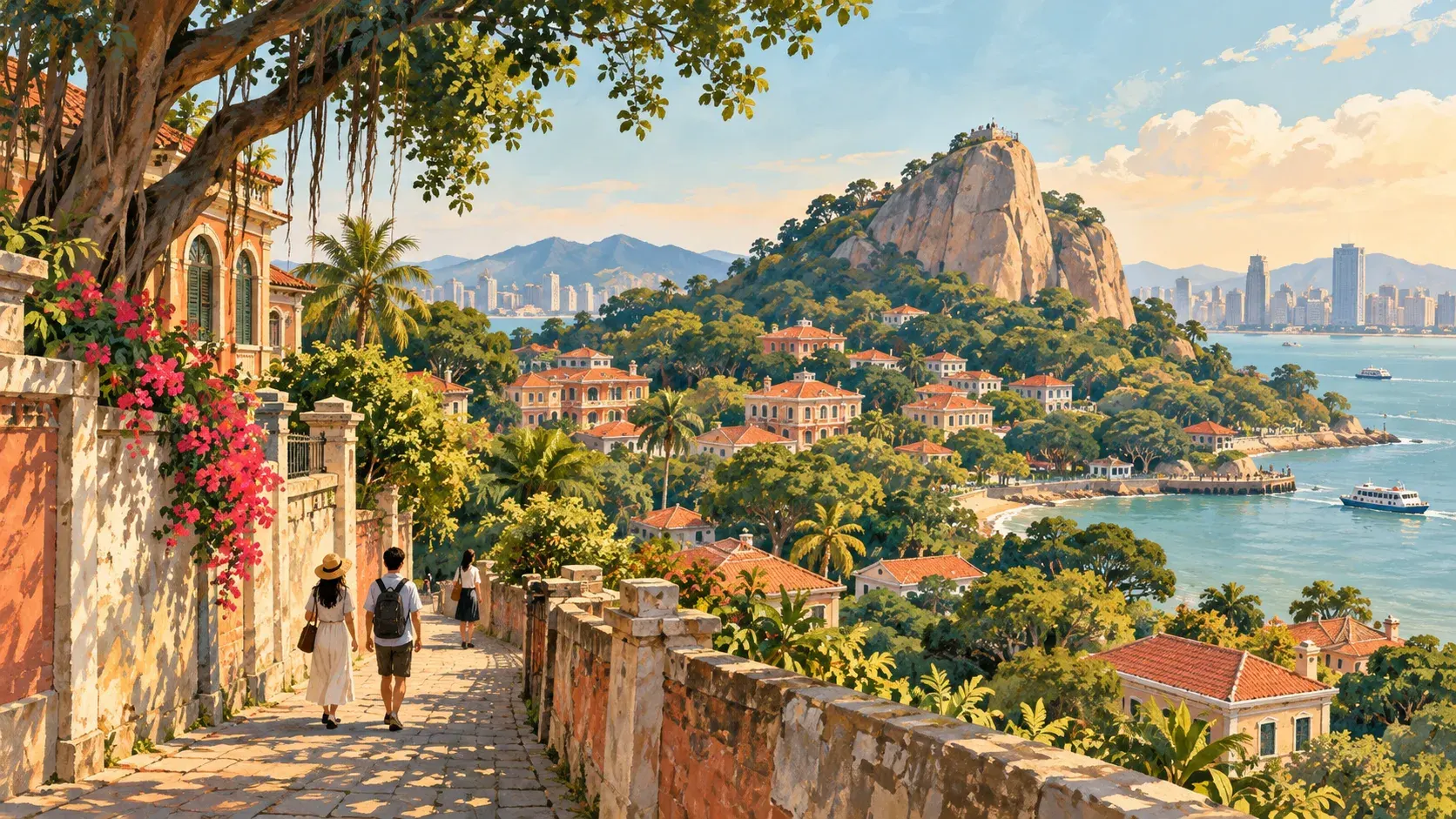 鼓浪屿
A car-free heritage island of consulates, churches, courtyards and pianos facing Xiamen — best walked at dawn and dusk, best slept in overnight.
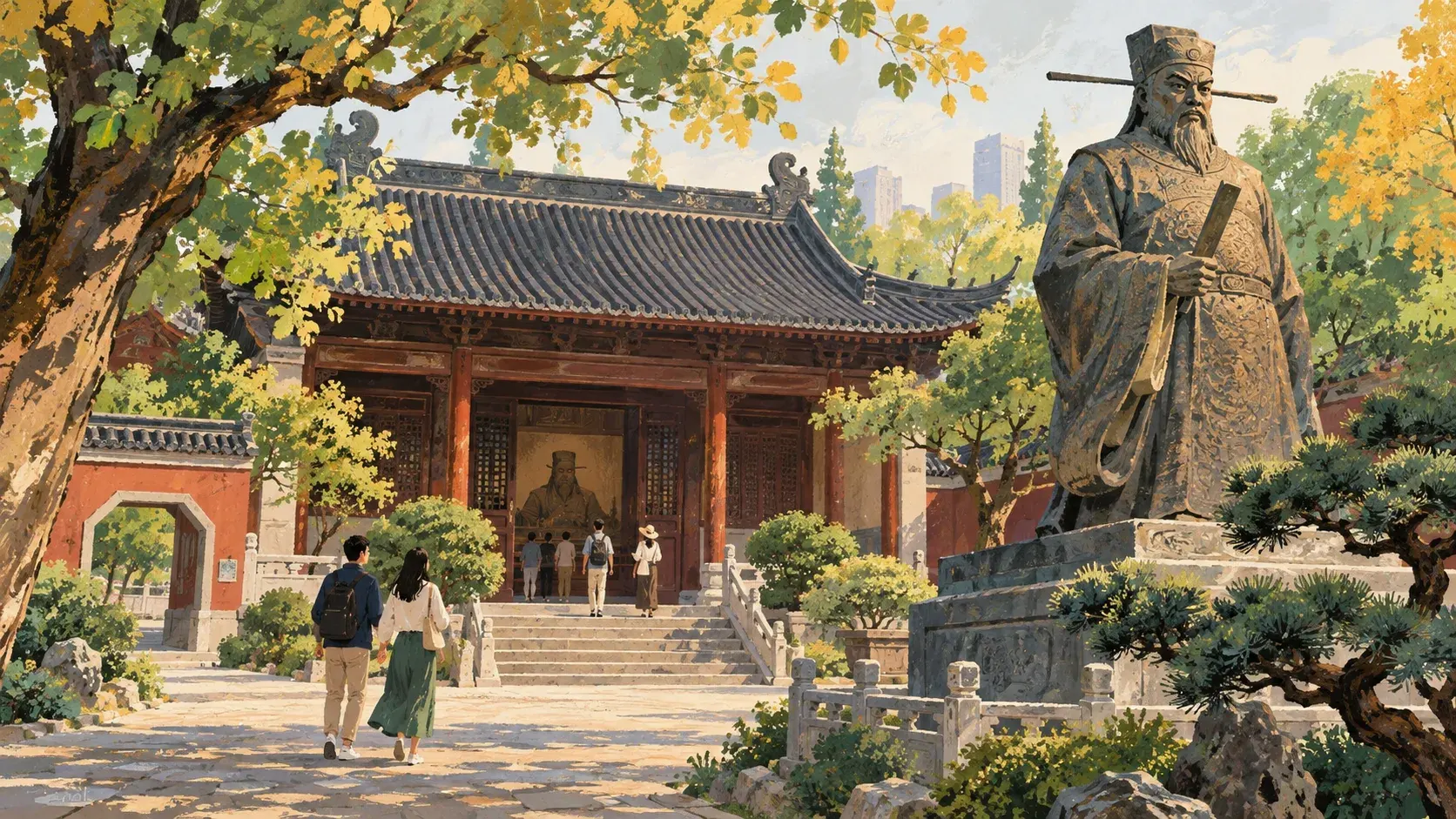 合肥
The incorruptible Judge Bao's hometown, a Three Kingdoms battlefield turned park, the residence of Li Hongzhang — and a scrappy capital that grew into China's science city.
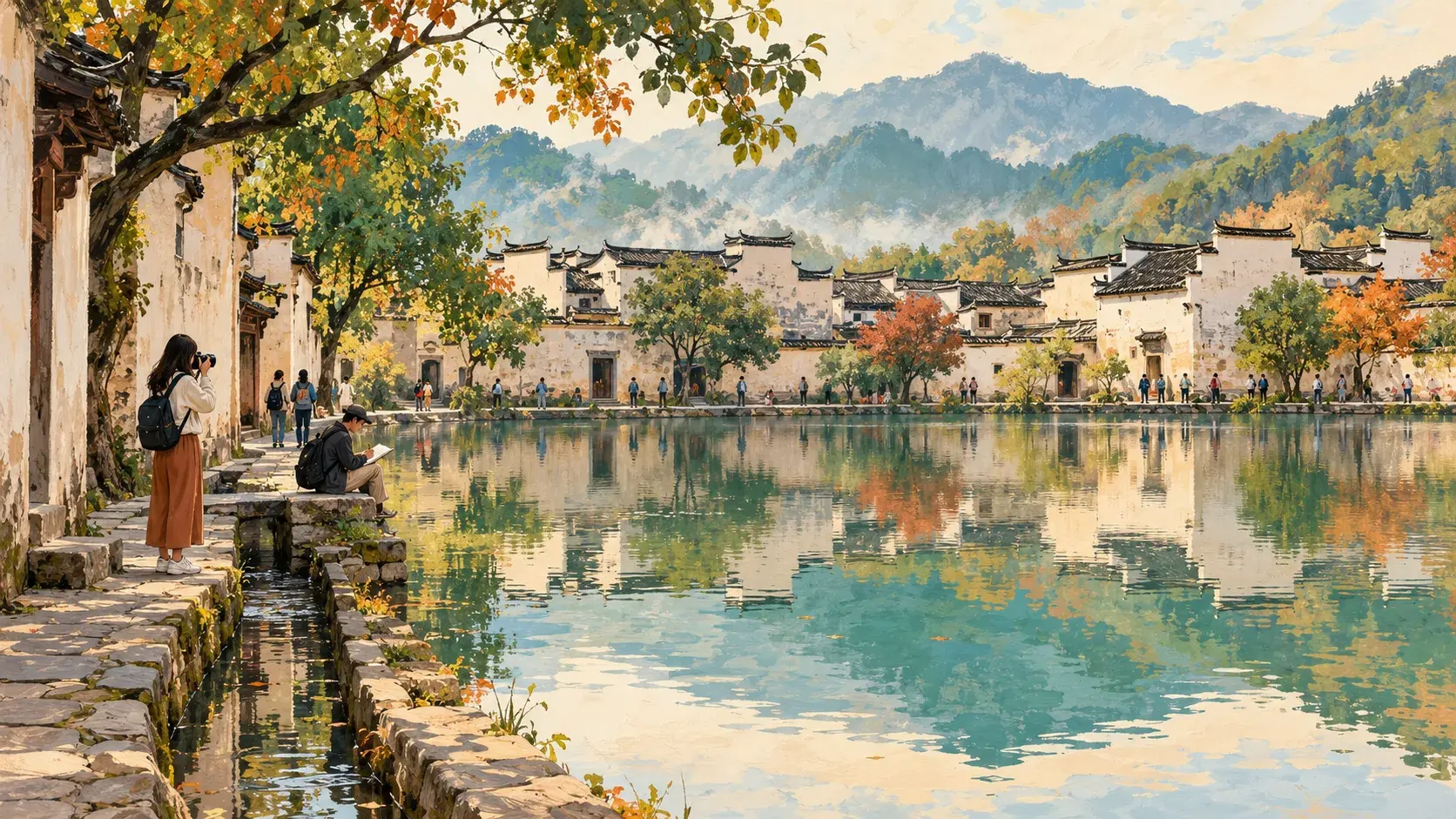 宏村
Mirror lakes, moon-shaped ponds and a water channel past every door in this UNESCO Hui merchant village — carved mansions by day, lantern reflections by night.
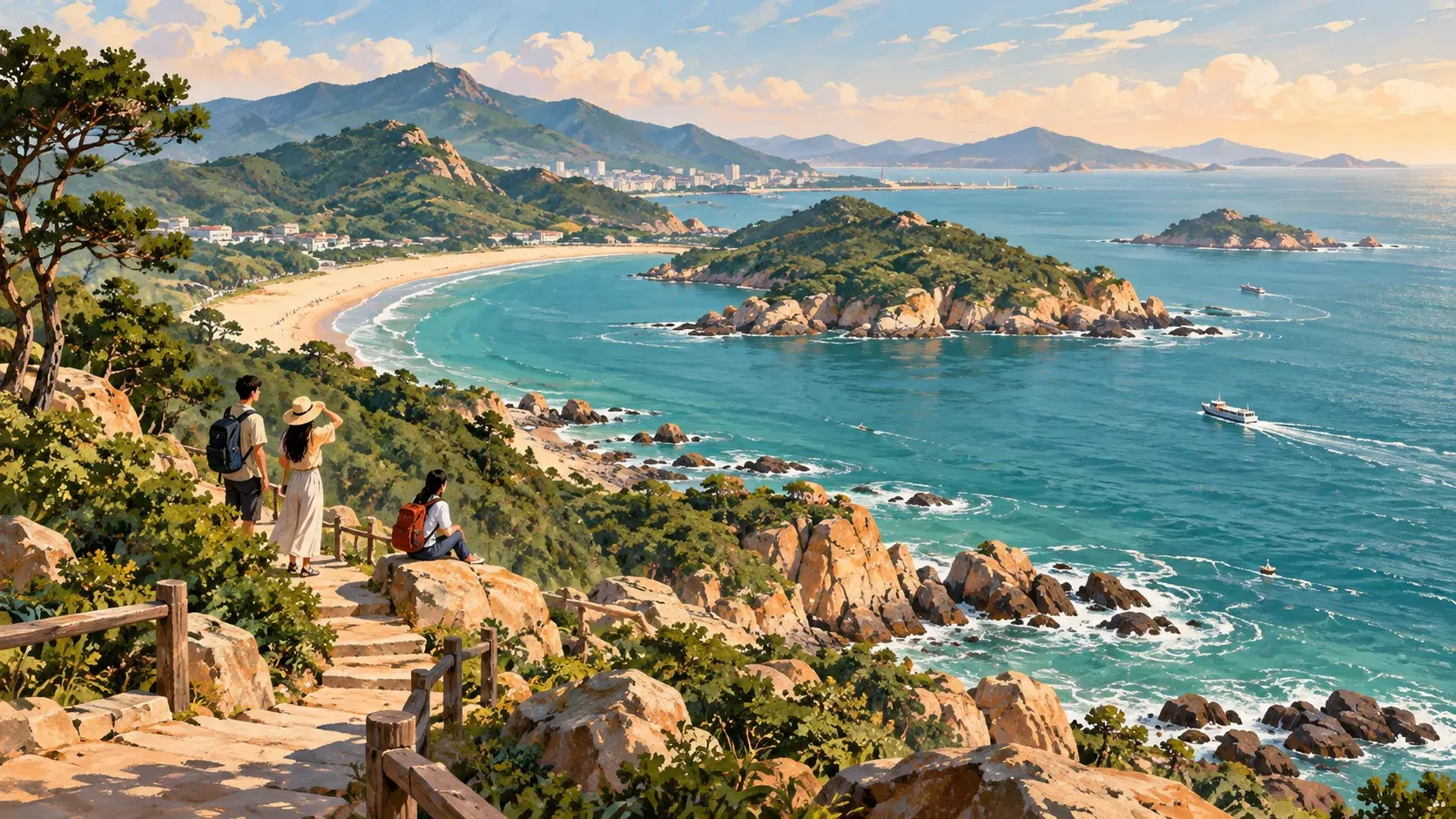 连云港
This Lianyungang edition focuses on a mountain-and-coast itinerary: Huaguoshan's Journey to the West landscape, the Yuntai mountain forest and one controlled coastal day.
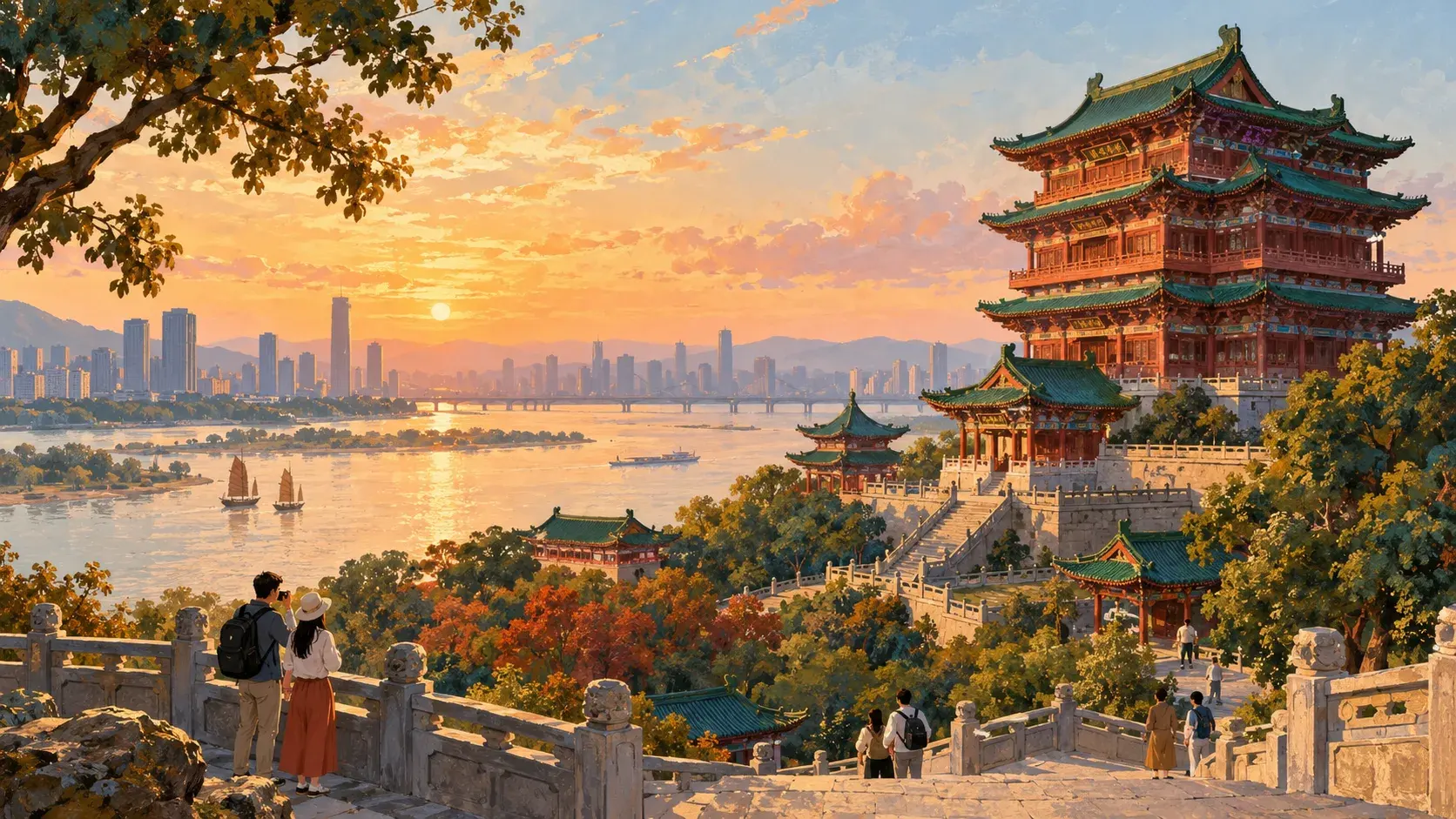 南昌
The tower of Wang Bo's famous preface, the square where the People's Liberation Army was founded, and winter cranes over Poyang Lake — Jiangxi at full volume.
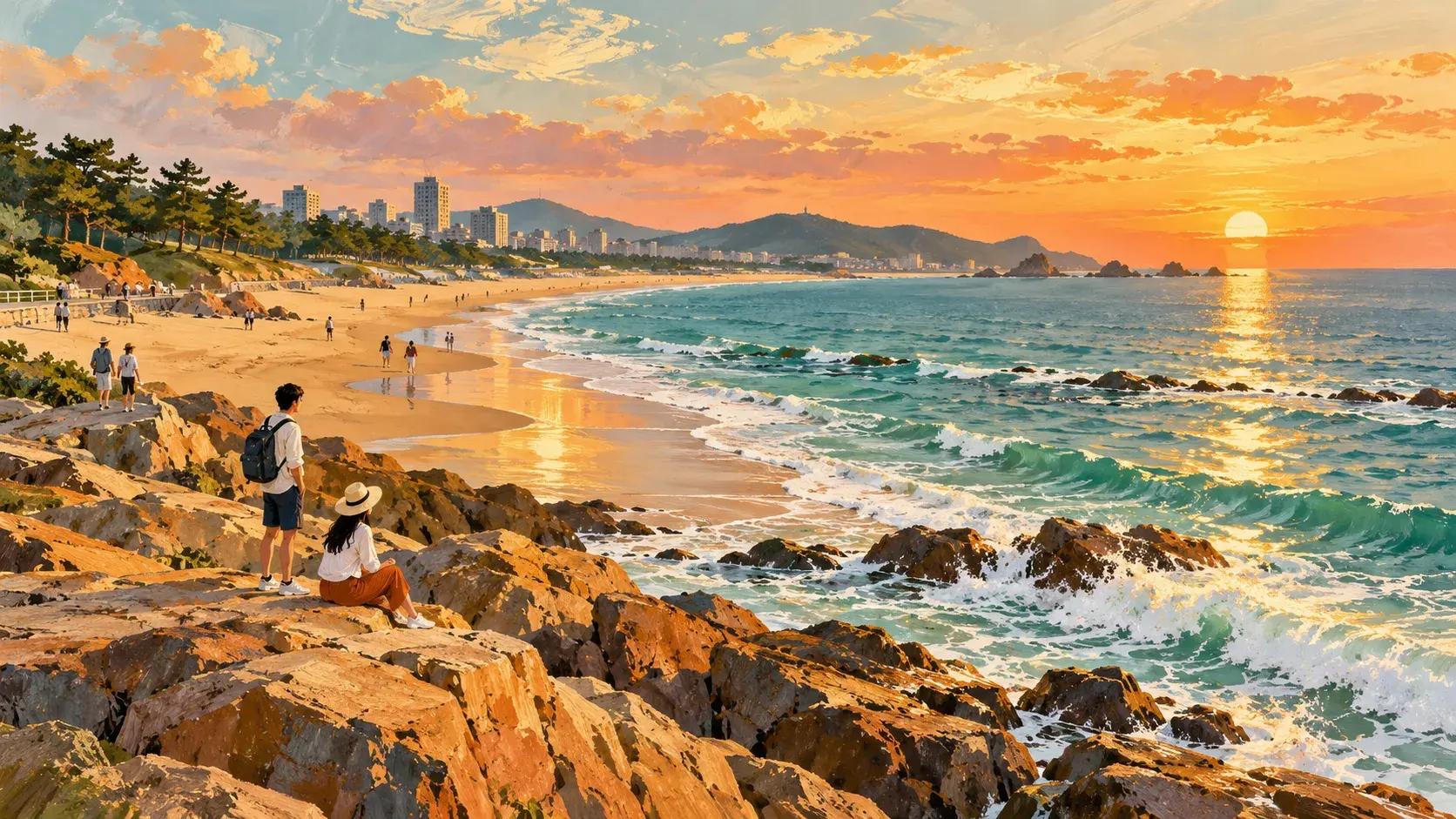 日照
This Rizhao edition is a focused two-day coastal itinerary rather than a duplicate city catalogue.
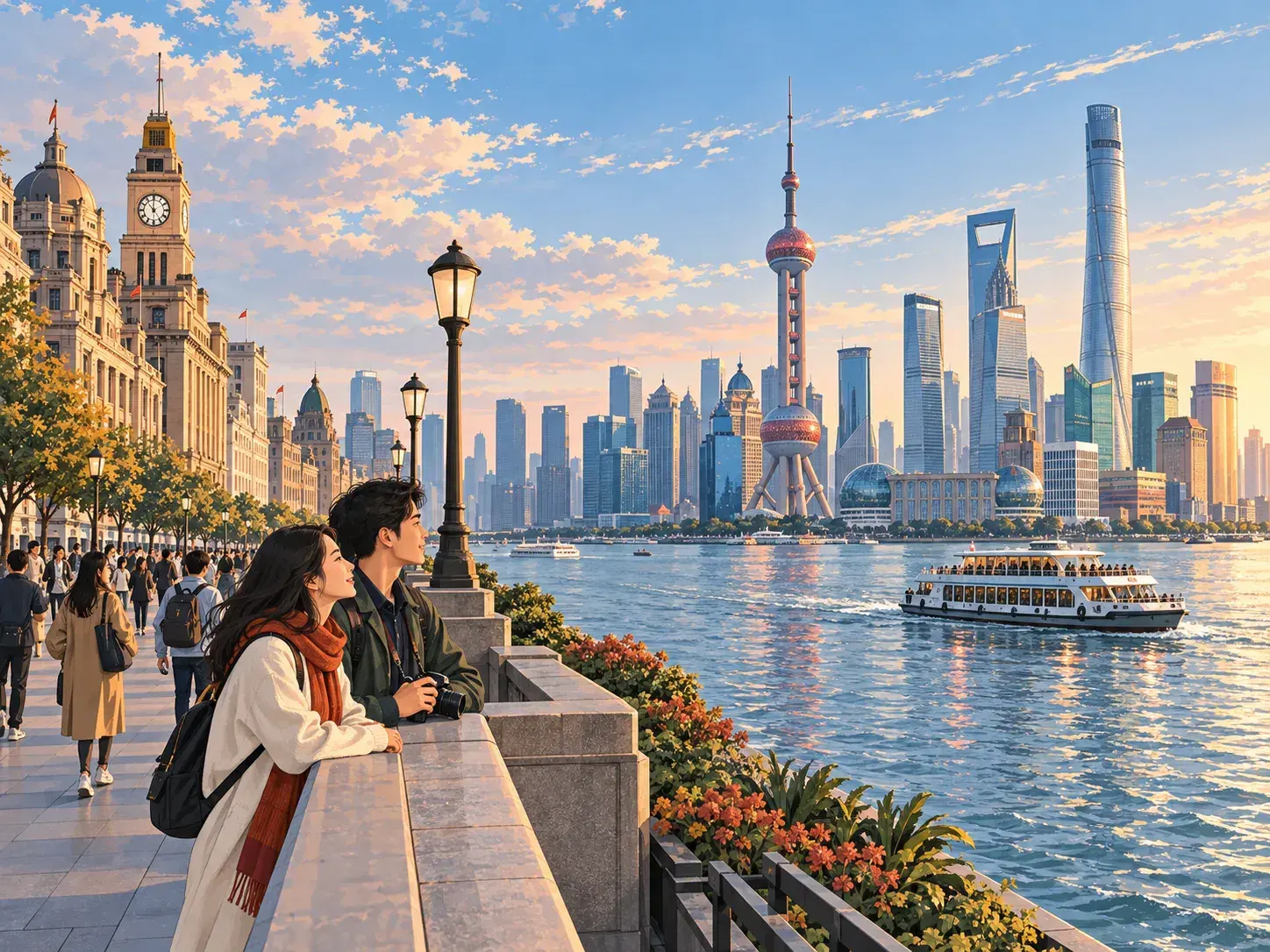 上海
Treaty-port grandeur on the Bund, tower country in Pudong, plane-tree lanes in the old French Concession — and the rail gateway to Suzhou, Hangzhou and Nanjing.
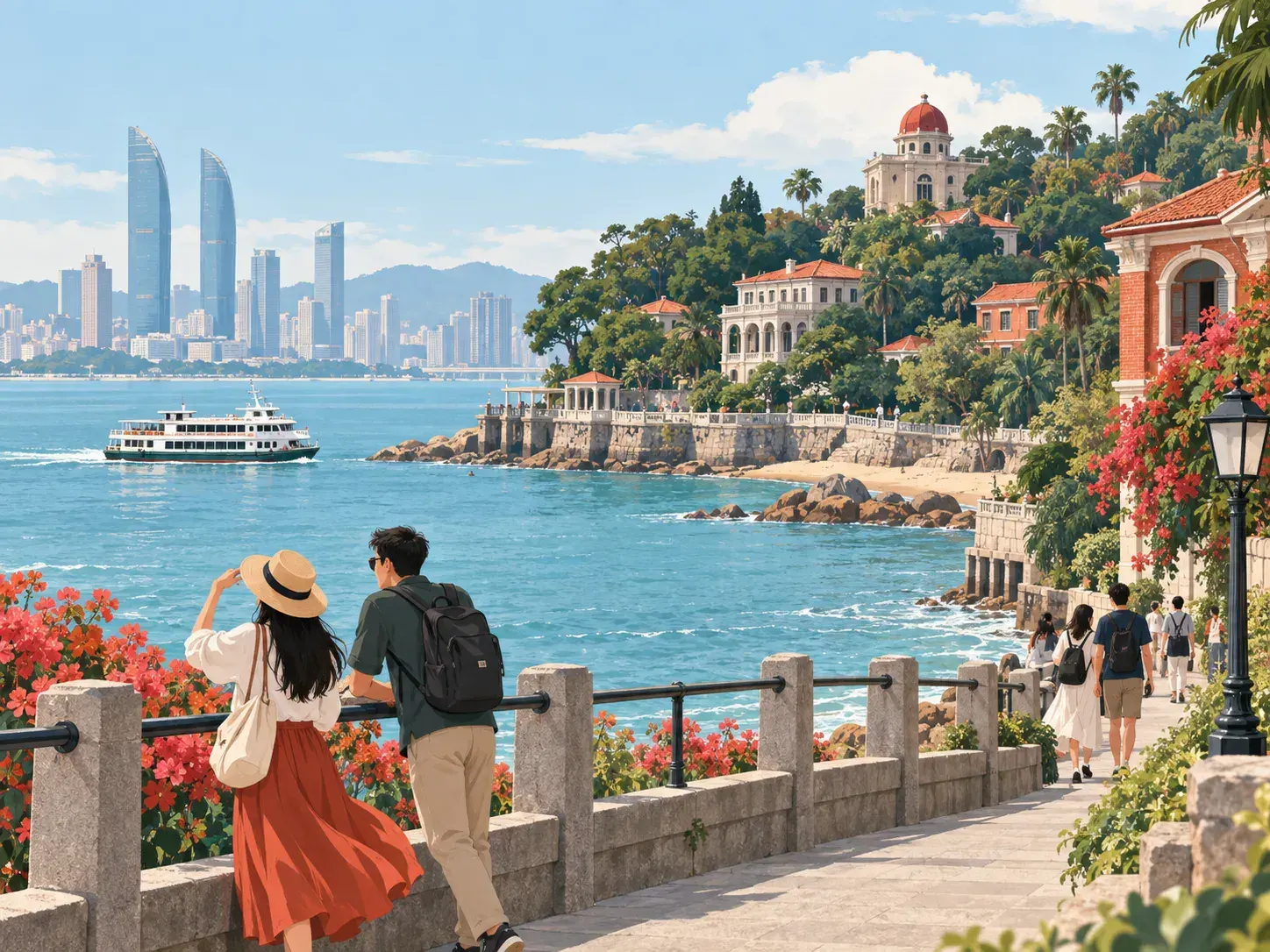 厦门
A relaxed island city of temple incense, a seaside cycle lane and the university by the beach — with the piano island of Gulangyu waiting across the harbor.
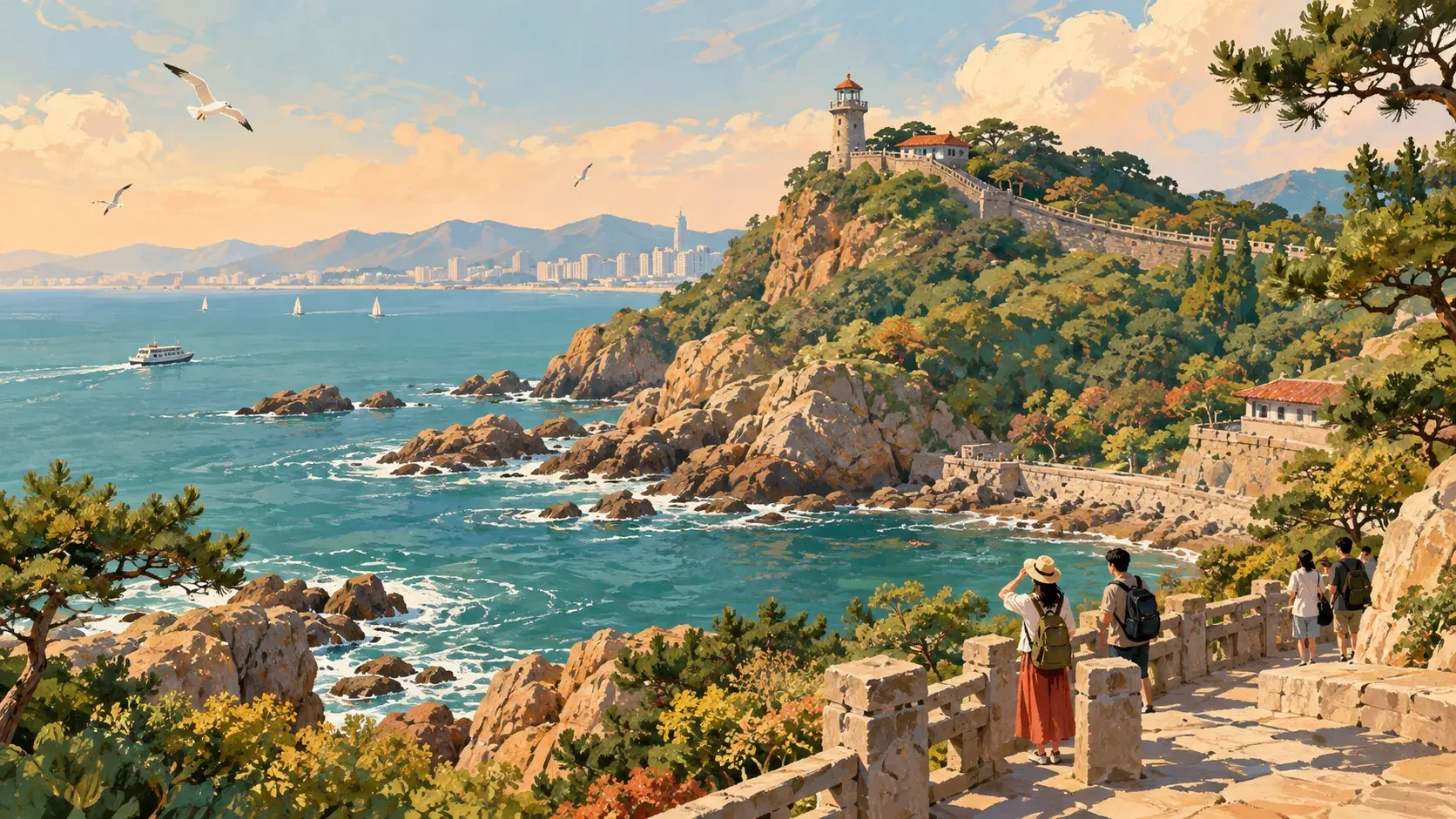 烟台
This Yantai edition is a three-day peninsula route focused on the central waterfront, one wine-country or mountain sector and one optional island-facing day.
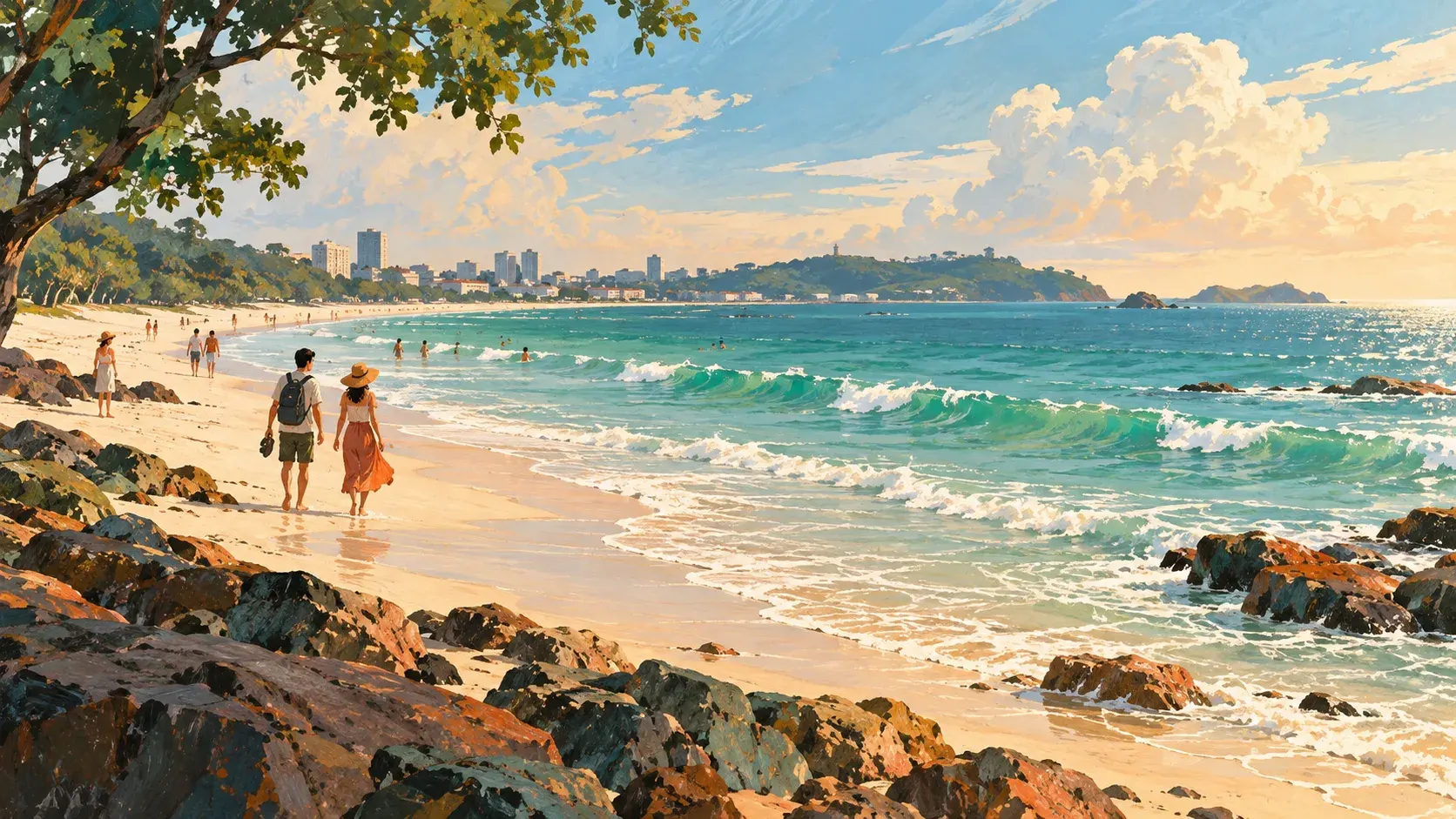 北海
A drowsy gulf port on the old Maritime Silk Road: kilometers of cool quartz sand, colonial arcades, and a ferry out to a coral-ringed volcanic island.
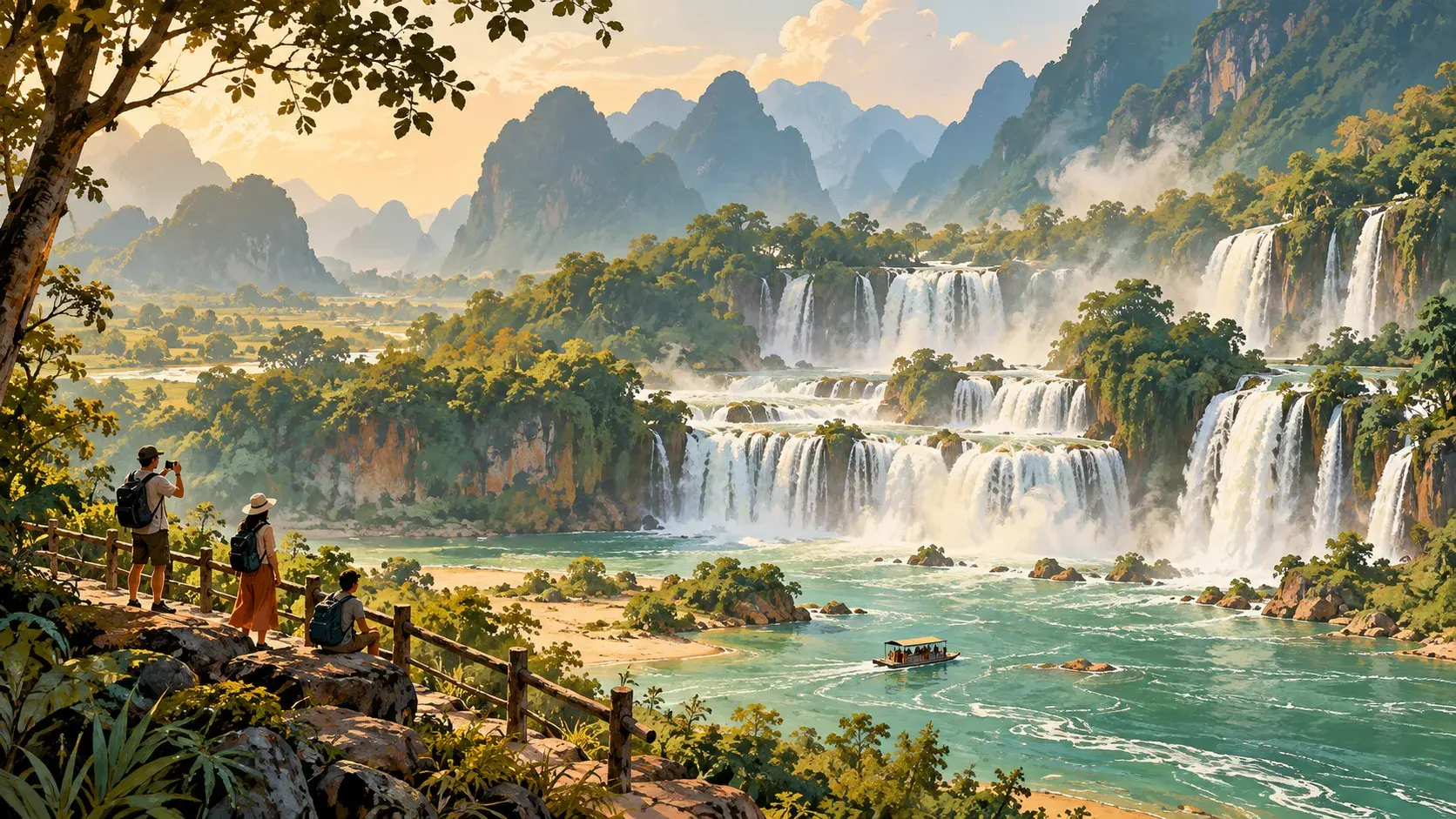 广西
Border waterfalls, longevity villages, Zhuang terraces, Dong bridges and the Beibu Gulf — an eight-day loop through China’s far south (Guilin has its own handbook).
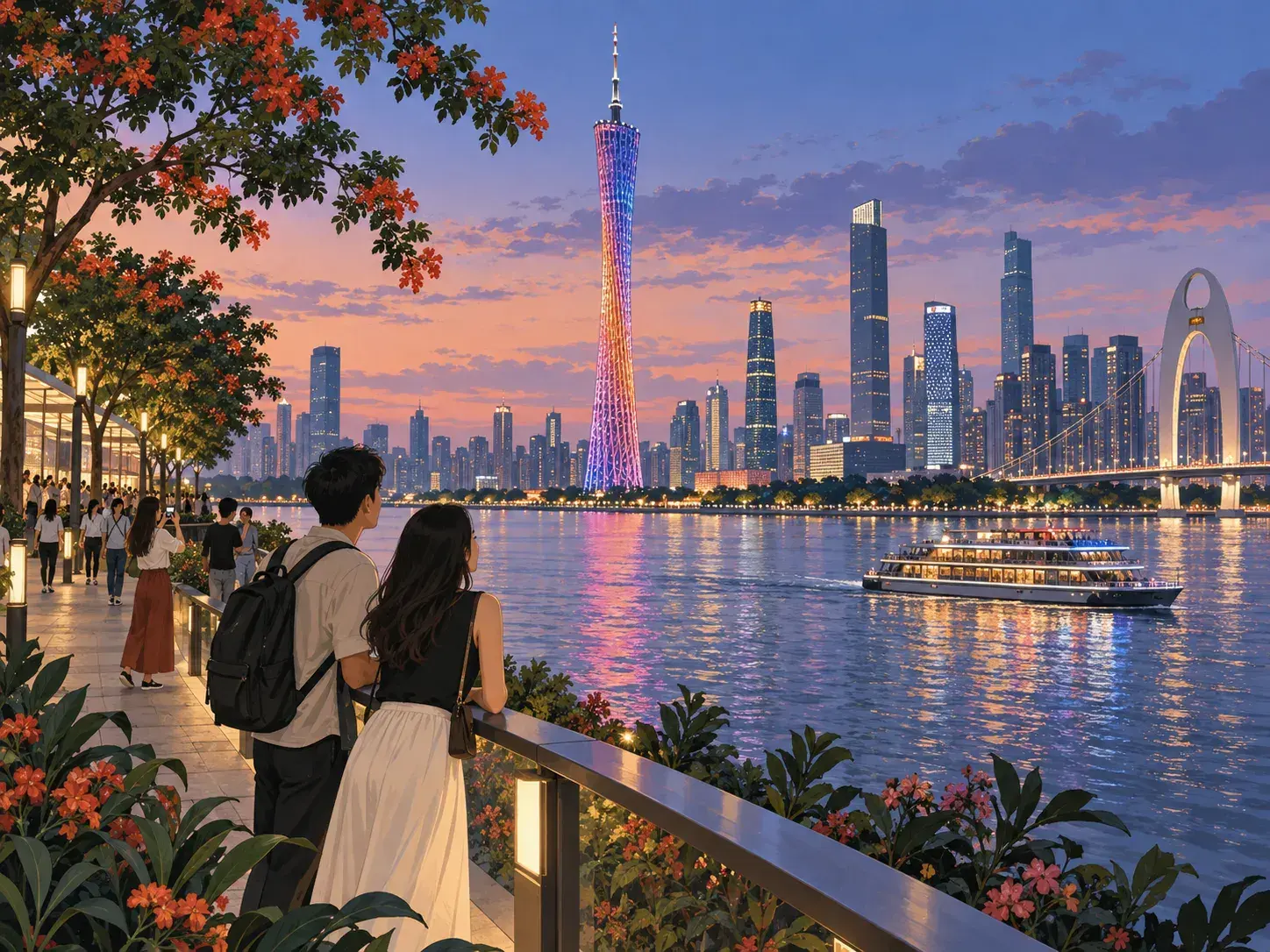 广州
Dim sum mornings, treaty-port arcades, Ming walls and a tower over the Pearl River — China's great food city, two thousand years deep in trade.
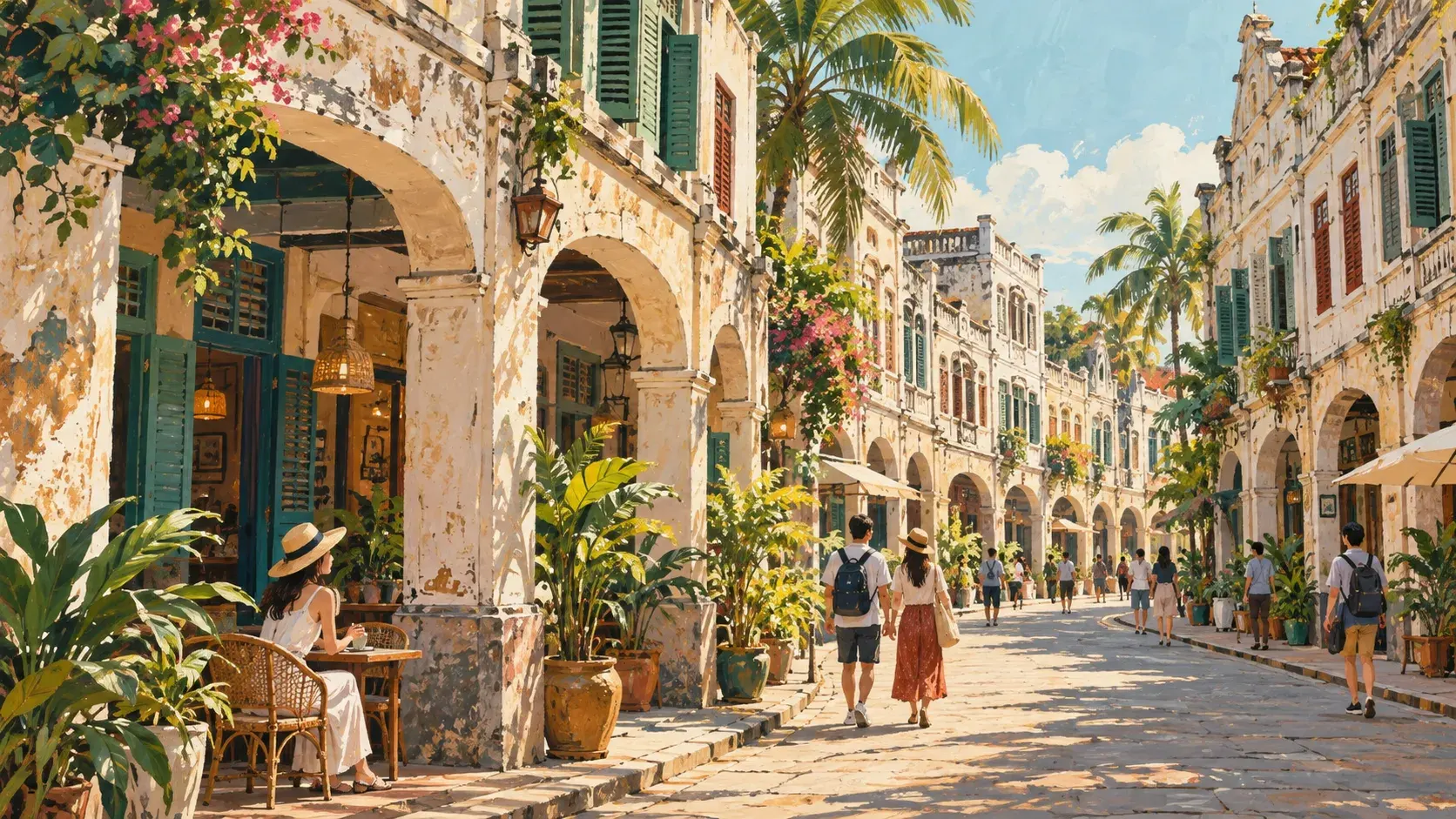 海口
Hainan’s unhurried capital: century-old qilou streets, daddy-tea mornings, a walk-in volcano park — the island’s real daily life, not its resort strip.
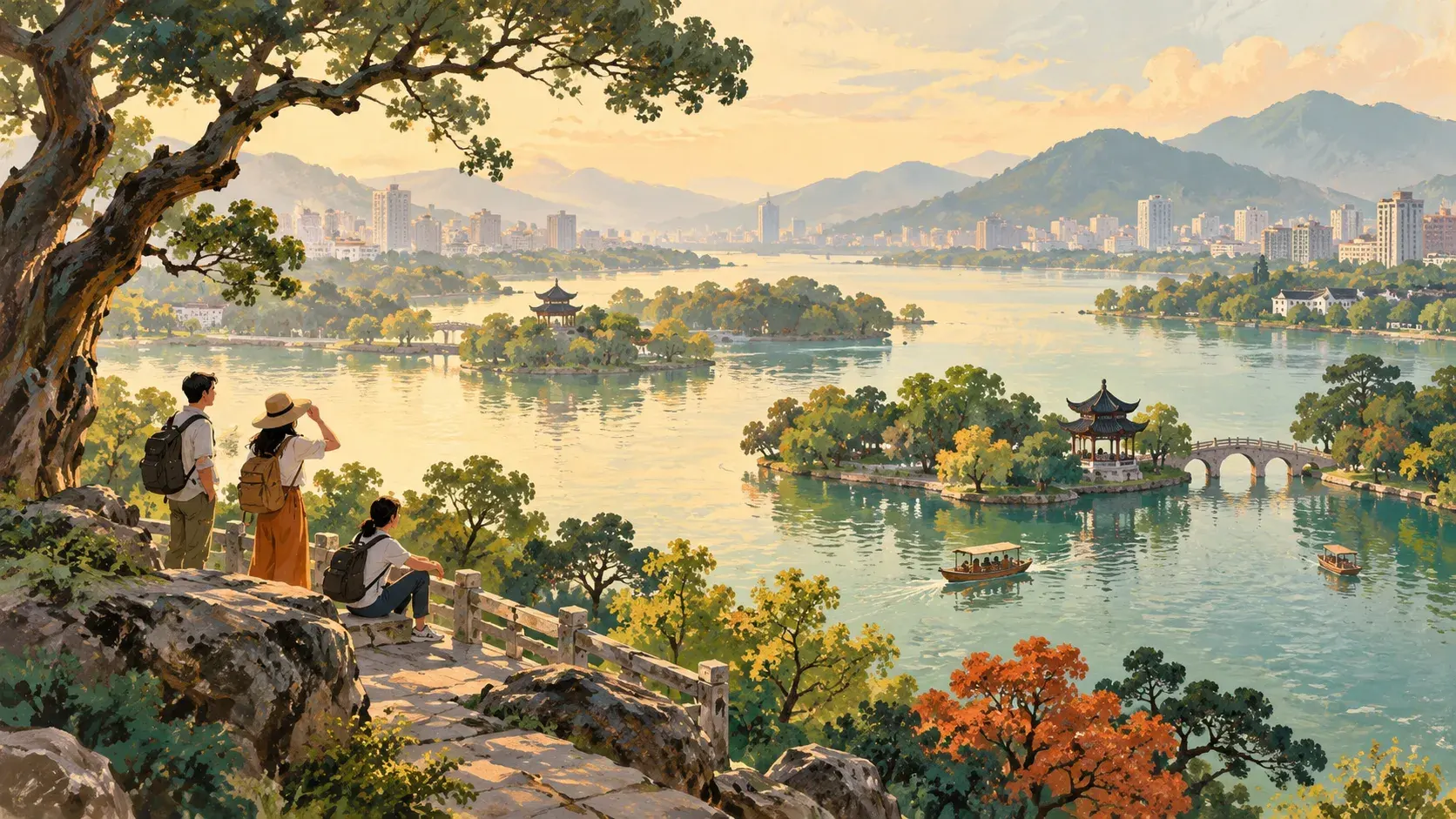 惠州
Su Dongpo's exile town on the Dongjiang: a West Lake of its own, Taoist peaks, bamboo seas, Hakka kitchens and clean sand on Daya Bay.
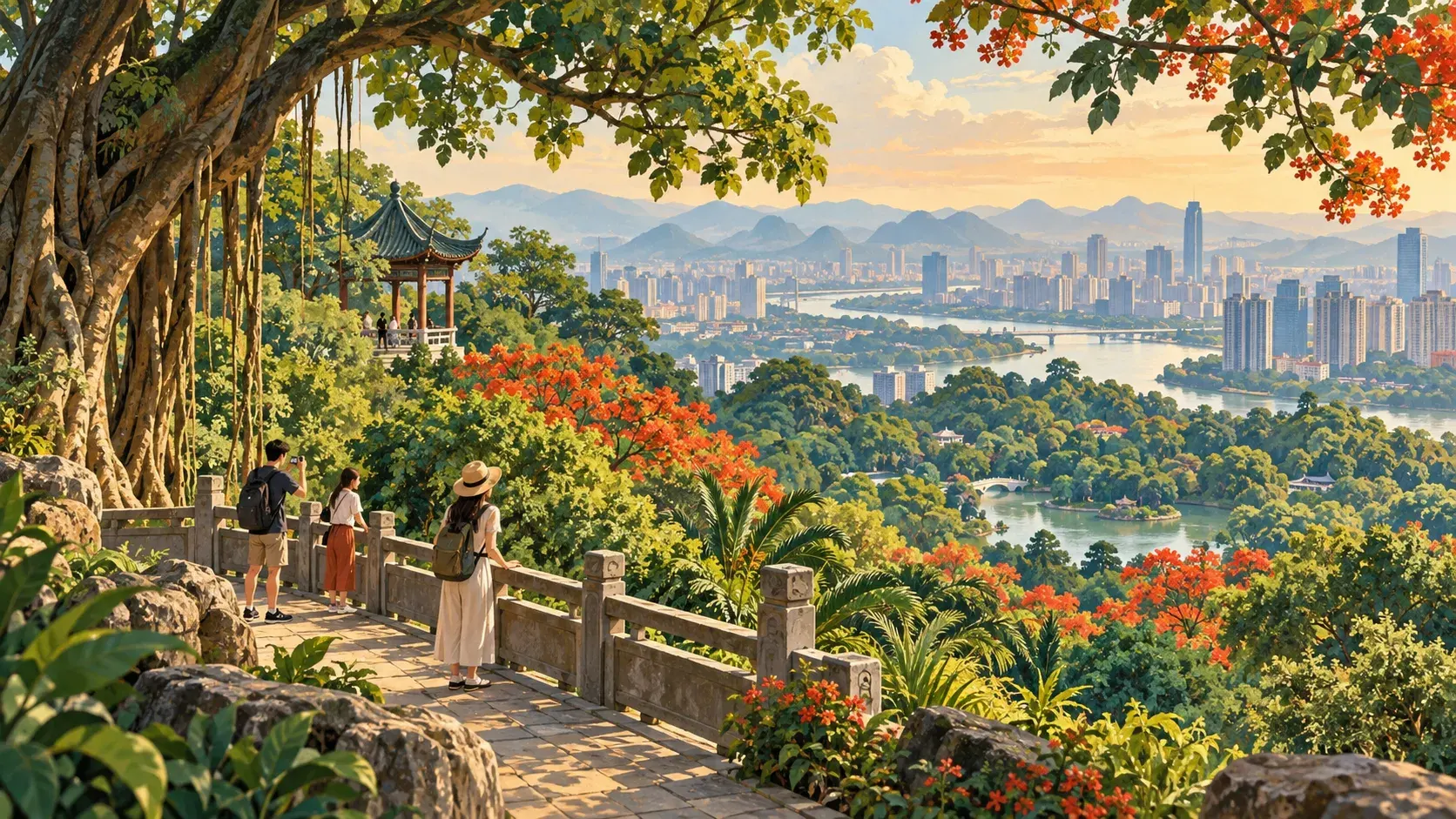 南宁
Guangxi’s laid-back capital, gate to Southeast Asia — banyan boulevards, night-market noodles, and the road to a waterfall on the Vietnamese border.
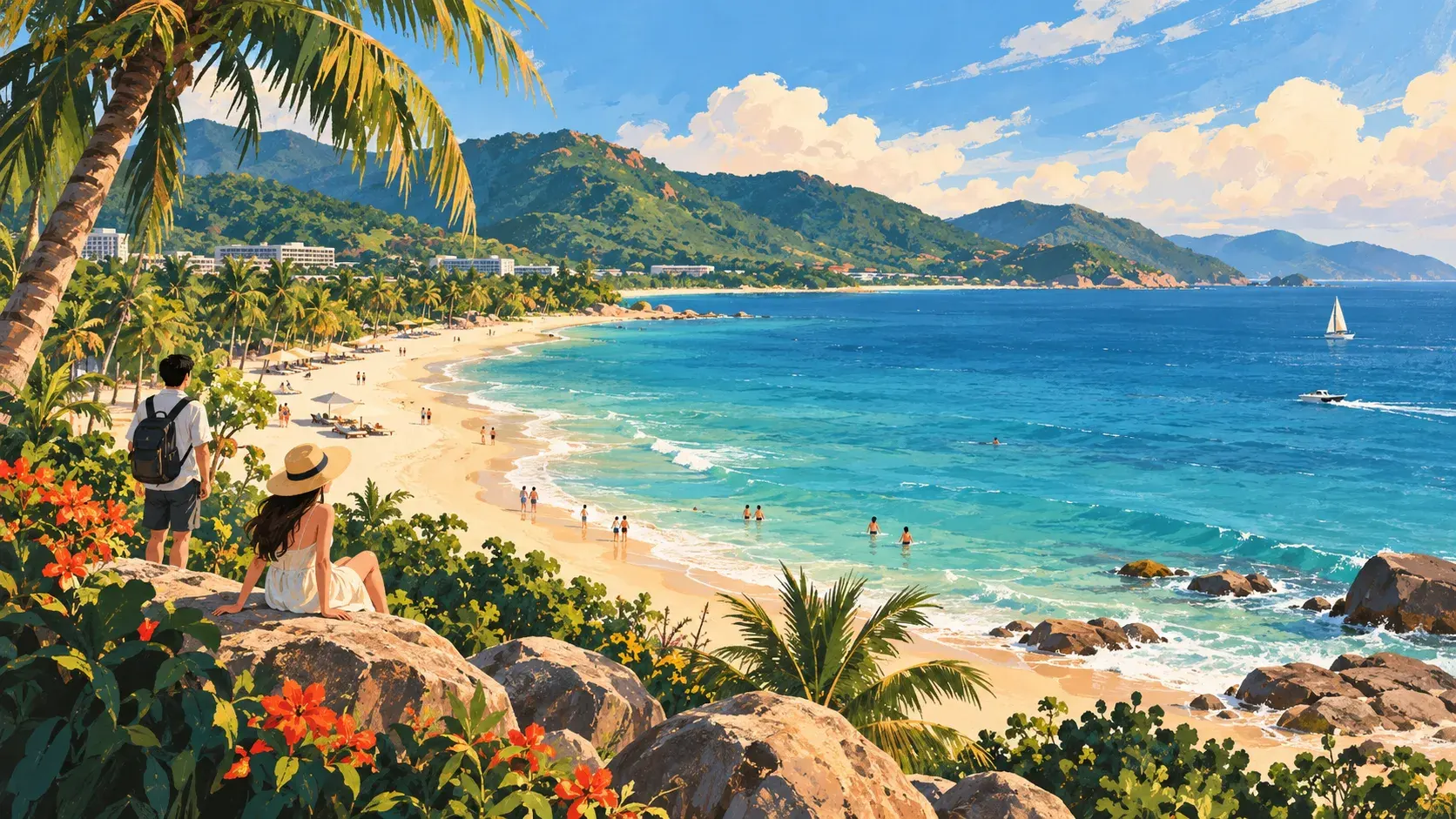 三亚
Palm-lined bays on the South China Sea, an island dive mecca, rainforest cliffs and a duty-free playground — the resort city, taken with open eyes.
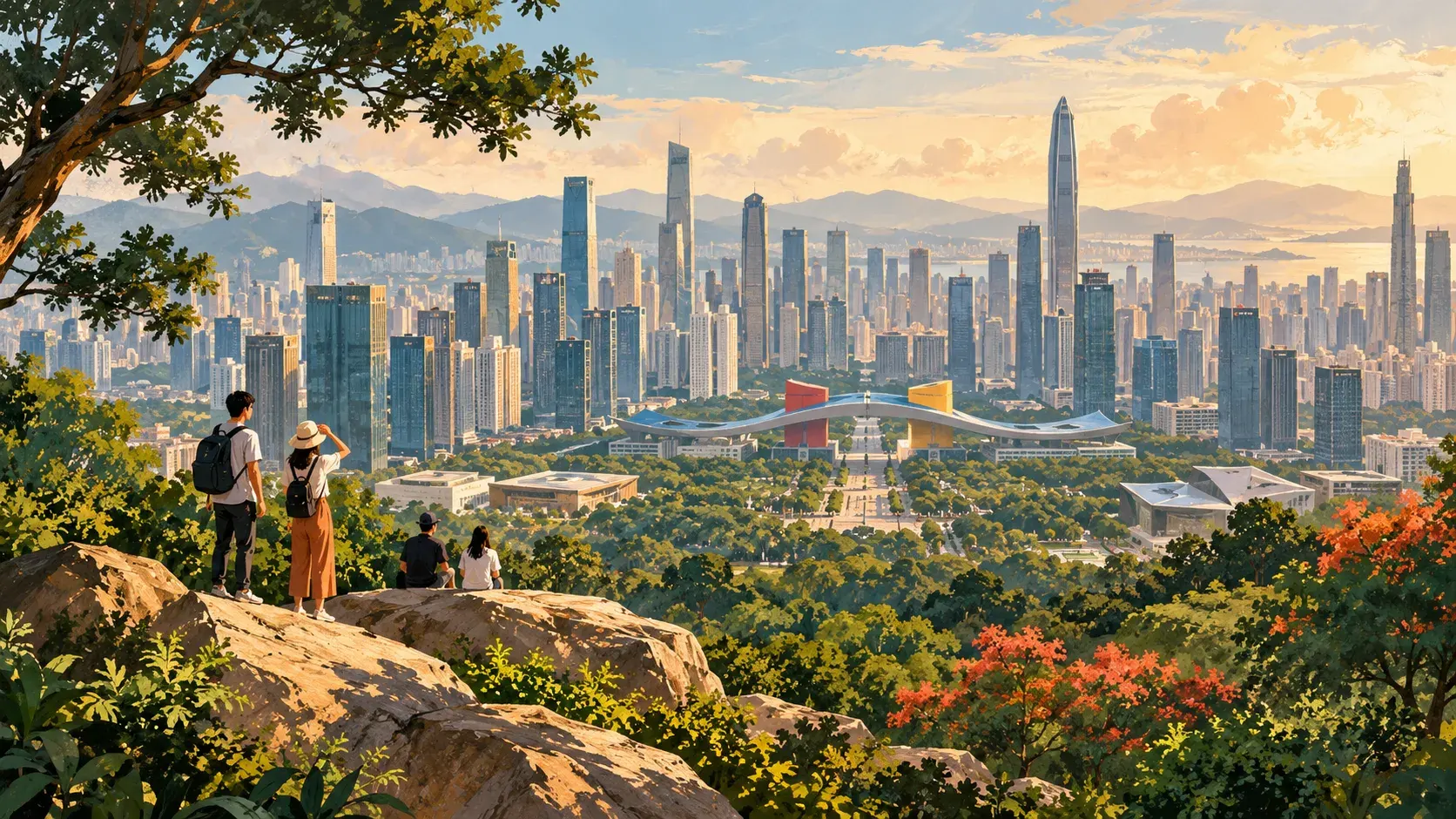 深圳
A fishing county turned megacity in one generation: theme parks, mangrove bays, mountain beaches and the skyline of the future — with Hong Kong next door.
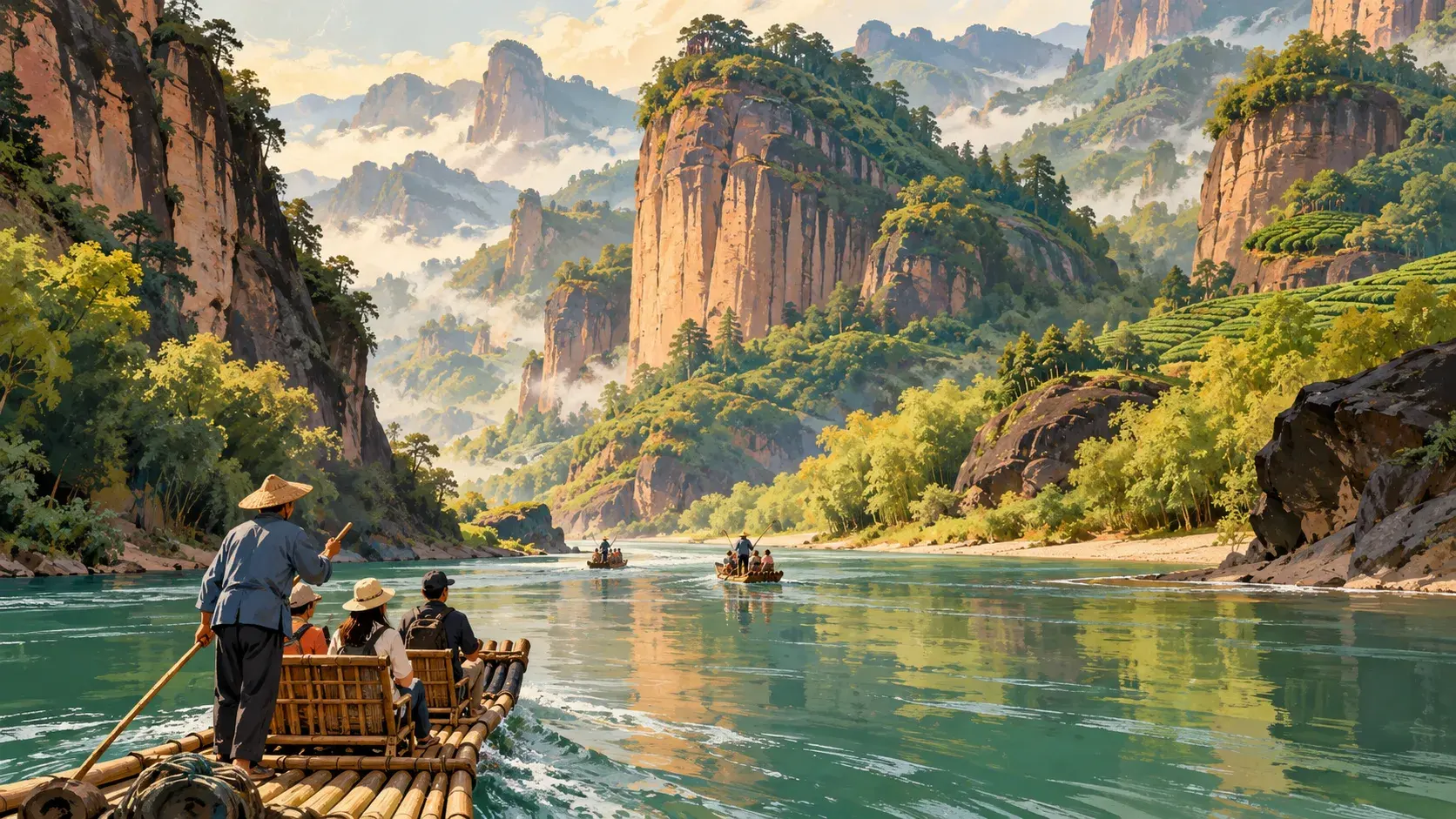 武夷山
Cliff-walled gorges in northern Fujian, a river that bends nine times, hanging coffins and the birthplace of da hong pao — a UNESCO heritage of rock and philosophy.
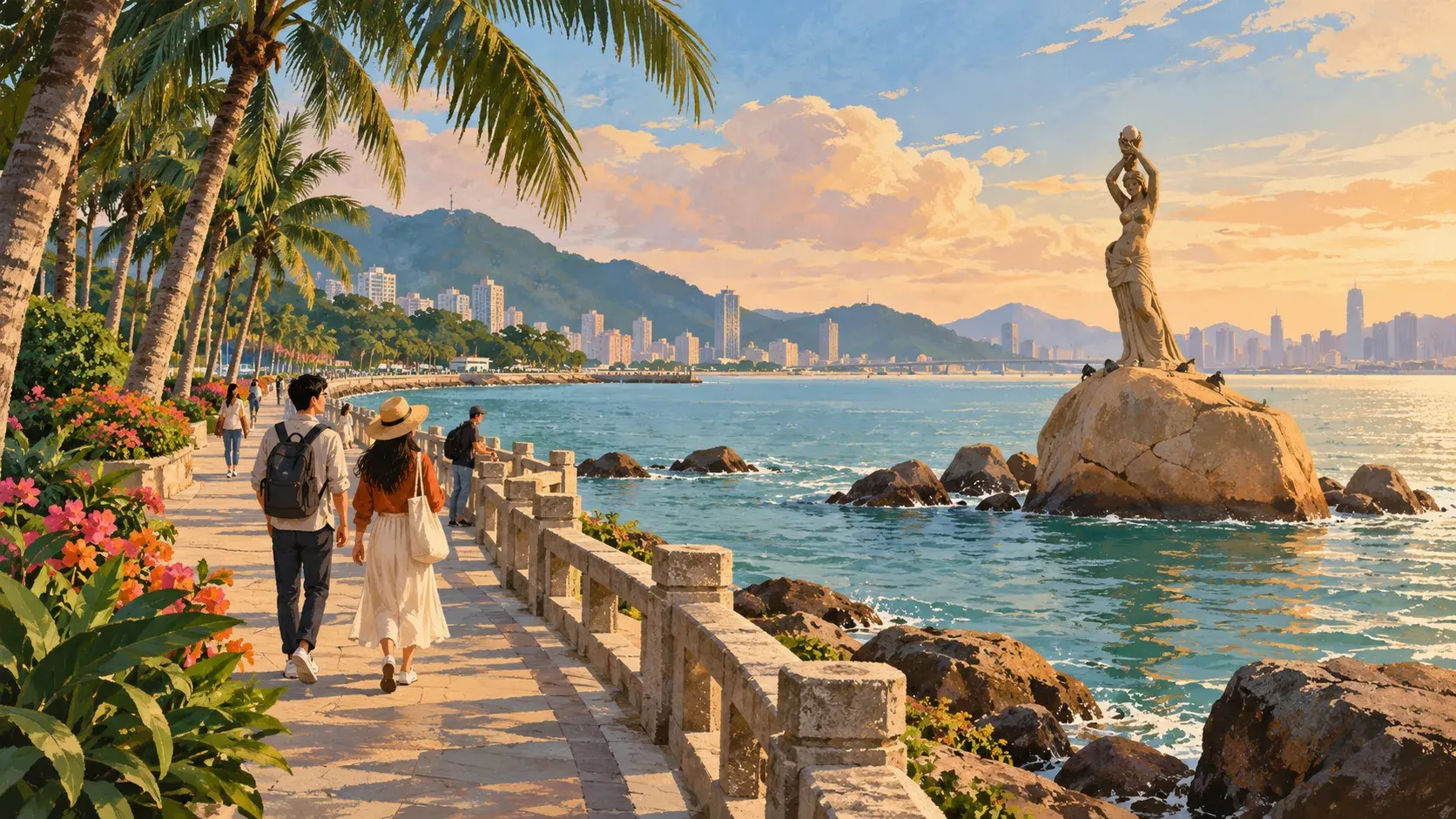 珠海
A promenade that never quite ends, a hundred islands offshore, Macau across the water — the softest pace on the Chinese coast, with oysters to match.
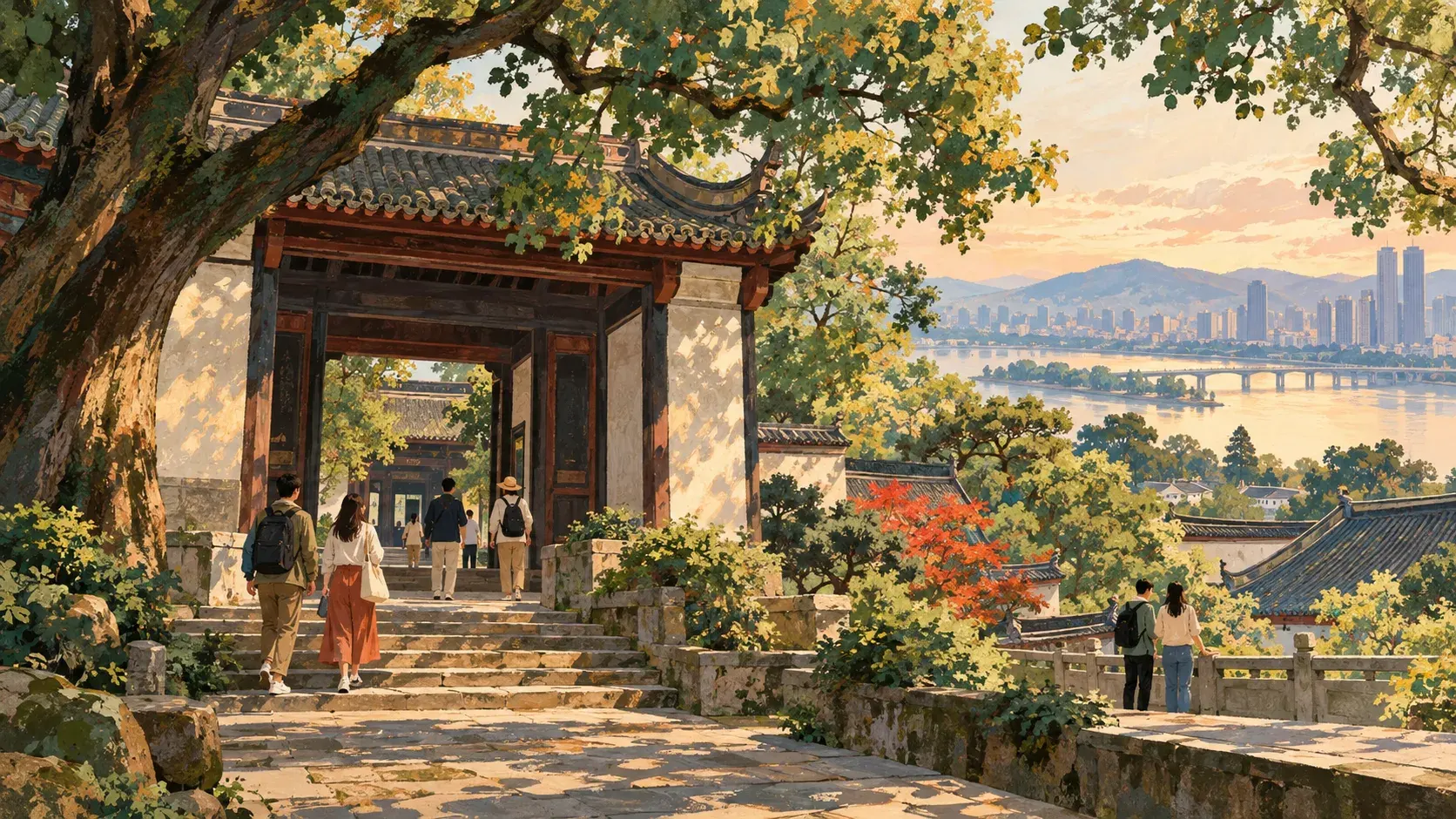 长沙
A Han lady in glass at Mawangdui, a thousand-year academy under Yuelu Mountain, Mao's river island — and the loudest, spiciest, most fun-loving night economy in central China.
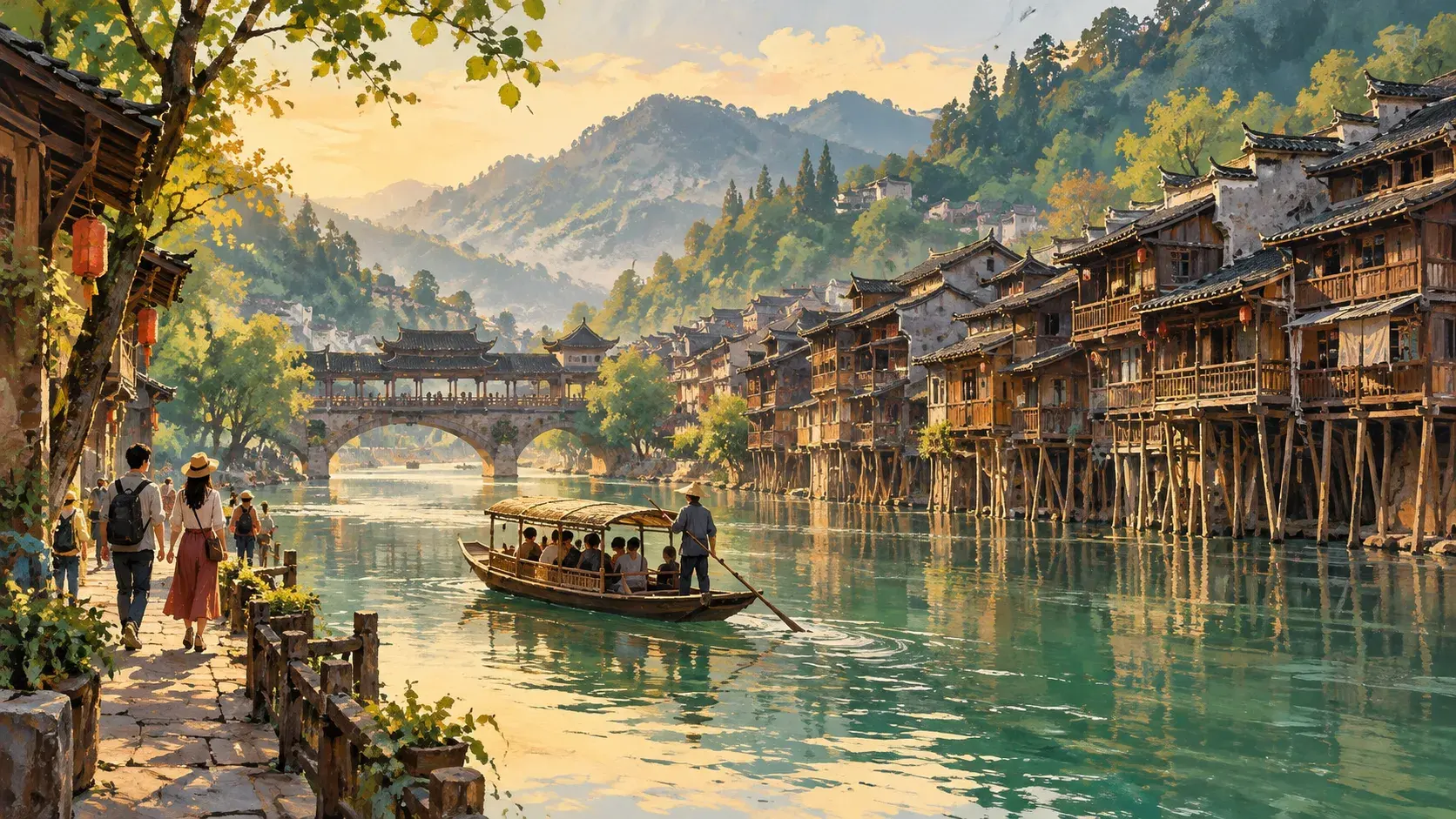 凤凰
Stilt houses over the green Tuojiang, Shen Congwen's literary myth, Miao villages in the hills — and an honest look at China's most touristed water town.
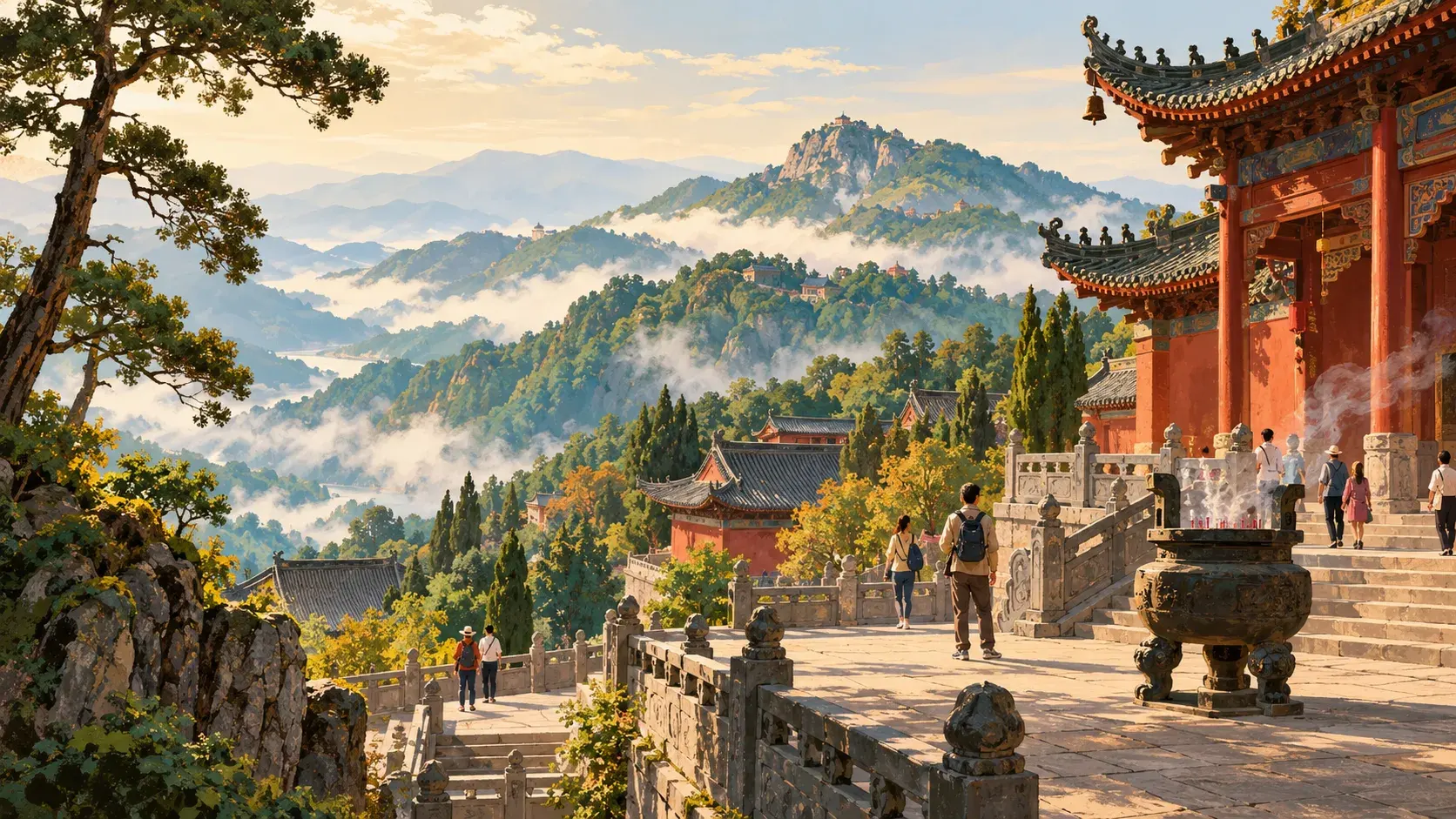 衡山
Pilgrim trails from temple to summit, sunrise over Zhurong Peak, and a rare southern rime-ice winter — the most Taoist-and-Buddhist of the Five Great Mountains.
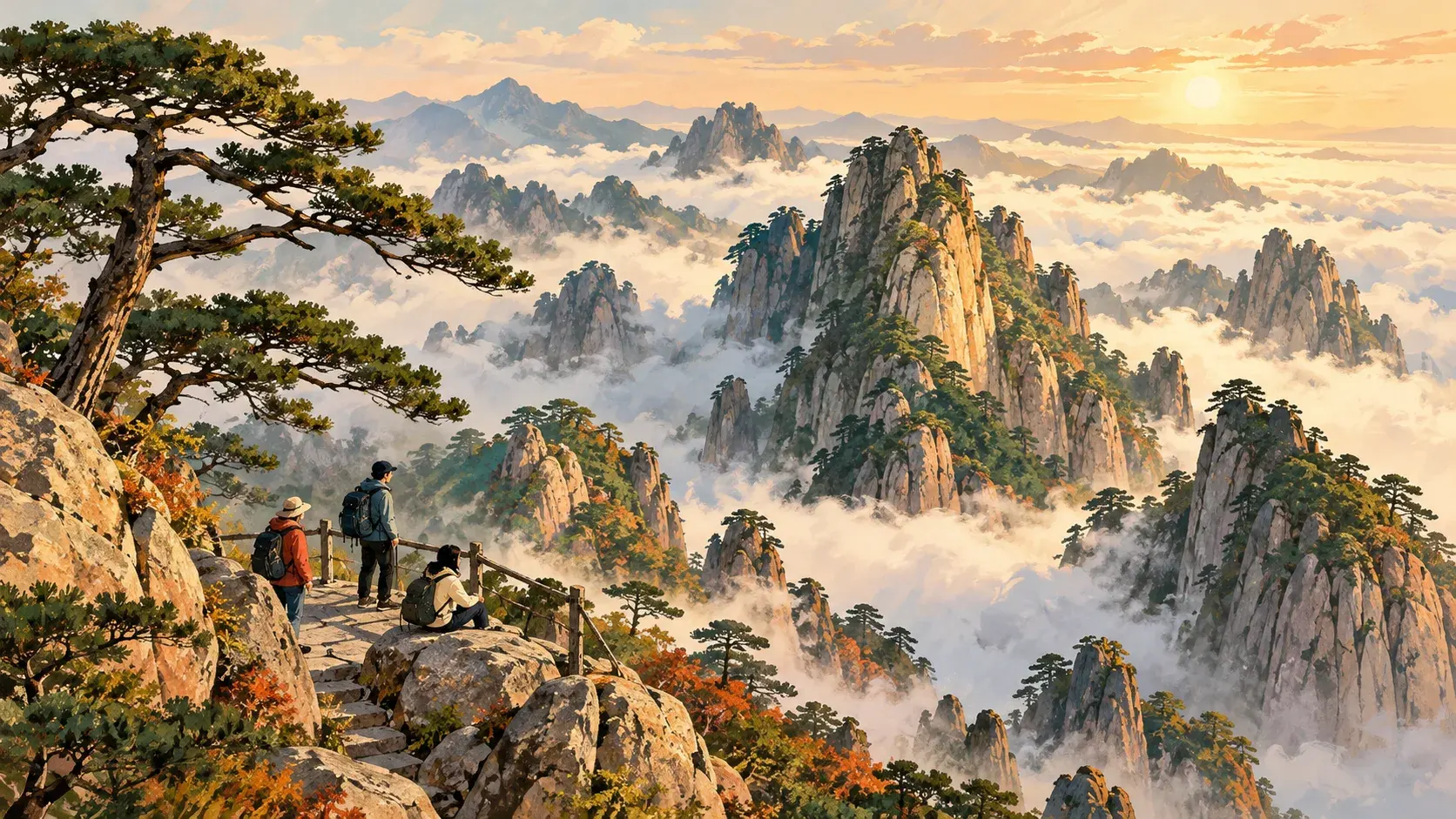 黄山
Granite towers, gravity-defying pines and seas of cloud — China's most celebrated mountain, with the Huizhou villages of Hongcun and Xidi in the foothills.
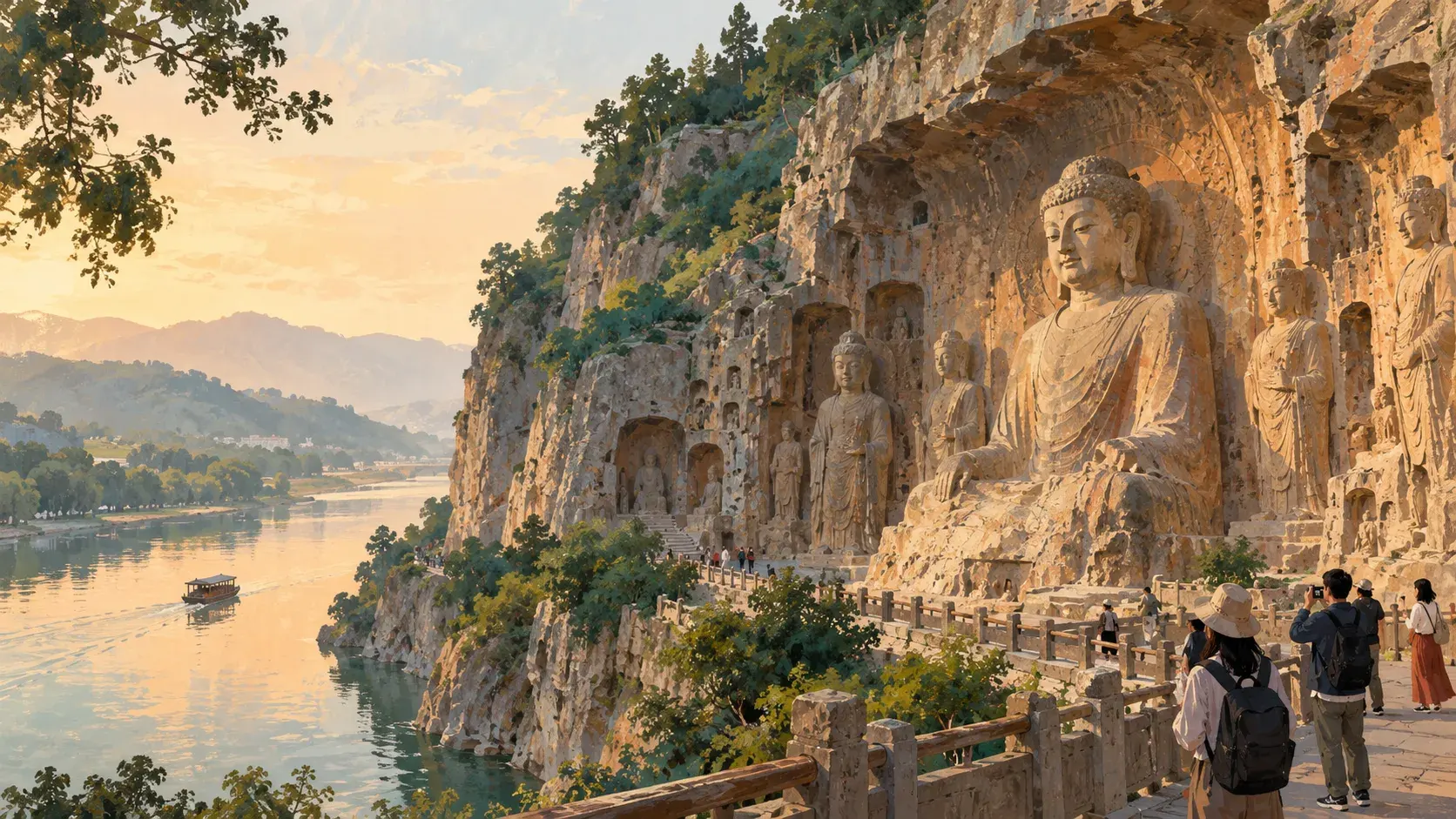 洛阳
The Longmen Grottoes carved into river cliffs, China's first Buddhist temple, a rebuilt Tang imperial axis — and every April, the peonies of the old capital.
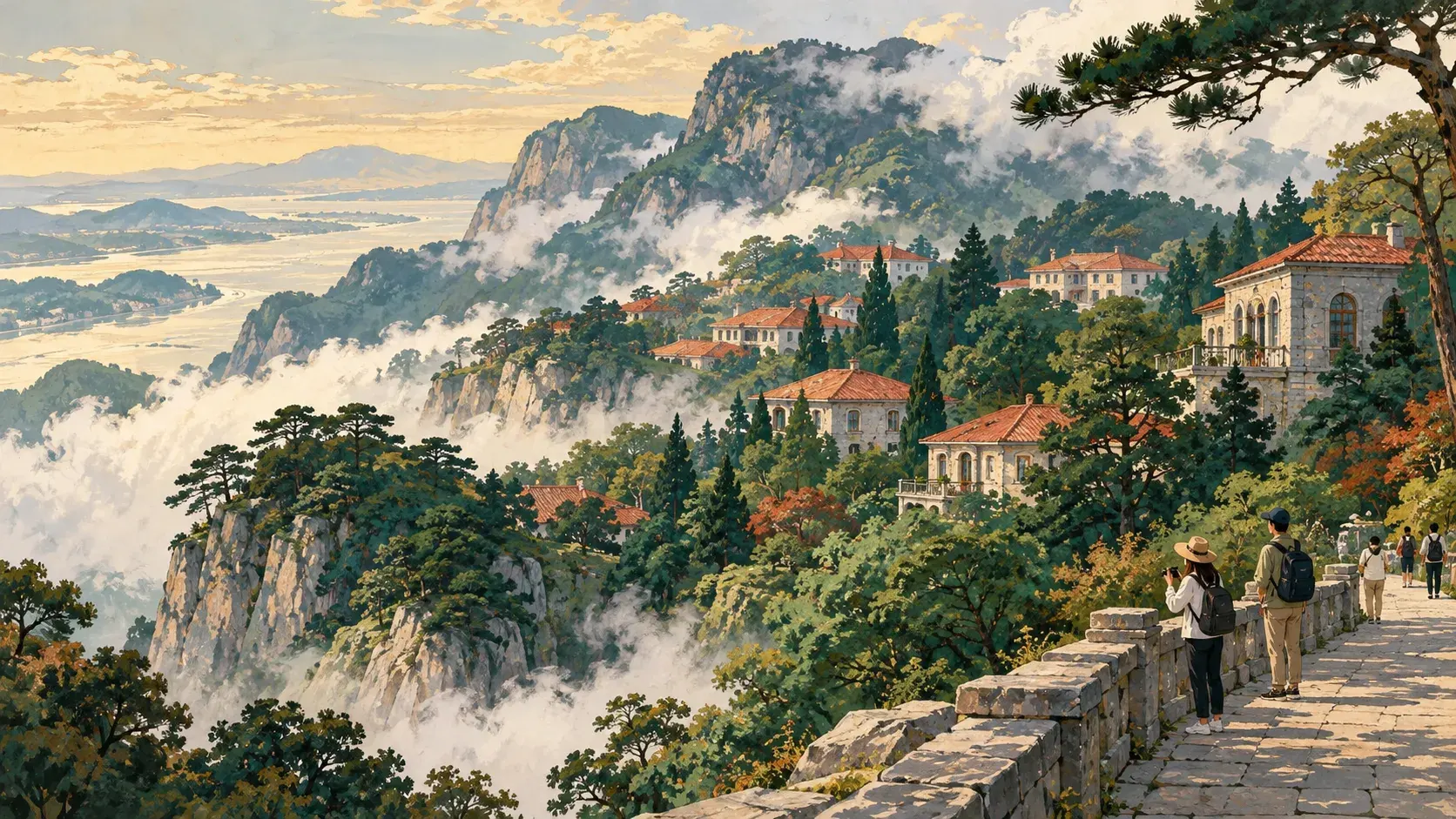 庐山
A summer capital floating above the Yangtze and Poyang Lake: waterfalls of Tang poetry, a town of stone villas, and mist that rewrites the mountain hourly.
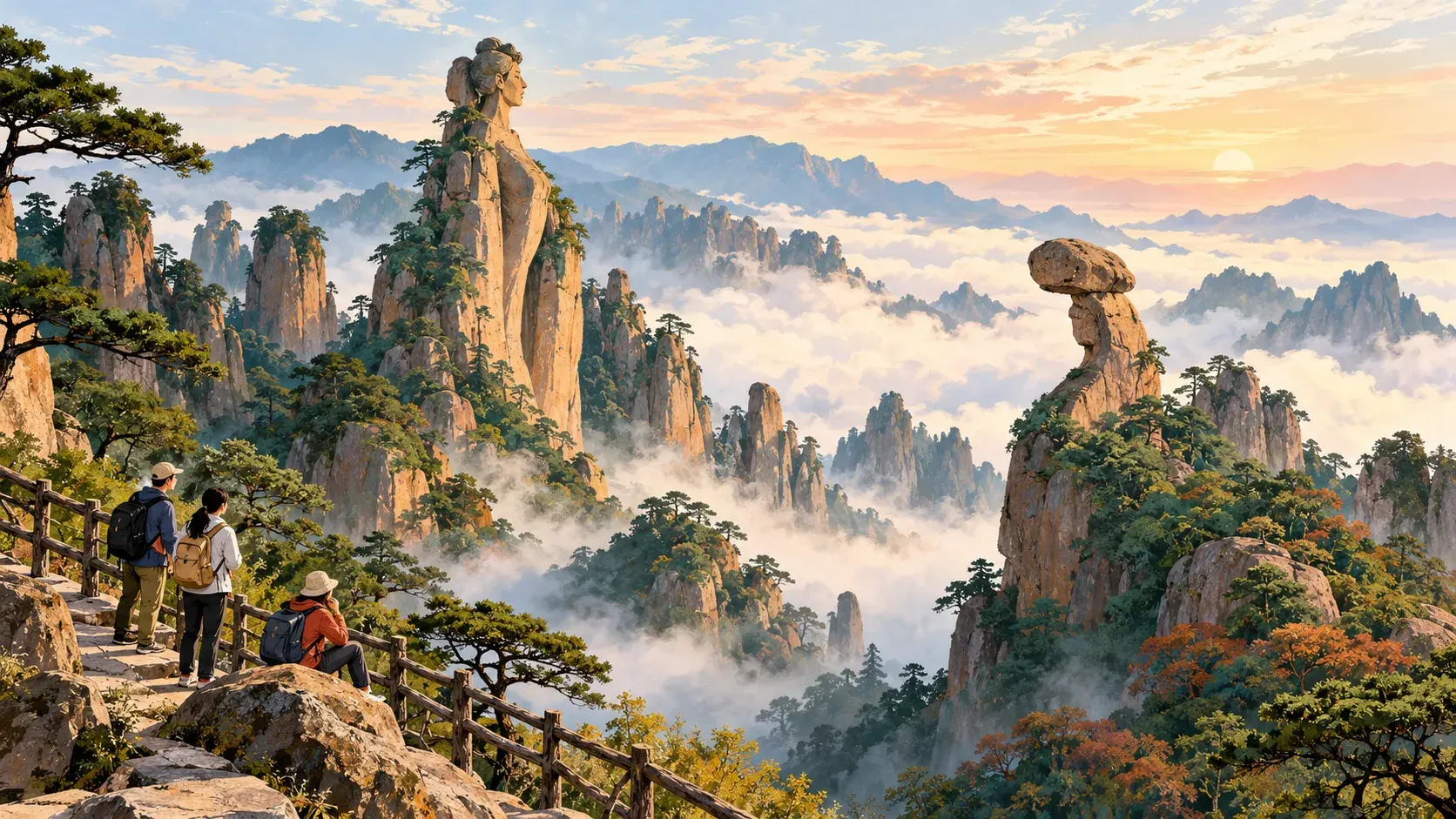 三清山
Walkways bolted to cliffs at 1,600 meters, mushroom pillars rising from subtropical forest, and azalea slopes in late spring — Huangshan drama with half the crowds.
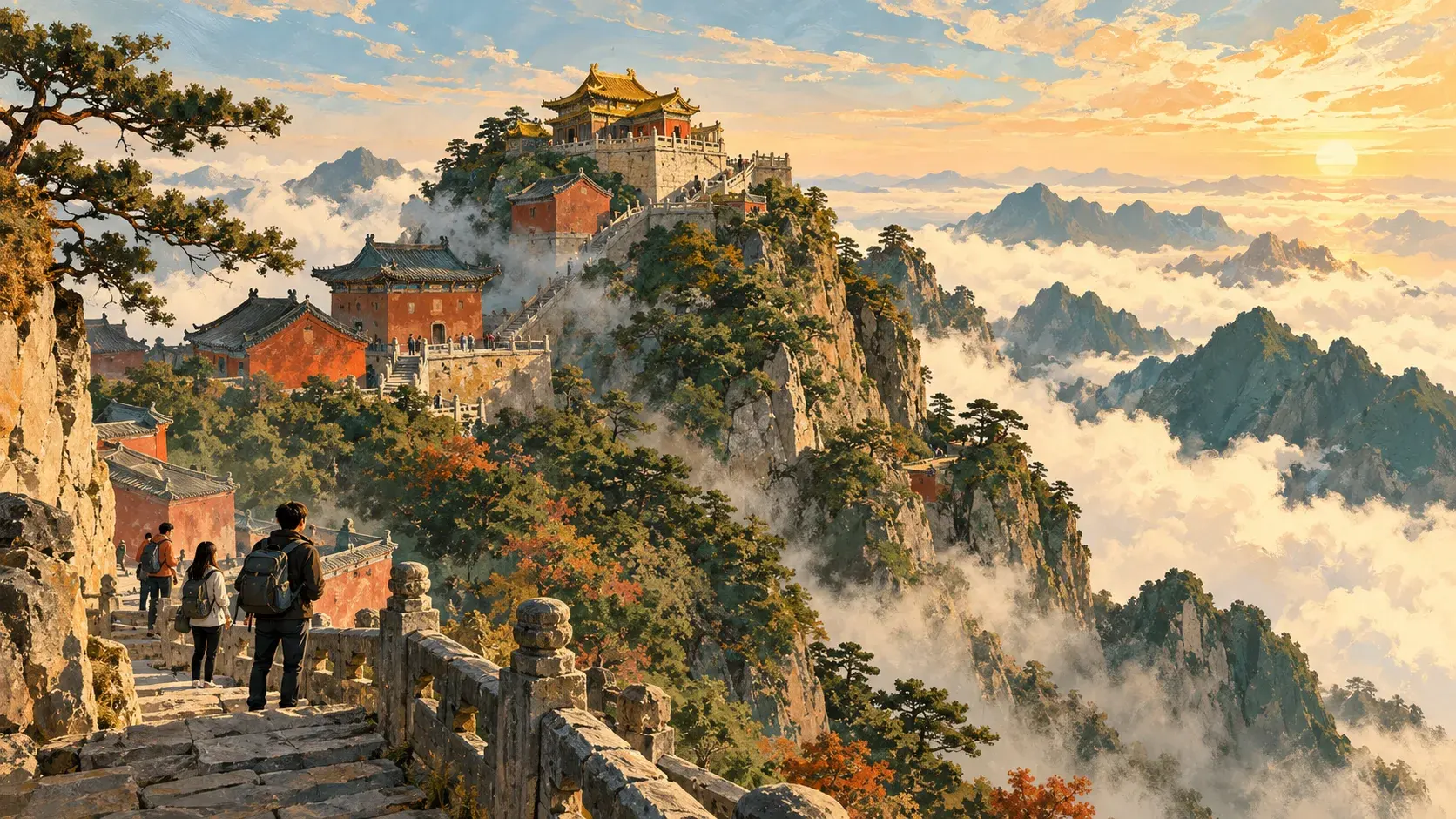 武当山
A gilded hall on the highest summit, Ming palaces balanced on cliffs, tai chi schools in the lanes — the holiest mountain of Taoism and of internal martial arts.
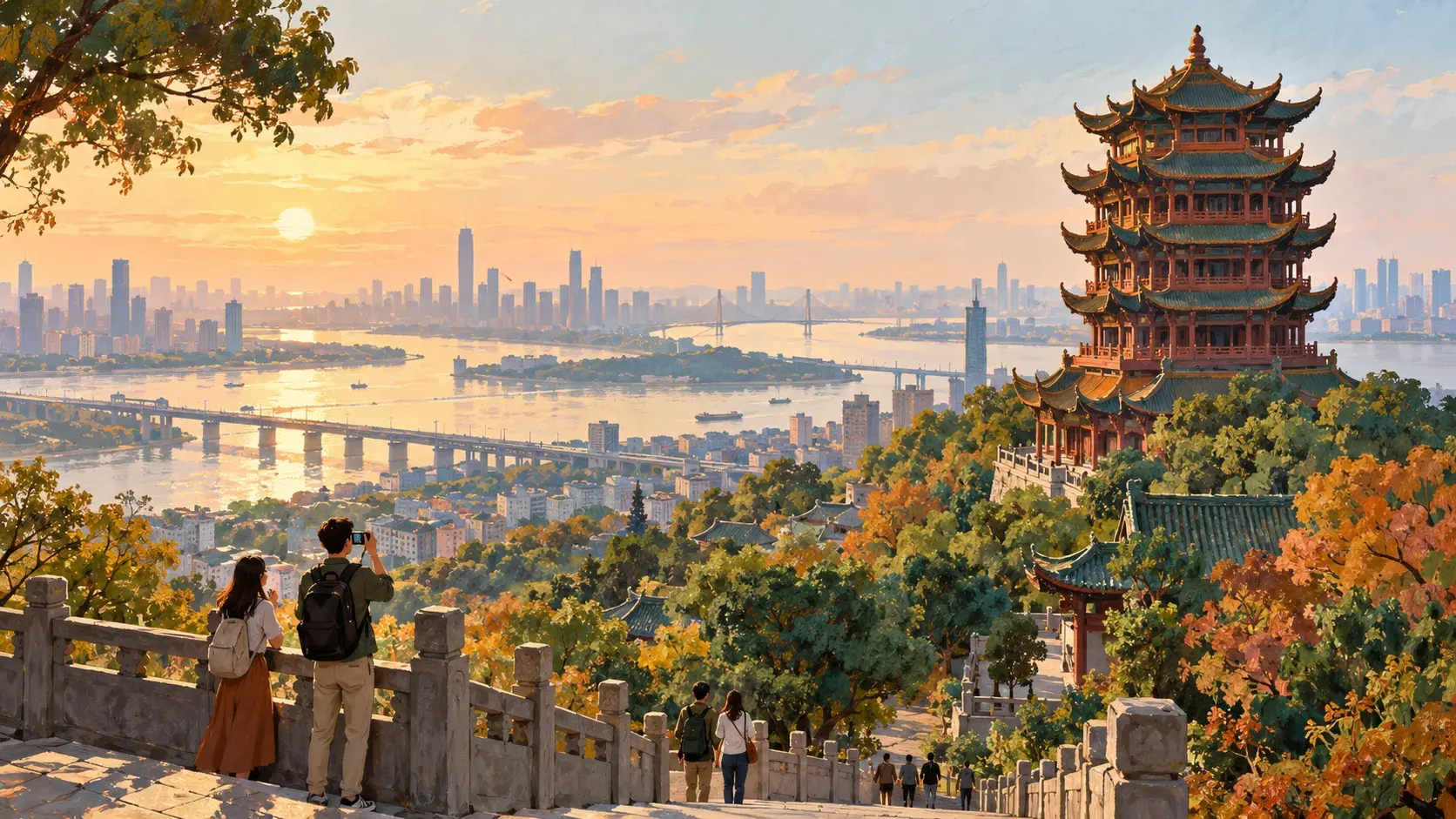 武汉
The Yellow Crane Tower, the first bridge over the Yangtze, a museum with a bronze orchestra 2,400 years old, lake greenways and the great breakfast culture of "guozao."
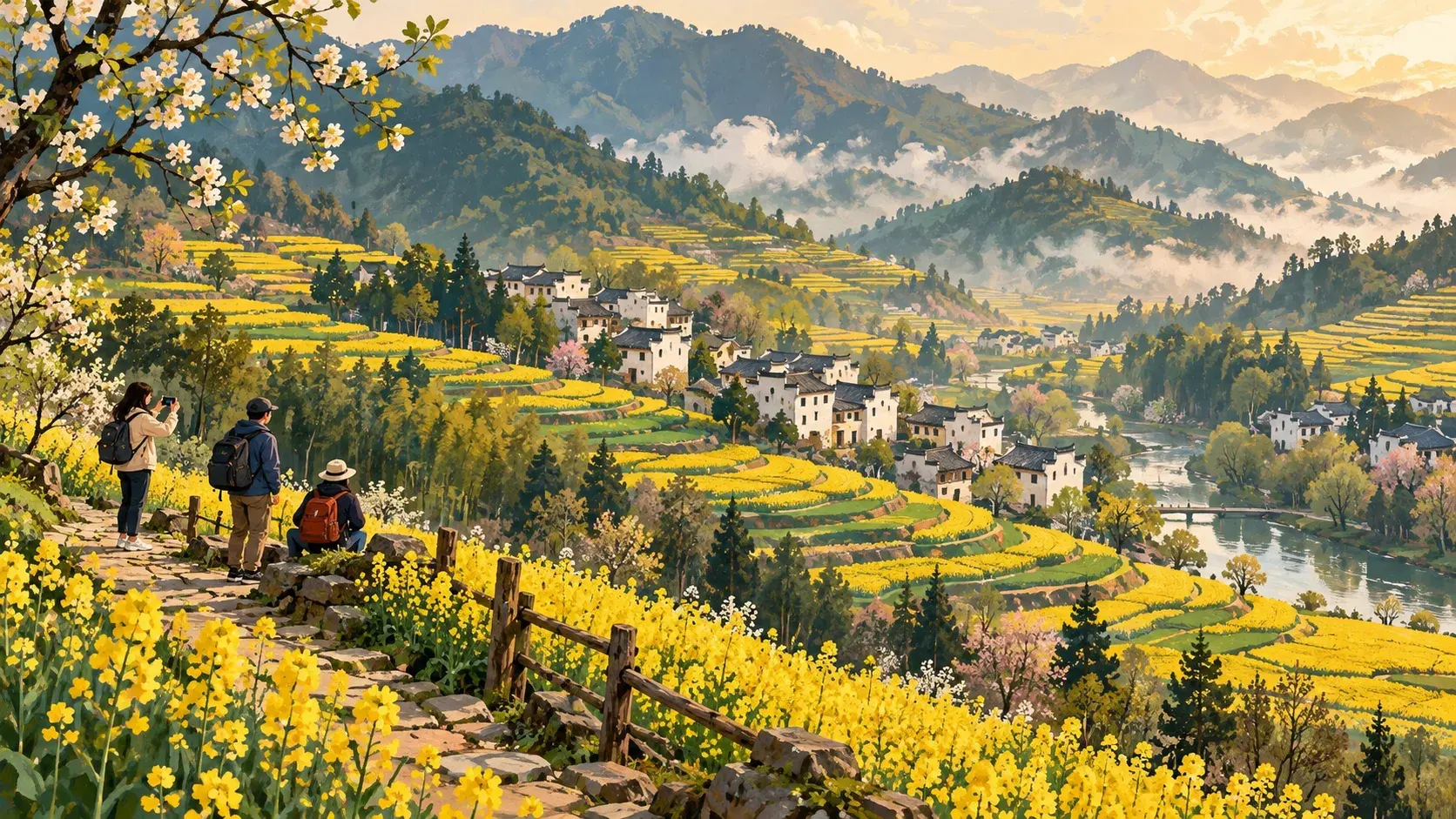 婺源
Rapeseed terraces around white-walled Hui villages, covered bridges and ancestor halls in the tea hills — and an autumn reprise of chilis drying over every balcony.
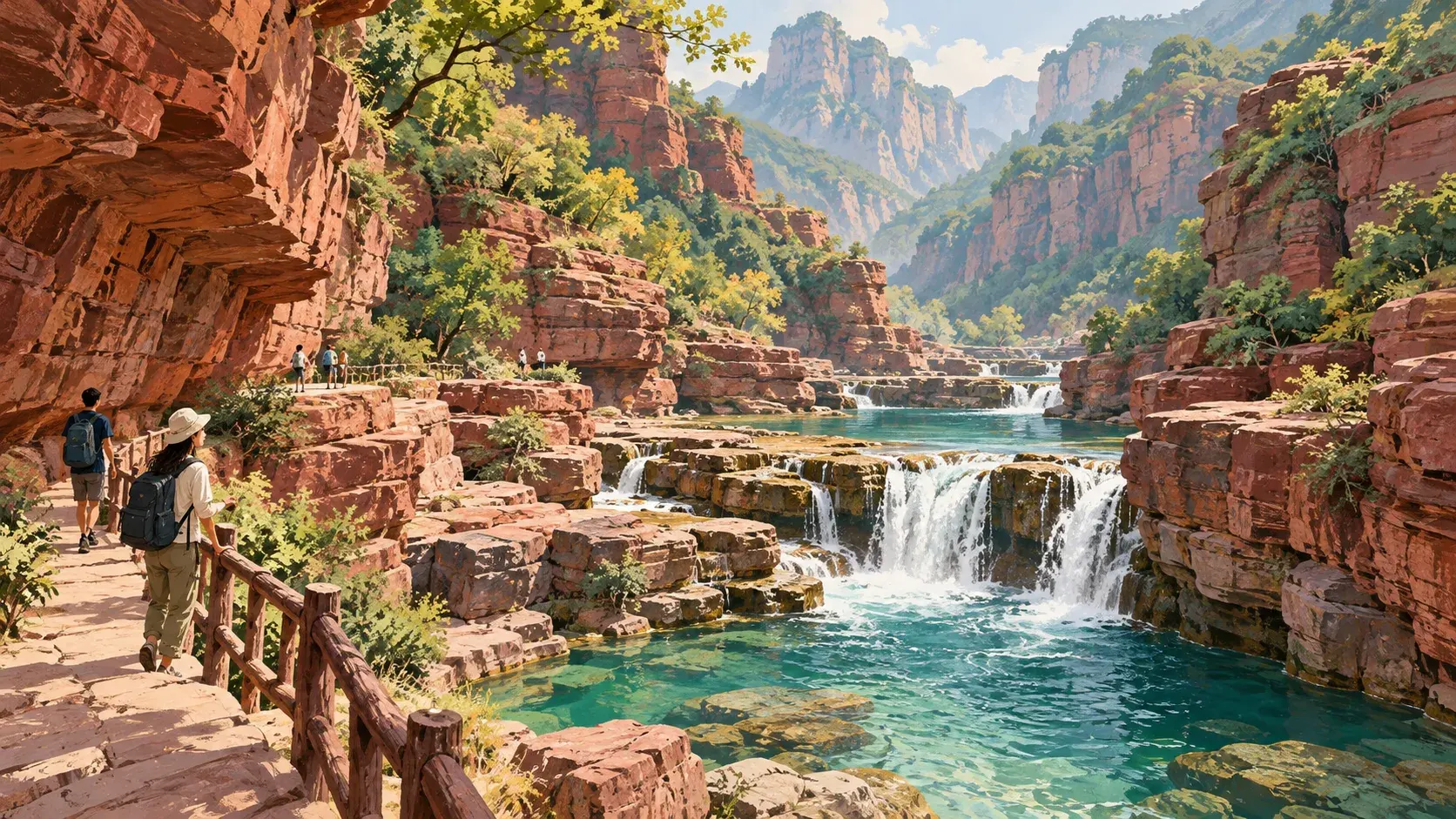 云台山
A red-sandstone gorge you wade through on boardwalks, a 300-meter waterfall, macaques in the woods — the Global Geopark where the North China plain meets the Taihang.
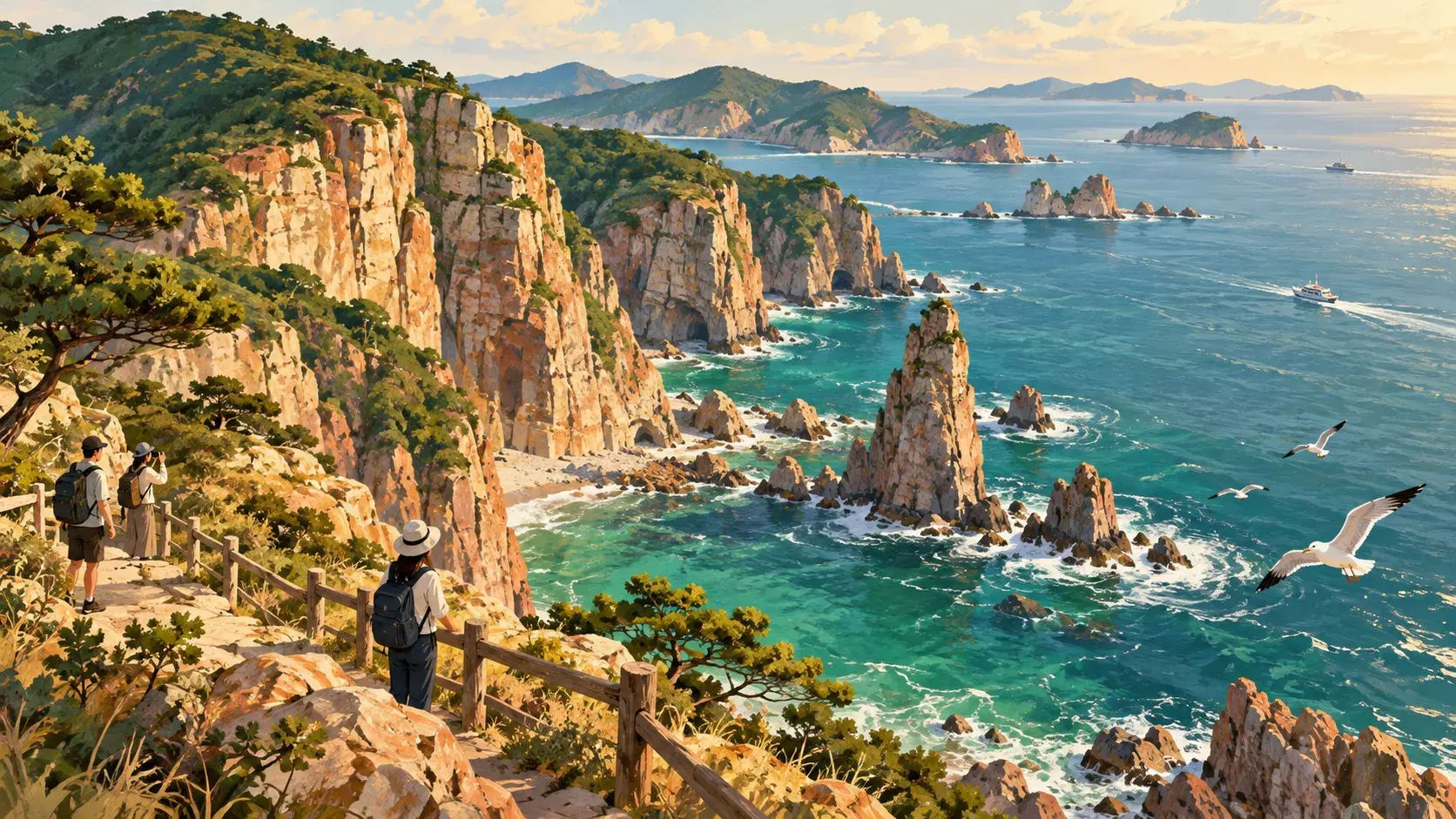 长岛
Thirty-two islands across the Yellow–Bohai seam: sea cliffs, a pebble beach that sings underfoot, gull cities on the outer rocks, seals in spring — and every road in ends at a ferry.
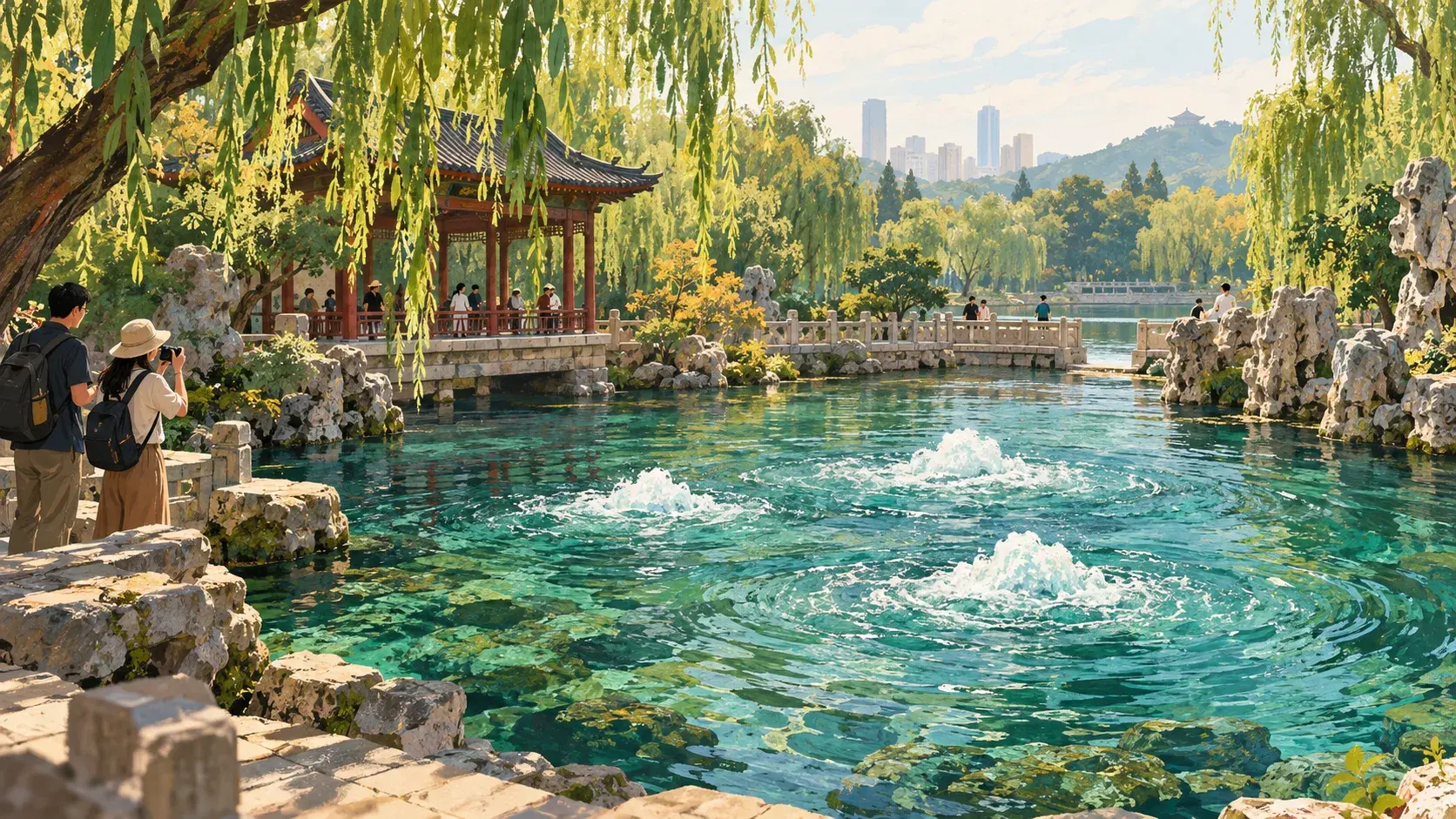 济南
Baotu Spring's jets, the willowed lanes where houses lean over flowing water, Daming Lake at dusk — Shandong's relaxed capital, built around water that rises out of the ground.
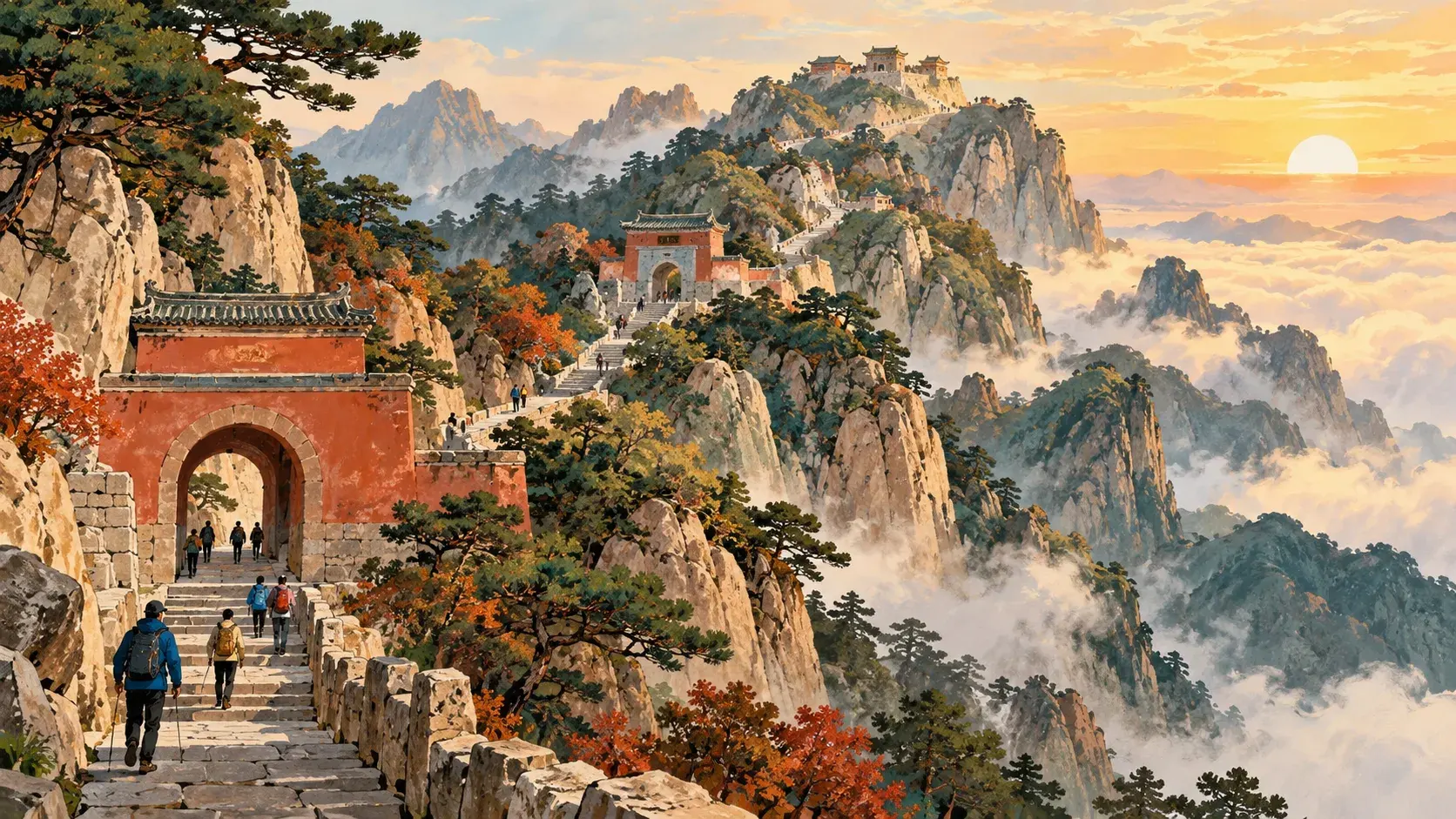 泰山
Six thousand steps up China's most storied mountain — emperors' temples, inscribed cliffs, a lantern-lit night climb and the most famous sunrise in the country.
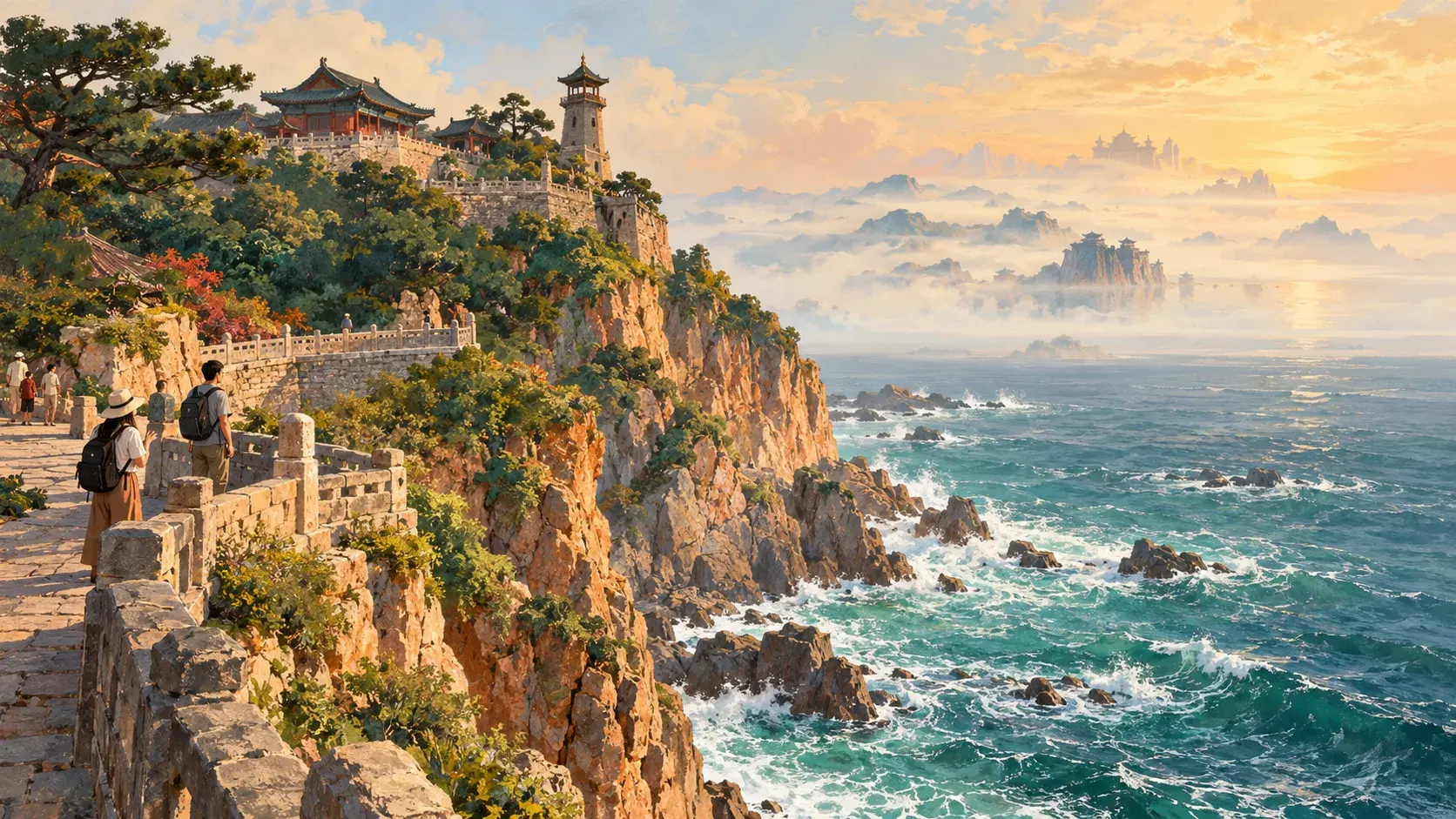 蓬莱
A cliff-top tower of the Eight Immortals legend, a Ming-dynasty naval harbor, real mirages over the strait, wine country inland — and the only ferry port for the islands of Changdao.
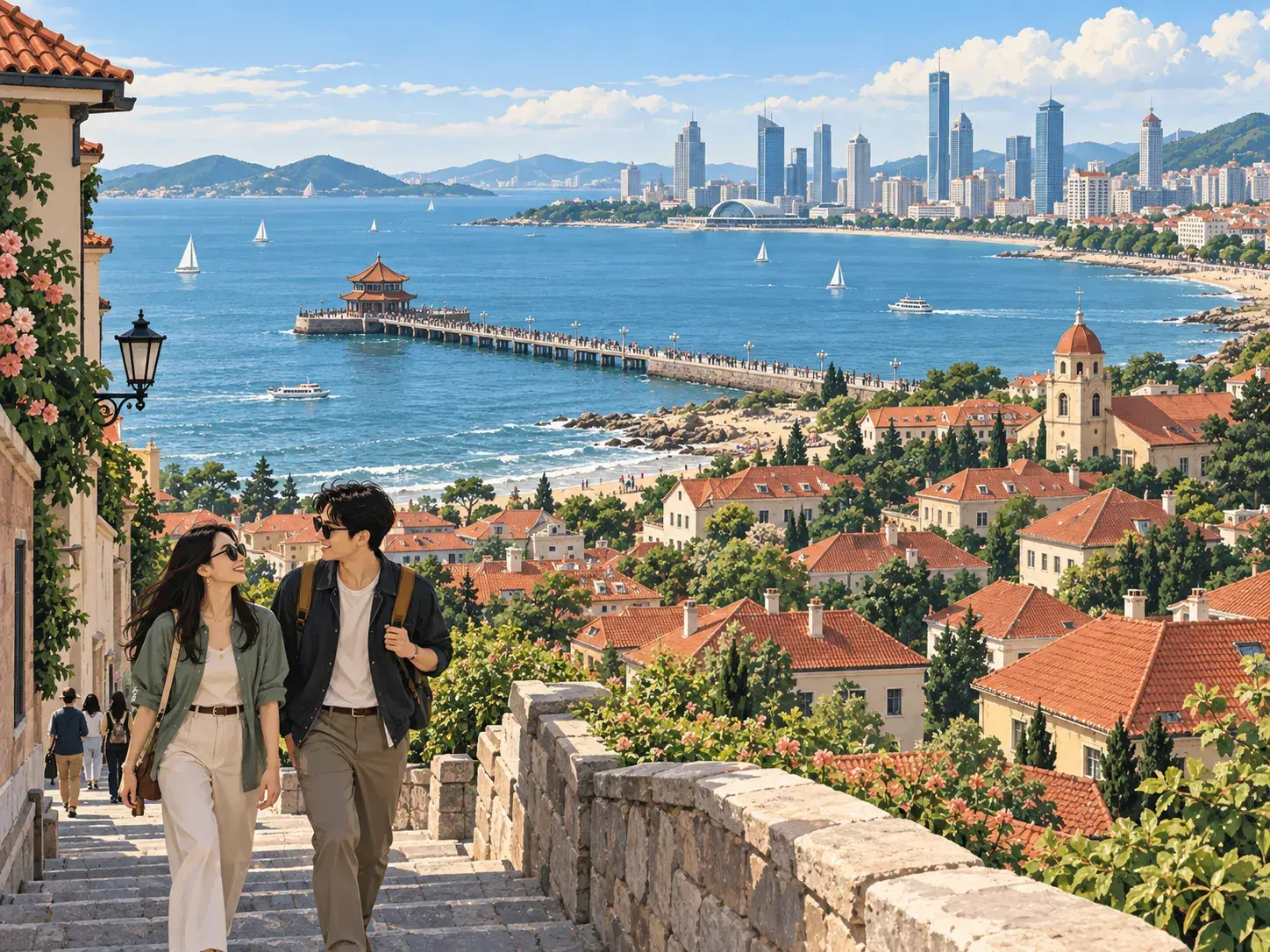 青岛
German-colonial streets under red tiles, the beer that carries the city's name, lifeguarded beaches and the Taoist sea-cliffs of Laoshan — China's most complete seaside city-break.
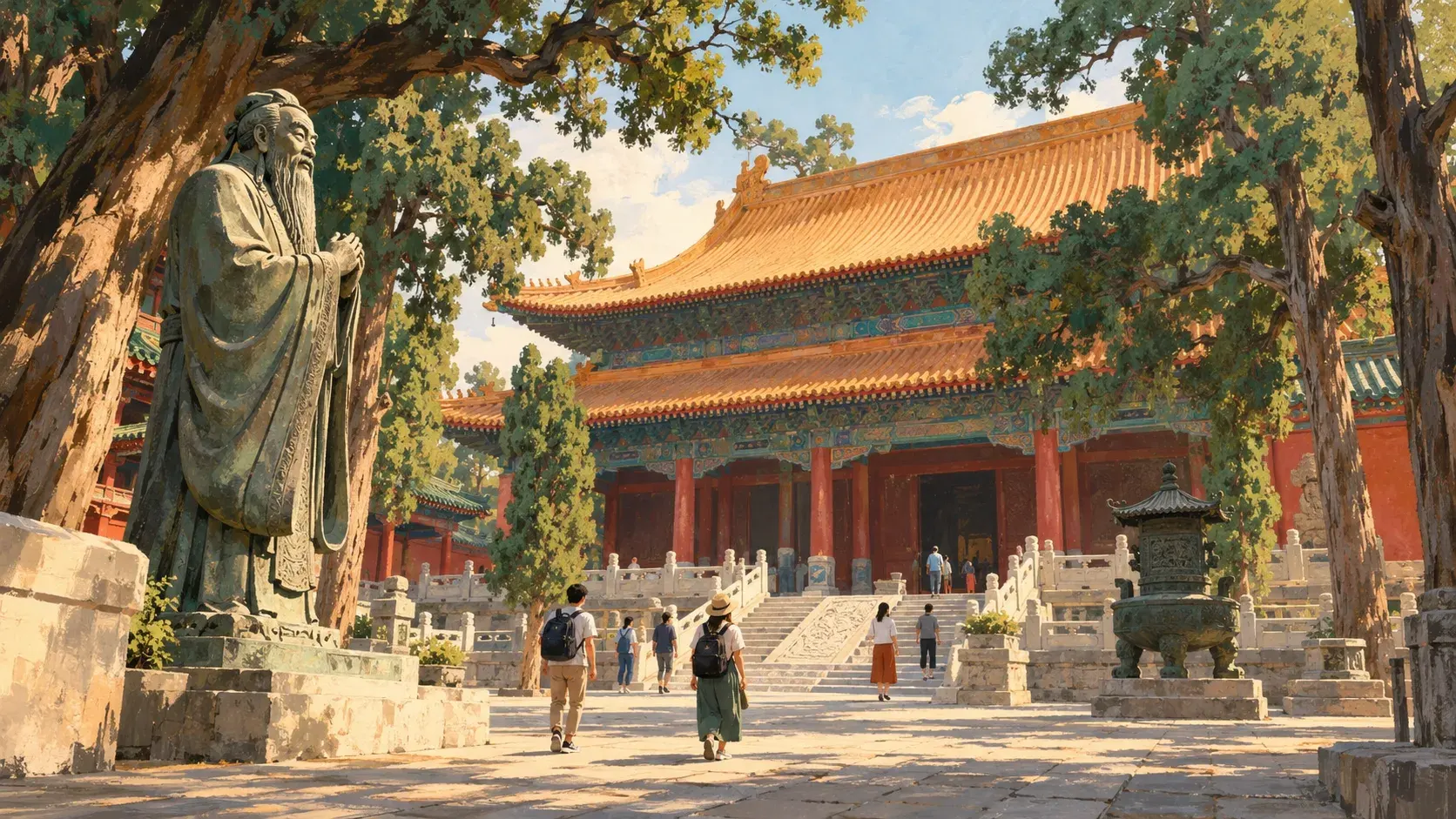 曲阜
The temple, the ducal mansion and the forest cemetery of the Kong family — two and a half millennia of ceremony in one low, quiet town, and rites that still run daily.
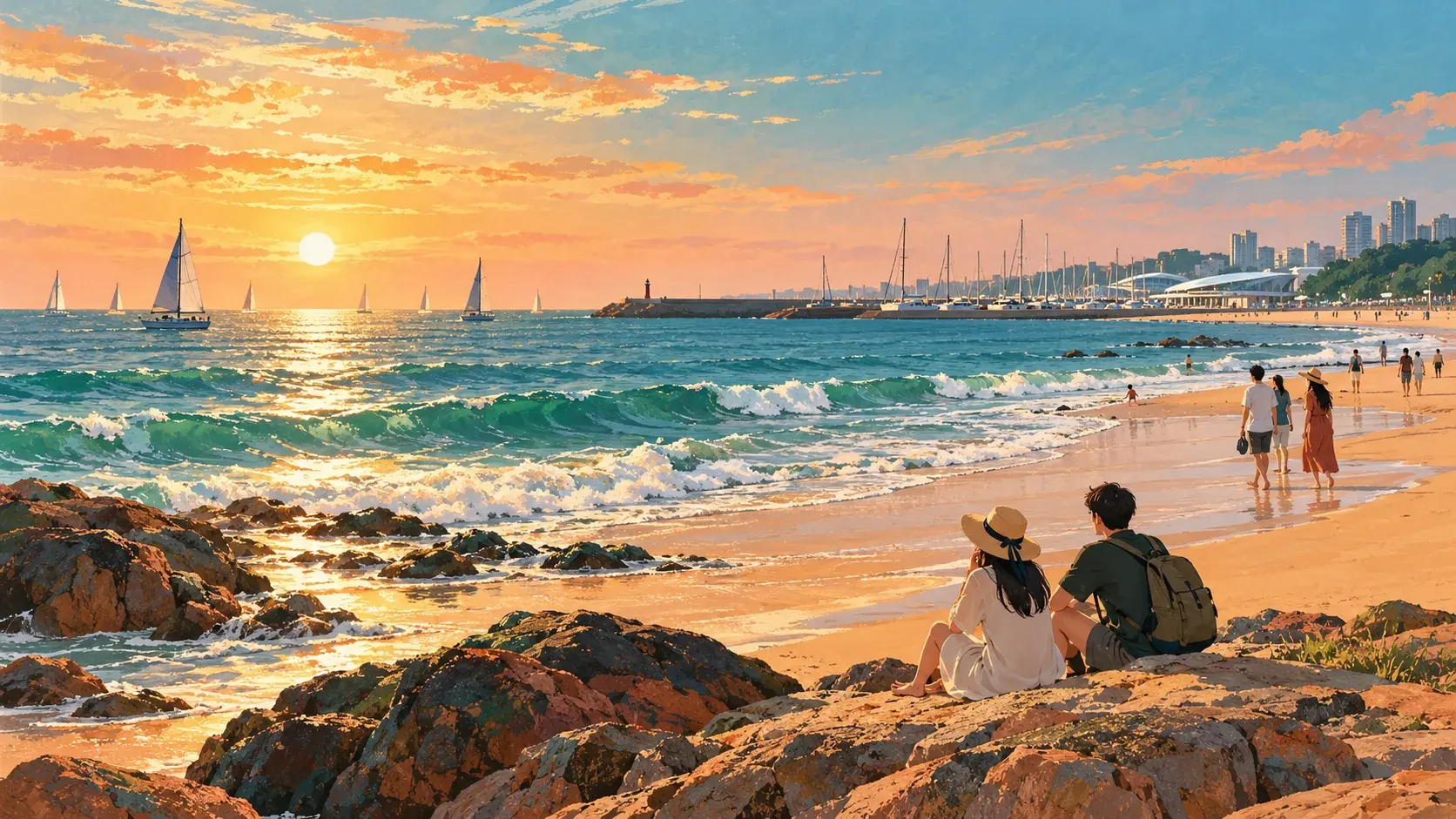 日照
Sixty kilometers of unbroken golden sand, a championship sailing harbor, clam flats you can rake at low tide and a bracing local green tea — the Shandong coast at its most unhurried.
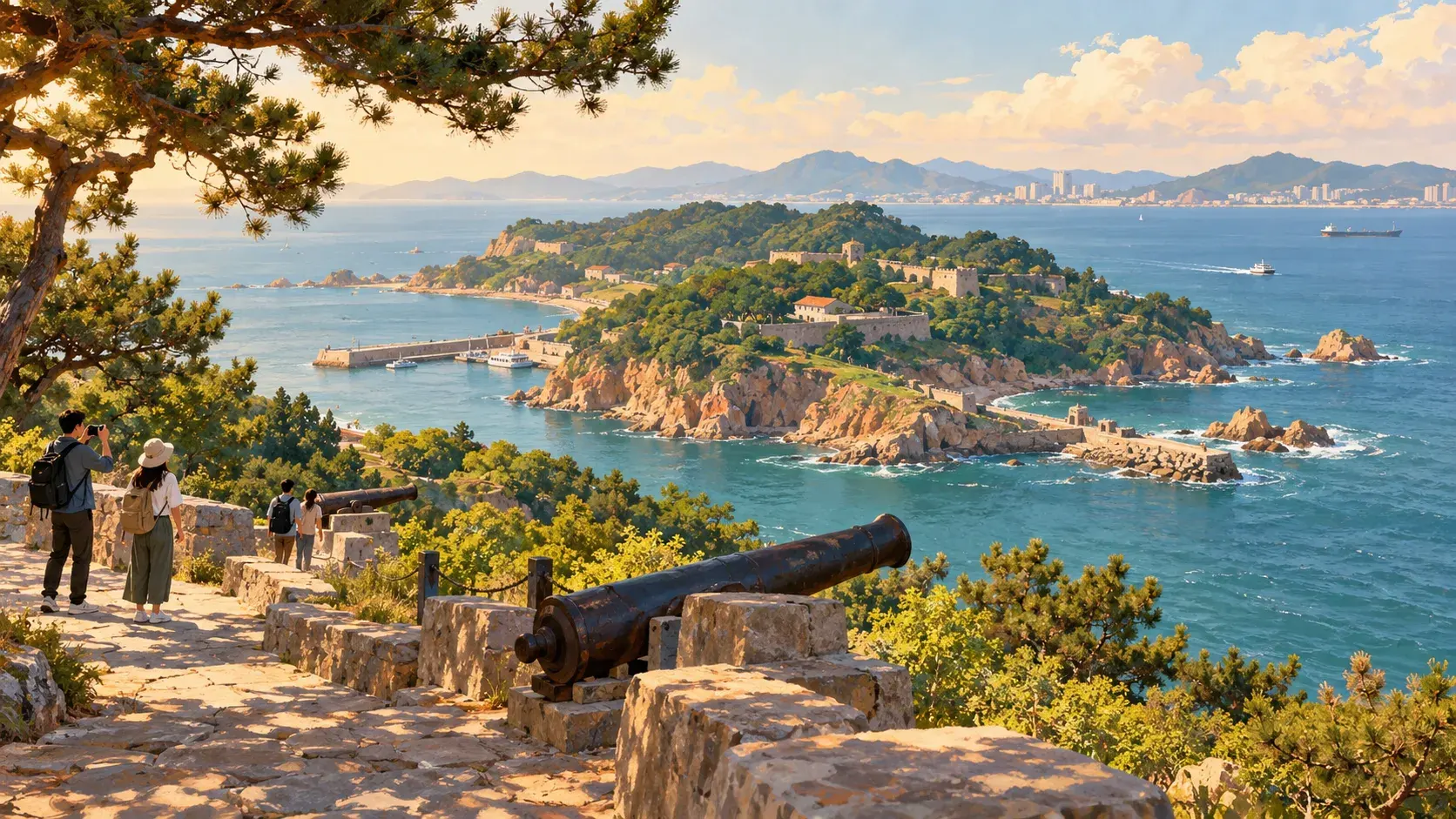 威海
The island museum of China's 1894 naval catastrophe, the mainland's easternmost sunrise, seaweed-roofed fishing villages and whooper swans on the winter lagoons — Shandong's cleanest coastal air.
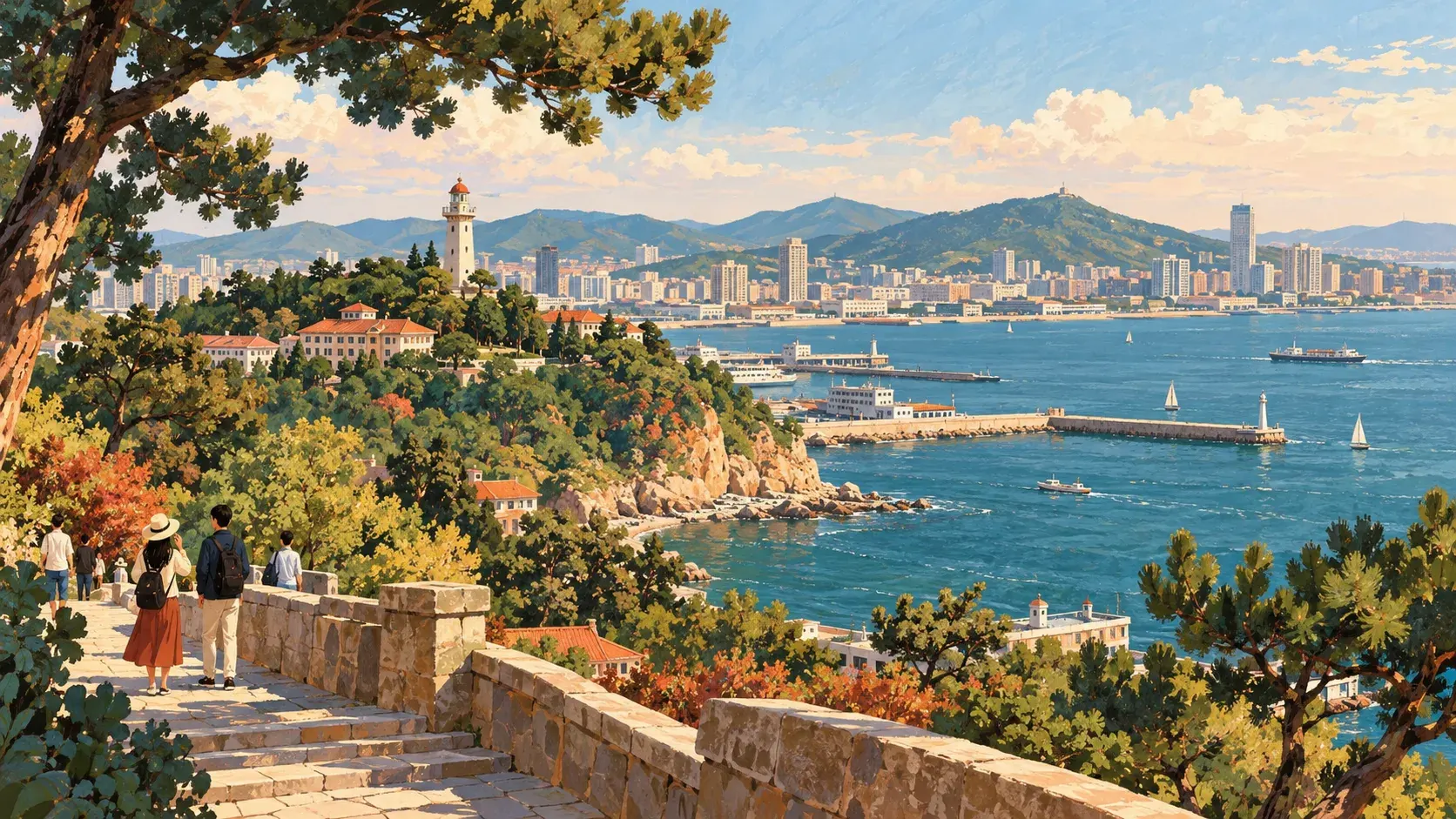 烟台
The harbor hill that named the city, China’s oldest winery in century-old cellars, cherry-and-apple orchards inland and broad northern beaches — with Penglai an hour away.
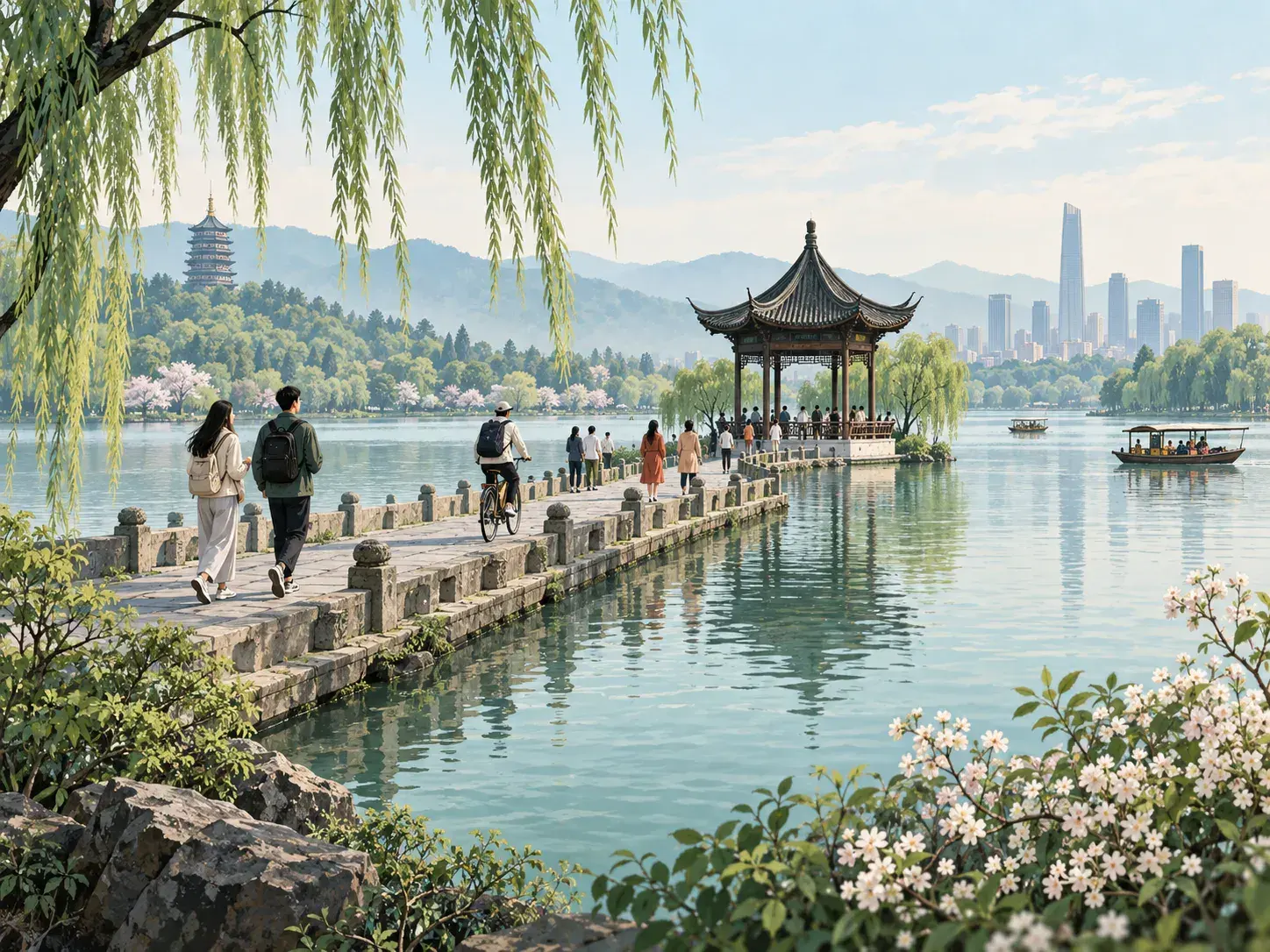 杭州
West Lake's willowed causeways, the temple hills of Lingyin, Dragon Well tea villages and a skyline rising across the river — the classical heart of Jiangnan.
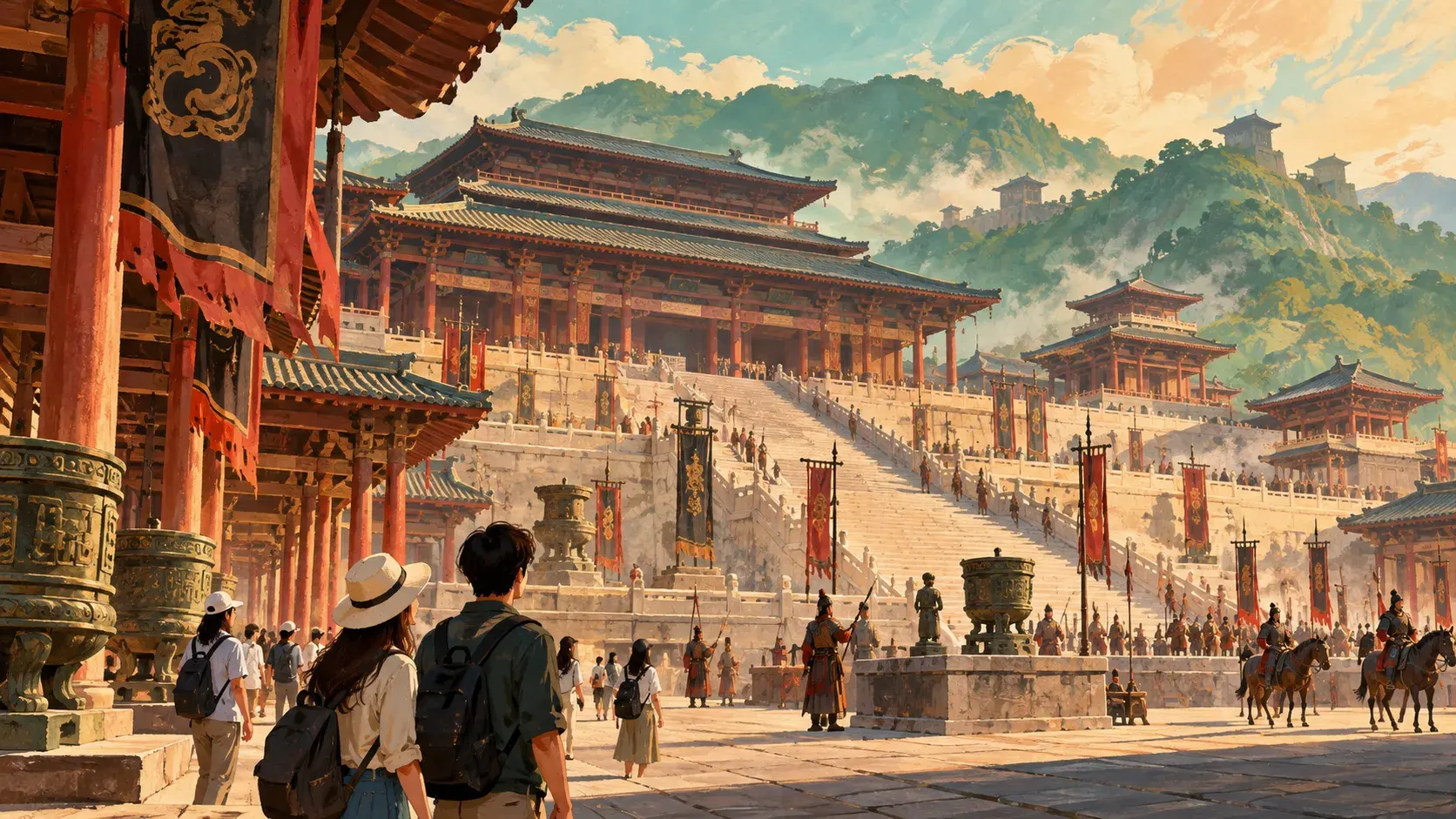 横店
The world’s largest film-studio cluster: a replica Forbidden City, Qin dynasty palaces, treaty-port streets — and costumed stunt shows between working shoots.
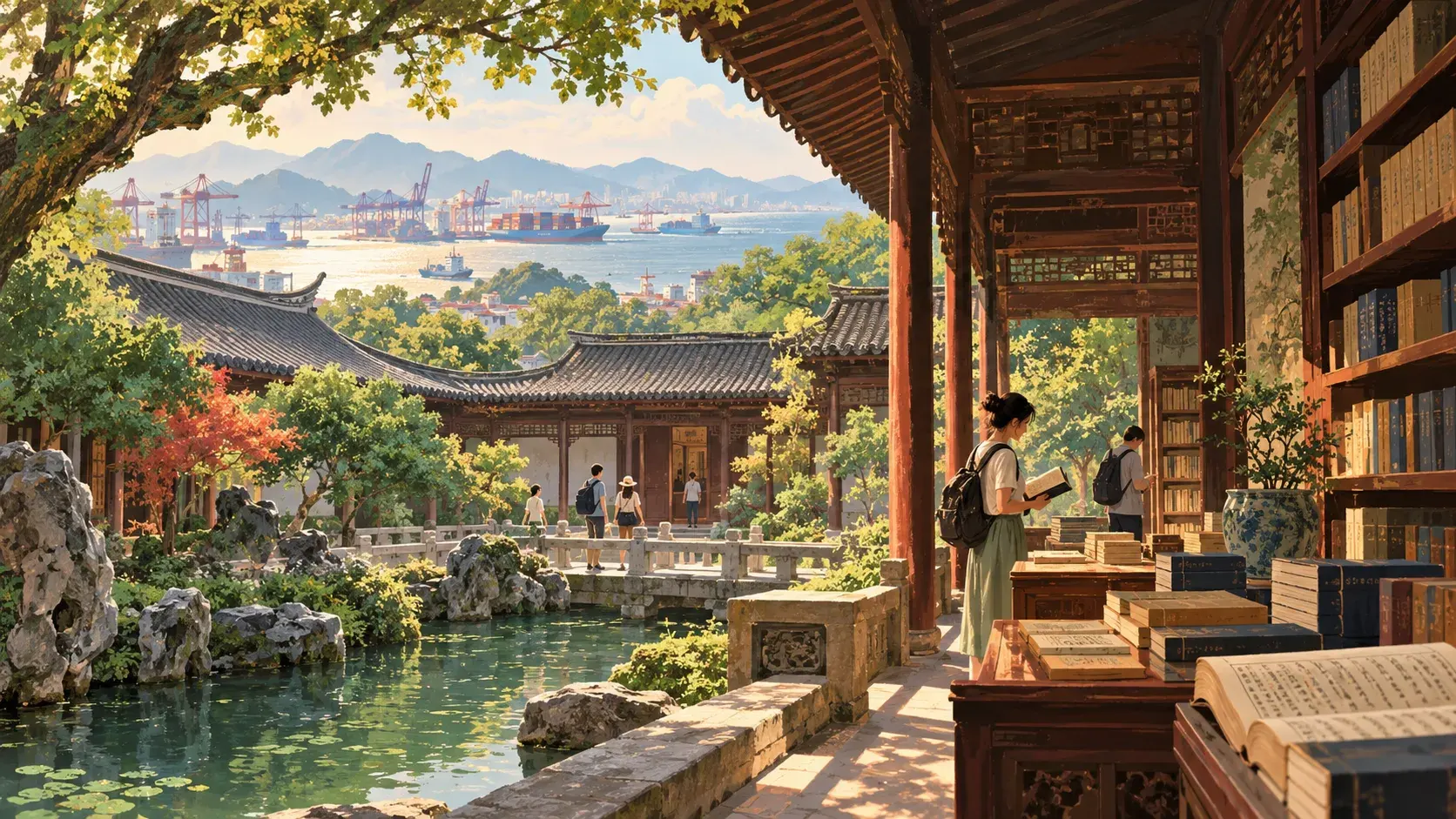 宁波
China's oldest private library, a Bund older than Shanghai's, drum towers and tangyuan — and the gateway to the sacred islands of Putuoshan.
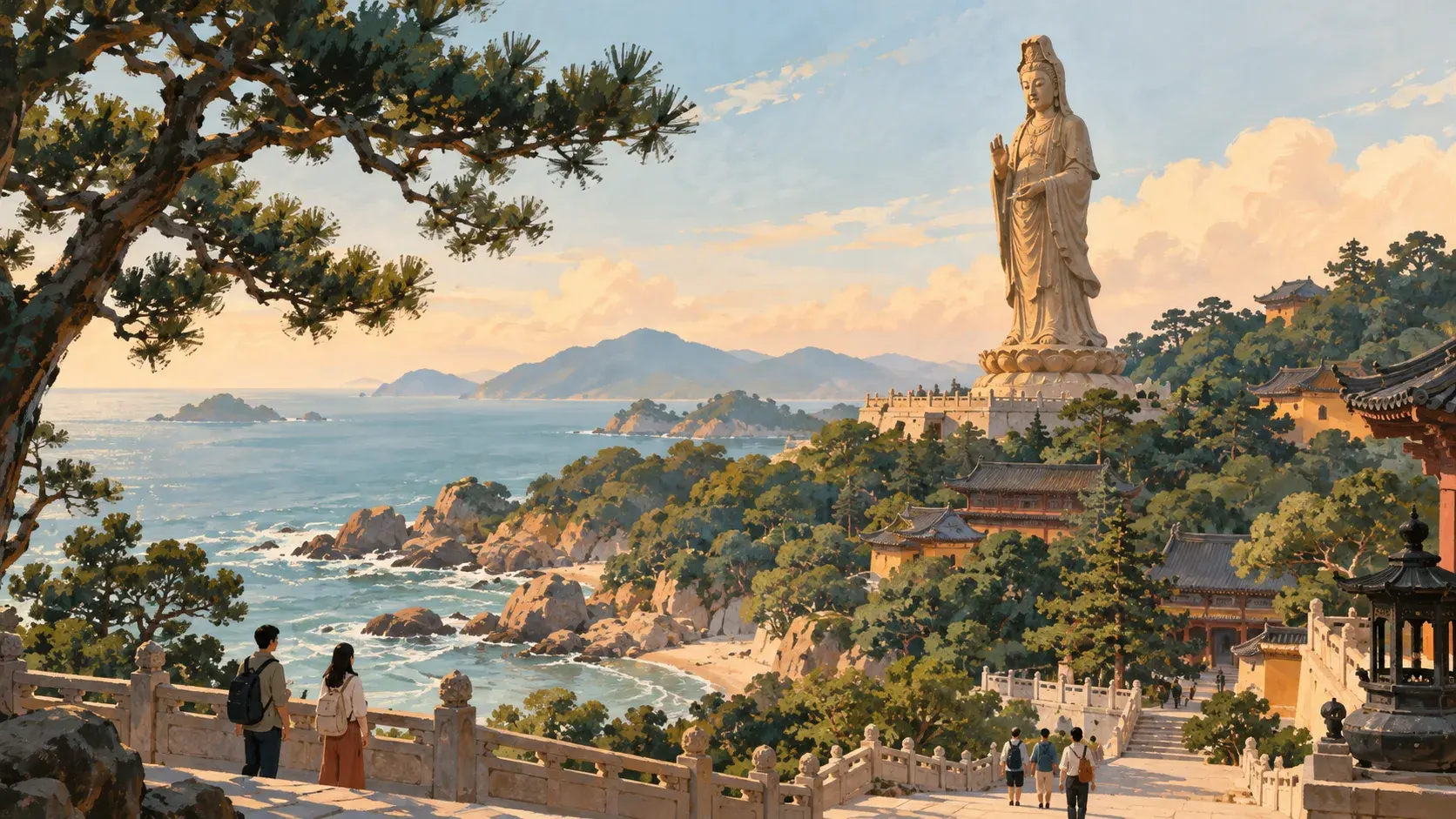 普陀山
One of Buddhism’s four sacred mountains rises straight from the East China Sea: temples in pine forest, pilgrims on the stairways, surf on golden sand.
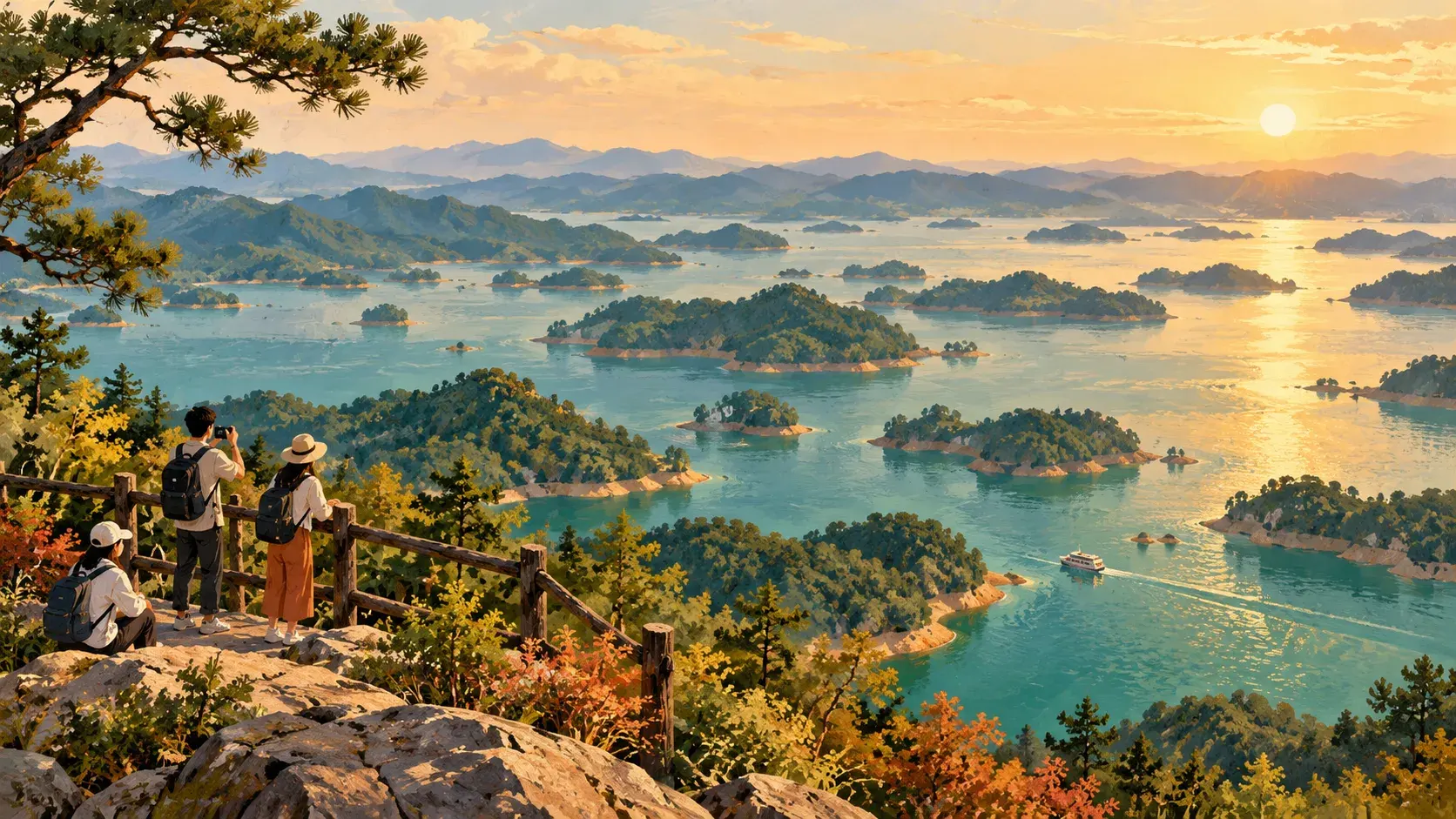 千岛湖
A 1959 reservoir that drowned two county towns and left a thousand forested peaks as islands — bottle-clean water, slow boats, and the famous fish-head banquet.
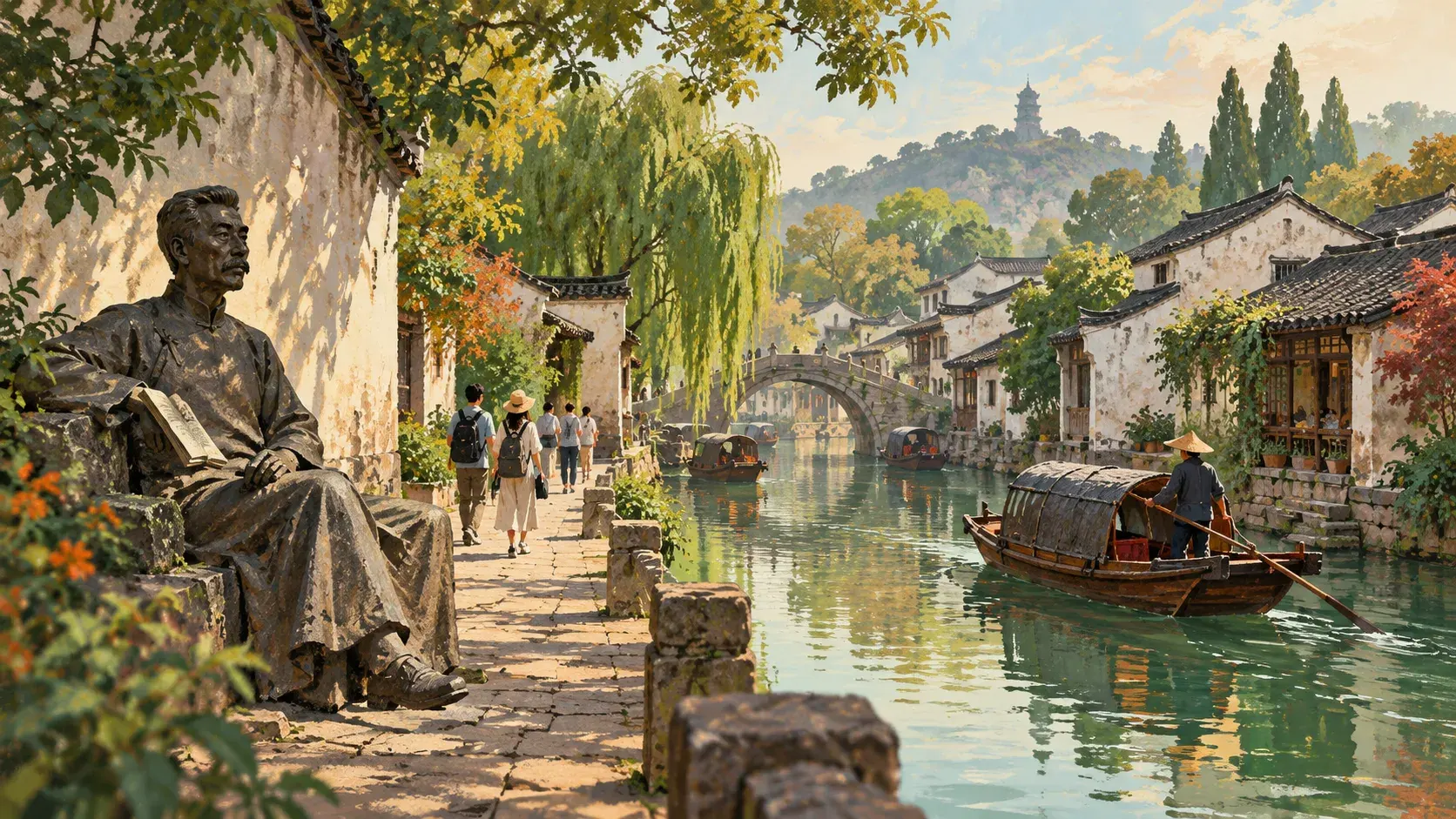 绍兴
Black-awning punts through 2,500-year-old canals, the lanes of Lu Xun's childhood, calligraphy at the Orchid Pavilion — and yellow rice wine warmed like tea.
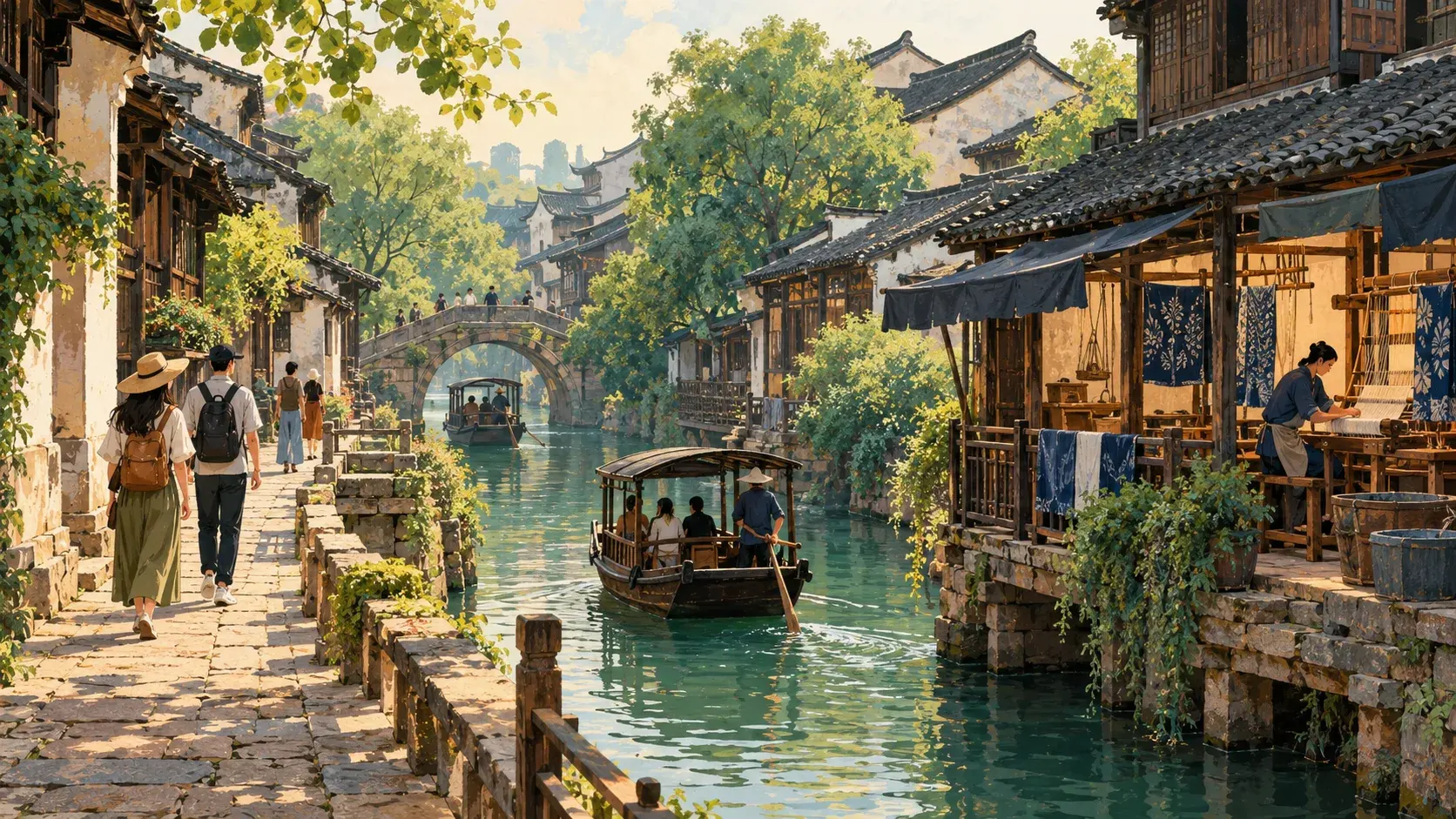 乌镇
Canals, black-awning boats and a whole glowing west zone by night — plus the theatre festival that turned a millennial town into a stage.
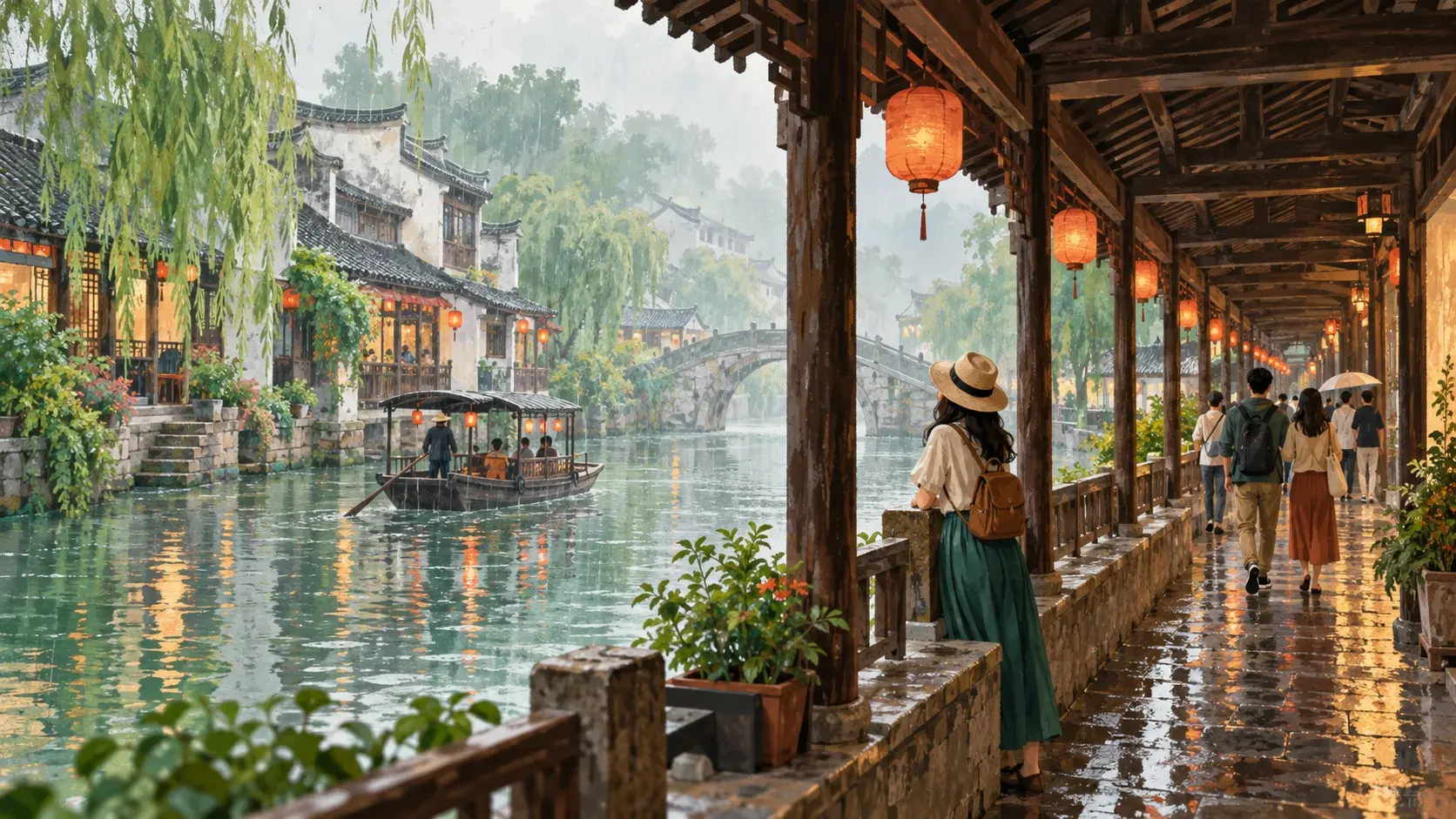 西塘
A kilometre of covered corridors along nine rivers, bridges with love-luck legends, a lane barely shoulder-wide — the lived-in water town an easy hop from Shanghai.
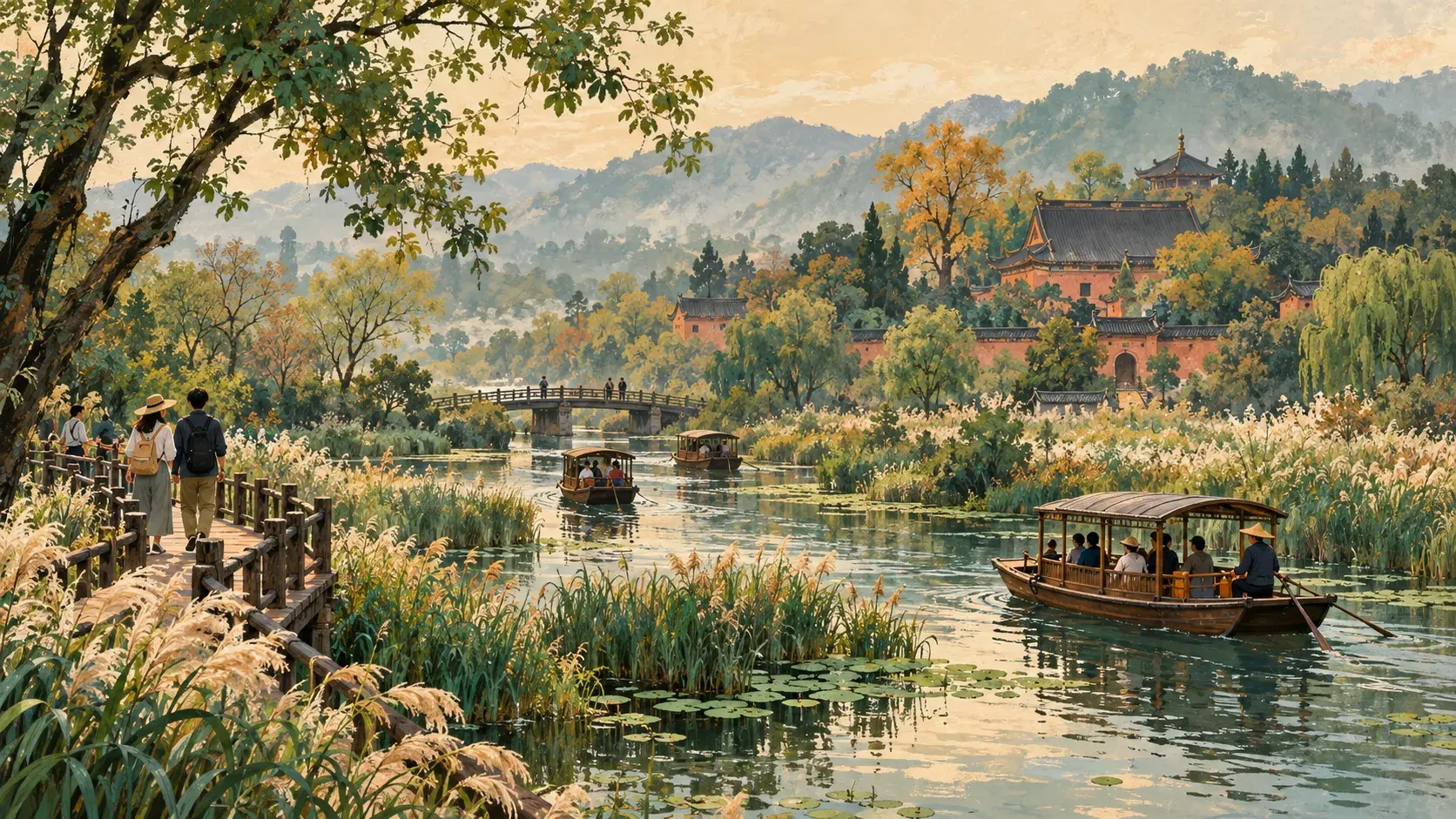 西溪湿地
Ten square kilometres of channels, reed banks and old fishing hamlets on Hangzhou’s western edge — explored by punt, glorious in plum blossom and autumn reeds.
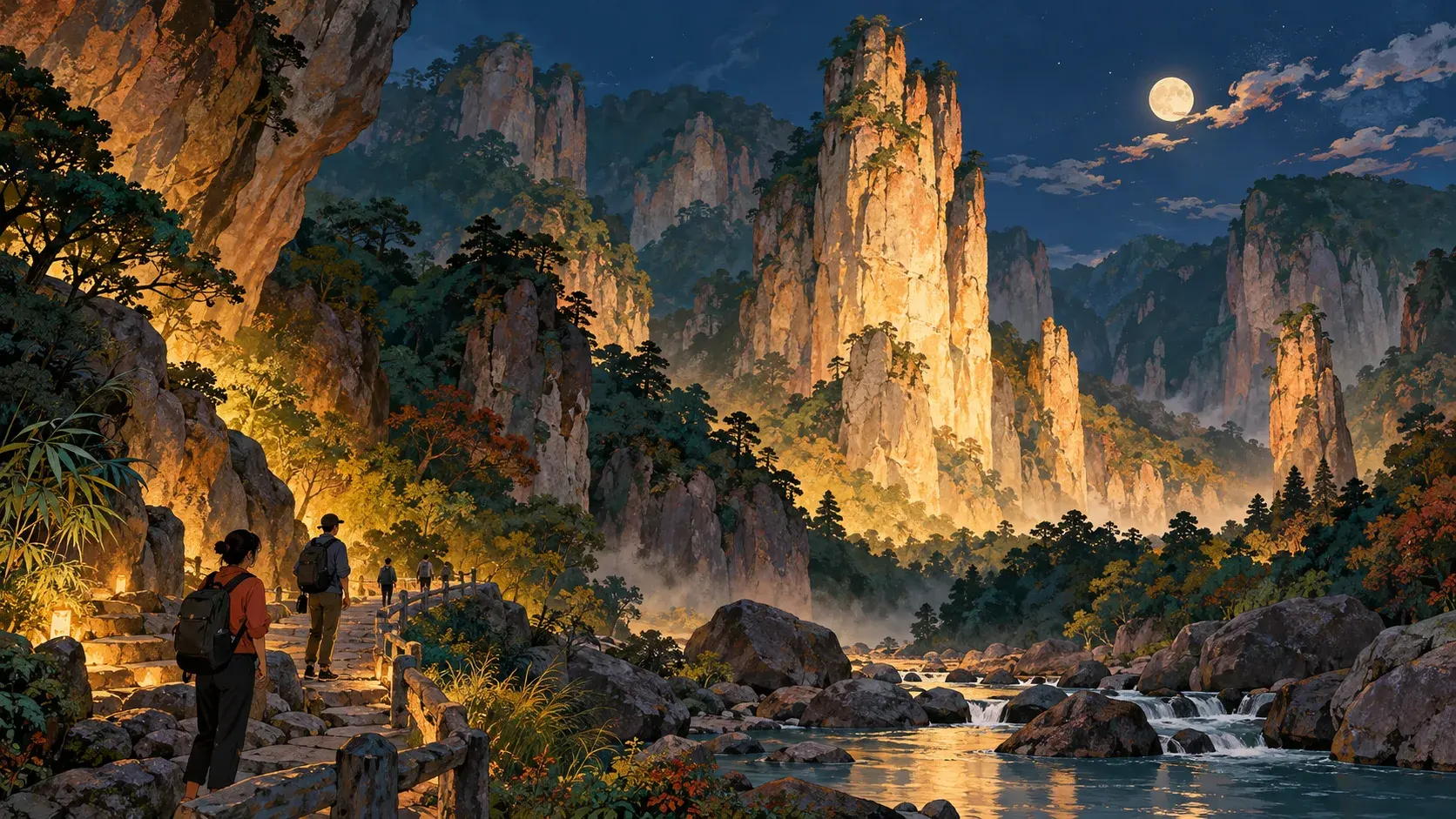 雁荡山
A Cretaceous volcano carved into pinnacles and slot gorges above the East China Sea — a great waterfall, cliff-walking acrobats, and floodlit silhouettes after dark.
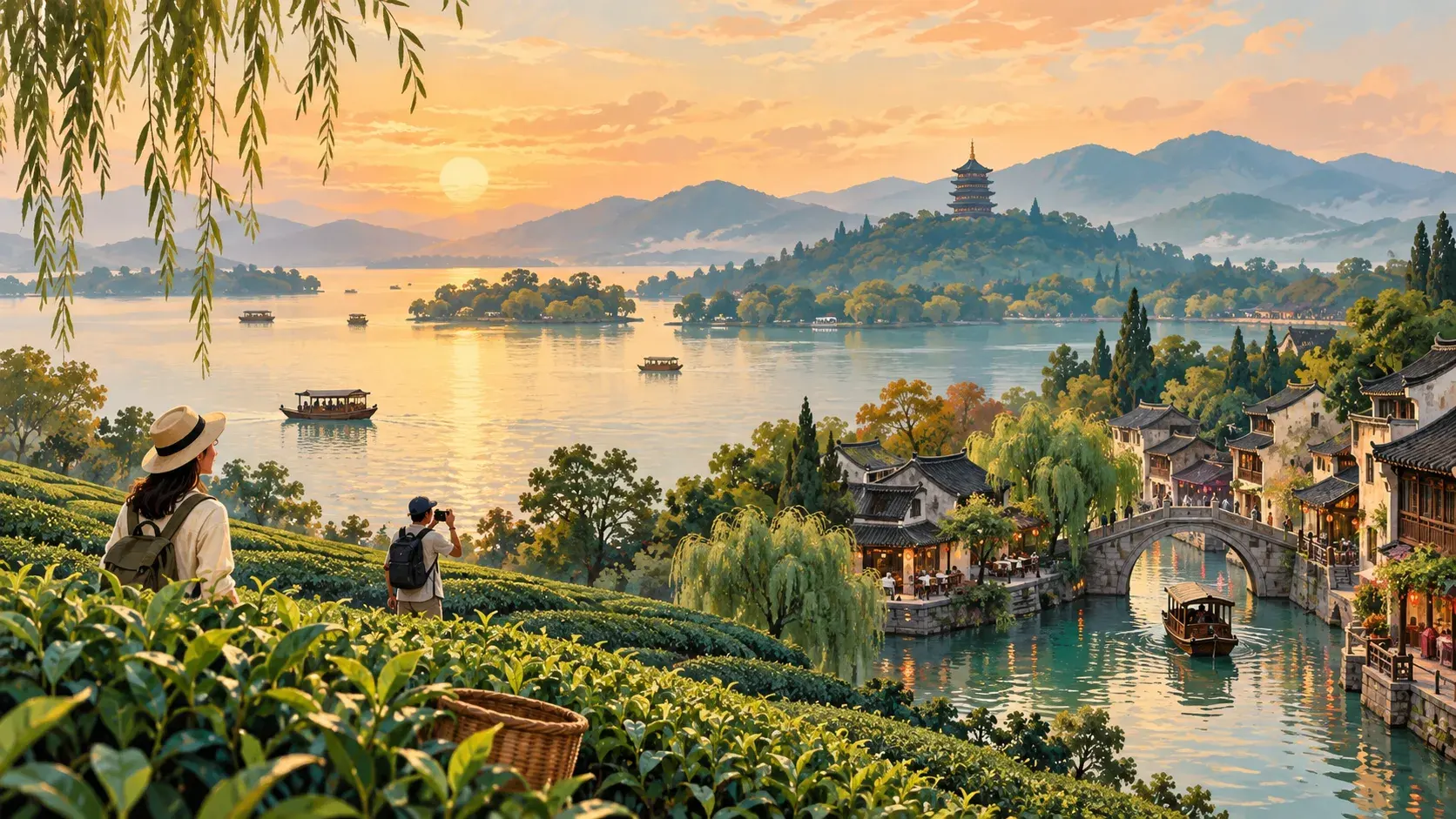 浙江
A province-size circuit from Hangzhou: tea hills and West Lake, lantern-lit water towns, the wine city of Shaoxing, a Buddhist island, volcano pinnacles and a lake of a thousand islands.
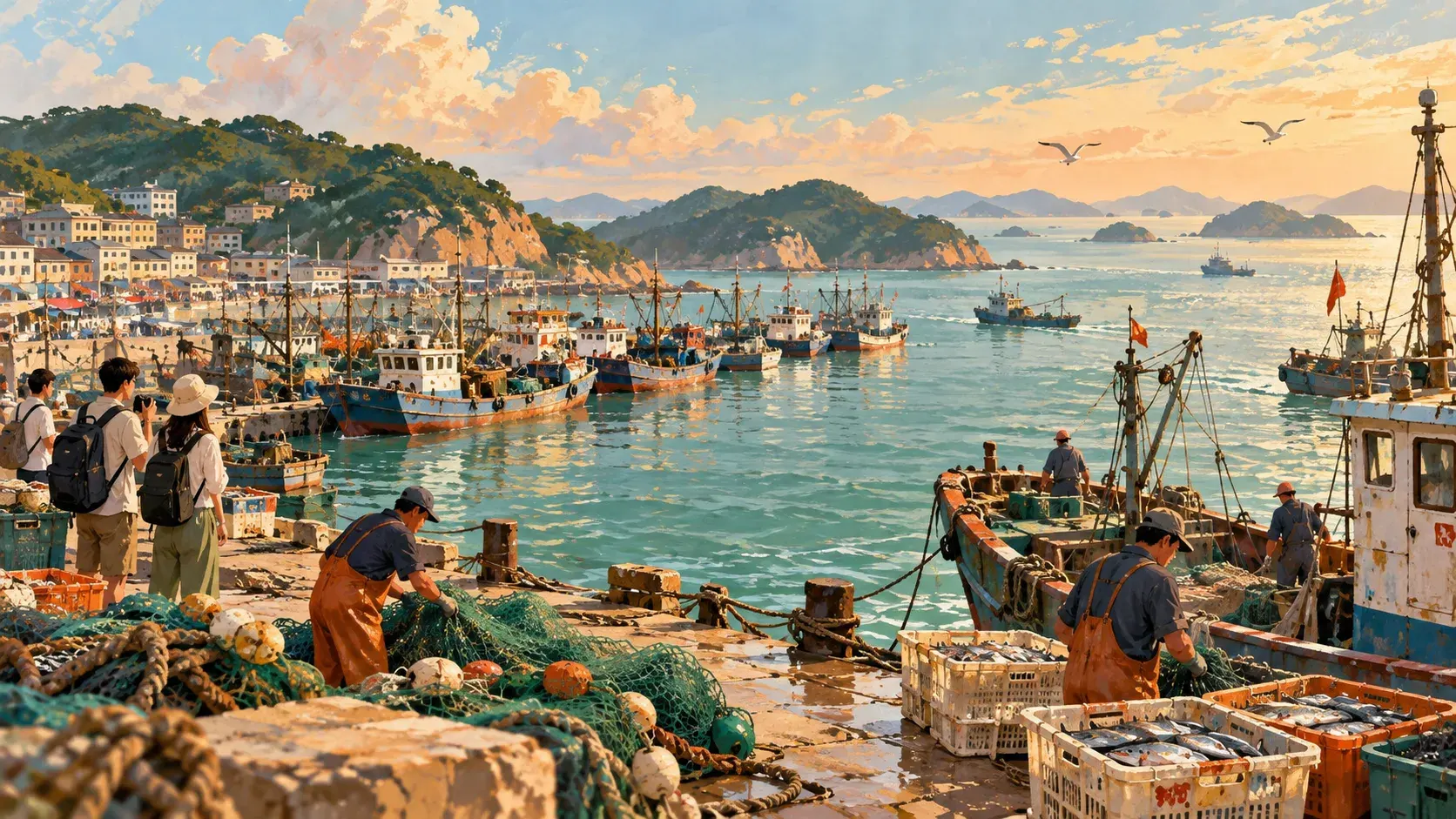 舟山
Thirteen hundred islands: dawn quays at a great fishing port, night seafood stalls, surf beaches and sand sculptures, islands out of wuxia novels.
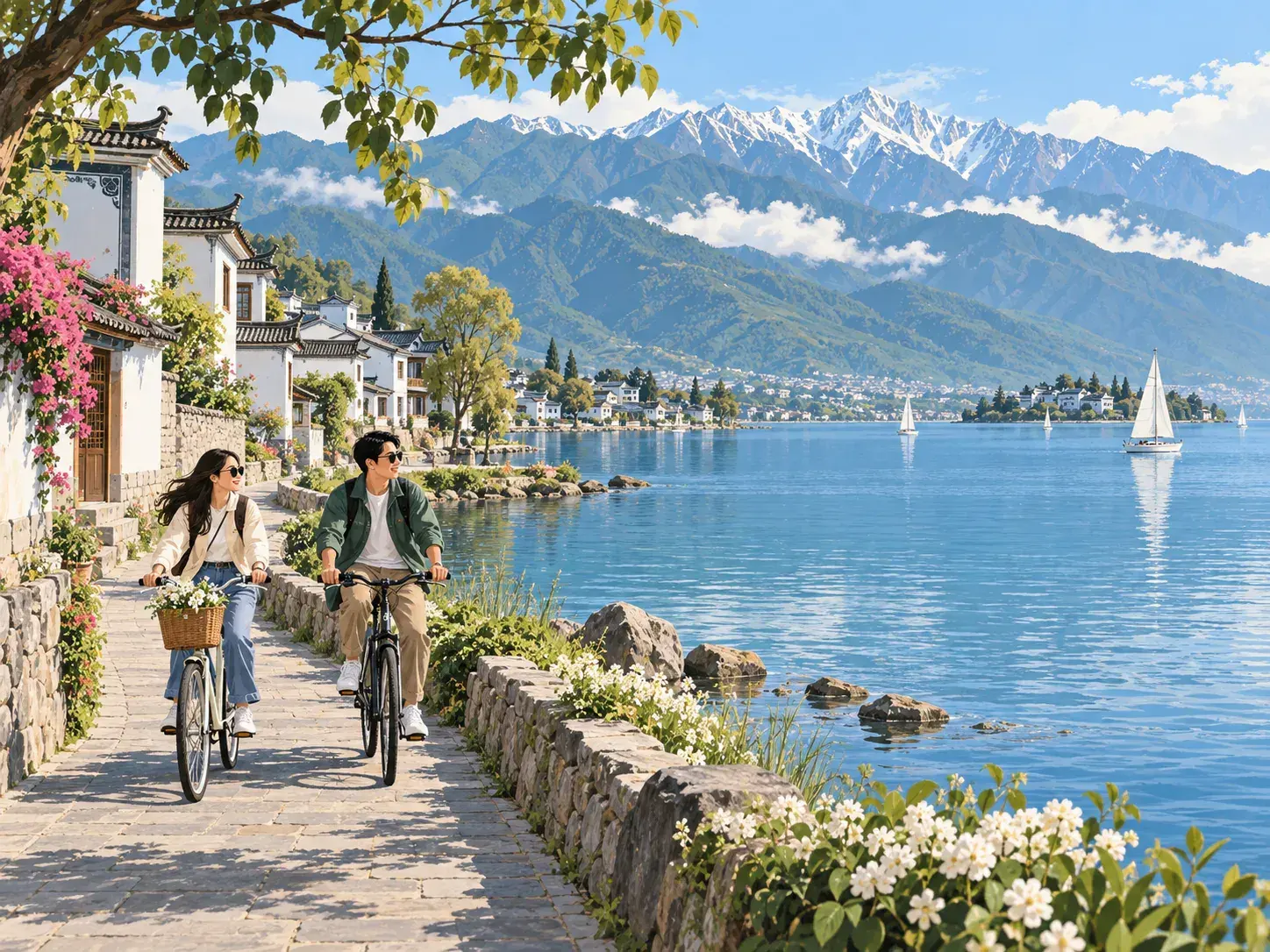 大理
A first-trip guide to the Old Town, Cangshan, Erhai and the Bai villages between them.
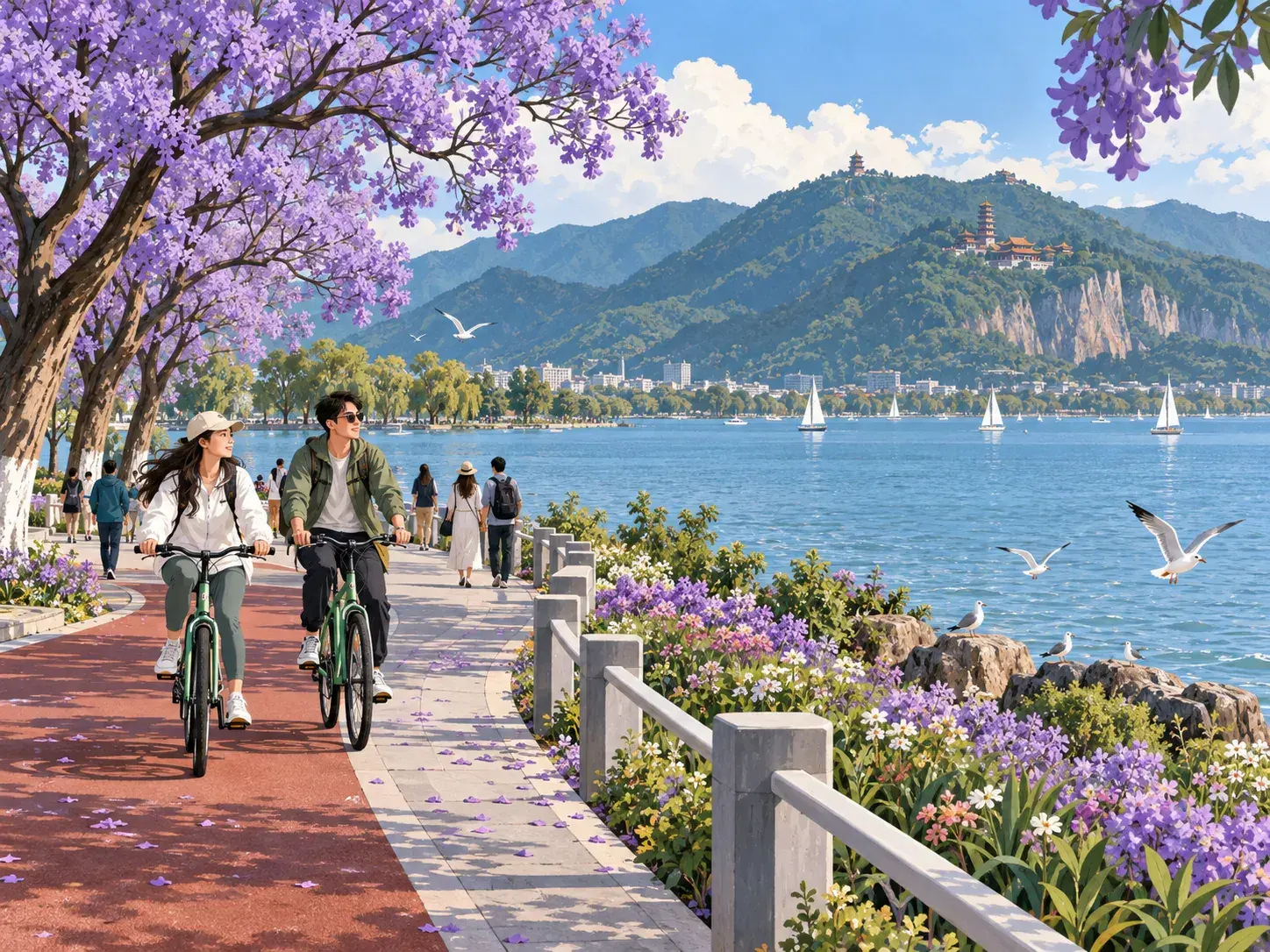 昆明
A first-trip guide to lakeside walks, city culture, local food and a full day among the Stone Forest.
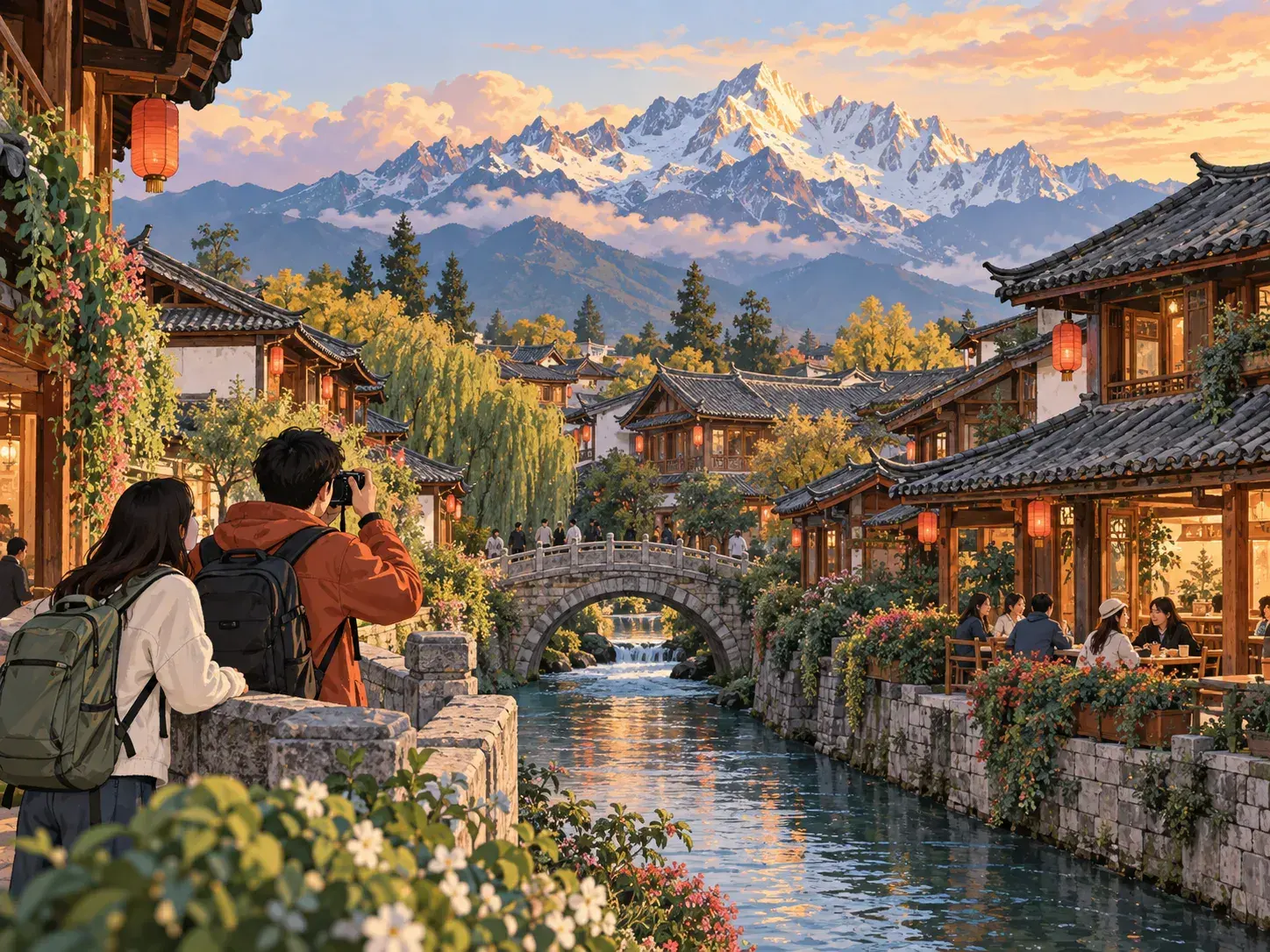 丽江
A practical first-trip guide to the Old Town, Naxi heritage, Jade Dragon Snow Mountain and the surrounding valleys.
 滇西北
The classic northwest-Yunnan corridor: two old towns, one great lake, a gorge of the Yangtze, and a Tibetan plateau finish — assembled so the altitude rises gently and every leg earns its drive.
 泸沽湖
A slow-travel guide to the lakeshore, local communities, boat routes and practical planning between Yunnan and Sichuan.
 香格里拉
A Tibetan plateau town at 3,300 meters in northwest Yunnan: butter tea and monastery courts, a seasonal lake that becomes grassland, and some of the most dramatic mountain driving in China.
 束河
A short guide to the old market town, its water lanes, Naxi heritage and an easy route from the city.
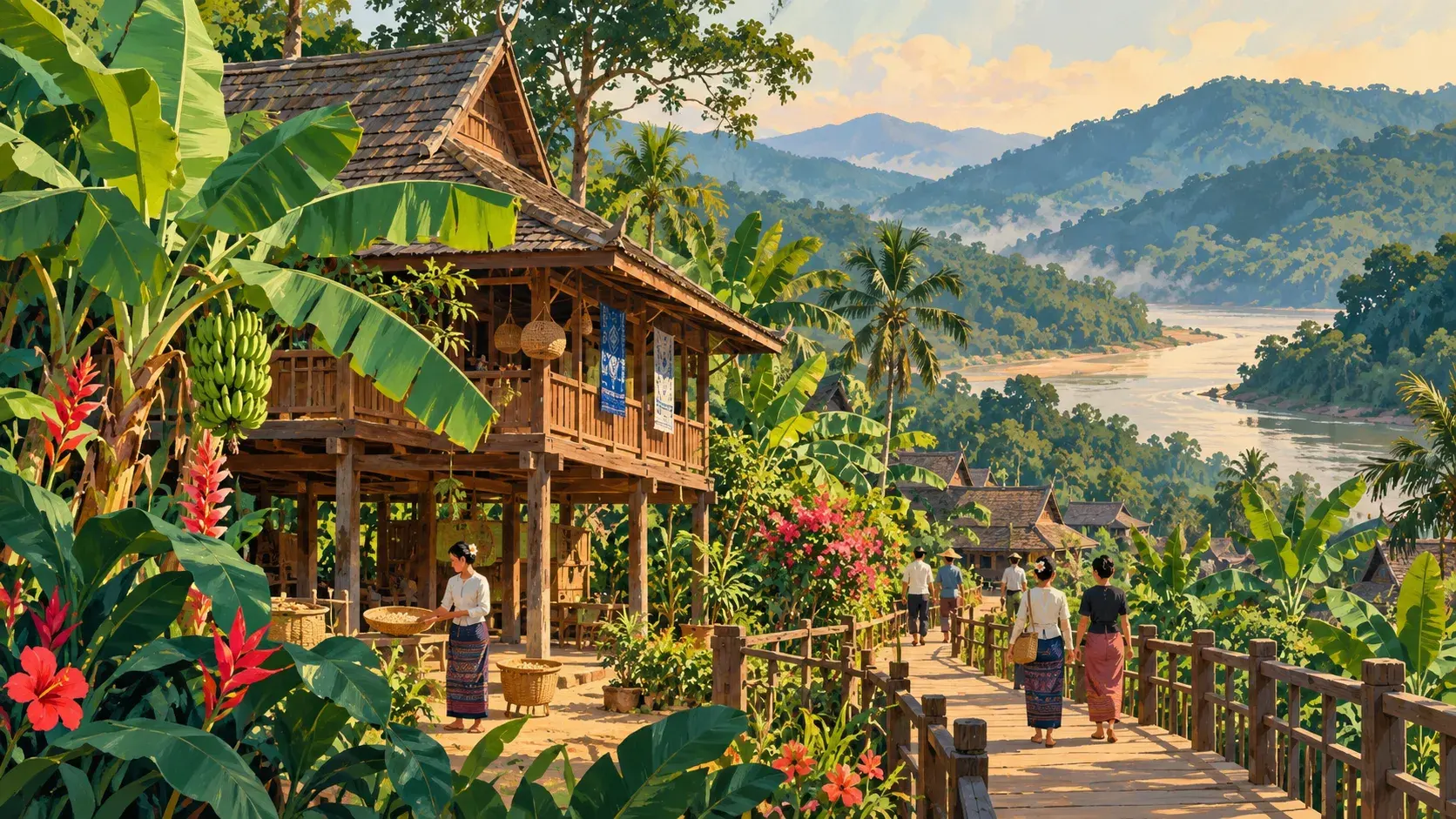 西双版纳
Rainforest, Dai river towns and lantern-lit night markets in China's far southwest, where the Lancang River rolls on toward the Mekong and the border with Myanmar and Laos.
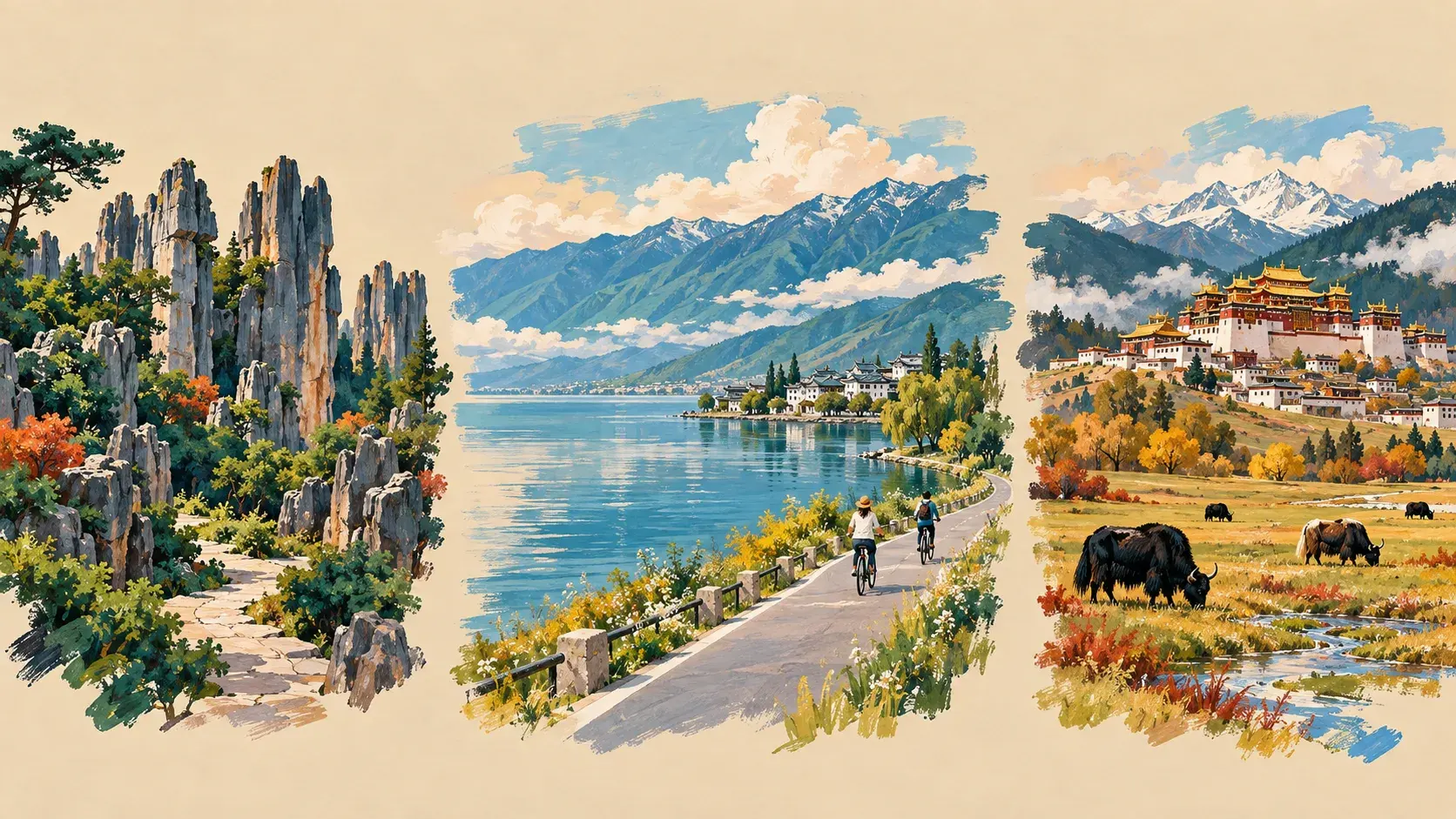 云南
South of the clouds is a whole calendar of trips: glacier mountains in the northwest, rice terraces in the southeast, rainforest on the Lao border, and a spring-valley capital to thread them together.
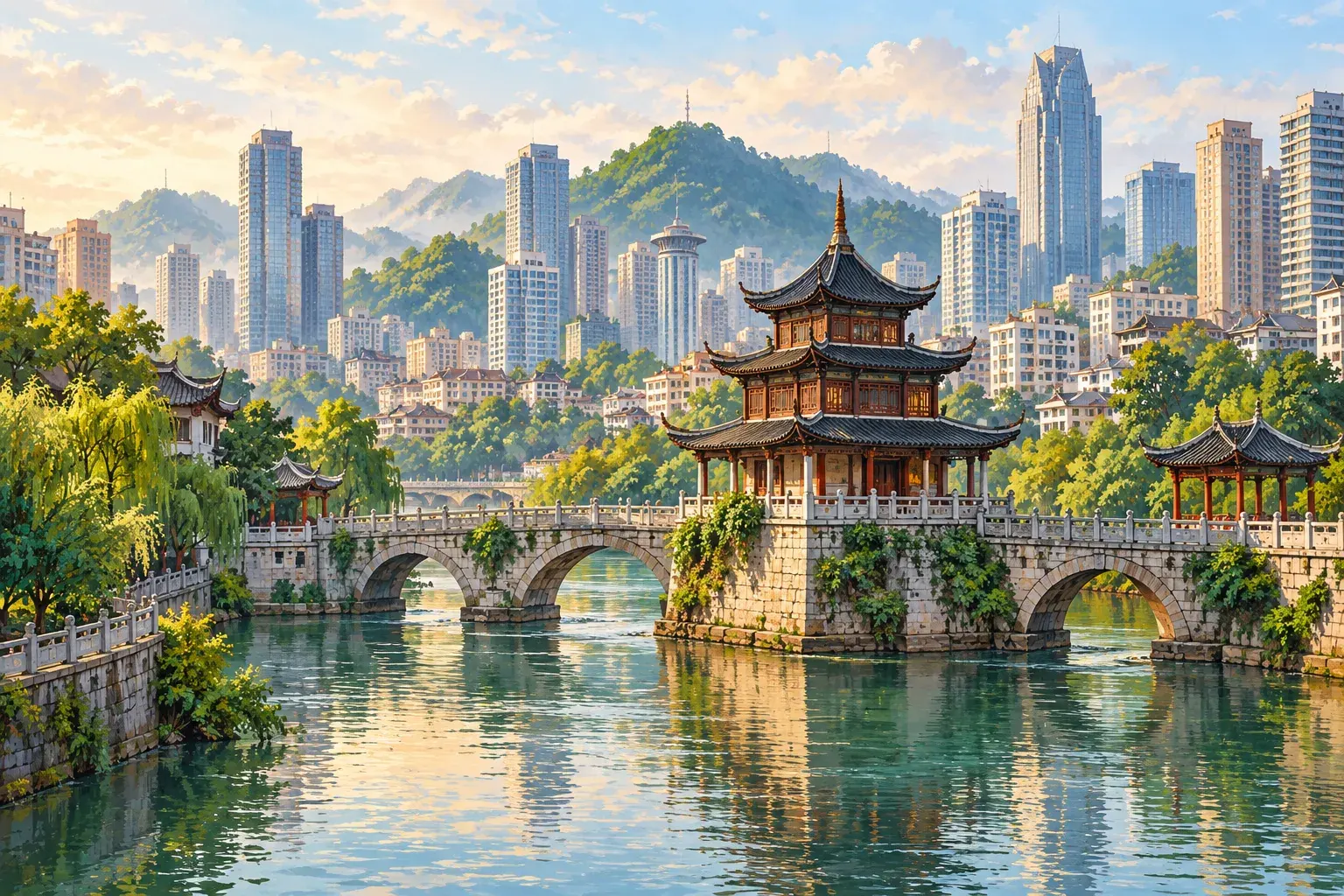 贵阳
Leafy streets, night markets and a 600-year-old stone town in China's summer-refuge capital — and the high-speed rail hub that unlocks Guizhou.
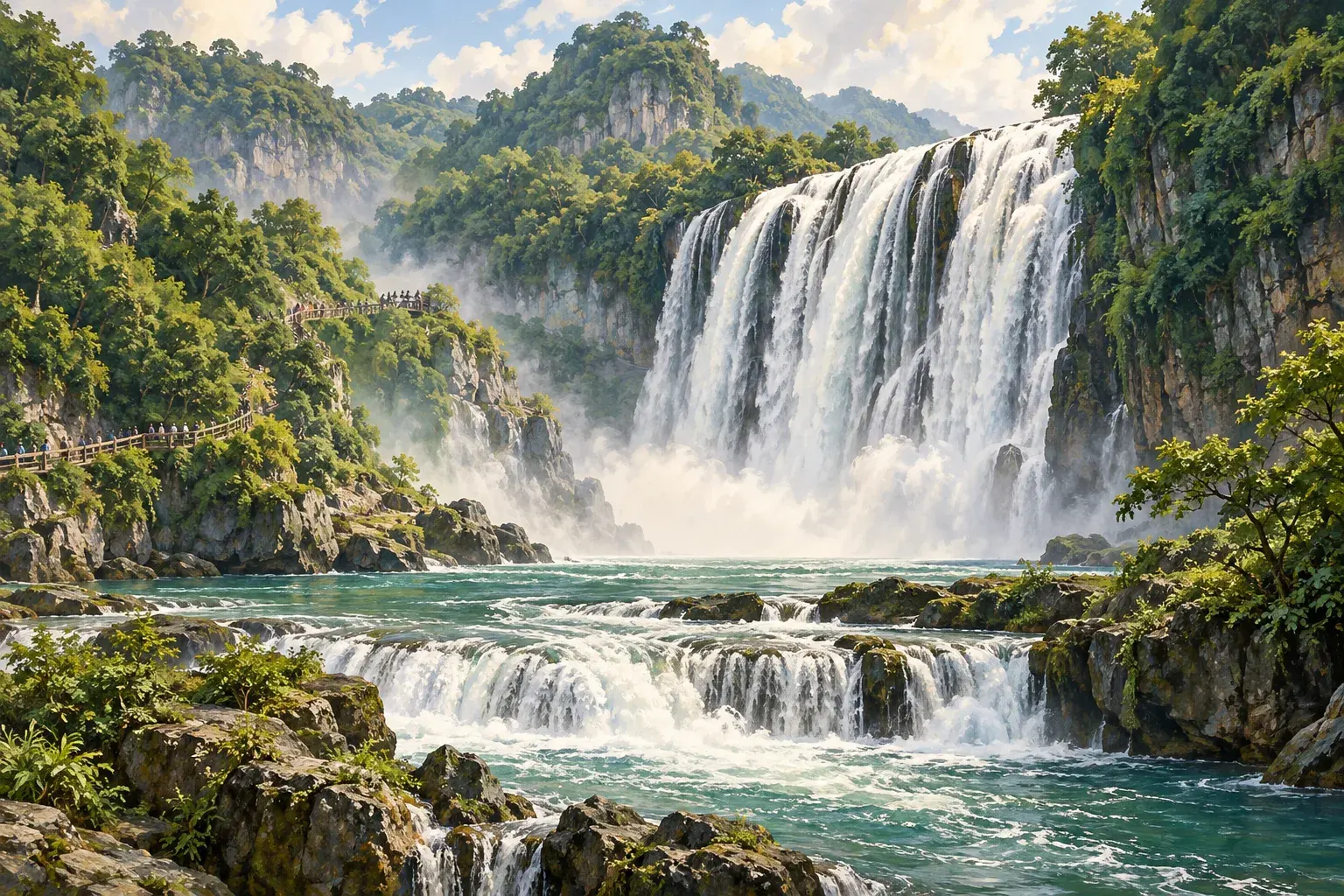 黄果树
A six-direction giant fall with a walk-in cave behind it, a stone-forest river park, and Ming garrison villages with masked opera — west of Guiyang.
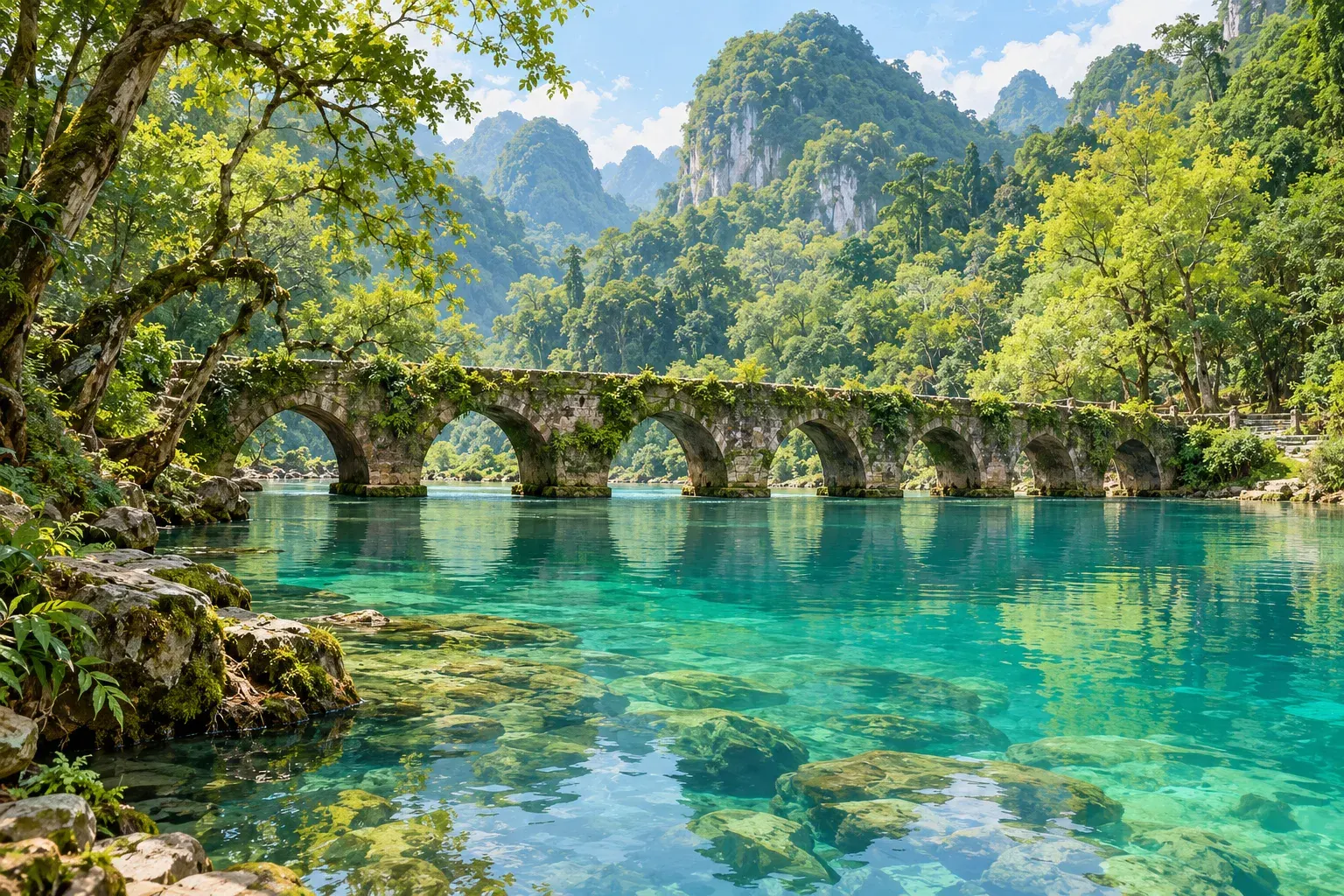 荔波
The Xiaoqikong valley of 68 waterfalls, waded water forest and impossible blues — plus the Maolan karst forest — now on the high-speed rail map.
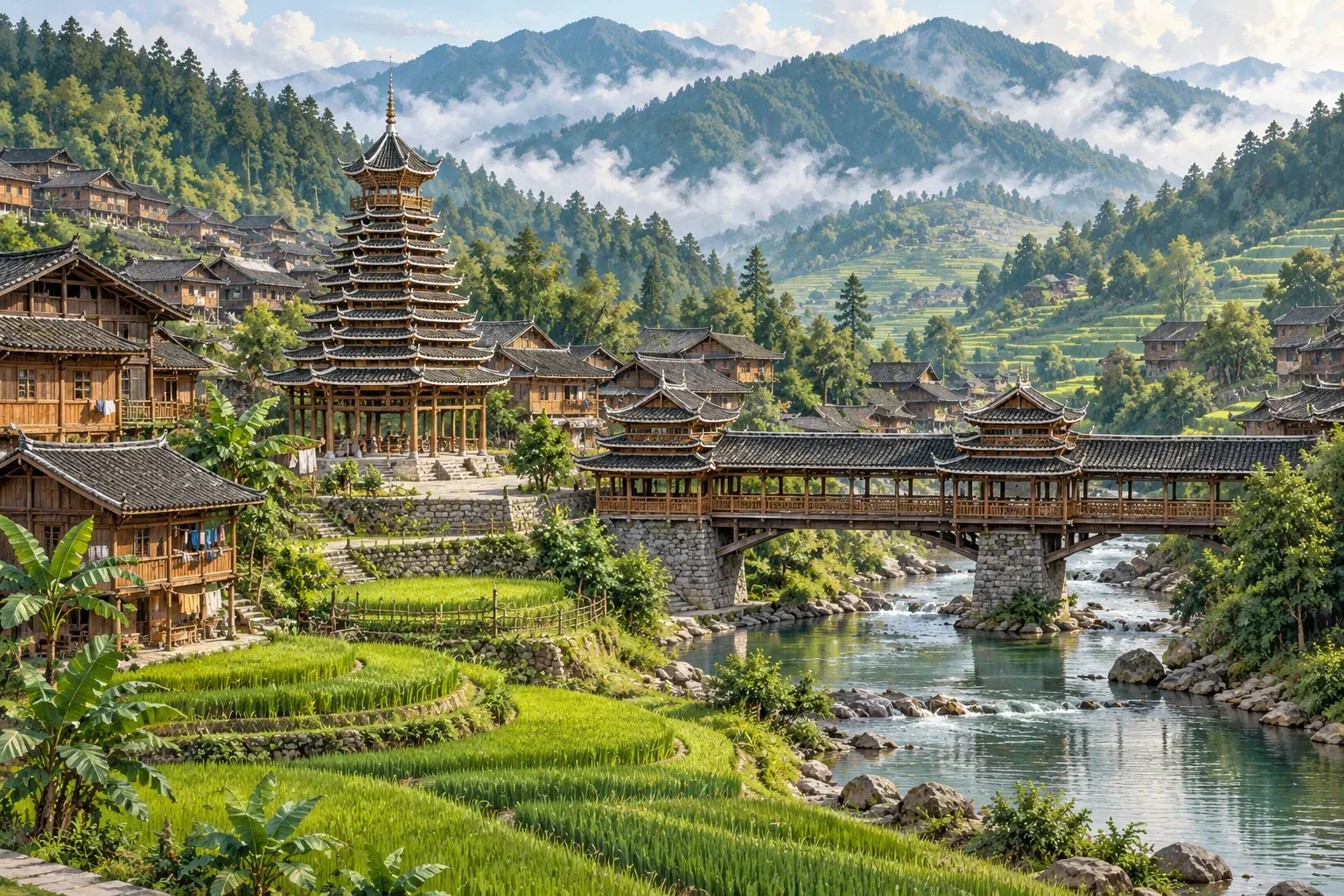 黔东南
Miao towers over terraced hills, Dong drum towers and grand song, festival calendars older than the counties — a slow loop through village China.
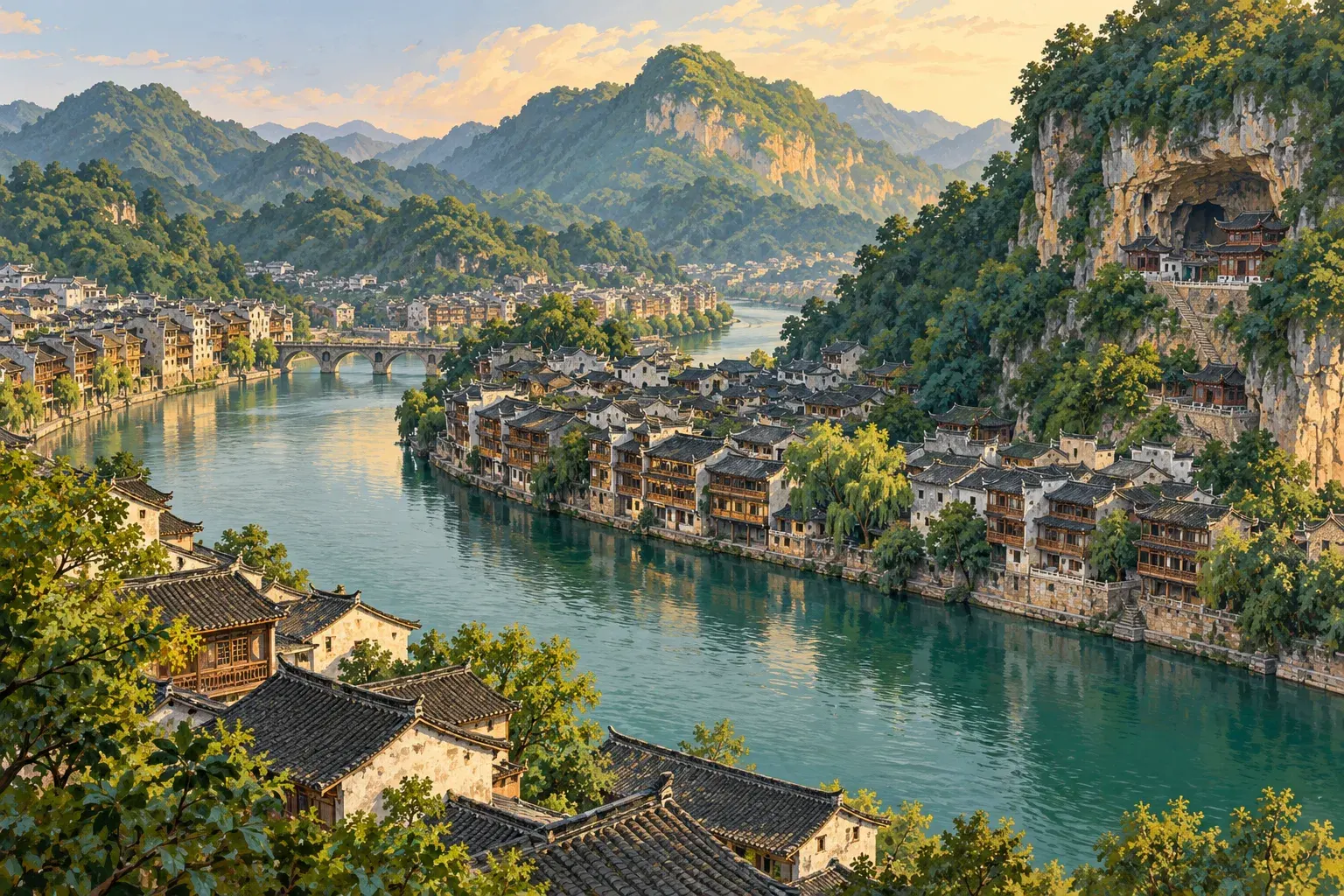 镇远
The Wuyang River loops an S through lantern-lit old lanes and cliff-hung temples — Guizhou's easiest rail town and its prettiest evening walk.
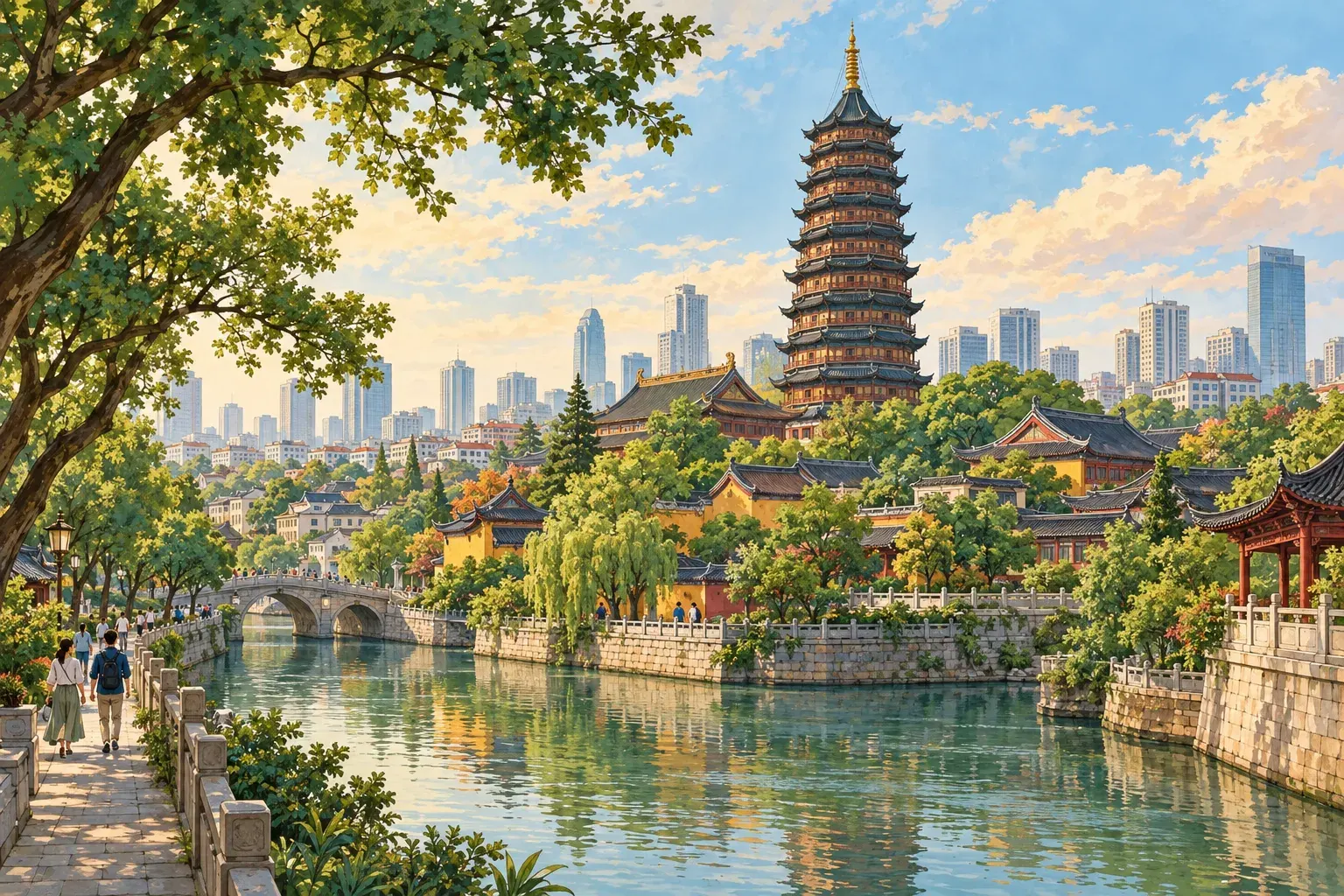 常州
A theme-park city with serious roots: China's tallest pagoda, the Spring-and-Autumn earthworks of Yancheng, and bamboo seas out in Liyang.
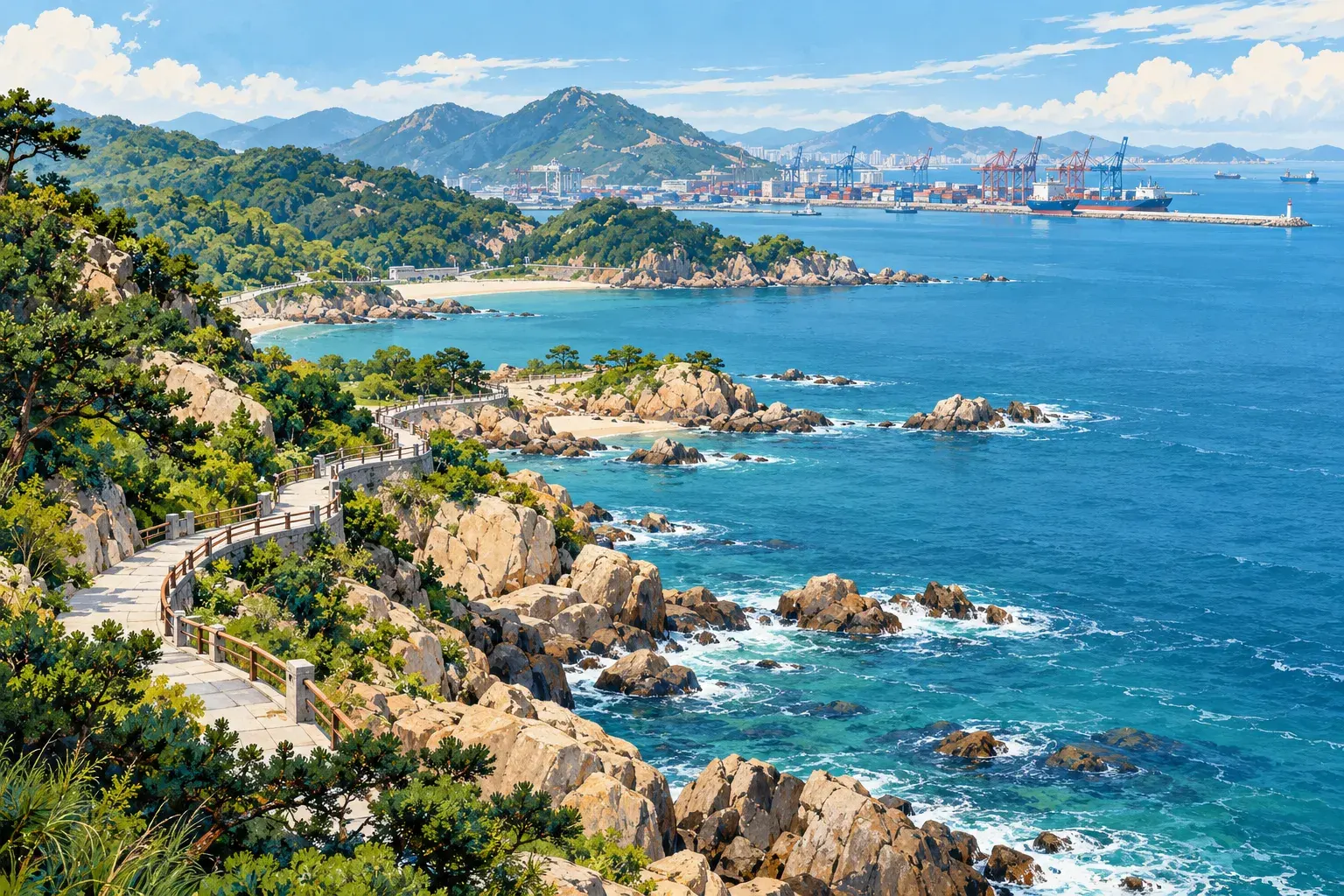 连云港
Beaches on Lian Island, the Mountain of Flowers and Fruit from Journey to the West, and the port where the Eurasian rail bridge begins.
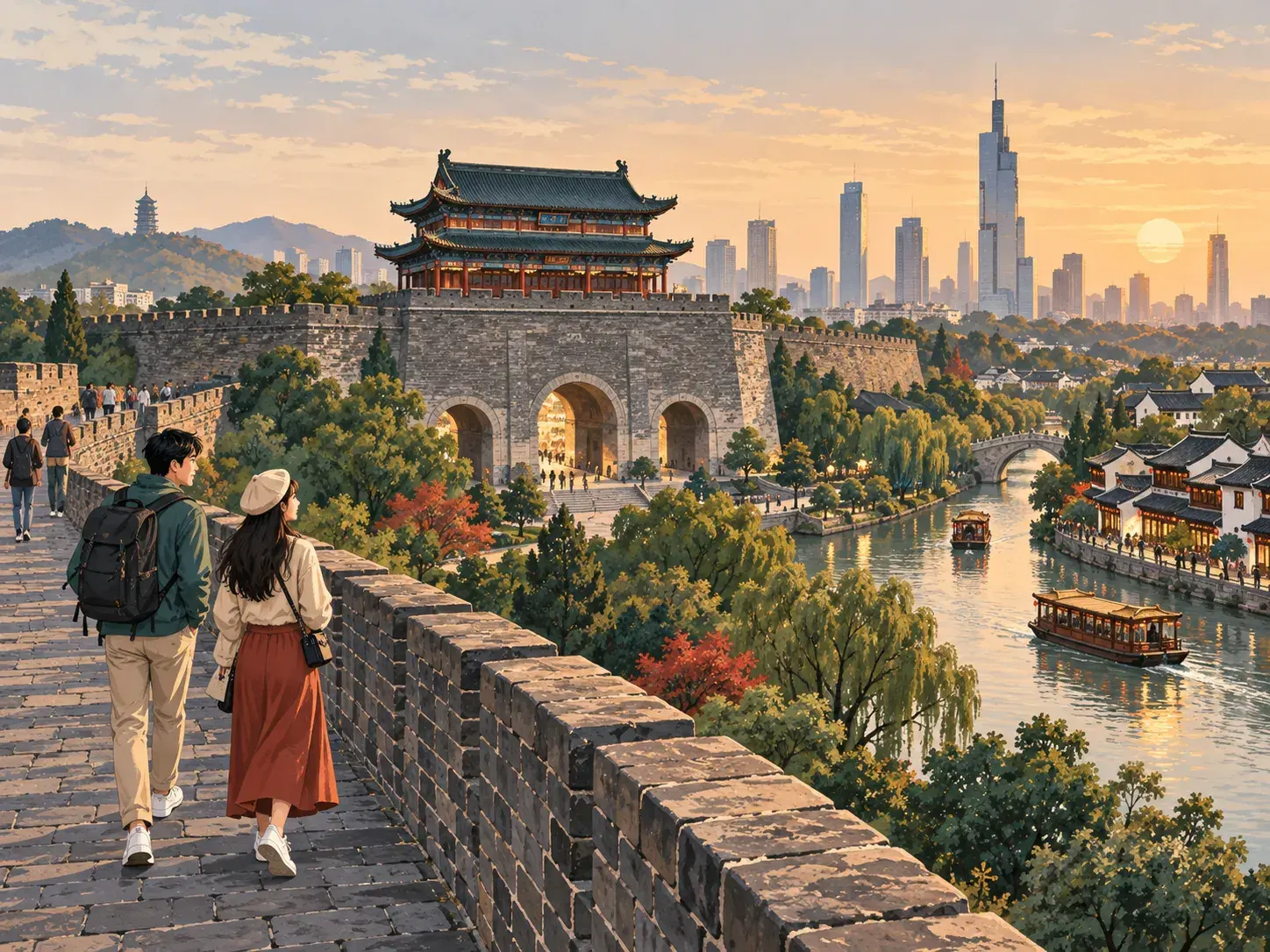 南京
City walls, the Sun Yat-sen terraces on Purple Mountain, lantern-lit Qinhuai nights and some of China's most sobering history — Jiangsu's old capital.
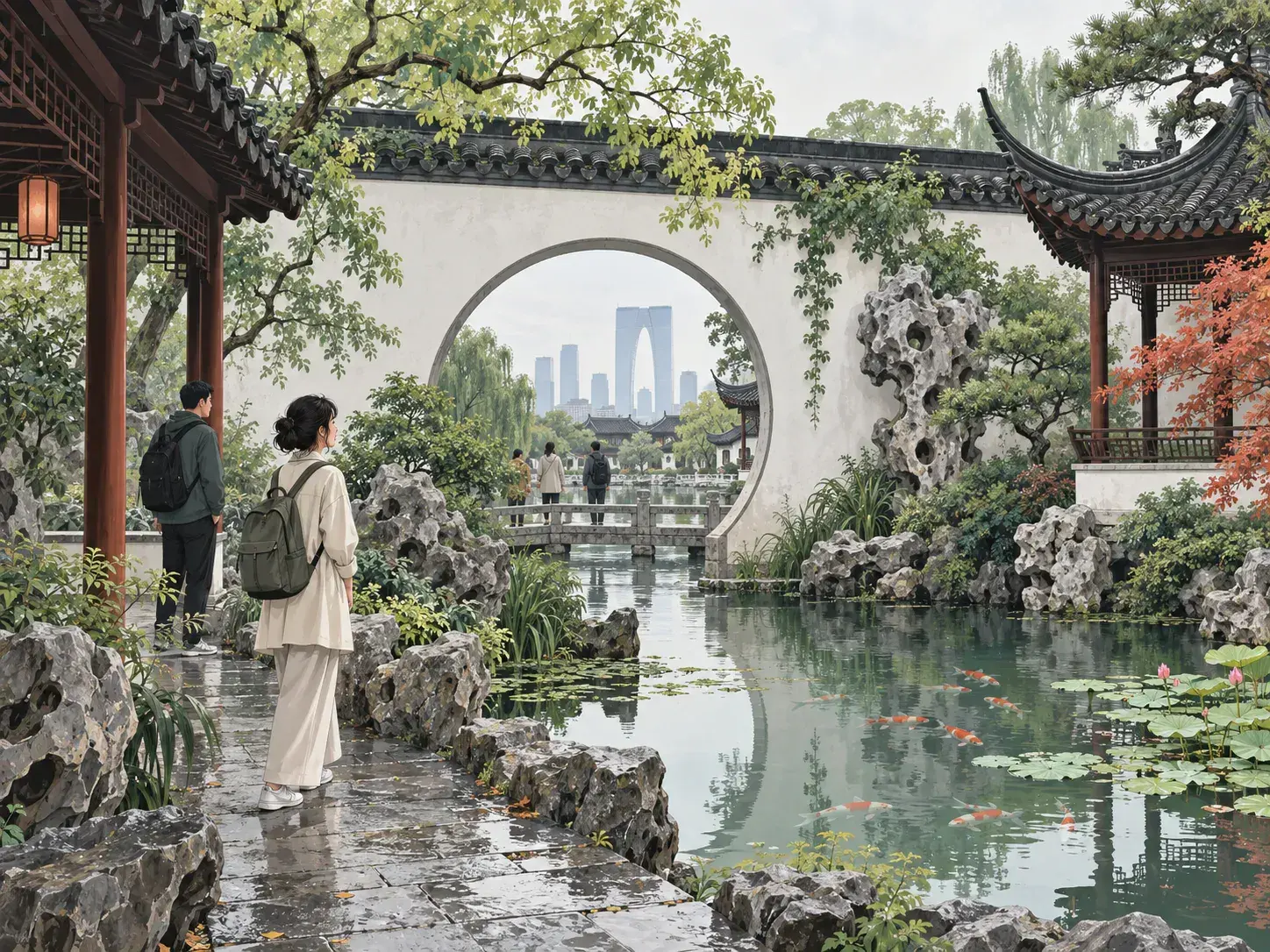 苏州
Classical gardens, pingtan strings down Pingjiang Road, and a sweet-lipped kitchen — the canvas on which every other Jiangnan town is judged.
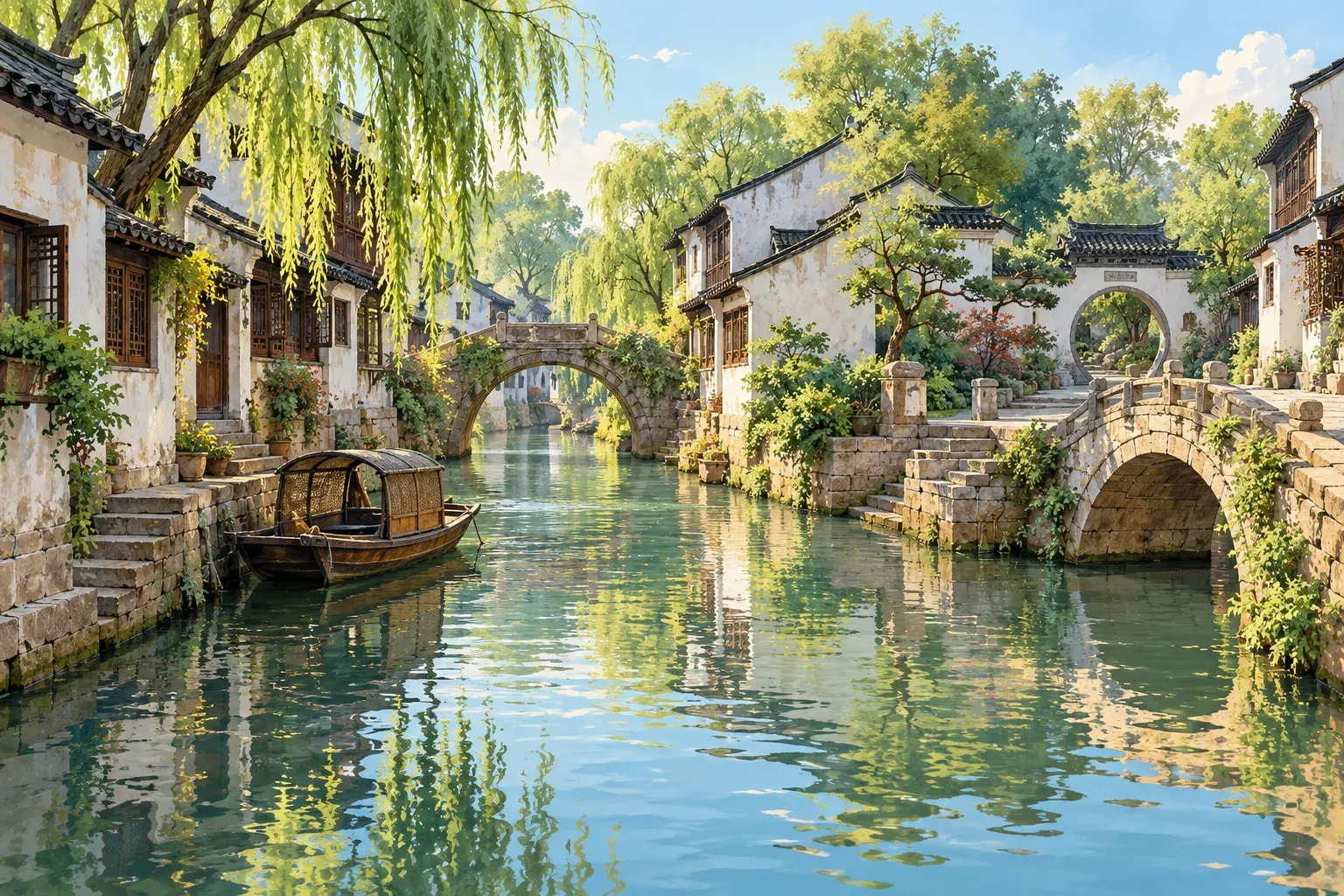 同里
A quieter water town with a UNESCO-listed garden, auspicious bridges and a lane so narrow two people pass sideways — reachable by Suzhou metro.
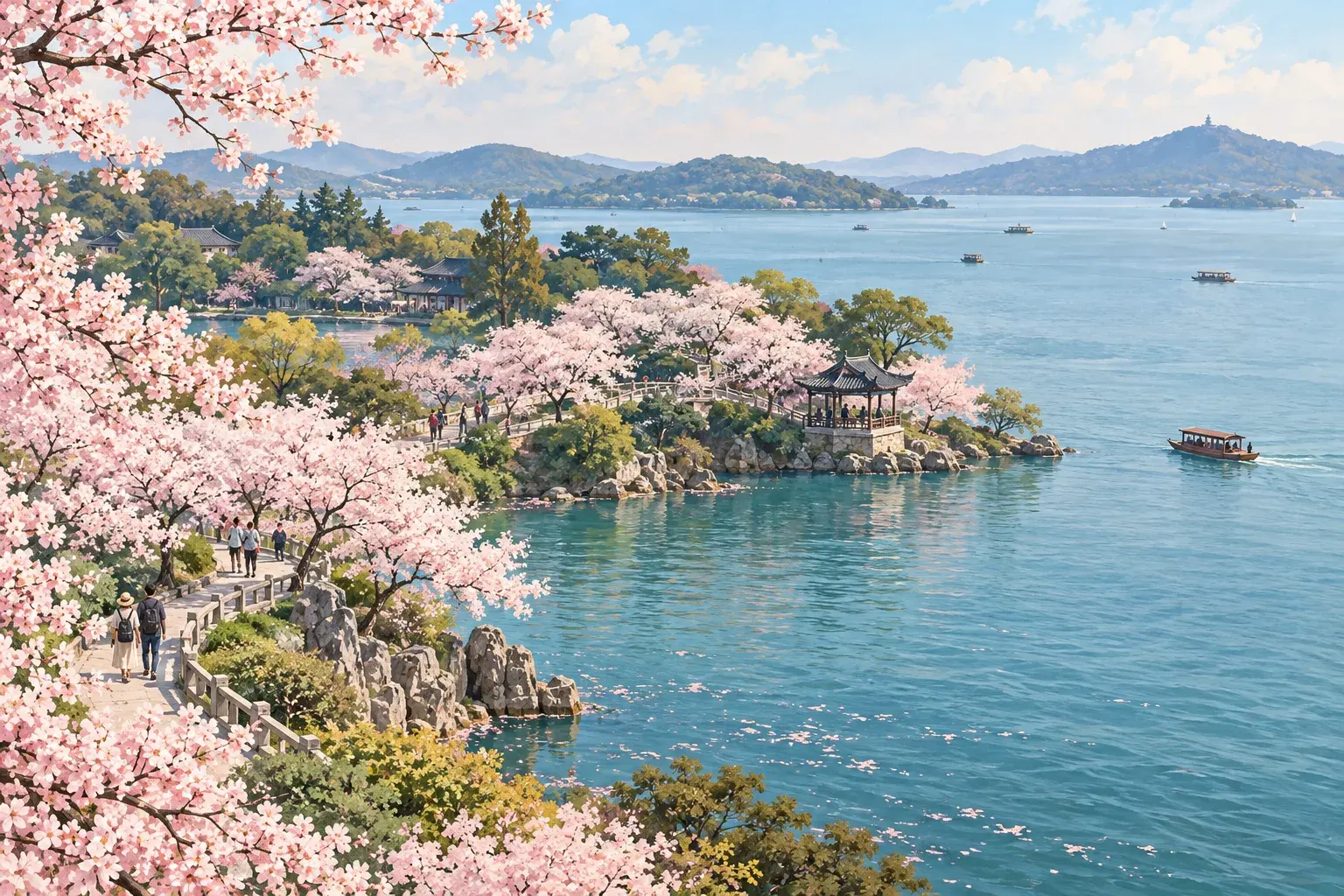 无锡
Cherry blossoms over Lake Tai at Yuantouzhu, a giant Buddha in the hills, an old canal quarter — and the sweetest pork ribs in Jiangsu.
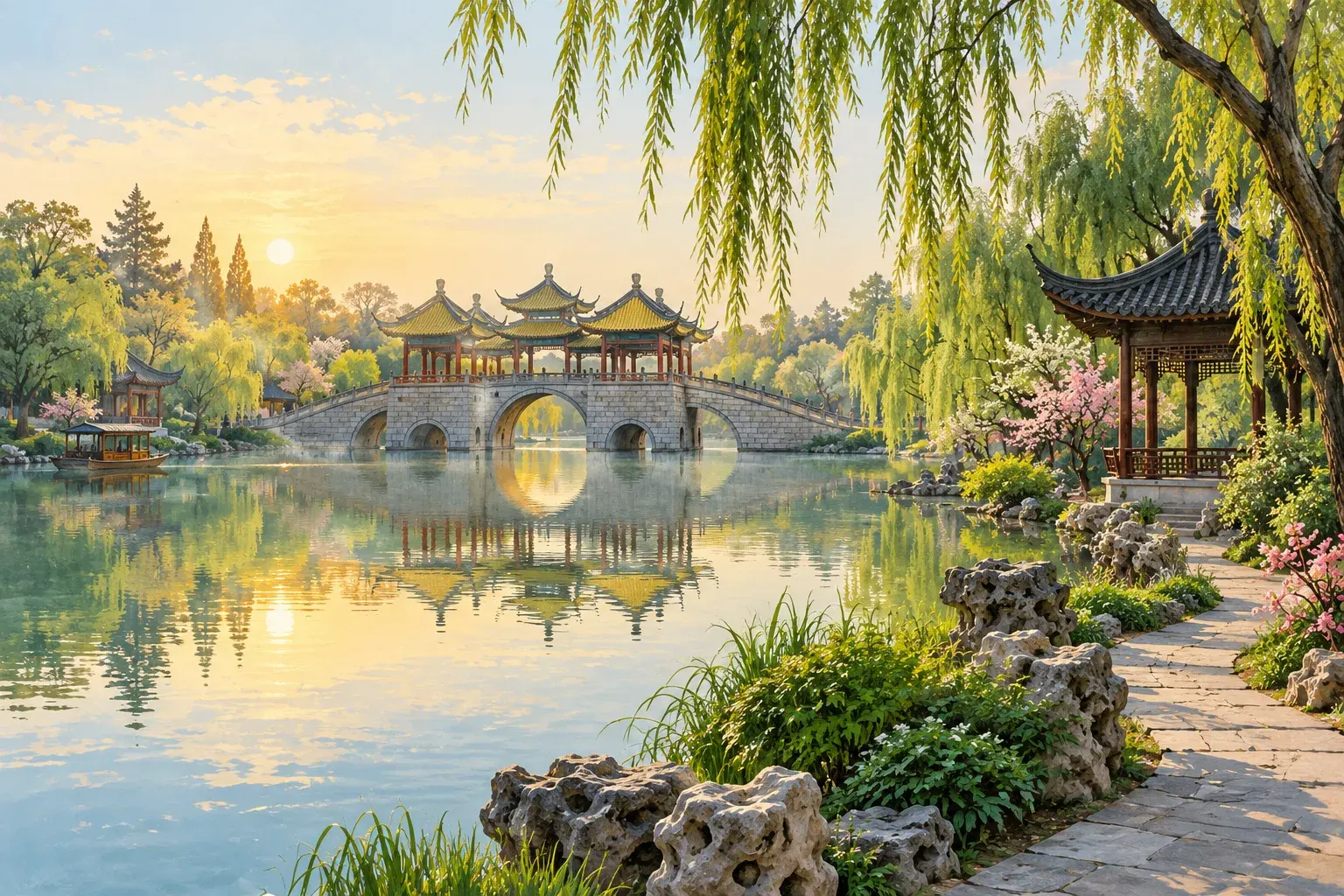 扬州
The Slender West Lake by boat, salt-merchant gardens, and a breakfast culture worth planning the day around — the poet's stop on the Grand Canal.
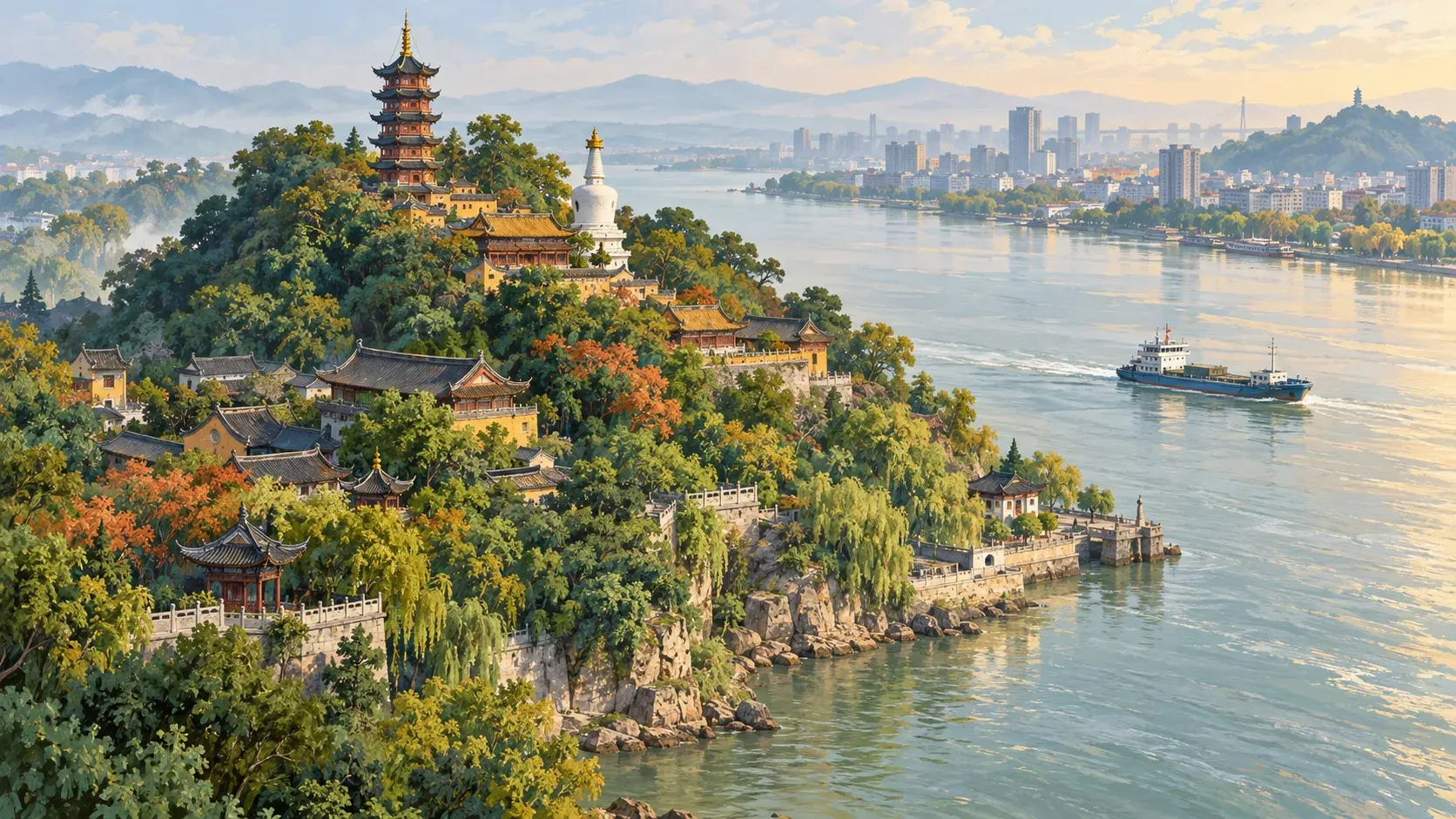 镇江
The temple that swallows its hill, Three-Kingdoms ramparts, a thousand-year-old ferry street — and China's most famous vinegar.
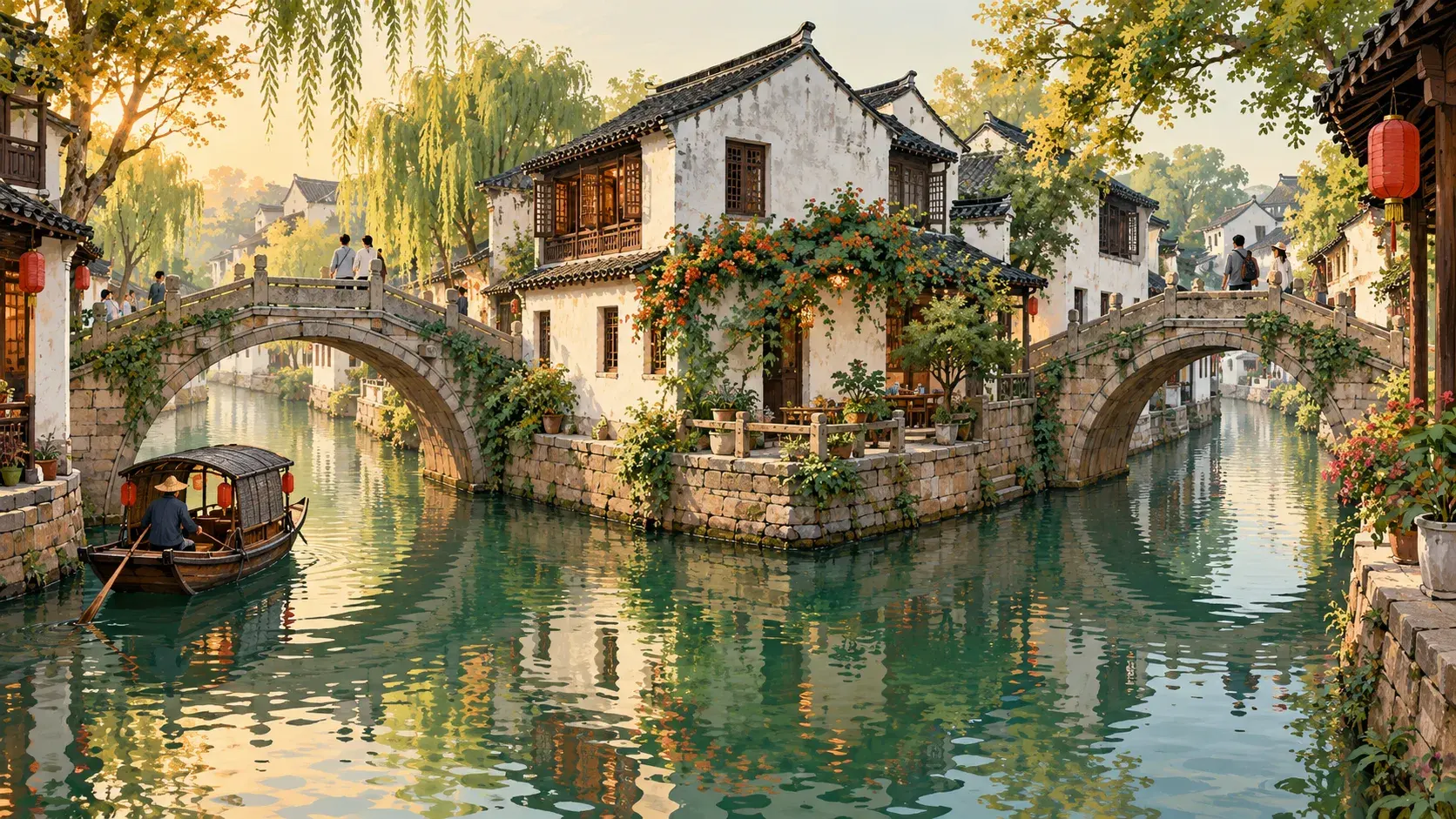 周庄
Twin bridges over a millpond canal, merchant mansions, Kunqu opera by lamplight — the most famous water town in Jiangnan, best at dawn and dusk.